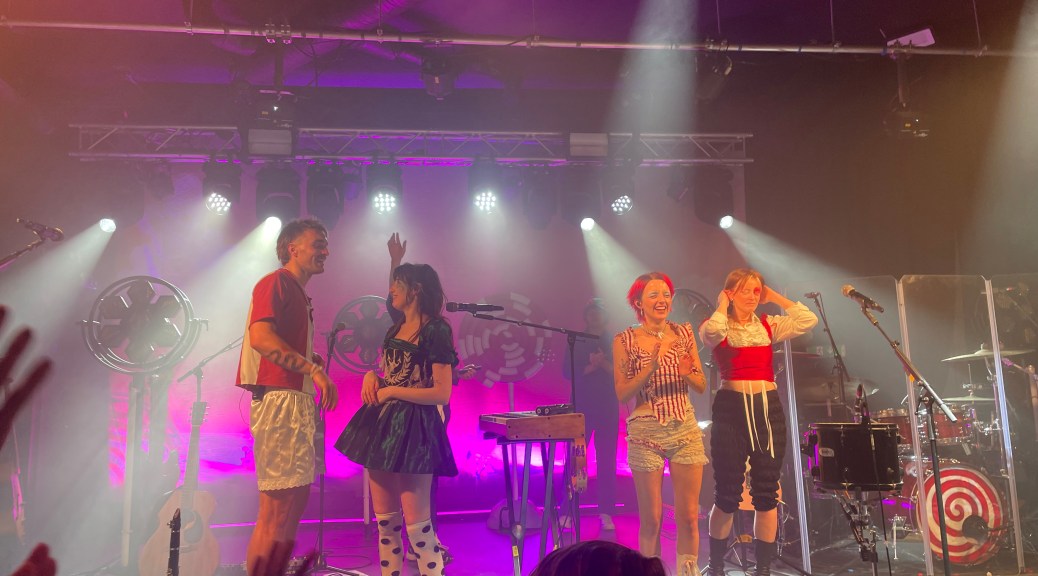
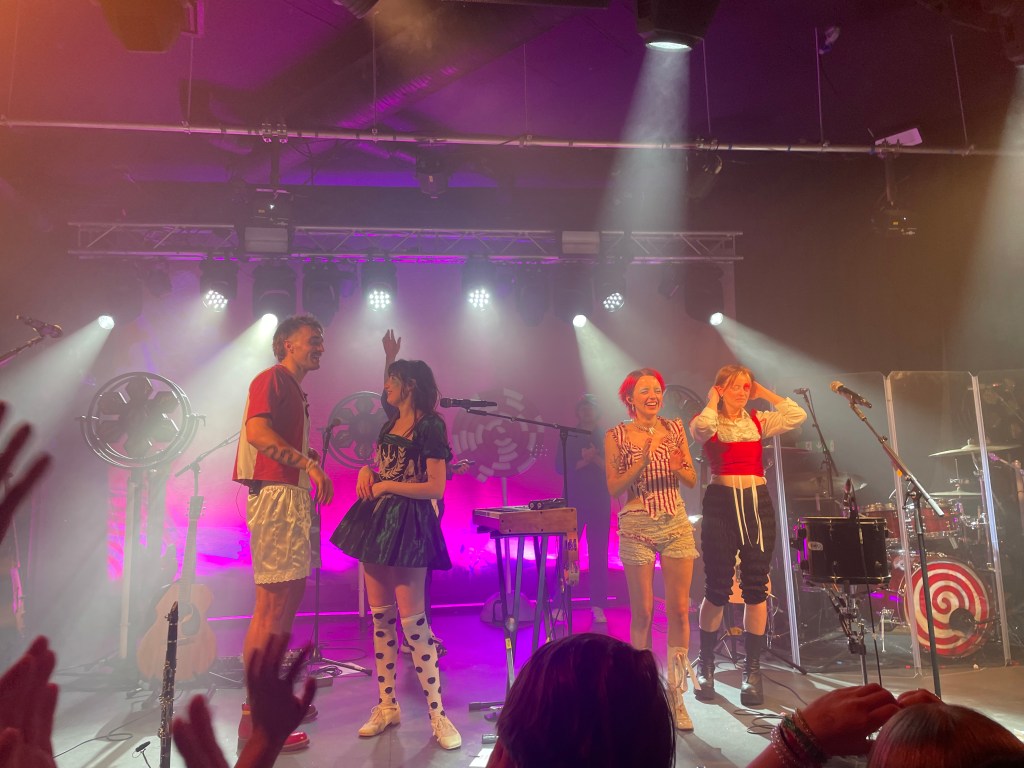
There are few things we here at Whistler Towers like more than a bit of jazz in the evening. And maybe some really really good food. And maybe some splendid drinks. So imagine our delight when we tripped all the way over there in Kemp Town (or Kemptown – you choose) to The Bronze, where on the first Thursday of every month, they feature live jazz. The nght we went down we saw the very fine One Hat Trio (pictured) – Eddie Myer, Lol Thomas and Luke Rattenbury – who “play classic guitar trio hard bop with echoes of Wes Montgomery, Kenny Burrell and Pat Martino, with added Afro-Cuban rhythm”. (nicked that from their Facebook page – you might have guessed). And I guess that’s probably true. They’re very good and very cool. They’ve got a residency at The Brunswick, too.
Your Gull About Town has written about the food at The Bronze before and I’m not surprised. The “slow and low smokehouse” serves up locally sourced smoked food at its finest. Chef David has the best smile and greeting and… Oh, come on. Good food, fine drink and kicking jazz. What’s not to like?
I’ve been a big fan of this Brighton band since they started a few years ago, and we’ve done some superb gigs together at The Prince Albert, Hotel Pelirocco, two landmark gigs at the Concorde and the 100 Club in London supporting punk legends Sham 69. They also played the new band stage at Rebellion and have toured Germany.
You have just released your second album, Great Expectations. How long did it take to record, where did you record it and what’s your connection with Germany?
Char – We recorded the album in Horsham at Ignite studios it was very cold, we did nine songs there then we did three songs at Russell Church’s Sea Side Studios. The tracks were mastered at Gatehouse studios. We didn’t have time to record a song called Outsiders which is shame because it’s a rip off another song I really love.
Leon – We had plenty of time Char, me and Loz just decided it was out. Did you not get the memo?
Char – We work with Time for Action records that are based in Germany – it’s just a shame we can’t tour and get out to Germany, they treat us really well out there.
What is the main inspiration behind your songwriting?
Char – On this album lyrically I was inspired by a lot of the uncertainty and repetitiveness you start to notice in the people around you once you get past 25. I feel compared to the first album it’s a lot more pessimistic. But I’ve been told we sound a lot more vulnerable at parts.
Leon – I think with this album I wanted it to sound bigger than the rest, but when it came to the writing I wanted it to be as honest and raw as possible. The first album we wrote songs based around characters mostly with some self-reflection, but this time I wanted it to feel personal and more relatable.
When & how did the band form?
Char – I met Loz in a bar called PR6 he was playing Blink with his mate Harry. Then I met Leon at the Jurys Out open mic night – he was wearing a Libertines T shirt.
Leon – No comment. I prefer to keep this shrouded in mystery
Who’s your biggest influence & why?
Char – The Clash of course. So many reasons but for now I’ll say because they are the best band that there ever was.
Leon – Well this is a big one, what does one look for in ones influences? Raw talent, musical prowess, cutting truthful lyrics? I dunno. I like a catchy tune, I’m well into Polka at the minute – it’s the next punk take it from me.
You met Mick Jones (from the Clash) when he was in Brighton in 2015, what did he say?
Char – He said ‘Nice set boys. You’ll be hearing from my lawyers’. He was beyond cool and had a lot of time for creepy fans like me.
Leon – He didn’t speak to me. I saw Matt Cardle at Westfield once. That was pretty cool.
What’s been your favourite gig you’ve played so far?
Char – That’s really hard. Playing Concorde 2 with Sham was amazing. Our first gig in Germany was incredible, but all the gigs we played at 12 Bar in Soho hold a special place in my heart. I miss that place, but right now I’d be happy to play a gig at a bus stop.
Leon – I do love the Concorde 2 gigs, but we’ve done some great gigs at the Albert over the years, they can be very sweaty and lively. It was also the first stage we ever graced so it has a special place among the many venues we’ve played.
Where do you see live music going, post lockdown?
Char – Going to be a big hit I think which is bad because it wasn’t getting much support before, maybe people will want to go out more after being caged for a year.
Leon – I think there’s a lot of DIY stuff coming out now so I’m hoping the decline of the stadium show will give space for small grass roots venues to make a comeback. Instead of going to see old bastards headline the Brighton Centre, maybe people will watch a new band down the street.
What’s your fave film?
1.Star Wars (empire)
2.Toy Story
3.Rocky 1
4.Clockwork Orange
5.Batman 1989
6.The Fly
7.Drop Dead Fred
8.One Flew Over The Cuckoo Nest
9.On The Beat
10.Overboard
How are you keeping busy in the lockdown?
Char – Writing a lot and Leon has taught me how to record demos at home, so we’re just trying to get all the ideas down ready for when we can practice again. Got a lot of new songs between us, over 20.
Leon – I’ve been reading them books.
Any other contemporary bands you like, especially in Brighton ?
Char – Teenage Waitress I’m all over at the moment, The Lathums, Bite The Buffalo, and I’m loving the new Strokes album. And my mate I was in a band with at school recently showed me Cloud Nothings.
Leon – I’ve been getting into the new post punk thing, bands like Squids, Sports Club and Yak, there’s also some cool stuff coming out of Australia like the Chats and Viagra Boys
And what are your plans for 2021?
Char -Get the new songs together and ready to record. But also we were planning to record a new single so we will be getting that together ASAP I would like to get that out this year, all depends on when we can get back in a practice room together again.
Leon – Shake my tail feather, I just wanna go dancing.
If you could play anywhere in the world where would it be?
Char – New York!
Leon – San Francisco all the way.
Any advice for a band starting out right now?
Char – Write, rehearse, gig, record.
Leon – Don’t do it, get a trade or learn how to code or something.
Where can we buy the album?
Char – The physical copies of the album have sold out, but it’s still up on iTunes, Amazon, Spotify and a load of other streaming sites I’ve never heard of. Actually, we did a few Dirt Royal bundles with the album, t-shirts and previous singles and stuff. There might be one or two still available at www.pipandpine.com…. quick go now
In the first of a new regular slot, Mick Robinson profiles up and coming new bands who are making a bit of a splash. First up, ShameFaced from, well, just up the road
https://www.youtube.com/watch?v=8_8wqelUAGk
There’s a huge groundswell of local talent waiting to burst out of their garage, rehearsal , studio space and play live, and when the lockdown is fully lifted this place is gonna see one hell of an explosion of energy & excitement.
Several local bands have caught my eye, and apart from playing on the Monty Platters show on Slack City Radio I’ll try and get some of those artists thoughts into the public arena via this page.
ShameFaced are a young, raw almost 60’s garage style band from the Crawley/ Horsham area – great guitars, melodies and lyrics with clout & meaning. We talk to Mass, Cian, Chris and Jude about life as a rock band during lockdown.
How did the band form? When and where?
Chris: Mass, Cian and I met in secondary school, we all started learning our instruments at a similar time and started rehearsing together badly, we all chose to go to the same college where we met our rhythm guitarist Jude early on and he came to a rehearsal and since then we have been developing our sound.
What inspires your song writing?
Mass – There’s a lot of different ways it comes about to be honest, a lot of the time it’s a very subconscious thing if I already have a clear idea in my head on what I’m thinking about, it’s often a lot of observational stuff from my perspective. I’m a big fan of Mike Skinner (The Streets) and how he creates a mood with his words so effortlessly, David Bowie, Pixies and The Cure are also big influences on my songwriting. A lot of the time we create a vibe when we’re jammin together which helps me know which direction to go in depending on how I think the sound feels. If it doesn’t feel right then we just start playing something else until I feel like I want to write something.
What bands have influenced you?
Cian – Some of the bands that we all like and have naturally influenced our music are The Libertines, The Stone Roses, The Clash and The Streets and we all have our own personal inspirations.
Any contemporary bands you like?
Mass – Slaves, Flowvers, Fontaines DC, The Chats, Easy life.
How have your live gigs been going, prior to lockdown?
Jude – Really well, we have been enjoying every show we’ve played, Live performances are always fun and we like to see the same faces coming back to see us play.
Is there a good music scene in the Crawley, Horsham area?
Chris – Not particularly, although there is definitely the audience around for one. There’s a few great bands and artists about including Slow Time Mondays who we have played shows with a couple of times now. We have recently been playing shows in London which have all gone well, we definitely want to branch out more in London as well as places like Brighton.
What undercurrent vibes are there amongst your generation about this lockdown?
We got challenging rhymes for challenging times.
Where do you see the band going given a normal non lockdown situation?
Cian – We have big plans for when things go back to normal, we’re currently working on a studio set up which we will be working on something you should expect to hear later on this year.
How do you feel about the music industry today? Spotify, record labels… Is the ideal these days to get signed still?
Mass – Today’s industry is a blessing and a curse. With platforms like Spotify, it encourages more people to make music and be inventive, so there is a lot of D.I.Y about which we are fans of. It is a lot harder to make a living for smaller artists, but everyone is starting to realise that record labels aren’t a necessity anymore and if you’re smart about it, you’re probably much better off being an independent artist.
Hopes for the band 2021 ?
Jude – By the end of 2021, we hope to have released our first body of work and to have played as many shows as possible, the songs we are set to release will be a serious step up from our previous demo releases.
Will you come play my pub in Brighton?
We’re there, any day of the week mate.
Anything to add feel free
For now if you haven’t heard them, listen to our demo releases over on Soundcloud https://soundcloud.com/shamefaced
and keep up to date with us on instagram or facebook @shamefacedd. We hope to see you at a show soon.
So wide can’t get around it, so low you can’t get under it, Brighton has always been one city under a groove. But in these days of lockdowns and shutdowns, it’s harder than ever for musicians to be seen and heard. Playing “late night radio in the daytime”, Slack City Radio, Brighton’s newest radio station, aims to put that right.
In the first of a new regular column on the Brighton and Hove music scene, Mick Robinson, one of Slack City’s DJs and a man steeped in Brighton and in music, talks about what they’re doing, when they’re doing it and the bands they’re playing.
The UK’s music scene & industry has one big pause button pushed on its sound system at the moment. From the venues, the sound engineers, lighting techs, roadies, merch sellers, ticket collectors, security to the musicians themselves, we probably have the most talented van drivers in the world at the moment.
As long as the venues can survive and as soon as restrictions are lifted, the scene will be reborn again overnight. The passion for the music here is so strong it can’t be suppressed for too long.
The independent radio stations on offer around the country at the moment is off the scale, created and hosted by genuine and knowledgeable lovers of music. No one gets paid and there’s no big sponsorship funding behind them. It’s all just built on love and passion.
Brighton has some excellent stations and excellent shows on them. Radio Reverb, 1BTN are fine examples, and the latest addition is Slack City, brought to you by the people behind Totallyradio and Juice FM before that.
Launched on January 1st this year, a station to reflect the eclectic & mavericks of this fine city, the base that the studio broadcasts live from is the wonderful Presuming Ed’s Café on London Rd.
I’m very honoured to host my own show in this set up. Called “Monty Platters”, it has evolved over the last five years on several local stations. The remit is a mix of old and new, a bit of punk, funk, any era or genre goes, pushing the boundaries a little with no compromise on quality.
A very important part of the weekly show is new Brighton bands, and the last few years the music scene here has never been better with an abundance of young exciting bands, Ditz (see link below), Sons, Rotten Foxes, Skinny Milk, Dirt Royal to name but a few.
Have a listen this Friday where we’ll be previewing some of the above & several other brand new tracks by Brighton’s crop of new talent.
Monty Platters live on Fridays 2pm till 4pm, repeated Sunday mornings 10-12.
What do you feel when you see a statue to some historical figure you’ve kinda heard of but don’t really know anything about? Do you think… “It’s just there. It’s always been there, so let it be there”? Do you think… “Who is that? I’m going to find out about that right now. Now, where’s my Wikipedia…?” Do you think… “Whoever it is, it means nothing to me. I wish there was something there I could feel something positive about”.
Well… strangely enough now we’ve got a chance to say what we think about public art in our city. We’re not talking about private exhibitions, shows, gigs, festivals, that’s one thing, But what about the art that’s out there in the public spaces. Statues. Outdoor installations. Spaces in parks. How do we, as a city, feel about that stuff? We saw last year, particularly in Bristol, that historic statues can be… problematic. How do we deal with those subjects and feelings? Remember the Mary Wollstonecraft sculpture that was unveiled in London in November?
Brighton’s an arty city, a creative city. It’s one of the reasons we’re here. The public art should reflect that – and now’s a chance to make that happen.
The Brighton based arts charity Lighthouse has launched an online public survey and series of short films under the banner “Let’s Talk Public Art” to encourage us to say what we think about public art in the city.
“Public art can provoke intensely divided public opinion, as we have seen recently with historic statues being removed because of their connections to slavery. These short films feature discussion points such as heritage, inclusion, sustainability and wellbeing so we can delve into how people feel about public art” says Alli Beddoes, Lighthouse CEO & Artistic Director.
https://youtu.be/vOdgSpyqJoM
Films:
Places & Spaces with Matt Adams – Blast Theory and Atif Choudhury – Diversity & Ability An exploration of what and where the spaces and places can be for public art. It should be more than standalone works in the public realm, they should be integral to the ways in which we experience and understand our city.
A Green City with Ami Rae – Onca Gallery and Claire Potter – Claire Potter Design What doers it mean to be green – and can you green the city through public art. Brighton & Hove aims to be carbon neutral by 2030 – how can public art support this?
Wellbeing with Elsa Monteith – Writer & Artist and Emma Frankland – Artist What does public art mean for our sense of identity and belonging? How can it help us connect and care?
Heritage with Judith Ricketts, Artist and E J Scott, Historian & Curator What is a successful piece of artwork that celebrates heritage in our city? How can public art hold onto the past without erasing it but use it to be informed and carve out a better future for the next generation?
Connectivity & Community with Amartey Golding – Artist and Bobby Brown – Music Producer & Careworker, Hangleton & Knoll A film discussion of the ways commissioning public art can connect to community groups in the city.
There’s an event – online, natch – called Let’s Talk Public Art – Digital Campfire(10am to 12 noon, Fri 5 February) which might be interesting. To join, take part in the survey, watch the films or register for the event visit: lighthouse.org.uk/events/lets-talk-about-public-art
Do you remember “going out”? No, me neither. Still, the Dome is re-opening its doors for a series of seasonal events, including a production of A Christmas Carol narrated by Killing Eve and Succession actor Harriet Walter.
Live stream events also continue, with best-selling children’s author Michael Morpurgo bringing the festive spirit into people’s homes with an afternoon of Christmas storytelling.Other events feature names such as Dawn French, Benamin Zephaniah and Liza Tarbuck.
Megan Wenham and Harriet Dunlop talk to Louise Channon about BGG and being a community hero
As the Christmas season fast approaches it is obvious none of us will have the usual festivities and traditions we look forward to all year long, as COVID and lockdowns seem to be a never ending cycle of new rules and restrictions.
All is not lost though, as we caught up with Louise Cannon, the Creative Director and Producer of Brighton Goes Gospel to talk about their “the all sing and dancing” 20th anniversary.
Earlier this year the choir embarked on their biggest challenge yet through recording a new song and creating their own documentary to highlight the best times over the years, all within the challenges of lockdown to ensure they can still spread light this Christmas.
“The idea of the documentary is to cover 20 years of our journey. It will cover footage from previous shows, photographs, artwork, interviews, and the people who have been a part of our journey. We just want to spread a bit more joy, especially this year where it is a lot more needed. We are just doing what we normally do just on a much wider scale.”
The documentary called “More Than Just Singing” also covers today’s matters too and in their own way they will be paying tribute to Black Lives Matter and the NHS.
“Gospel means good news and some people really need that right now. The beauty of gospel music is that it does cover a broad spectrum and people can make it whatever they need it to be for them.
“Even though we are a gospel choir we are not all religious, we are welcome to all religions and non-religious people. The reason we come together is love of gospel music and is all for different reasons.”
Louise’s hard work has not gone unnoticed, and she has been presented with the “Make A Difference Heroes Award” in recognition of all her work. “It’s quite humbling to receive an award as a thank you from the community and from my peers.” The awards are dedicated to celebrating unsung heroes from across the local area, organised by BBC Radio Sussex.
The Brighton Goes Gospel choir have also been working hard on recording their own version of “With A Little Help From My Friends”.
“We have created joy in a pandemic and still fighting to spread love and this is what the song is about.”
Recording the song during a pandemic definitely had its challenges as you could imagine. As a choir of vast age range, getting people to record their parts of the songs was difficult. “What we did was set up support groups on Facebook live so we can explain to people what we needed them to do. At times we have gone to their house, filmed for them or used our devices if they did not have a smartphone.
“The brave thing about the choir is they are normally together with 120-140 people and singing in a group, but asking people to sing a solo is the scariest thing ever and the wonderful thing is a lot of people stepped out of their comfort zone and nobody bowed out.”
The track will have guest features from renowned gospel artists including; Michelle John, Ken Burton, Paul Lee, Annette Bowen, Nathaniel Morrison, Sharlene Hector, Vula Malinga, Ladonna Harley- Peters and many more. “It’s been about five months in the making, we chose the track back in January and it is a COVID anthem for me.”
Tucked away in a terraced house perched on the slopes of the West Hill neighbourhood is housed one of Brighton’s – and possibly the UK’s, most impressive collections of reggae music. From top to bottom its walls bulge and strain with vinyl from every era – from ska and rocksteady in the 1960s, through 1970s roots reggae, right up to contemporary dancehall. It is all lovingly archived by John Masouri, who’s mission for over 30 years as one of the world’s foremost reggae music journalists, been to document the constant stream of creativity and musical innovation coming out of Jamaica.
John has been writing about Jamaican music since 1988 but his love for the music goes back to his upbringing in a working class area of Nottingham during the 1960s where he was introduced to ‘shabeens,’ also known as ‘blues parties’ – all night house parties playing ska and early reggae on huge, neighbourhood-shaking sound systems.
Blues parties were like entering another universe. ‘You’d go in there, into these very small confined spaces, like in one of these two up two down terraced houses. And the music would be very loud, it would be very dark, just the light of the amplifier valves lighting up in the darkness. The sweat, the condensation on the walls – and also the music.’
At that stage John had no idea the music would take him on an epic journey of a lifetime, it was just a place where the kids who didn’t fit in anywhere else felt at home. ‘I had no intention of playing the music or being involved with it at that time though, it was just purely to be there to soak in the atmosphere. It felt like a safe space, in essence.’
After a period working at the Tate Gallery in the early 1970s, John came down to live in Brighton in 1976 and helped to kickstart the city’s vibrant reggae scene, which still continues to thrive. ‘I loved Brighton ever since I first came down here on a visit. It just felt like this is where I wanted to be. When I moved down here, very quickly I went looking for reggae music and I went to this place called the Alhambra on the seafront, and people said that downstairs in the basement there was reggae music.’
The venue downstairs was known as The In Place and there he met and befriended Brighton’s now legendary first reggae sound system, King Tafari Love. ‘At the same time punk was happening, so there’d be punk upstairs at the Alhambra and reggae downstairs. There was the Top Rank Suite, the place where Dennis Brown and all these people would play, Black Uhuru, Gregory Isaacs. That was a guy called Colin Matthews who worked at Brighton Art College, he was the promoter, he used to bring down a lot of those acts. Aswad, Misty In Roots, these people were always down here.’
In the early 1980s as a DJ John helped to bring the atmosphere of those early Nottingham shabeens he’d attended to Brighton (well Hove, actually) with support from one of the city’s most feared gangsters. ‘In those days I was playing with a sound system called Field Marshall Hi Fi. There were about five or six of us. But playing out was difficult, you needed places to play. And reggae music was never all that popular with proper venues, because of the crowds, because there were too many ganja smokers in the crowds, so that was always a constant factor. But then to our rescue came Nicholas Hoogstraaten who was Brighton’s notorious landlord.
Hoogstraaten would give us these basement flats. He’d say ‘you can play in here and do whatever you like’ and he’d charge us some money like a hire fee and then he’d come and collect it at about three in the morning and he’d sweep in with his big long coat and his ‘assistants’ and they’d take the money.’ Frequent visitors down from London would be visiting MCs over from Jamaica such as Mikey Dread and Barrington Levy.
Talking about those early Shabeens John remembers, ‘we all had young children, so the children would come to the blues parties so we’d put mattresses down in a room upstairs and they’d all pile in there when they got tired and go to sleep. We’d have ‘ital’ (Jamaican for ‘wholesome’) food, jerk chicken and all of that, of course Red Stripe and Heineken to buy there, it was totally illegal of course. We charged about two pounds on the door or something, some token amount on the door an then was selling food and drinks, they were great social occasions. It went on for several years.’
John’s son Felix grew up in that atmosphere, which eventually led him to take up his father’s mantle. ‘He started at the age of four. We would set up the sound system gear and he absolutely loved it, he would chat on the mic in the warm up. I have a cassette with him aged 4 chatting on a mic, all nonsense. But he loved the experience of being around it. I could trust him putting on records, putting on vinyl from a very early age, he had this respect for the whole process. He loved the music, we used to nurse him to sleep to reggae music when he was a baby.’ Now in his 40s, Felix started his own dancehall reggae night at the Volks when he was just 19, playing the latest fresh sounds from Jamaica every week.
He continues to work as a live music promoter with his company Global Beats, who have brought such acts to Brighton as Mykal Rose, Yellowman, Eek-A-Mouse, Horace Andy, Kobaka Pyramid, Jah 9, Morgan Hertiage, Misty In Roots as well as Public Enemy and Roy Ayers. ‘His contribution to the Brighton reggae scene is very much greater than mine because he’s put on so many club nights and he’s put on so many artists,’ says John.
The pair now work together on a radio show on Brighton’s community station 1BTN FM with an emphasis on new sounds coming out of Jamaica. ‘We decided to do a show called Run The Track for 1BTN that showcases contemporary music. We rarely play anything that’s older than a couple of years and most of what we play is just a few months old. Mainly roots and vocal music. But its nice that father son thing. I enjoy doing the shows with him a lot and I learn a lot from him.’
John continues to write about reggae music. Simmer Down is his book about the about the pre-fame early days of Bob Marley and the Wailers in the 1960s published on his own Jook Joint Press. Steppin’ Razor: The Life Of Peter Tosh (Omnibus Press) is the first full length biography of the former Wailer and revolutionary firebrand. Wailing Blues: The Story of Bob Marley’s Wailers (Ominbus) is about the post-Marley Wailers, brilliantly documenting the legal wranglings of his group after Marley’s death. Look out for Felix and John’s shows on 1BTN FM.
John Masouri is now embarking on a series of anthologies curated from over 30 years of writing about Jamaican music entitled Reggae Chronicles, published via his own independent Jook Joint Press imprint. The first of these is Rebel Frequency: Jamaica’s Reggae Revival, which focuses on writings from the previous decade, up to and including 2019. This will be followed later this year with The Marley Files: One Foundation, a look at Bob Marley’s legacy since his death, featuring in-depth interviews with Damien, Stephen and Ziggy Marley. They can be purchased direct from johnmasouri.com
HAVE YOU HEARD of “The Bird”? Charlie Parker, known as “Bird”, was a very great alto saxophonist and the major creative force in the jazz style known as Bebop. During WW2 he became widely admired and then idolised, in the United States, for his fantastic ability as an improviser. When that War ended his fame and the jazz style called Bebop immediately spread around the World. The effects of that explosion are still felt today. Here in Brighton jazz is enjoying a new surge of interest. Although the musicians and their music have a healthy variety, an influence from the Bebop era can be felt everywhere.
But Bebop wasn’t the only jazz style to emerge from WW2. Something very different was born, – and much of it was hatched outside the United States. No jazz of any recognisable style began before 1900. Then the early “traditional” style began to be played, most obviously In New Orleans.
More bands appeared, recording began in earnest and the centre moved from New Orleans to Chicago. By 1927 this early style, based on the interplay of trumpet, clarinet and trombone reached its peak. It then began to disappear back into clubs and bars. Very few young black musicians were interested in this style. They quickly took up their places in the new “Big Bands”. [Do not forget that racism in the USA meant that until well into the 1940s Big Bands were either white or black]
What happened in WW2 was a surprise. In Holland, France, in the UK, in Eastern Europe, in Australia, amateur jazz bands, often of self-taught musicians, began to attempt to play in what they believed was an early and purer style of jazz, unspoilt by the commercialism which dominated the “Swing” era from 1935.
In 1943 a pianist, George Webb, living in South-East London decided to relieve the gloom of the Blitz by forming a small jazz band. Its fame soon spread. In Nottinghamshire two enthusiasts who knew a great deal about the early history of jazz, James Asman and Bill Kinnell, had begun publishing a magazine to encourage interest in the origins of the music. They were very encouraged by the success of “George Webb’s Dixielanders” and promoted the band through concerts and commercial recordings. As the number of fans and other bands grew, musicians such as Humphrey Lyttleton and Chris Barber for example – came on the scene.
Then something awful happened for two reasons. The first was a lack of decent pianos, or any pianos at all. The second was a shortage of pianists able to play in the traditional style AND fit into a rhythm section which was supposed to swing. The result was the emergence of a very successful band led by Chris Barber without a pianist. The rhythm section was dominated by the banjo of Lonnie Donegan. Through no fault of his, and almost without noticing it, the band began to play with a kind of rhythm which bore little relation to early jazz. It also promoted a strange kind of jerky jazz dance which became very popular. Several other bands were infected. Then, somehow, this aberration became a total disaster. Someone more in touch than me can possibly give a date to it. I think it began in 1957, when Acker Bilk arrived in town and his band started a trend for uniforms which others quickly adopted. Soon there were bands dressed as cowboys, gamblers, waiters, city gents. Somehow this trend embraced the Banjo dominated music to become a monster. British “Trad” was born. There was immediate commercial success. The traditional jazz started by George Webb had become a major part of British popular music. Suddenly it inflated to become this ugly monster with little musical merit and no resemblance to the early jazz by which it claimed to be inspired.
In 1962 there was a film about it, “That’s Trad, Dad” but, as is often the case, the film was too late. The monster really had no substance and would not have sustained popular interest for very long. It was swept aside by the Beatles and the Stones and a whole new music driven by great energy and imagination. The music begun by George Webb was able to return to the care of semi-professional musicians in the back rooms of local pubs.
Have you heard of “The Bird”? Charlie Parker, known as “Bird”, was a very great alto saxophonist and the major creative force in the jazz style known as Bebop. During WW2 he became widely admired and then idolised, in the United States, for his fantastic ability as an improviser. When that War ended his fame and the jazz style called Bebop immediately spread around the World. The effects of that explosion are still felt today. Here in Brighton jazz is enjoying a new surge of interest. Although the musicians and their music have a healthy variety, an influence from the Bebop era can be felt everywhere.
But Bebop was not the only jazz style to emerge from WW2. Something very different was born, – and much of it was hatched outside the United States. First let’s be clear about dates. No jazz of any recognisable style began before 1900. Then the early “traditional” style began to be played, most obviously In New Orleans. The first recordings date from the years of WW1. More and more bands appeared, recording began in earnest and the focal centre moved up the river from New Orleans to Chicago. Jazz also grew rapidly in importance in New York. By 1927 this early style, based on the interplay of trumpet, clarinet and trombone reached its peak. It then began to disappear into minor clubs and bars. Very few young negro musicians were interested in this style. They quickly took up their places in the new “Big Bands”. [Do not forget that racism in the USA meant that until well into the 1940s Big Bands were either white or black]
What happened in WW2 was quite a surprise. In Holland, in France, in the UK, in Eastern Europe, in Australia, amateur jazz bands often of self-taught musicians began to attempt to play in what they believed was an early and purer style of jazz, unspoilt by the commercialism which dominated the “Swing” era from 1935. By 1945 these bands were beginning to attract enthusiastic fans. It was a new phenomenon.
Peter Batten
News and views from West Hill and Seven Dials in Brighton