
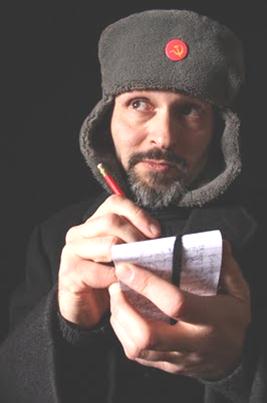
The story unfolds under scene titles such as A Shifting Landscape, Charm Offensive, a Dimedroppers’ Odyssey (it cost a dime to make the phone call to the FBI). Seldom have I seen a one–man-show of such intrigue and excitement, full of ironic wit and fun. Outrageously immoral and dismissive of the truth, the character seemed to attract affection. He gulled senator Joe McCarthy, who chased “reds under the beds”, supported by the man from whom you would least care to buy a second hand car, Richard M Nixon, who hung onto political office by his finger-nails until eventually he was elected President. During his second term, the Watergate incident and his lies culminated in a scandal which forced him into resignation. Harvey Matusow lived and thrived in these corrupt times and Robert Cohen presented an educating and entertaining evening, devised with help from the archives which Matusow donated to the University of Sussex.
Robert has written a specially commissioned play for Shakespeare United 2012 called Propaganda, about the Lord Chamberlain’s Men, the acting company for which William Shakespeare wrote plays and performed, which produced his play Richard II on the night before the Earl of Essex, back from Ireland, rode into London at the head of armed troops during the reign of Elizabeth I. As the play was about a King’s abdication and a touch of regicide and it was paid for by one of Essex’s supporters, it would seem the Lord Chamberlain’s Men were in real trouble. Propaganda follows the reactions to this night of folly and what it meant in the upper echelons of society, with some thought-provoking and definitive scenes between Elizabeth and her canny, cunning councillor, Cecil. I attended a play-reading at the Pub with No Name, when a strangulated gasp from Nicholas Quirke, a consummate local actor, brought the house down during a protracted discussion of the political meaning of the evening’s presentation — of Richard II, that is.
Sylvia Alexander-Vine
 The Whistler