
I recently bought two bottles of wine for £4.99 each: Chateau Mont Milan from Majestic and Marques de Carano Gran Reserva 2002 from Tesco. Of the two it was the Mont Milan that I was most looking forward to; it’s from the Corbières, a region of France I know and whose wines I like; but above all because it won Bronze in the 2010 Decanter World Wine Awards.
I was disappointed. The Mont Milan was good value for money; it had the blackcurrant fruitiness typical of Corbières with a little peppery spice, but it wasn’t special, and not a patch on the Spanish wine, which didn’t wine a prize. So how do these prizes get awarded and what do they mean?
Decanter magazine has a fine reputation as the ‘world’s best wine magazine’. Their competition is open to all comers and their judges are world-class experts who taste blind. It is only when you look in detail at how the competition runs that you discover why a Bronze doesn’t mean that this is the third best wine in the world, or even third best in a class of red wines under £5 a bottle.
Firstly, they only judge wines whose producers or retailers apply, and pay, for entry to the competition. Producers of wines that already have a reputation or which already sell well are unlikely to apply. So, it’s more X Factor than Olympic Games.
Secondly, they don’t award just one gold, silver or bronze, they give those medals to any wine that meets a certain pre-determined standard. Using the figures for 2011, this means that, out of 12,254 entries, 68% received an award. In Languedoc-Rousillon, which includes Corbières, there were 691 entries, of which 10 won Gold, 63 won silver and 172 won bronze. A further 199 were ‘commended’. Only 243 came away with nothing; that’s only 35% of entrants. Not quite prizes for everyone, but close. A final detail for those keeping score, a further 4 wines won the four Regional Trophies, which, with the International Trophy, are the highest awards of all.
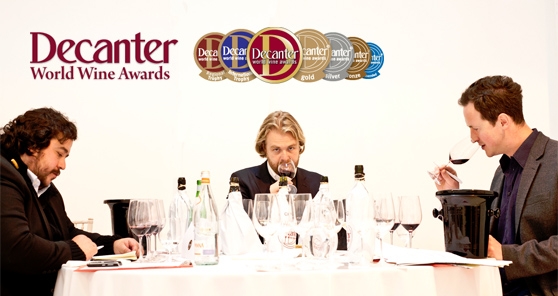 Thirdly, wines are tasted in groups of 12, so that wines of the same colour, region, style, grape, vintage and price bracket are tasted together. This makes sense – comparing wines that don’t share these attributes is like comparing oranges and apples – but it means that a wine under £10 that earns a bronze medal might not have earned it if it had been priced at over £10, or come from a more prestigious region.
So, the lesson I’ve learned is that an international medal will mean that the wine has reached a certain standard, but that the standard is unlikely to be exceptional unless the medal is gold or the wine receives an even higher accolade. And this applies to all the international wine competitions that I’ve looked at, not just the Decanter World Wine Awards.
Andrew Polmear
 The Whistler