
7 July 7.15pm – 12 midnight Tickets: £25 per person
Dome B, The Equatorial Group, The Observatory Science Centre, Hailsham, East Sussex (formerly the Royal Greenwich Observatory), Herstmonceux. Tickets: www.the-observatory.org or call 01323-832731
The Brighton Chamber Ensemble performers will be Nicola Bates and Sophie Jesson (violins), Conall Gleeson (viola), Siriol Hugh-Jones (cello) and Mark Andrew Jameis (oboe). This will be a tremendous mix of science and the arts. The musical programme will include: Oboe Concerto in E flat (1759) by Sir William Herschel, Mozart String Quartet No. 19 in C Major, KV 465 (Dissonance), Mozart Oboe Quartet in F major, K.370 (K368b), Beethoven Cavatina from the String Quartet No. 13 in B flat, Opus 130.
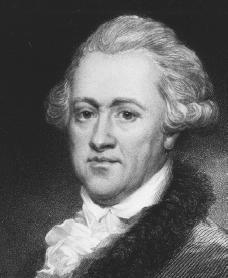
William Herschel (1738 – 1822) was a German-born British astronomer and composer. He composed 24 symphonies and his most famous astronomical discovery in 1781, using a telescope, was Uranus. He was appointed Astronomer Royal in 1782. He also discovered two of the moons of Uranus, Titania and Oberon, two moons of Saturn and infrared radiation. During his career he constructed over 400 telescopes.
“Herschel’s works are notable for their light musical touch and fine sprightly melodic lines, sometimes with a certain melancholy in the slower passages. The rapid, complex orchestration around the solo oboe in the concertos is handled with great confidence, and suggests Herschel’s ability to handle counterpoint. This was a conceptual skill which he seemed to transfer (visually) to the patterning of stars and constellations. He moved from earthly music to the music of the spheres.” (Richard Holmes: The Age of Wonder. Harper Press London 2008).
During Mozart’s lifetime there is evidence he embraced some thoughts of Astrology and his last symphony No 41 is known as the Jupiter symphony. Beethoven’s Cavatina is one of the pieces included on a “Golden Disc” in Spacecraft Voyager 1 and 2 selected to portray the diversity of life and culture on Earth.
 The Whistler