Category Archives: Health Matters

Be well, stay well

Season Affective Disorder (S.A.D)

Jo Bareham
Jo Bareham

Have you noticed the nights drawing in and the autumn chill in the air? For those who are prone to the winter blues, autumn often marks the beginning of changes in appetite, mood and energy levels. Seasonal affective disorder (S.A.D) – myth or reality? Most definitely reality, so if you find yourself feeling low, depressed, lacking energy, motivation and/or eating excessively read on for some helpful advice…

As the nights begin to draw in we are exposed to less daylight. For some this is just part of the natural seasonal change and for others it symbolises the beginning of difficult times ahead over autumn and winter. Primarily hampered by feelings of very low mood, symptoms often include: depression, over-sleeping, lethargy, loss of libido, over-eating (particularly carbohydrates). S.A.D was reported back in the 1980s although it has been acknowledged for over 2000 years. Men, women and children can all be affected by S.A.D, although women and individuals with a history of depression are more susceptible.
Continue reading Season Affective Disorder (S.A.D)

Seasonal Eating

As a Sussex-based Nutritionist I am always encouraging people to try and buy local, seasonal produce. Not only does it make good nutrition sense, but it also helps support the local economy and reduce food miles. So why not start with visiting what’s on your doorstep such as the Grocer and Grain in Surrey Street? Also the Sussex Food Finder www.sussexenterprise.co.uk/foodfinder is a great directory of all foods in Sussex. Here are three simple tips to get you started – buy it British, buy it local, buy it in season. These tips can help you to buy tastier, fresher and more nutritious food, helping to support sustainable food production in your local area and in the UK.

Buy British

Imported food has to travel long distances between suppliers, producers, processors and manufacturers. Not only does the quality and nutrient content of food deteriorate in this time, transportation creates greenhouse gases contributing towards climate change. 

Buy local
Buying local produce can help limit the distance your food has travelled from being produced to being eaten and reducing its carbon footprint. Local produce is also fresher and likely to be better quality, not having been transported so far. If you buy organic, then even better, as the nutrient levels will be higher too. Food purchased at farm shops and farmers’ markets has generally less packaging or packaging that is easier to recycle or reuse such as glass and paper. Also, you will be helping support the local economy and keep farmers in business.

Buy it in season
Eating with the seasons helps to provide our bodies with the right nutrients for the time of year. Foods are at their best when in season and are bursting with flavour and nutrients. Unfortunately we have got used to supermarkets providing us with every possible fruit and vegetable throughout the year and they can often be tasteless and poor quality. <a If you’d like to keep informed with what’s in season then sign up to www.eattheseasons.co.uk and they will send you an email each time a food comes into season. Another useful website for eating and growing seasonally is: www.eatseasonably.co.uk

Finally, you will know where your food has come from. You will have the feel-good factor of having supported local farmers and businesses. You might even meet the person who grew your fruit or vegetables or made your bread. If you are unable to get to local farmers markets or farm shops then try to buy British foods from your supermarket.

Jo Bareham www.healthyyou.co.uk

Ask The Medical Herbalist

If you have a health concern, The Whistler invites you to ask our local Consultant Medical Herbalist, Deborah Grant, for advice. Email your questions to: whwhistler@aol.com

Q. I have been suffering with rheumatoid arthritis for the past 10 years but am reluctant to take the anti-inflammatory drugs suggested by my doctor. Can herbal medicine help?

A. Rheumatoid arthritis can be treated effectively by Herbal Medicine and diet. Patients are usually delighted at the reduction in pain and stiffness in their joints. Mobility is also improved. Appointments are monthly for 3 months and then every 3 months. Herbal medication costs approx £10 per week.
___________________________________________________________________________________________

Q: I haven’t slept properly for months now and it’s getting me down. I feel so tired all the time. I have a very full-on job and lots of pressure so must get some sleep. Can you help?

A: You have been running on adrenaline for too long. I suggest you are treated for stress and given a tonic to restore your adrenal function. The medication costs £10 per week.
___________________________________________________________________________________________

Q: Every month I get really bad PMT for a week. On a short fuse and very tearful. Hard to keep it together in the office and have over-reacted to several situations recently.

A: The biochemical changes that occur premenstrually can impact the emotions. Herbal medicine can be very effective in rebalancing the hormones and in getting you back on an even keel.
___________________________________________________________________________________________

Q: After being prescribed three antibiotics for cystitis, it didn’t clear up. My doctor said it’s interstitial cystitis and there’s no cure. Can you help?

A: Yes. Herbal treatment rebalances the body and calms the inflammation thus allowing healing to take place.
___________________________________________________________________________________________

Q: I suffer from migraine. Sometimes I’m laid up for 3 days. Can herbal medicine do anything for this?

A: Yes. After looking at the patient’s diet and lifestyle, I prescribe medicine to help prevent migraine. This approach works well.
___________________________________________________________________________________________

Q: My skin is ruining my social life. I have acne on my face and back. Cream from the doctor made my skin red and dry. As soon as I stop using the cream, the spots come back again.

A: Acne can be caused by hormonal imbalance or a problem with the elimination of toxins by your liver. Herbal Medicine can get rid of acne. Diet also needs to be looked at.
___________________________________________________________________________________________

Q: My sister is often tearful and doesn’t want to go out anymore. She broke up with her fiancé recently but never talks about it. I read that herbs put people in a better mood.

A: It seems as if your sister is suffering from depression. Herbal Medicine can help. She would notice a difference within 7-10 days.
___________________________________________________________________________________________

Q: Every month I get really bad PMT for a week. On a short fuse and very tearful. Hard to keep it together in the office and have over-reacted to several situations recently.

A: The biochemical changes that occur premenstrually can impact the emotions. Herbal medicine can be very effective in rebalancing the hormones and in getting you back on an even keel.

www.herbalist-medicine.com Dyke Road Natural Health Clinic Tel: 01273 561 845

London Medical Herbalist Discovers Seven Dials

Moving from Canary Wharf, where I had a healthcare practice looking after the stressed and burned out bankers, to Seven Dials is one of the best decisions I have ever made. Arriving here last December shortly before all the snow, it came as a pleasant surprise to have neighbours, who smile in the street and greet me. Within a short time of arriving here, The Whistler arrived and I relished every word. A community newspaper, where residents are encouraged to contribute! This was something I had never experienced before. It made me realise that I want to work in this community.

I became interested in Herbal Medicine and the power of medicinal plants, when my partner was diagnosed with cancer. After surgery, he preferred to avoid radiation or chemotherapy. To that end I set out to explore other avenues. What I discovered was so fascinating that this period in my life signified a turning point. I had such a passion for Herbal Medicine that I decided to study for a Bachelor of Science Honours degree in it. After graduating with a commendation, my passion for the subject was stronger than ever and I went on to do postgraduate study too. By following what is in my heart, I have managed to make a difference to the lives of others, which is the most rewarding aspect of my work.

Since those early days helping my partner, my practice has gone from strength to strength and, after appearing on live television to discuss health issues, I was invited to practice at the world-famous Hale Clinic in Central London, which was opened by HRH The Prince of Wales. I am now delighted to have a practice at Dyke Road Natural Health Clinic, where I can serve this community.

Deborah Grant BSc(Hons)Herb.Med. Consultant Medical Herbalist
www.herbalist-medicine.com

Summer Seed Sprouting


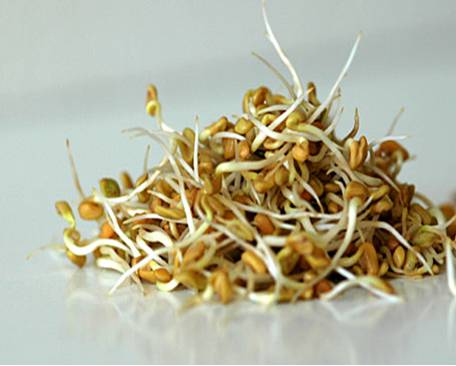
Seed sprouting may be one of those things that you have never considered doing at home. They are raw, very tasty and highly nutritious so give them a try once you’ve read this article.

Seeds sprouts are very easy to produce, economical and full of essential nutrients. If you are thinking back to distant memories of mustard and cress, then sprouts have moved on ‘sprout years’ since those days! Sprouts are one of the most alkalising, nutritious and convenient foods available, particularly as they can be grown easily in four to six days and require no effort and very little cost. Seeds sprouts are incredibly versatile in meals and can be added to salads, soups, stir-frys, and juices or just eaten as they are. They also provide an excellent source of protein and are a great addition to a raw food diet or a detox.

A tasty weapon to fight disease
The main benefits of sprouting seeds are the amazing amount of nutrients and enzymes that are released once a seed germinates from dormancy. What may look like a humble seed becomes a nutrient explosion once you provide it with light and water. Unlike most fresh foods that actually deteriorate once picked and lose nutrients prior to consumption, seed sprouts continue to become a powerhouse of nutrition as they grow. Seed sprouts are packed with vitamins, minerals, proteins, enzymes, phytochemicals, antioxidants, trace minerals, bioflavonoids and isoflavones, which work against toxins and invigorate the body’s immune system. The abundant enzymes in sprouts also make them easily digestible as their cell walls easily release nutrients.

Scientific proof
According to Professor Rowland of Ulster University eating just over 100 grams of tasty sprouted vegetables every day for a fortnight showed clear protective effects against DNA damage in human blood cells. “And just a portion – 113 grams – per day of a mix of broccoli, radish, alfalfa and clover sprouts was enough in our tests to show the protective effect.” DNA damage is associated with cancer risk. Sources of DNA damage include diet-related carcinogens, and bodily processes like oxidative stress – and the raw sprouts protect against this kind of damage. So this scientific research reinforces why you should eat your greens.

Types of sprouters
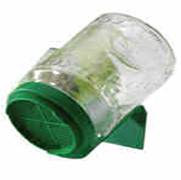
There are lots of different sprouters on the market that vary dramatically in price, but a simple ‘jar style’ sprouter as seen here will do a good job and costs less than £10.

Jar sprouter
Jar sprouter
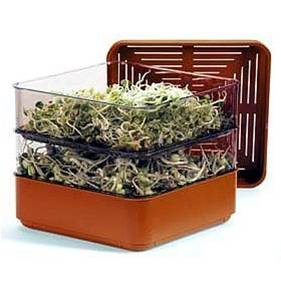
3 tier square sprouter
3 tier round sprouter

Instructions for sprouting

  • Place your chosen seeds in a fine sieve and wash thoroughly
  • Soak the seeds overnight or for approximately 12 hours and then rinse thoroughly
  • Place the seeds in the germinator and ensure that they are evenly spread out and not too cramped together, otherwise they may go mouldy
  • Place the germinator in a well lit spot, but away from direct sunlight and keep at room temperature
  • Water twice daily (ideally with filtered or bottled water)
  • Watch your seeds begin to sprout. After 4-6 days your sprouts are ready to harvest – rinse thoroughly and keep refrigerated (consume within 5 days)

Seed types
Many different types of sprout are available including the more popular alfalfa, broccoli, radish, mung bean and a range of mixes. Added herb seeds such as basil, coriander and oregano can bring lots of flavour to your food.

Jo Bareham is a BANT registered Nutritionist based in Haywards Heath www.healthyyou.co.uk