Category Archives: Music

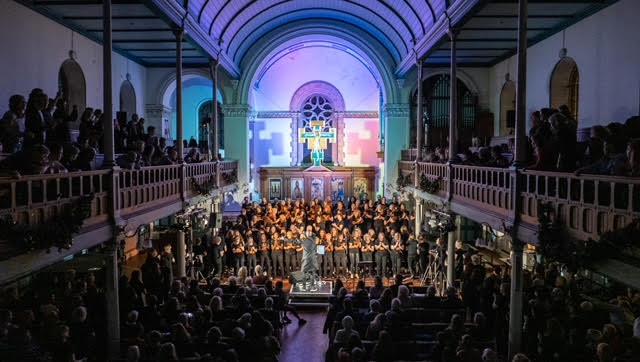
Brighton Goes Gospel

Megan Wenham and Harriet Dunlop talk to Louise Channon about BGG and being a community hero

As the Christmas season fast approaches it is obvious none of us will have the usual festivities and traditions we look forward to all year long, as COVID and lockdowns seem to be a never ending cycle of new rules and restrictions.

All is not lost though, as we caught up with Louise Cannon, the Creative Director and Producer of Brighton Goes Gospel to talk about their “the all sing and dancing” 20th anniversary. 

Earlier this year the choir embarked on their biggest challenge yet through recording a new song and creating their own documentary to highlight the best times over the years, all within the challenges of lockdown to ensure they can still spread light this Christmas.

“The idea of the documentary is to cover 20 years of our journey. It will cover footage from previous shows, photographs, artwork, interviews, and the people who have been a part of our journey. We just want to spread a bit more joy, especially this year where it is a lot more needed. We are just doing what we normally do just on a much wider scale.”

The documentary called “More Than Just Singing” also covers today’s matters too and in their own way they will be paying tribute to Black Lives Matter and the NHS.

“Gospel means good news and some people really need that right now. The beauty of gospel music is that it does cover a broad spectrum and people can make it whatever they need it to be for them.

“Even though we are a gospel choir we are not all religious, we are welcome to all religions and non-religious people. The reason we come together is love of gospel music and is all for different reasons.”

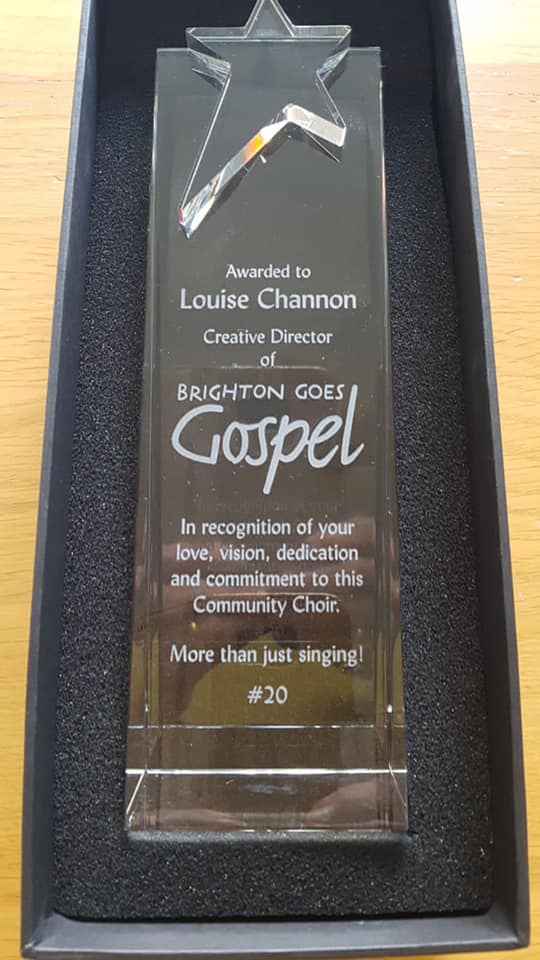
Louise’s hard work has not gone unnoticed, and she has been presented with the “Make A Difference Heroes Award” in recognition of all her work. “It’s quite humbling to receive an award as a thank you from the community and from my peers.” The awards are dedicated to celebrating unsung heroes from across the local area, organised by BBC Radio Sussex. 

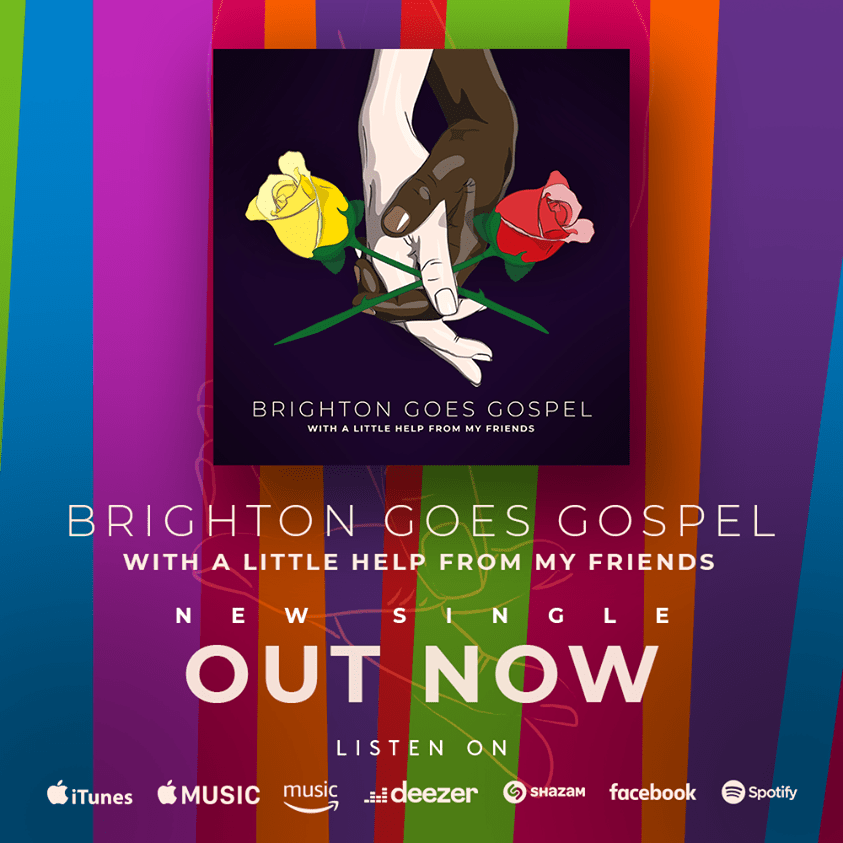
The Brighton Goes Gospel choir have also been working hard on recording their own version of “With A Little Help From My Friends”.

“We have created joy in a pandemic and still fighting to spread love and this is what the song is about.”

Recording the song during a pandemic definitely had its challenges as you could imagine. As a choir of vast age range, getting people to record their parts of the songs was difficult. “What we did was set up support groups on Facebook live so we can explain to people what we needed them to do. At times we have gone to their house, filmed for them or used our devices if they did not have a smartphone.

“The brave thing about the choir is they are normally together with 120-140 people and singing in a group, but asking people to sing a solo is the scariest thing ever and the wonderful thing is a lot of people stepped out of their comfort zone and nobody bowed out.”

The track will have guest features from renowned gospel artists including; Michelle John, Ken Burton, Paul Lee, Annette Bowen, Nathaniel Morrison, Sharlene Hector, Vula Malinga, Ladonna Harley- Peters and many more. “It’s been about five months in the making, we chose the track back in January and it is a COVID anthem for me.”

https://www.bggchoir.org.uk/

https://www.facebook.com/brightongoesgospel

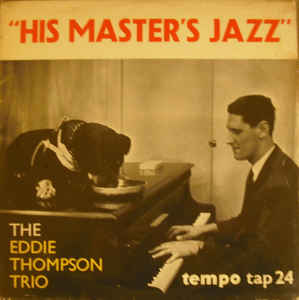
The great Eddie Thompson

Peter Batten pays tribute to one of the great British jazz pianists

One wet Friday evening in November 1961 I was about to leave my place of work, the Stevenage College of Further Education. As I came to the main entrance I met a bachelor colleague. Like me he was new to the College; we had both arrived in September.

“What are you doing this evening?” he asked. I explained that I was going to a jazz club run by one of my new neighbours. 

“May I join you?” he asked.

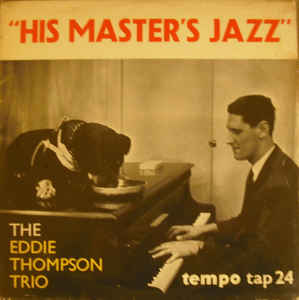
Later that evening he gave me a lift and we arrived at the club just as Eddie Thompson was about to play. His dog was already settled comfortably under the grand piano.

Eddie [1925-86] had long been recognised as one of our finest jazz pianists. Born blind, he attended the same school as the great George Shearing. Like some other people with his disability, he turned to piano tuning as his trade. However his talent for jazz soon began to shine through. He performed  solo and with bands in a variety of styles. That evening, although I had heard several of his recordings, I was to hear him in person for the first time. I fell in love with his playing. What I did not know was that his dog was about to retire. A few months later Eddie took a very brave decision to try his luck in the clubs of New York.

He was away for ten years. Although he won great respect in New York, he knew that the experience would enhance his ability to make a living in London. By the time he returned I was working at a new college in South London. He often appeared nearby at a pub called the Leather Bottle in Merton. One of my friends played bass with Eddie at his regular gig at the Playboy Club as well at Merton so I was introduced. At that time I was very fond of a great song by Tadd Dameron called “If You Could See Me Now.” Eddie played it superbly, so it became a regular request from me.

Then I decided to give myself a special treat. The music studio at the Sutton College was equipped with a small Bosendorfer grand piano, one of the world’s finest pianos. I arranged for Eddie to give a solo performance for an audience of about 50 people. He loved the piano. The result was an evening of outstanding jazz. I never heard him play better. And there was a bonus. Eddie had a very sharp wit and a stock of jokes, most of them unsuited for polite company. It was an “Evening with Eddie Thompson” to remember.

As we entered the 1980s he was playing better than ever. Sadly his years were limited. He was diagnosed with emphysema. Within 18 months he declined rapidly, was housebound, confined to bed and died, aged 61. He had been a very heavy smoker.     ]

If you want to know what a great player he was, call up some of his recordings on Youtube. I would particularly recommend “One Morning in May” by his trio with the great Martin Drew on drums.

At 87 years of age I have been shielding at home during Lockdown. That is my excuse for leading you back through my memories of a lovely, gifted man. One special evening comes to mind. It was August and very hot. I went to the Bull’s Head at Barnes, a famous jazz venue, to hear the great American saxophonist Johnny Griffin. To my delight Eddie was at the piano, with Martin Drew on drums. The music was fantastic, the room was packed, the sweat was pouring off us and even seemed to be running down the walls. Through it all I could see Eddie, exactly opposite me at the grand piano, a broad grin on his face, enjoying the chance to accompany such a great musician.

A final story. One of Eddie’s friends had given him a lift home from a gig. Eddie invited him to come in for a coffee. The curtains were drawn, the house was in total darkness and the friend began to collide with the furniture. “Sorry” said Eddie, “I’ll put the light on. I’d forgotten you could see”.

The Reggae Scribe of West Hill

Tucked away in a terraced house perched on the slopes of the West Hill neighbourhood is housed one of Brighton’s – and possibly the UK’s, most impressive collections of reggae music. From top to bottom its walls bulge and strain with vinyl from every era – from ska and rocksteady in the 1960s, through 1970s roots reggae, right up to contemporary dancehall. It is all lovingly archived by John Masouri, who’s mission for over 30 years as one of the world’s foremost reggae music journalists, been to document the constant stream of creativity and musical innovation coming out of Jamaica.

John has been writing about Jamaican music since 1988 but his love for the music goes back to his upbringing in a working class area of Nottingham during the 1960s where he was introduced to ‘shabeens,’ also known as ‘blues parties’ – all  night house parties playing ska and early reggae on huge, neighbourhood-shaking sound systems.

Blues parties were like entering another universe. ‘You’d go in there, into these very small confined spaces, like in one of these two up two down terraced houses. And the music would be very loud, it would be very dark, just the light of the amplifier valves lighting up in the darkness.  The sweat, the condensation on the walls – and also the music.’

At that stage John had no idea the music would take him on an epic journey of a lifetime, it was just a place where the kids who didn’t fit in anywhere else felt at home. ‘I had no intention of playing the music or being involved with it at that time though, it was just purely to be there to soak in the atmosphere. It felt like a safe space, in essence.’

After a period working at the Tate Gallery in the early 1970s, John came down to live in Brighton in 1976 and helped to kickstart the city’s vibrant reggae scene, which still continues to thrive. ‘I loved Brighton ever since I first came down here on a visit. It just felt like this is where I wanted to be. When I moved down here, very quickly I went looking for reggae music and I went to this place called the Alhambra on the seafront, and people said that downstairs in the basement there was reggae music.’

The venue downstairs was known as The In Place and there he met and befriended Brighton’s now legendary first reggae sound system, King Tafari Love. ‘At the same time punk was happening, so there’d be punk upstairs at the Alhambra and reggae downstairs. There was the Top Rank Suite, the place where Dennis Brown and all these people would play, Black Uhuru, Gregory Isaacs. That was a guy called Colin Matthews who worked at Brighton Art College, he was the promoter, he used to bring down a lot of those acts. Aswad, Misty In Roots, these people were always down here.’

In the early 1980s as a DJ John helped to bring the atmosphere of those early Nottingham shabeens he’d attended to Brighton (well Hove, actually) with support from one of the city’s most feared gangsters. ‘In those days I was playing with a sound system called Field Marshall Hi Fi. There were about five or six of us. But playing out was difficult, you needed places to play. And reggae music was never all that popular with proper venues, because of the crowds, because there were too many ganja smokers in the crowds, so that was always a constant factor. But then to our rescue came Nicholas Hoogstraaten who was Brighton’s notorious landlord.

Hoogstraaten would give us these basement flats. He’d say ‘you can play in here and do whatever you like’ and he’d charge us some money like a hire fee and then he’d come and collect it at about three in the morning and he’d sweep in with his big long coat and his ‘assistants’ and they’d take the money.’ Frequent visitors down from London would be visiting MCs over from Jamaica such as Mikey Dread and Barrington Levy.

Talking about those early Shabeens John remembers, ‘we all had young children, so the children would come to the blues parties so we’d put mattresses down in a room upstairs and they’d all pile in there when they got tired and go to sleep. We’d have ‘ital’ (Jamaican for ‘wholesome’) food, jerk chicken and all of that, of course Red Stripe and Heineken to buy there, it was totally illegal of course. We charged about two pounds on the door or something, some token amount on the door an then was selling food and drinks, they were great social occasions. It went on for several years.’

John’s son Felix grew up in that atmosphere, which eventually led him to take up his father’s mantle. ‘He started at the age of four. We would set up the sound system gear and he absolutely loved it, he would chat on the mic in the warm up. I have a cassette with him aged 4 chatting on a mic, all nonsense. But he loved the experience of being around it. I could trust him putting on records, putting on vinyl from a very early age, he had this respect for the whole process. He loved the music, we used to nurse him to sleep to reggae music when he was a baby.’ Now in his 40s, Felix started his own dancehall reggae night at the Volks when he was just 19, playing the latest fresh sounds from Jamaica every week.

He continues to work as a live music promoter with his company Global Beats, who have brought such acts to Brighton as Mykal Rose, Yellowman, Eek-A-Mouse, Horace Andy, Kobaka Pyramid, Jah 9, Morgan Hertiage, Misty In Roots as well as Public Enemy and Roy Ayers. ‘His contribution to the Brighton reggae scene is very much greater than mine because he’s put on so many club nights and he’s put on so many artists,’ says John.

The pair now work together on a radio show on Brighton’s community station 1BTN FM with an emphasis on new sounds coming out of Jamaica. ‘We decided to do a show called Run The Track for 1BTN that showcases contemporary music. We rarely play anything that’s older than a couple of years and most of what we play is just a few months old. Mainly roots and vocal music. But its nice that father son thing. I enjoy doing the shows with him a lot and I learn a lot from him.’

John continues to write about reggae music. Simmer Down is his book about the about the pre-fame early days of Bob Marley and the Wailers in the 1960s published on his own Jook Joint Press. Steppin’ Razor: The Life Of Peter Tosh (Omnibus Press) is the first full length biography of the former Wailer and revolutionary firebrand. Wailing Blues: The Story of Bob Marley’s Wailers (Ominbus) is about the post-Marley Wailers, brilliantly documenting the legal wranglings of his group after Marley’s death. Look out for Felix and John’s shows on 1BTN FM.

John Masouri is now embarking on a series of anthologies curated from over 30 years of writing about Jamaican music entitled Reggae Chronicles, published via his own independent Jook Joint Press imprint. The first of these is Rebel Frequency: Jamaica’s Reggae Revival, which focuses on writings from the previous decade, up to and including 2019. This will be followed later this year with The Marley Files: One Foundation, a look at Bob Marley’s legacy since his death, featuring in-depth interviews with Damien, Stephen and Ziggy Marley. They can be purchased direct from johnmasouri.com

Adam Reeves 

That’s Trad, dad

HAVE YOU HEARD of “The Bird”? Charlie Parker, known as “Bird”, was a very great alto saxophonist and the major creative force in the jazz style known as Bebop. During WW2 he became widely admired and then idolised, in the United States, for his fantastic ability as an improviser. When that War ended his fame and the jazz style called Bebop immediately spread around the World. The effects of that explosion are still felt today. Here in Brighton jazz is enjoying a new surge of interest. Although the musicians and their music have a healthy variety, an influence from the Bebop era can be felt everywhere.

But Bebop wasn’t the only jazz style to emerge from WW2. Something very different was born, – and much of it was hatched outside the United States. No jazz of any recognisable style began before 1900. Then the early “traditional” style began to be played, most obviously In New Orleans. 

More bands appeared, recording began in earnest and the centre moved from New Orleans to Chicago. By 1927 this early style, based on the interplay of trumpet, clarinet and trombone reached its peak. It then began to disappear back into clubs and bars. Very few young black musicians were interested in this style. They quickly took up their places in the new “Big Bands”. [Do not forget that racism in the USA meant that until well into the 1940s Big Bands were either white or black] 

What happened in WW2 was a surprise. In Holland, France, in the UK, in Eastern Europe, in Australia, amateur jazz bands, often of self-taught musicians, began to attempt to play in what they believed was an early and purer style of jazz, unspoilt by the commercialism which dominated the “Swing” era from 1935. 

In 1943 a pianist, George Webb, living in South-East London decided to relieve the gloom of the Blitz by forming a small jazz band. Its fame soon spread. In Nottinghamshire two enthusiasts who knew a great deal about the early history of jazz, James Asman and Bill Kinnell, had begun publishing a magazine to encourage interest in the origins of the music. They were very encouraged by the success of “George Webb’s Dixielanders” and promoted the band through concerts and commercial recordings. As the number of fans and other bands grew, musicians such as Humphrey Lyttleton and Chris Barber for example  – came on the scene. 

Then something awful happened for two reasons. The first was a lack of decent pianos, or any pianos at all. The second was a shortage of pianists able to play in the traditional style AND fit into a rhythm section which was supposed to swing. The result was the emergence of a very successful band led by Chris Barber without a pianist. The rhythm section was dominated by the banjo of Lonnie Donegan. Through no fault of his, and almost without noticing it, the band began to play with a kind of rhythm which bore little relation to early jazz. It also promoted a strange kind of jerky jazz dance which became very popular. Several other bands were infected. Then, somehow, this aberration became a total disaster. Someone more in touch than me can possibly give a date to it. I think it began in 1957, when Acker Bilk arrived in town and his band started a trend for uniforms which others quickly adopted. Soon there were bands dressed as cowboys, gamblers, waiters, city gents. Somehow this trend embraced the Banjo dominated music to become a monster. British “Trad” was born. There was immediate commercial success. The traditional jazz started by George Webb had become a major part of British popular music. Suddenly it inflated to become this ugly monster with little musical merit and no resemblance to the early jazz by which it claimed to be inspired. 

In 1962 there was a film about it, “That’s Trad, Dad” but, as is often the case, the film was too late. The monster really had no substance and would not have sustained popular interest for very long. It was swept aside by the Beatles and the Stones and a whole new music driven by great energy and imagination. The music begun by George Webb was able to return to the care of semi-professional musicians in the back rooms of local pubs.

Peter Batten

Peter Batten’s Jazz Corner: Bird song

Have you heard of “The Bird”? Charlie Parker, known as “Bird”, was a very great alto saxophonist and the major creative force in the jazz style known as Bebop. During WW2 he became widely admired and then idolised, in the United States, for his fantastic ability as an improviser. When that War ended his fame and the jazz style called Bebop immediately spread around the World. The effects of that explosion are still felt today. Here in Brighton jazz is enjoying a new surge of interest. Although the musicians and their music have a healthy variety, an influence from the Bebop era can be felt everywhere.

But Bebop was not the only jazz style to emerge from WW2. Something very different was born, – and much of it was hatched outside the United States. First let’s be clear about dates. No jazz of any recognisable style began before 1900. Then the early “traditional” style began to be played, most obviously In New Orleans. The first recordings date from the years of WW1. More and more bands appeared, recording began in earnest and the focal centre moved up the river from New Orleans to Chicago. Jazz also grew rapidly in importance in New York. By 1927 this early style, based on the interplay of trumpet, clarinet and trombone reached its peak. It then began to disappear into minor clubs and bars. Very few young negro musicians were interested in this style. They quickly took up their places in the new “Big Bands”. [Do not forget that racism in the USA meant that until well into the 1940s Big Bands were either white or black]

What happened in WW2 was quite a surprise. In Holland, in France, in the UK, in Eastern Europe, in Australia, amateur jazz bands often of self-taught musicians began to attempt to play in what they believed was an early and purer style of jazz, unspoilt by the commercialism which dominated the “Swing” era from 1935. By 1945 these bands were beginning to attract enthusiastic fans. It was a new phenomenon.

Peter Batten