Category Archives: Andrew Polmear

Stories and news about Wine & Cheese

How much is it safe to drink?

Andrew Polmear writes for the love of wine…

Ever since I started writing this column I knew that, sooner or later, I would have to write this article. I‘m a doctor as well as a wine lover, and very conscious that alcohol is dangerous. 7% of hospital admissions are primarily due to alcohol and alcohol is partly responsible for another 35%. Most of these patients are neither alcoholics nor necessarily even heavy drinkers. They are drawn from the 20% of the adult population who are ‘risky’ drinkers, ie those who drink more than 3 – 4 units of alcohol a day (male) or 2 – 3 units (female), most days a week. And just to be quite clear, a bottle of wine at 13.5% is 10 units. A 175ml glass of wine is 2.3 units. So it’s not hard to get into the ‘risky’ category.

This information isn’t new. What is new is the understanding that there are no safe limits below which alcohol is harmless. The damage that alcohol does in causing cancers, liver disease, pancreatitis and stroke starts with the first unit you drink. It’s true that alcohol gives you a little protection against coronary heart disease. If you stick to 1 unit a day (unlikely – it’s only half a glass of wine) that benefit outweighs the other risks. As soon as you drink more than that, the risks outweigh the benefit.

What do these risks mean for the individual drinker?

  • The average UK adult has a risk of dying each year of 1%, or 100 in every 10,000. Obviously if you’re 20 it’s less; if you’re 80 it’s more.
  • If you drink 2 units a day that risk becomes 1.05%, or 105 in every 10,000.
  • If you drink 5 units a day it becomes 1.5%, or 150 in every 10,000. And that’s just by sharing an evening bottle of wine with your partner every day – no alcohol at lunch, no G & T before the meal.
  • Regular binge drinking (more than 8 units on one occasion for men, 6 for women) more than doubles the risk of death.

Remember that these are average figures. The older you are and the longer you’ve been drinking the worse the risk becomes. And it’s cumulative; you can’t detox and wipe the slate clean.

That’s pretty bleak for those of us for whom wine is a daily joy, without which no meal is complete. So what have I decided to do?

  • Stick to one 150ml glass a day. I can cope with an increased risk of dying of 0.05%. The rest of the bottle will keep for up to 5 days especially if you seal the bottle with a vacuum.
  • Have tonic (no gin) in bars or at parties.
  • Get used to asking in restaurants if they’ll re-cork the wine so I can take what’s left home (they never refuse; some have a range of snazzy wine bags for the purpose).

It’s a shame, but I’ve had too many patients with cancer of the breast or mouth or oesophagus or larynx, to mention only the main cancers, to be casual about it.
Would you like to taste the wine?

Andrew Polmear writes for the love of wine…

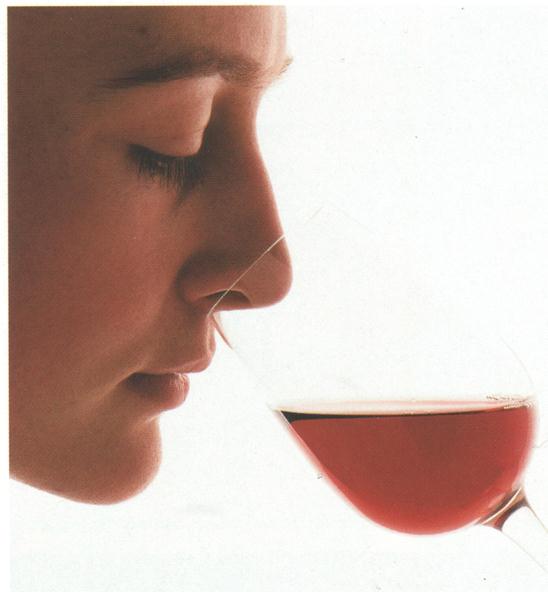
Wine tastingTwenty years ago the answer was simple: you were tasting to see if it was corked, ie whether it tasted musty because the cork had gone mouldy. Back then it was estimated to be detectable in 10% of wines, although people’s ability to detect the chemical responsible was very variable. Now it’s more like 0.1%. Or if it’s a screw cap, 0%.

So is it still worth tasting before it is poured? First, let’s be clear, you are not being asked whether you like it, merely whether there’s anything wrong with it. The answer is, yes, it’s still worth doing; there are other things that can go wrong with wine apart from the cork.
Continue reading Would you like to taste the wine?

Learning to appreciate wine

Andrew Polmear writes for the love of wine…

How is it that some people can tell an enormous amount about a wine from one sip while others just know they like red more than white? I’m sure that some people are born with a greater sensitivity to flavours than others, but most of the ability comes from practice. And to learn from practice you have to be able to describe what you taste; without words the brain can’t learn from experience. And here comes the problem for the amateur. A description like “chewy ripeness with plenty of structure, limpid in the mouth and a fine zest on the finish” may mean something to the person who wrote it but it doesn’t mean much to the rest of us.
Continue reading Learning to appreciate wine

It’s all Chardonnay

One of my favourite wine stories is that of the woman who exclaimed to her friends “I don’t understand why the young all want to drink Chardonnay! Give me a nice dry Chablis any time!” Her friends were too polite to tell her that the grape in Chablis is Chardonnay.

I like it because it reminds me how easy it is to make a fool of yourself talking, or writing, about wine; and because it raises so succinctly the most interesting question you can ask about a wine – what makes it taste like this? How is it that wine made from the same grape, using similar methods, in Puligny-Montrachet, just 125 kilometres to the south of Chablis, tastes so different? Chablis is like steel compared to Montrachet’s butter.
Continue reading It’s all Chardonnay

International Prize Winning Wines

I recently bought two bottles of wine for £4.99 each: Chateau Mont Milan from Majestic and Marques de Carano Gran Reserva 2002 from Tesco. Of the two it was the Mont Milan that I was most looking forward to; it’s from the Corbières, a region of France I know and whose wines I like; but above all because it won Bronze in the 2010 Decanter World Wine Awards.

I was disappointed. The Mont Milan was good value for money; it had the blackcurrant fruitiness typical of Corbières with a little peppery spice, but it wasn’t special, and not a patch on the Spanish wine, which didn’t wine a prize. So how do these prizes get awarded and what do they mean?
Continue reading International Prize Winning Wines