
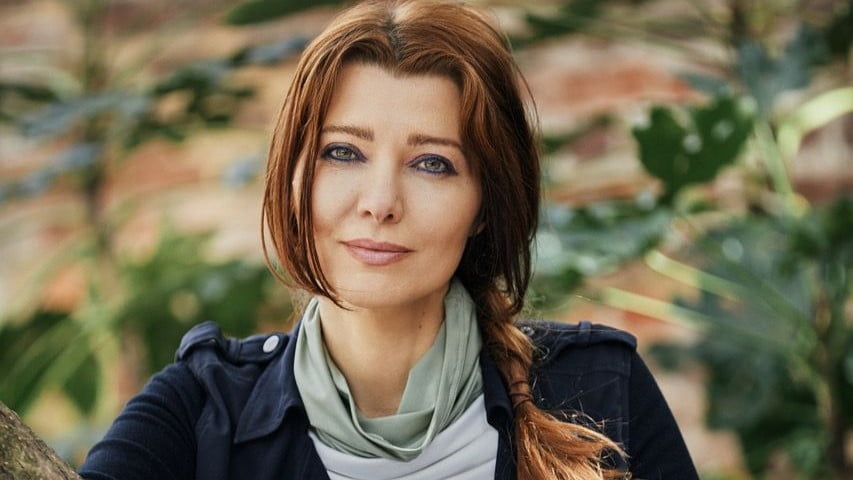

“A novelist’s job, says Booker Prize nominee, Elif Shafak at the Charleston Festival, “is not to shy away from the difficult questions, but to create a space, and then step back for the reader to find the answers.”
I’m not sure that there are many spaces like the Charleston Festival, home to the Bloomsbury set’s Vanessa Bell, Duncan Grant and Quentin Bell where the really big questions are pondered in such thought-provoking surroundings. A wander through the old farmhouse before the Festival events finds the ghosts of London aristocracy conscientiously objecting to war, creating art on the backs of doors, on tables, on the side of the bath and playing with their sexuality in the bosom of East Sussex’s South Downs. Changing the conversation, if in a rather refined way, is what Charleston is still all about.
In the Festival tent, French born Turk, Elif Shafak is joined by Peruvian lawyer and author, Monica Feria-Tinta to talk about their latest books as part of the Voices of Resistance series. Monica, a refugee from what she calls a ‘godless’ country is the author of A Barrister for the Earth, a title she has earned since coming the UK as a refugee and fighting for eco-justice, including, among other victims of development and pollution, East Sussex’s River Ouse.
But the audience packing the tent on this late spring afternoon is here for Elif , the author famous for the intricate narratives that transcend geographical and emotional boundaries. A powerful voice in contemporary literature, she’s a thorn in the side of Turkey’s conservative government, fighting for LGBTQ+ rights, exploring themes of identity and belonging, blending East and West, and challenging the norms of both through the personal with the political. She’s one of Turkey’s strongest advocates for women’s rights and social justice.
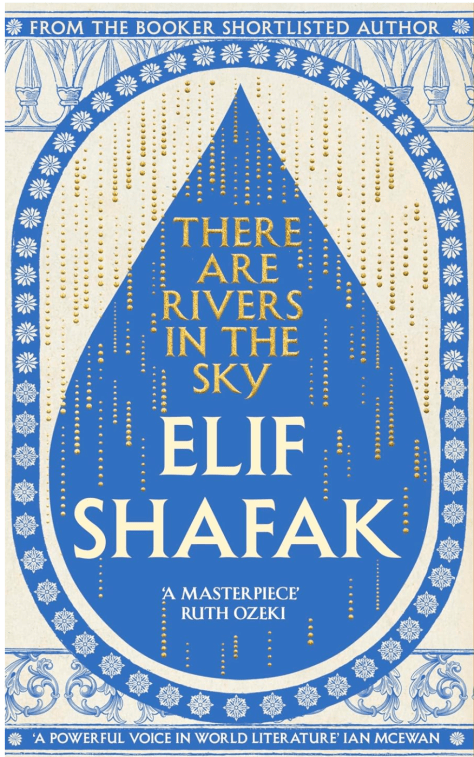
There are Rivers in the Sky, her latest book, which is shortlisted for this year’s Booker Prize, is her best yet. A multi-generational sweep across empires and peoples from The Tigris to The Thames, the book uses water as a device to connect the stories of persecution and power, opportunity, art and love to transcend the worst of times. “You want to know its story,” she tells us about the drop of water that marks the beginning of each section. “You want to see the whole world through it.”
“Water gives us an illusion of abundance,” she tells us. But, she reminds us that it has always been used in war; the poisoning of water and the flooding of lands can kill a collective memory. And with drought and flash floods becoming an everyday story of climate change, she suddenly summons up the ethereal beauty of Leila, the Yazidi seer in her book. “Water wars are the future” she whispers. And we believe her.
The Q&A is hard core. Someone asks which to prioritise – the housing needs of local people, or the rivers locked in the developers’ sights. Someone else asks Monica what hope felt like in her godless homeland. “A light”, Monica says, and when she tells us that it’s why she’s here right now, on stage with Elif Shafak to talk about eco-justice, a shard of that light seems to brighten the tent. A professor says that she is naturally pessimistic – how could she lie to her young students about the state of the world – and asks Elif if she has hope. “I’m naturally pessimistic too”, says Elif. “I’m Turkish. It’s in my DNA.” And everyone laughs. “We live in the age of angst”, she says. “We need to stop Googling for answers. We need to read books and listen to podcasts, and have real discussion about what we find.” And not to know the answer is the goal, she says, with that look of Leila descending again. “Knowledge is slow to come.”
 The Whistler