Category Archives: Features

Back home for one more adventure

What do you do after the jungles of French Guiana and Chicago? Jed Novick finds out
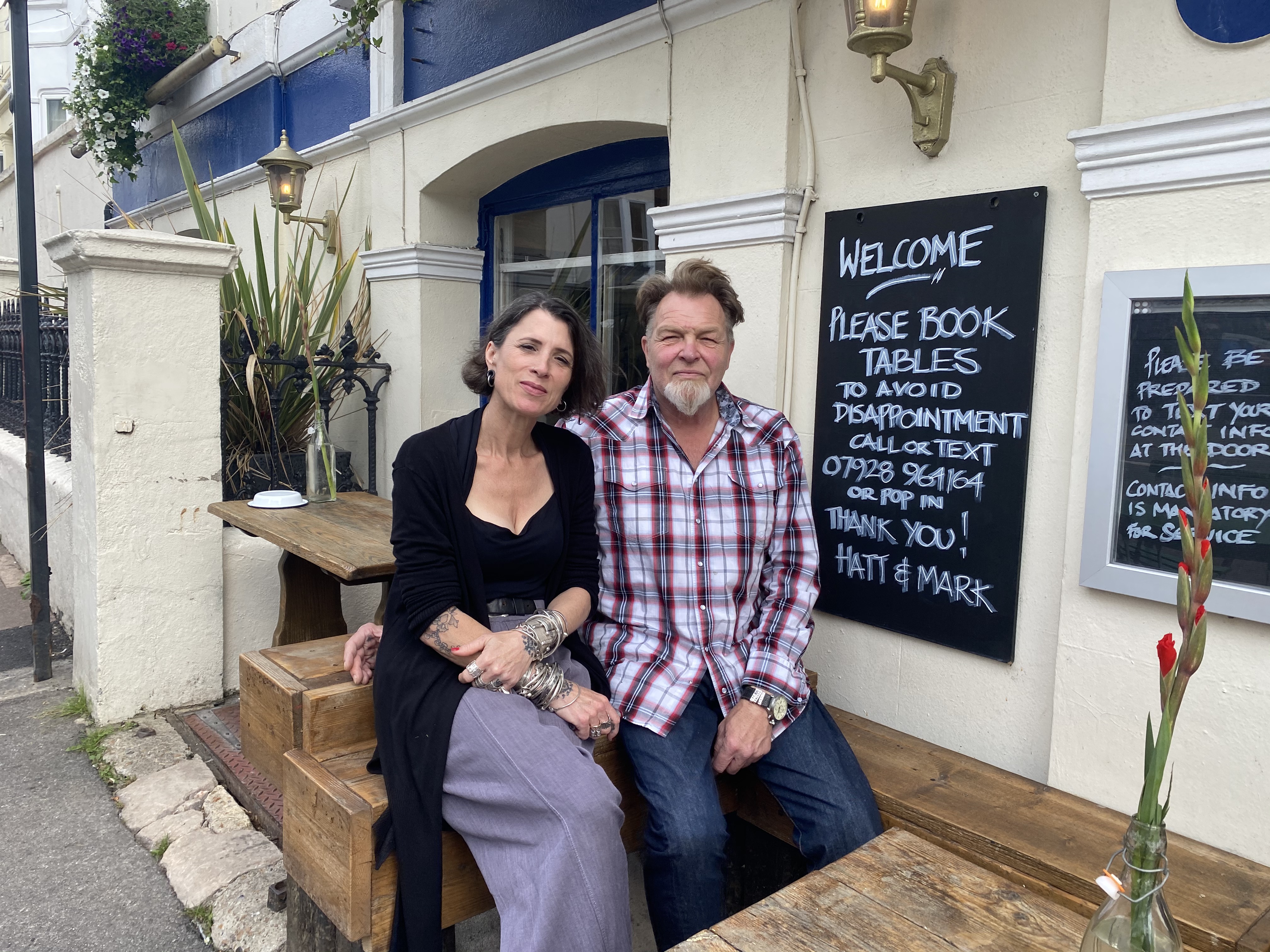
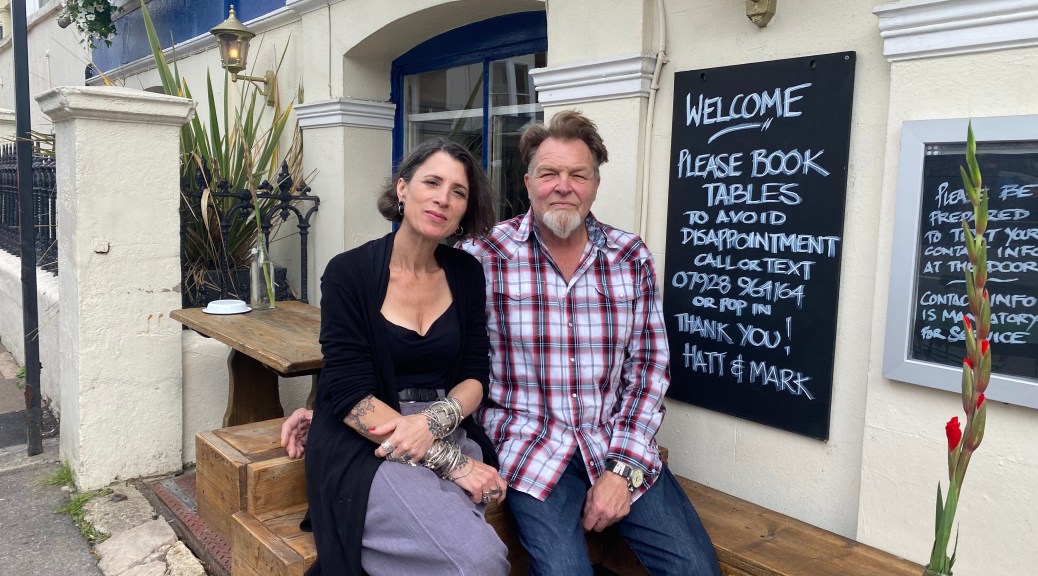
I’m outside the newly revamped Eddy, enjoying an afternoon drink and chat with Mark and Hatt, the new guardians of this particular galaxy. A car comes down the road and stops outside the pub. I don’t even notce, but Mark’s up and over there. Hatt turns, looks, smiles, carries on. Seconds later, a young lad, all muscles and tatts and with a face like a kid who’s been told to clear up his dinner plates, is walking over to the recycling bins carrying a lone bottle. He drops the bottle in the bin and throws us a half-hearted sneer, but Mark’s already back with us and the story is done. “He was just going to leave the bottle on the pavement” says Mark. “This is our community. We live here. We all live here. Have a bit of respect”. 

Hatt – Harriet Eaton – and Mark – Mark Reed – took over The Eddy in January and from there till now, it hasn’t been a straight line. But one look at Hatt and Mark and somehow you know they’re familiar with picaresque journeys. They’ve got stories.

She’s all bangles, tattoos and rings. An artist. Originally from West Sussex, the road to West Hill hasn’t been a straight one. Went to Paris when she was 18, worked in fashion, married a doctor. “He wanted to specialise in the tropical diseases. So we went and lived in South America for three years in French Guiana in a place called Maripasoula, right in the middle of the jungle. It’s like a tiny plane or three days on a boat to get out. So that was interesting. Mostly”. 

As you do when you find yourself in the middle of the jungle days away from anywhere, Hatt set up a textile business “because that’s what I’d done in Paris and that went really well – beach towels and robes” but then life intervened – kids, parents, school, the usual – and the path led back to Brighton working behind the bar in a pub not far from where we’re sitting now. 

Originally from Hastings, Mark also took a few detours before getting the keys to The Eddy. “I had a few pubs and clubs in Hastings, pubs and clubs in Brighton”. Anything I’d know? “Yeah. The old Club Savannah, which is where Club Revenge is now above Harry Ramsden”. How far are we going back here? “This is back in the early to mid-Eighties. Then I moved to America and I worked in the music industry in America, going on tour with bands for a number of years, lived out hotel rooms for about five. I worked for EMI and then I was a writer for a while and then my…  Then the music industry career got parlayed into partnerships in nightclubs and bars and restaurants in Chicago, um, over, uh, over a long period of time. And then alongside that, I also got into the car industry and worked for a major US Volkswagen dealership”. But then Mark’s life intervened…

So Mark came back after 25 years away, and Hatt taught herself how pubs worked and when the landlord of the pub where Hatt worked moved on… Well, opportunity knocks.  
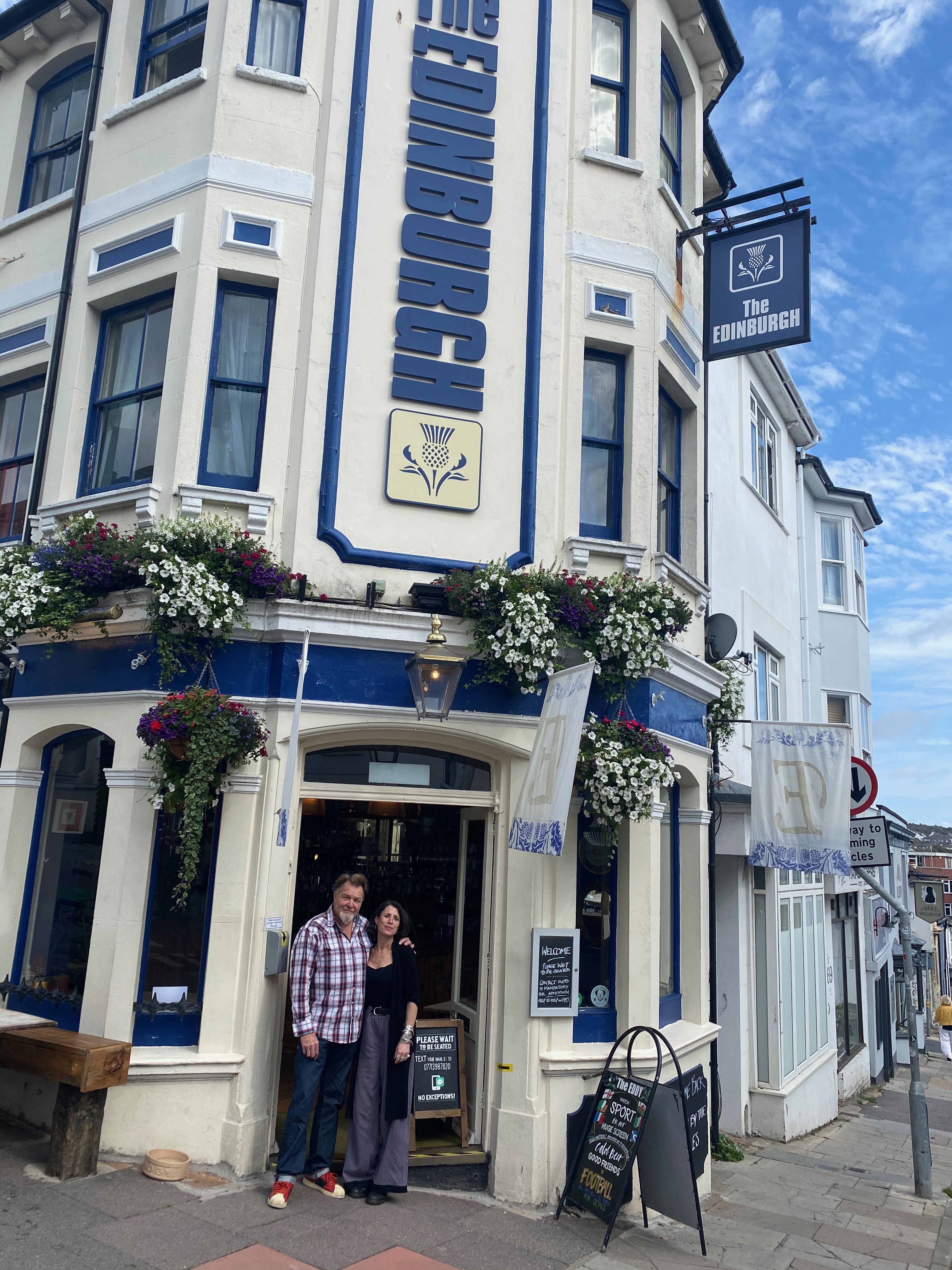
Opportunity knocks and then opportunity pulls the rug away.  In January they got the keys. A couple of months later… the world stopped. Words like “global pandemic” and “lockdown” probably weren’t in the original business plan. What was the conversation like on March 19th, the night before the lights went out?  “We’ve got a lovely little film of the last night before we shut and there was great atmosphere and everybody was wow, this is our last night for a while.

“I think people just thought it was going to be about a month or a couple of weeks, and then we’d be back open again. And I think that we were sort of ignorant of how long it was going to be. But, you know, things happen and it’s just a question of how you look at it. For us, lockdown was fantastic. We just completely embraced it and changed the pub to who we are. Re-painted everything, cleaned everything, changed everything. The cellars, the toilets, everything.  It’s like being in my front room really, you know, we really, really have made it our own.

One sweet thing that came out of lockdown was that the idea of community really kicked in. “When we closed down, John at The Yeoman created a WhatsApp group for the four pubs on the block. We called ourselves The Manor and there’s definitely a sense of care between us, but yeah, it’s very sad that some of these pubs are too small to open. John’s been there for 15 years and his whole business plan has had to change. And it’s really tough”.

What do you want from all this? “The last owner was more…, um, he didn’t really understand the concept of the community, but that’s what we love. We live here. We live above the pub. It’s our home”.

Ready to snap into a new life

“It’s not what you get with Deliveroo”, Red Snapper’s Pam and Philippe tell Gilly Smith

Panwad (Pam) ManeeTapho and her Belgian husband Philippe Ghenet are sitting at a table as the early autumn sunlight pours into the Red Snapper, until lockdown one of the most popular restaurants in Seven Dials. They’re talking about their plans to expand it into a casual lunch stop, a couple of tables outside and three inside. It’s all suitably distanced, which will add to the transformation of the busy buzzy evening eatery. 

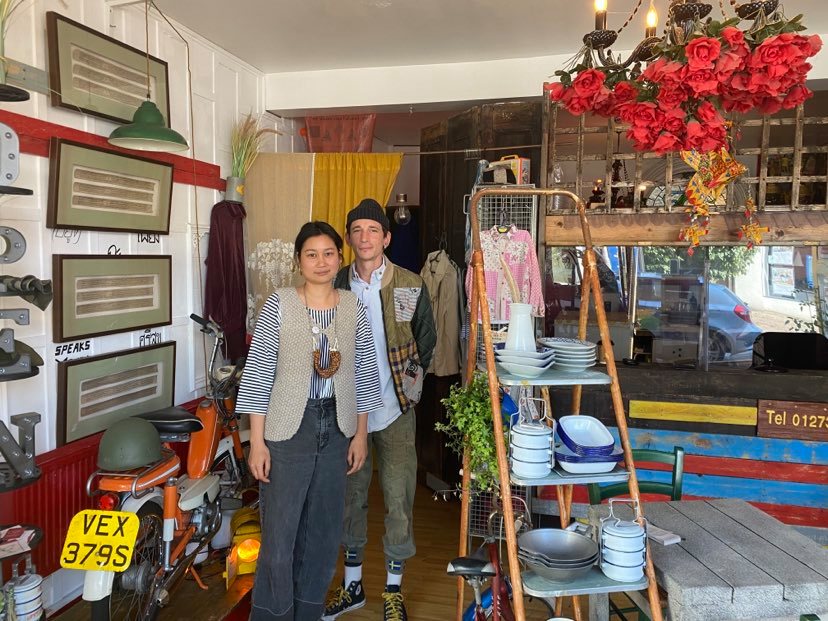
The restaurant, which has always been a celebration of the fresh seafood and herb-flavoured dishes from their eastern Thailand home, has been replaced by a shop where customers can browse through the restaurant’s silver starter plates, the stacks of gluten-free fish sauce and Thai ginger shots stacked on the upcycled shelving. An orange 1977 Honda Novio scooter is the centrepiece, a cool, vintage reminder of where Red Snapper comes from. 

“That’s my mum’s” says Pam. The couple plan to use it for deliveries. “Imagine that turning up outside your door”, Philippe smiles. “It’s not what you get with Deliveroo.” 

Red Snapper is a triumph of creativity and lockdown lateral thinking. “We saw it coming” says Philippe who grew up in Italy and heard from relatives there what COVID was already doing to its economy. “It’s the end of the world, right? In a way it was like, come on guys, this is Nostradamus!”

At first, the couple held their heads in their hands, but they quickly realised that lock-down could give them time to think about what they really wanted from their life. “After 16 years of  working in the restaurant, sweeping, cooking, cleaning, it was spinning so fast that sometimes we didn’t have time to stop and think which way we want to channel the business”, says Pam who with her younger sister has worked with her parents in the restaurant since she was 16. “Four months of lockdown made us think, think, think, write down, plan, plan, plan. Which path are we going to take?” For them, it was always about the food. “We know what our customers like and what we can offer,” says Pam.  It’s the quality of the food. The flowery stuff, the service, the music, the smells, the incense, the candles… it all comes after.” 

They decided to offer the best take-away experience they could; while Pam and her father, Turmphan cook downstairs, Philippe chats to their customers upstairs, telling his stories and charming them with his laid-back style. “I like it this way. We’re done by 9pm and I can watch a movie with my son.” 

They first shared a flat when Philippe had just graduated in Media at Brighton University and Pam was studying Art, Design & Fashion at Northbrooke College, and they’ve spent months using their creativity, repurposing items from home for this cool, new look. “That was where we stored our linens,” says Philippe pointing to the beautifully battered vintage suitcase now housing an old set of scales and a pink neon heart light. “We choose to be our own bosses, so we might as well add our identity.”

He sees Red Snapper as a Thai market-style café. “Maybe you’re coming back from town; Churchill Square is closed but you still want to have a coffee”, he says. “We like to be a bit of a community market where you can pop in and get some ginger tea. Or maybe just a take-away.” 

As we sit in the late summer sunshine, nine-year-old Finlay is on his second day back at school and Pam and Philippe are feeling philosophical. As working owners, school is an essential part of the child-care, hence the move to daytime food which will reflect the ethos of the original Snapper; accessible, but made in-house from scratch. 

“We offer passion” says Pam. “This is our career, our life. Before COVID we were too busy, we had too much to lose. We might as well shape the life that we want.” 

Gold – you’re indestructible…

David Foot finds hope among the bitter pills and pessimism

SOMETIMES IT’S EASY to sit down and write a piece for the Whistler. Sometimes, it is difficult. Today is the latter. Generally, I have some sort of handle on what is going on in the financial world. Alas, I really have no idea of what may happen, in the next few months. Events have an unerring ability to shock and surprise, and markets react in peculiar ways to events. 

It feels like we’re stumbling towards the edge of a cliff. We’ve certainly been in situations before where, despite things looking gloomy, everything has turned out fine. Maybe I am suffering from too many months of “lock-down misery”, but I feel increasingly worried about the direction the UK is heading. 

The two massive factors influencing the near future of this country are what the long-term effect of the pandemic will be, and what will our trading relationship with the rest of the world be, after the “transition period” ending our relationship with the EU. What effect it will all have on world markets are complete unknowns. 

My short-term pessimism and long-term optimism, tell me that things will be horrible, but all right in the end. I may be wrong, but I fear that despite a mini-boom in house prices, due to the pent-up purchasing power,, there may well be some “bitter pills” to swallow – once the artificial stimuli are gone and things settle down. 

The long-term economic effects of coronavirus may prove to be much worse than we are currently given to believe. The willingness of our Government to flout international law, fills me with woe. How will those, with whom we wish to make trade agreements, look upon our nation, if our leaders cannot obey their own laws? Our future relationship with our biggest trading partners looks increasingly shaky. What happened to “the easiest trade deal in the history of trade deals”? Enough. If I dwell further on the subject, I’ll be in grave danger of making myself bilious.

One of the (few) investment upsides of this horrid virus, is that the price of gold (historically, a hedge against unstable markets) has increased a little more than somewhat. This probably has little effect on most of us, but one interesting aspect has come to my attention. 

One of my clients lost a gold bracelet and as part of the claim procedure had to get a valuation for a replacement item. It wasn’t expensive and was covered by the “unspecified personal possessions” section of their home insurance. Or so they thought. 

Fear not, this is not a horror story. However, it is something that is worth remembering. The replacement value was more than the “single item limit” on the policy, not by much, but the replacement cost was more than twice the original cost. If you have jewellery, particularly items that you wear away from the home, and you want to ensure that it is adequately covered, check the replacement value every so often. 

The insurer paid the claim in full, but insisted that the replacement was specified on the policy, to make sure there would be no problem, in the future. They’re not all monsters! Until next time.

Belonging and Nature in West Hill

A chance encounter in a shared space. L.O.Hughes meditates on an urban sanctuary

ON THIS JUNE DAY, I attempt to write about the theme of Belonging and Nature. The theme resonates and feels sensitive for me, a British-African. Hoping to unblock my writer self, I take a break in St Ann’s Well and walk over to St Nicholas Quiet Gardens, my sanctuary over 30 years. 

It’s a cool afternoon. As I stroll, I notice light trying to break through the flat, milk sky. Not unlike my own process. Right now, I’m content under this oasis of trees. But a brief encounter stops me in my tracks. 

An unfamiliar pooch, charges while barking loudly. Often I freeze and hold my breath, the ‘owner seeing the situation, swiftly calls on their pet  “He’s harmless” they say,  taking him in tow. We exchange smiles I breathe out. Job done. 

Yet on this June morning the scenario has all the tension and trepidation of a slow-motion film. I’m frozen, the owner, while only an arm’s length away, crawls like a tortoise, towards his barking terrier. More, his hard-shell silence and steely gaze, slice through my pleading eyes. I notice his pursed lip. Is he’s thinking, “Who is this stupid woman, scared of small lovable dog?”. I can’t tell, but as he finally takes control, I hear myself apologising. “I’m just a bit afraid of dogs when…” 

 “Well” he spoke assuredly, “This is a place of many dogs… So not the best place…” He stopped short. The words “for you” hung momentarily unspoken in the air between us, before drifting into the sky. 

My equilibrium quickly returns. “I think this is a place for everyone”.

I promptly dismissed the incident in my head. This was a decent enough guy, perhaps, interpreting my fear as dislike of his pet dog, and whose ill- manner, briefly, threw me off balance. 

Later I reflect on our shared gardens. How over 30 years I’ve seen changes in the ways we use these spaces; from strollers, tai chi practitioners and meditators to couples doing exercise, a place of refuge /sleep, to walkers, their dogs and more. Brightonians, while we not perfect, are generally open and accommodating to such diversity. 

Back home and with my writing. My mind has cleared. I reflect on belonging and inclusion during pandemic, front line workers finally recognised as essential, disabled people again fought for their lives, as others who are overlooked. I think about the incident in the park how it speaks to the theme of belonging in nature.  

I allowed myself feel the momentary blow, the impact of the spoken and unspoken atmosphere. The territorial claim over a green space, meant to be shared.  

I think about my childhood growing up in an institution that kept us separate from ordinary life and from nature itself, about how regularly my presence has been subject to question, often unwittingly, and at times blatantly. The impact on mental health, a collective experience for many struggling with the complexities of belonging re disability, class, ethnicity and more. Here there’s a gap in understanding of who can take belonging and inclusion for granted and those who don’t have that privilege.

I notice how my equilibrium more often returns quickly. How, I have found healing in nature itself. Walking the South Downs Way over 30 years gave me a feeling of belonging to the land as well as friendships here. Our parks are part of nature we long to protect. I experience Brighton as one of most open places in the South. During lock down, we saw some of our best qualities.  And like many cities we have our challenges. 

As we face more lock downs and use our communal spaces more, we are challenged to negotiate how we use, share, take care of them and each other. Many are fighting to enable people, animals and earth to breathe more easily, be protected, respected and enjoy belonging together in our precious green city.

Come here, feast your mince pies, my old china…

Peter Batten goes misty eyed and remembers his real East End 

MY FATHER’S FAMILY came from the Isle of Dogs, home of Millwal football club and the area of London portrayed in the TV soap, “East Enders”, but how true is that to the true East End? 

I grew up in a house which looked out on a very substantial street market. On the other side of the road there were market stalls and behind them a row of shops. Just at the end of the row was a pub called, The Queen Victoria. My grandmother would meet her friends there most evenings. Just before closing time she would toddle home clutching her nightcap, a small jug of brown ale. On our corner, two houses away, was a fish and chip shop, and  I can almost recapture the smell as I write these words. 

Just a few yards away the market became denser, with stalls on both sides of the road and many different shops. Activity began at about 6am, when some stalls had to be brought out and ended after 6pm. 

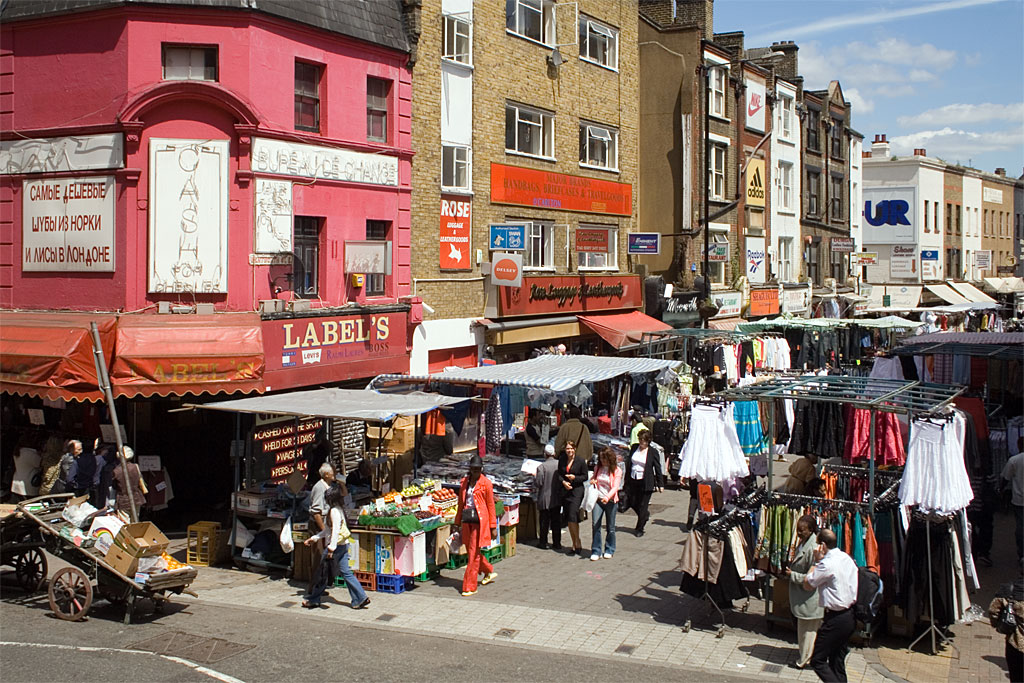
The street market I’ve described is typical of those inner London suburbs which grew up post 1850. They were active from Monday to Saturday, then on Sunday huge special markets took over, like the amazing Petticoat Lane (pictured) or the one I often visited just off Walworth Road. One of their special attractions was the sale of animals, which took up one or two side streets.

My memories of our market are based on the years 1938-1958. Each of the smaller local markets had a character of its own, but they all offered a diversity of goods and characters. Our market was known as “The Blue Anchor” after the pub which was at the heart of the market. It was older than the Queen Vic, a late Victorian pub, and an even younger pub, the Colleen Bawn. As a nosey child this name always irritated me. What did it mean? Only in the 1970s did I discover it was the title of a successful Victorian play by the Irish playwright Dion Boucicault. 

We had a small fleapit cinema, the Rialto, a small Woolworth’s, a bank, and a Co-op, built on the road which had been destroyed by bombs. The variety was amazing, with all kinds of goods and foodstuffs on sale. Immediately opposite our house was a greengrocer’s, so it was easy to nip across if we needed extra veg for a meal. Right behind was a German bakery called Griesbach. A little further away was a German pork butcher that sadly  closed in 1940. Among the more unusual offerings was Sarsparella, a red cordial sold by the glass from a barrel. 

As in Ben Jonson’s Elizabethan play, “Volpone” there was usually someone offering some miracle cure for all ailments. Sometimes there would be a crockery stall where you were encouraged to make an offer for plates  or a tea service, An allegedly ex-boxer stood with a set of scales offering to tell your weight. Someone called prince Monoloulou might come by offering to sell you betting tips.

Which reminds me. There is no illegal betting in East Enders. In my childhood it was going on all around me. “Runners” as they were called were quietly taking bets in every pub and every factory. Our elderly neighbour, Mr Westcar, found a handy way to add to his pension by running a small “Book”, as it was called. Just in case the police came calling, my mother explained to me, all his betting slips were pinned to the underside of his large kitchen table.

Such memories – and we still haven’t mentioned jellied eels.

(Pic: Andrew Dunn)