Category Archives: Features

Anything and everything

Your Local U3A

What is the U3A? U3A stands for the University of the Third Age but it runs no courses, requires no qualifications and gives none! It is organised by its members and funded by low annual subscriptions.

What it does do is offer opportunities for people to meet in groups to follow their interests or pursue new ones, as well as the chance to attend talks by interesting speakers, plus social events and outings.

Who can join the U3A? Everyone in the Third Age is welcome. The ‘Third Age’ refers to the time after full-time employment and/or parental responsibility, when we are freer to pursue our own interests. No qualifications are required, and none are given.

What do we do? Brunswick, West Hove & Portslade U3A has about 25 special interest groups which meet regularly throughout ‘term’ times. The interests covered by these groups range over Theatre Visits, Reading Fiction, Music, Languages, Writing, Walks, Art, Play Reading and Theatre Studies, Gardens, Discussion Groups, Patchwork… and many more. Suggestions for new groups are always welcome. Each group has a co-ordinator, with members of the group sharing knowledge and experience, discussing ideas.

We also have a programme of interesting talks and visits to places of local interest, plus social events for all members, and at the AGM in November we have some entertainment and again a chance to socialise.

What does it cost? There is an annual fee, currently £16 – and that’s it! Talks, social events and visits may have a small additional charge.

How to join or just find out a little more. On Wednesday, 10 September 2014 at 2pm we will have an Introductory Meeting to be held at the Ralli Hall, near Hove Station, where you can hear what is going on, meet members and see what all our groups are up to – and if you like what you see, you can join.

If you would like more information, you can contact our Membership Secretary: Cynthia Barnes   01273 550745 / cynthia.barnes@talktalk.net or visit our website: u3asites.org.uk/brunswick-westward.

You don’t have to live in a particular catchment area in order to join a U3A, you can join any – or more than one! There are six local U3As covering Brighton and Hove and the surrounding area, with many more nationwide and internationally. Details available from U3A National Office: Telephone 0208 466 6139 or national.office@u3a.org.uk
 

The Animal Dispensary

Vignettes from Seven Dials’ Past – The Pet Shop

Like most people, I suppose, my early memories are pretty fragmented. Possibly when we are toddlers we only memorise the important events, but I have an alternative theory; this is that we actually forget the whole darn lot, but we do remember remembering the important things, in other words the five-year-old selects which of the three-year-old’s memories will be retained. Some of the memories are reinforced, to a greater or lesser extent, by parents and others reminding one of past events.

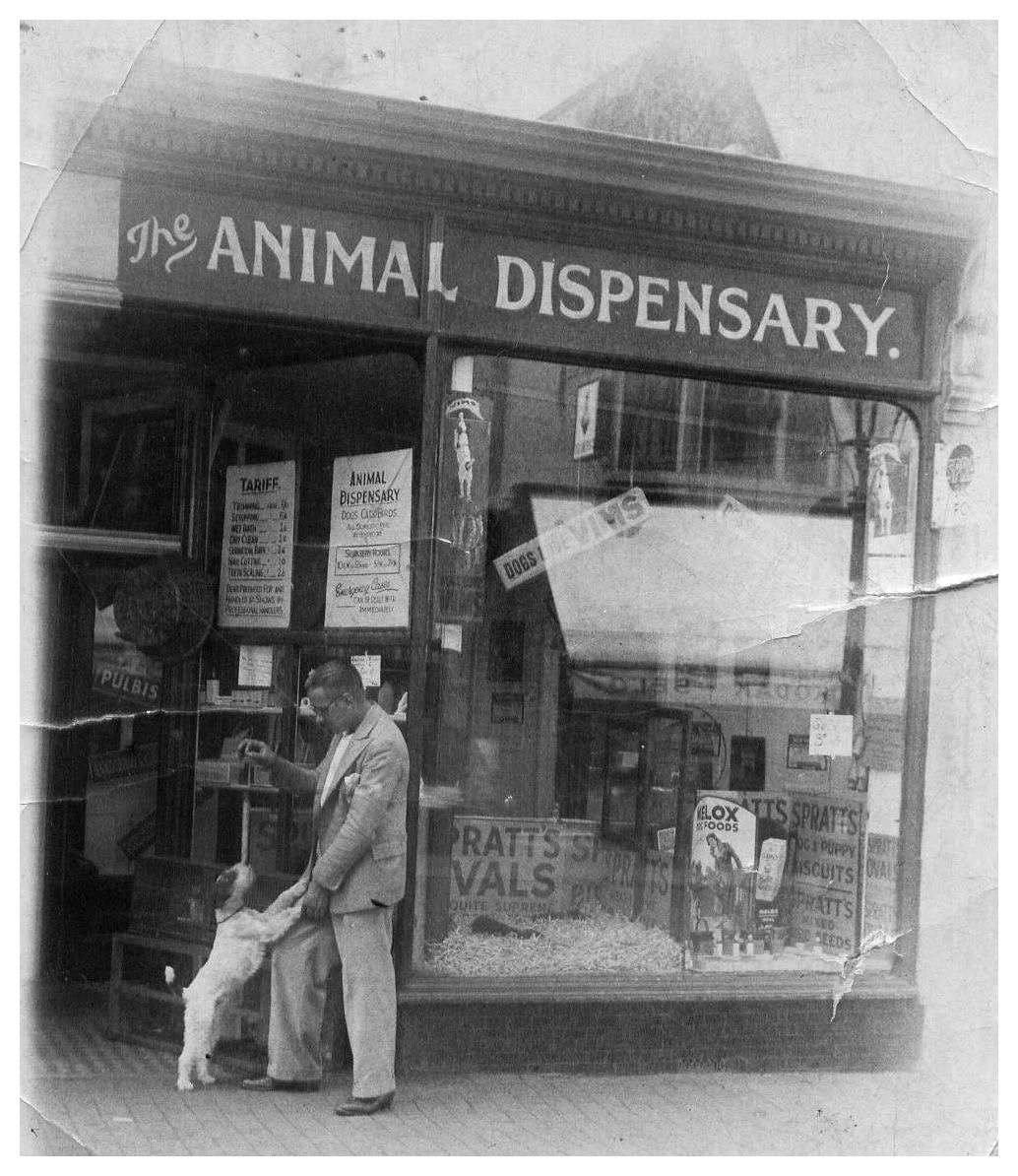
The earliest thing I remember is walking out of Brighton Station with Mum, and meeting Dad in his car parked on the station forecourt. I know from them that Mum and I had been to Newcastle–upon-Tyne, staying with her parents while Dad, who was opening a pet shop, “The Animal Dispensary” at 42 Dyke Road in Brighton, found us somewhere to live.

This was in 1936 and I was two and a half years old.

Dad took us in the car to our new home, Clifton Cot, a rented bungalow in Underdown Road, Southwick, on the coast four miles west of Brighton. The bungalow had a large and rather unkempt garden. Dad needed the garden for dog kennels, so that the pet shop could offer boarding facilities.

The_Pet_ShopI was not a well-behaved child but my misbehaviour was due more to curiosity than malice. One sin I didn’t confess until I was grown up. Besides the stream of canine residents at our boarding kennels we had some dogs of our own, Jock, Hitler and Lady. Lady had two pups, a few weeks old, Porky and Milky. Porky was better at suckling and Milky was rather under-nourished in comparison.

In the living room where I was playing with the pups, there were some cords hanging from the ceiling; obviously I hadn’t attached them and I’ve no idea why they were there.

Anyway, I thought the pups would enjoy a swing! Mum had a large copper preserving pan, the kind with two handles, and I tied a cord to each handle. The pan hung there nicely. I gave it a push and it swung backwards and forwards, just like the swings in the playground on the green.

Time to try it out on the pups. I picked up Milky and put him in the preserving pan. I gave it a push. Milky became frightened and moved to the side of the pan. This upset the balance and the pan turned upside down. Milky fell on to the floor, from a height of perhaps three feet. You might have expected a puppy to survive such a fall ninety-nine times out of a hundred, but sadly, Milky did not.

I burst into tears, convinced I would receive terrible retribution.

Mum and Dad came in. “Porky did it, Porky did it!” I blubbered.

To my amazement they believed me! Dad even said that Porky must have shaken Milky by the scruff of his neck, the way a dog kills a rat.

A crime for which I was punished, I committed for, what I considered, a justifiable reason. The pups’ mother, Lady, had got out of our garden and was on the other side of the fence in the Rest Garden. I obligingly broke a hole in the fence to let her in. And a hundred dogs got out! It took three days to get them all back. Our three dogs were wire-haired terriers, which Mum’s father Granda Green used to breed and show. I’m not sure if they all came from him. Jock was a lovely dog who would let me do anything with him. Hitler got his name from his appearance, a white face with black around and on the left ear, which looked like Adolf’s hair. But the name suited his character, he was a villain. Dad had not meant to keep him, and had sold him three times in the pet shop, but each time the new owners returned him and demanded a refund. Hitler bit me when I was three years old, and Dad hit him with a broomstick that happened to be handy. Hitler learned his lesson and never so much as growled at me afterwards. Apart from the fence episode I remember nothing about Lady.

Tony Hill

To be continued…


My Mother

Throughout March 2014, my mother had an exhibition presented in her name at ‘Churchill Square’. It displayed some of the clothes she wore in the 1960s.

It was called the ‘Concetta Exhibition’, her clothes, together with photos and snippets of biography, were displayed in glass cabinets on the walkways inside the centre.

I’m aware that some of The Whistler readers saw the exhibition and the overall feedback was very positive.

After my mother died in June 2012 I started to sort through her personal things. In the process I came across two large suitcases, and inside, neatly packed in between tissue paper, were clothes I recognised that she used to wear in the 1960s.

I contacted a friend in the fashion business who, in turn, put me in touch with someone called Hannah who was interested in vintage clothes.

When we met up she was surprised by the condition and quality of the clothes. She suggested donating some of the clothes to the fashion department at Brighton university, and I agreed. A student called E-J Scott was so impressed by my mother’s clothes that he made the collection part of his masters degree in History of Design and Material Culture. He wanted to put a human face to the clothes, so he made contact with me.

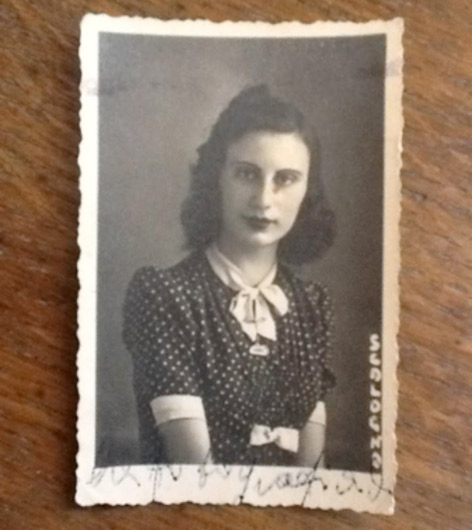
Concetta Trotta
Concetta Trotta

When we met up he asked if I minded him recording me talking about my mother, I jokingly said as long as you don’t want to film me! Some time later he left, with more than he bargained for. I understand he eventually passed his degree with flying colours.

In the early part of this year I received an email from E-J telling me about the forthcoming exhibition. I was surprised but also pleased at the idea. Then, at the beginning of March, I received phone call from E-J saying the BBC wanted to interview me. I was thinking he meant local radio but in fact it was local TV.

I suddenly found myself in front of a camera, a rather nerve-wracking experience if you don’t like being filmed!

How did this all came about? According to E-J he was walking through Churchill Square one day and thought to himself, “This is exactly where Concetta and Reg lived when they first came to Brighton, right underneath where I’m standing now.”

He got in touch with his lecturer in the fashion department and discussed it with her and the result was the exhibition, Concetta Trotta’s Everyday Clothing Collection 1964-1970

Reginald Gennaro Woodhouse


Peter Batten

Brighton resident Peter has been writing articles for The Whistler since 2011. It’s time we found out more about him…

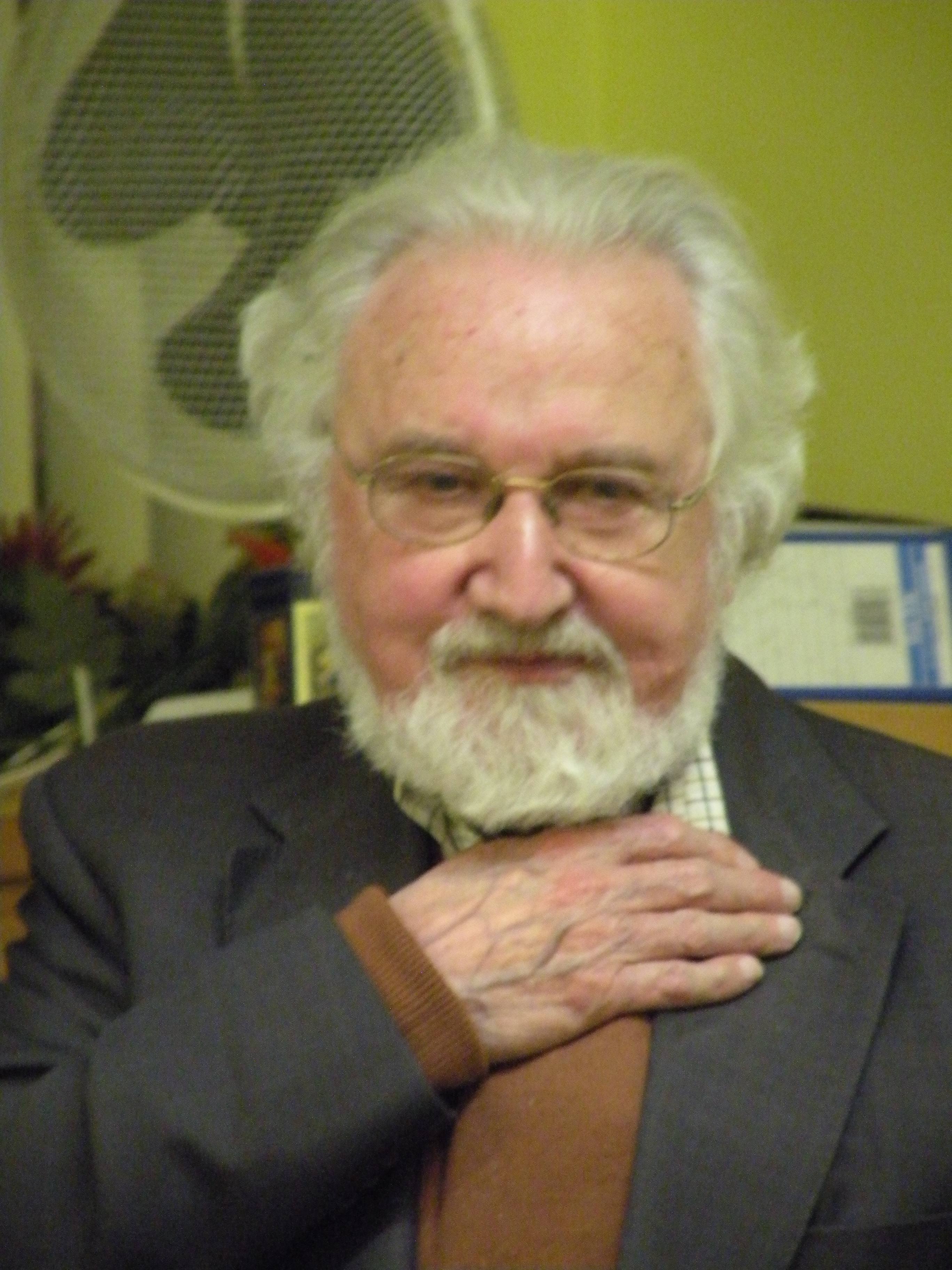
DSCN9065He celebrated his 80th birthday in July last year. He has been married twice and has 5 children. He has a degree in English Literature, a master’s degree in Adult Education and is a qualified Russian Interpreter.

Some of his earliest memories are of London during the Blitz of WW2. His family come from the Isle of Dogs, an area which was heavily bombed. From September 1944 he attended St Olave’s Grammar School in Southwark, where he played in the first Cricket XI.

Peter dreamed of becoming a professional cricketer, but he was not good enough. He was developing a strong interest in the Arts. In 1952 he was offered a place at Jesus College, Cambridge, which enabled him to develop his understanding of literature. This increased during his National Service, when he trained as a Russian interpreter.

After Cambridge he worked for the London County Council before becoming an Adult Education tutor at a Village College. He was able to enjoy the link between his work and his interest in Literature.

His next move was to Stevenage, where he was one of the first lecturers appointed to teach ‘Liberal Studies’ in technical education. By 1965 he was Head of the General Education Department at Chichester College. He became involved in the life of that city and served for several years on the Gala committee. In his final career move he was the first Principal of a purpose-built Adult Education College in the London Borough of Sutton. This was very rewarding work but after 10 years he clashed with the College Governors about Adult Education Policy. To resolve this he was given a golden handshake which he still enjoys.

In the early 1980s his life changed completely. His marriage broke up and he met his second wife, Nikki. Financial security freed him to work as a free-lance lecturer and a jazz musician. In fact, Peter had been leading a double life since the 1950s. During National Service he argued with a friend who played Doris Day records every evening. Peter insisted on playing records of his own. He had been introduced to recordings of Jelly Roll Morton by his English teacher, so he went out and bought one. He was hooked. Soon he was buying a jazz record every week. He moved on to King Oliver, Louis Armstrong, and a whole collection of jazz greats. He was obsessed. His home today contains an enormous collection of jazz CDs. He talks about jazz, writes about jazz, lectures on jazz. He is totally obsessed. Worse was to follow: he became a jazz musician. He had years of piano lessons as a child. As his obsession grew he tried to play jazz on the piano, but failed. He needed an instrument which made fewer demands on his fingers – perhaps the trumpet. He bought an old brass band cornet and found he could get pleasant sounds almost immediately. Soon he was playing scales and simple tunes. At university he played in student bands and in 1957 was in the Cambridge band which won the English Universities Jazz Contest. As his working life began, he played trumpet and cornet in many different styles and bands. He felt he had to play at least once every week, although he was only an average player.

Peter is not being heralded for his age, his musicianship or his love of jazz alone. He has had to overcome several health problems. The photograph shows him holding his throat. That is because he has a hole through to his windpipe to enable him to speak – the result of cancer of the vocal cords which, 37 years after he first put the cornet to his lips, forced him to give up playing. He has had a quadruple by-pass and is minus most of his sternum, thanks to a post-operative infection. His ribs are held together by some clever plastic surgery. Despite all this he still exercises regularly at Ralli Hall and finds time to write for The Whistler.

Riots not Diets

RNDAs Seven Dials residents, some of you will have noticed that, every now and then, live gigs happen at the West Hill Hall. Over the years, they have fluctuated in regularity, often with large barren spells. Recently though, a small group of promoters have dedicated themselves to using the Hall frequently and considerately. I am one of these promoters and have been using the Hall on a regular basis for the last 3 years. The night I usually promote there is called Riots Not Diets, created to provide a non-commercial, affordable space for various fragments of the queer and punk community to meet and watch bands. The bands we book for this night are advocates of feminist politics and identify as queer (in its loosest definition, critical of heterosexual supremacy and the power relations enforced therein). Our nights are fully accessible, all are welcome regardless of size/age/gender/orientation. The bands we put on are mostly all Do-it-Yourself bands, with an emphasis placed on a traditional ‘anyone can do this’ punk ethos. We promote community and non-competition ahead of the more traditionally expedient, corporate environments in which people can experience live music.

We are aware that our criteria are not always fully met for shows, that there are groups still excluded from our events, but we try and work constructively around these negatives. Also, for reasons of venue availability, our nights often have to be exported to the very venues of which we are critical. However, we are proud of what we have achieved and hope that we make a valuable contribution to the Seven Dials community.

We also have an exciting new project lined up with our fellow Brighton promoters, ‘If You’ve Got Ears, You’ve Got to Listen’. They have recently started up and have been showing documentary films about musical sub-cultures to great acclaim at Brighton’s Picturehouses.

In collaboration with them, we are doing various crossover events at the West Hill Hall on Tuesday nights – 15 July, 19 August, 23 September and 21 October. Hope to see you there!     


Toby Blackman