Don’t Miss the Bus

Bert Williams
Bert Williams
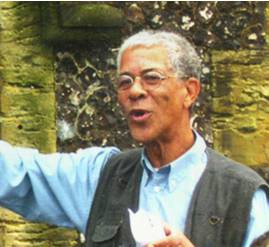
When you get your 2010 diary, please write a memo to yourself at the beginning of October: “Find out when in October Bert is doing his Black History Month bus tour.” I went on it this year, along with many Brightonians of all colours (and sizes) who filled up the chartered double-decker bus while Bert filled us in with fascinating historical facts about Brighton’s black history. The continuous history of black people in Britain dates from the mid 16th Century and the beginning of the slave trade. Many black people “employed” as slave-servants, musicians, footman, soldiers and sailors visited and worked in Brighton.

Starting off from Brighton library, Bert took us on a magical tour of the places in Brighton associated with black history. We passed Dr Brighton’s baths which stood on the site of the Queen’s Hotel. Sake Dean Mahomed (1759-1851) grew up in India, emigrated to Ireland in 1786, and in 1814 Dean and his Irish wife Jane, moved to Brighton and opened the first shampooing vapour masseur bath in England. Both King George IV and William IV appointed him as their shampooing surgeon in Brighton.

Black History
Black History
As the bus travelled from the seafront into West Street, we passed St Paul’s Church to which Emperor Haile Selassie made a donation in 1947, in appreciation of the five years he spent in exile in Britain between 1936-41; the King’s Head pub (now The Heist) where, in 1651, Charles II stayed on his flight to France, aided and abetted by ‘a tall Black man six feet and two inches high’.

We got off the bus and went into St Nicholas Church, the oldest church in Brighton, which is packed full of associations with black history – including the resting place of Dean Mahomed; the home to a set of wooden carvings of the stations of the cross depicting African figures, donated by Dame Flora Robson; the wedding venue of Sarah Forbes Bonneta, a West African of royal lineage who was married there in 1862 in a ceremony sanctioned by Queen Victoria. So little room here, so much history to learn – don’t miss the bus in 2010.

For more information, visit the Black History website http://www.black-history.org.uk/

The Two Mongoleers

Paul and Laura
The Two Mongoleers
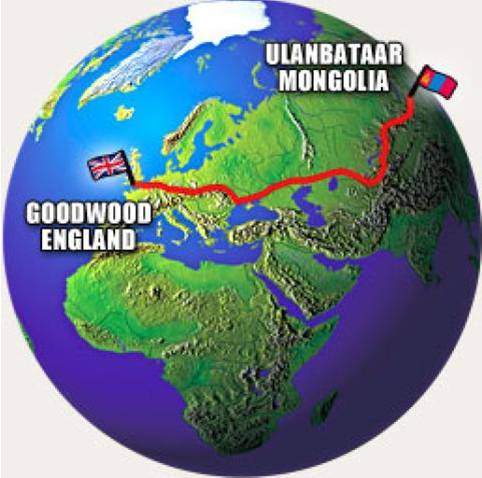
Local Seven Dialler, Laura Over, will be attempting the Mongol Rally in 2010. Laura, (aka Queen of the Rally) who lives in Albert Road, and best friend Paul, will be attempting to drive from Goodwood to the capital of Mongolia, Ulaanbaatar. Sounds easy? Well, it’s over 10,000 miles across 12 countries, a possible 5 mountain ranges and 3 deserts. Visas are needed, borders could take up to 4 days to pass and crossing is not guaranteed. Plus, the rally rules state the car must be under a 1.2 litres.

Clearly, the idea of driving over 10,000 miles, completely unaided in a very small car, is sheer madness but it’s all in a good cause, as they are undertaking this huge task in an attempt to raise £2,000 for three very worthwhile charities – The Christina Noble Children’s Foundation, Cancer Research and the Neurofibromatosis Association. When they reach Mongolia the car itself will be given either to charity or sold and the money donated to charity. As Laura points out, “The small car rule is a bit of a worry as, apparently, the Gobi Desert is not very forgiving! Needless to say, our parents are more than a little worried, but I’m sure we’ll be fine.”

Mongol rally
Mongol rally

The Two Mongoleers are hoping that the local community will ‘rally’ behind them. They are currently looking for a number of corporate sponsors (and have four sponsorship packages available, meaning that a business could get involved for as little as £50); donations to their chosen charities; and a car in which to undertake this mammoth task.

If you, or your company could help, in anyway at all, or if you just wish to find out more, check out the website: www.thetwomongoleers.co.uk, contact Laura on 07725-110154 or email Laura and Paul at thetwomongoleers@google.mail.com

Old World Wines

Philip Reddaway, The Whistler’s wine columnist, is musing on old vs new world wines…

Red wine maturing in oak barrels
Checking the progress of a red wine maturing in oak barrels
In the past few years, French wine sales have taken a battering in the UK. Australia has now been joined by California as the most popular supplier of wine to the Brits. The attraction of New World wines is obvious: the consumer knows what to expect from varietal labelling (chardonnay, shiraz etc are recognizable brands in their own right); the wines deliver consistency – just as a true brand should; and, in these tough times, promotions discounting wine to less than £4 is clearly attractive. But those who wouldn’t tolerate sliced white bread in their diet would do well to apply their discernment more often to wine – for only a few pounds more you can savour artisanal products that ooze character, flavour and satisfaction – not just a quick fix alcoholic fruit bomb.

This is where France really comes into its own, in the mid-range price bracket £7-£12. Why are these wines generally superior? One reason is that the typical French winery is a small family business where the focus is on driving quality and reputation before profit, with an average 2/3 family members and 2 employees farming just 25 hectares of vineyard. Compare this to Australia where 15 giant wineries now make 86% of the wine produced.

Take one example of the difference a focus on quality can make: hand vs machine harvesting. I recently helped pick the harvest at Domaine des Anges here in the Ventoux and even this year when the fine summer had left the grapes in great condition we were still leaving about every tenth bunch on the ground, rejected for showing some signs of minor rot. A harvesting machine – ubiquitous in Australia – can make no such discernment; all the bunches go into the hopper together and in order for off-flavours not to appear in your glass, ‘corrective’ procedures are then necessary in the winery. When the French talk loftily about the importance of a wine “expressing its terroir” it’s too easy to scoff, what they really mean is they aim to reduce intervention (chemicals, modern techniques for softening tannins, wood substitutes etc) in the wine-making to an absolute minimum. The result is wines that are as infinitely different from each other as the terrain is different from farm to farm – it’s what makes wine-drinking such fun: the continual discovery of different nuances of aroma and flavour from different producers.

So, what are my top tips for characterful wines from our area, available in the UK, in that price bracket? At Majestic the 2006 Clos de Mont-Olivet Cotes du Rhone, £8.99 (or at time of writing £6.99 each if you buy two): big, savoury and warming. As an aside, Cotes du Rhone level wines from Chateauneuf du Pape producers are a great source of bargains. From M&S the earthy, spicy Perrin brother’s (another CNDP house) Rasteau 2007 at £9.99; and, finally, from the Devon wine merchant Christopher Piper, available online, the Cotes du Rhone Villages Visan 2005 from Roche-Audran at £11.16, a bio-dynamic wine of great complexity and character that will convince you that your extra pounds have been wisely invested.

If you are interested in one of our Provence based wine holidays please visit http://www.rhonewineholidays.com, or if you just want a fabulous place to stay as you drive through France we now do bed and breakfast – see www.bighouseinprovence.com.

Crash, Bang, Whoosh!

As I sit down to write this article, it is the evening of 5th November, and beyond the window, all manner of crashes, flashes and bangs fill the air. Some investments seem to have been a bit like that in the last six months or so. Some meteoric rises that look like they will never end, some flashes of brilliance that have been sinking, ever so slowly, and, a little longer ago, Lehman Brothers, who just went bang! I am minded of my youth, and the likes of ‘Jumping Jacks’ which would jump erratically, this way and that, with no-one knowing which way they would go next.

I think markets may be in a ‘Jumping Jack’ phase at the moment! Then, there was the ‘Catherine Wheel’ that needed to be nailed to a tree or fence or something nice and woody: pinned too hard, and it would spin slowly, or not at all; too loosely and it would whoosh around at a frantic pace then fly off at a tangent and die. When the economic nail is just right in the world tree, then markets spin along – in their cycles – just as we like them. The current ‘loose nail’ of low interest rates was supposed to help things get spinning, and did at first, but it seems like the gunpowder is a bit damp now, and after an early surge, things haven’t really started firing up again. Some time next year, things may start to burn, then possibly overheat again, and the Government of the day may start to nail the economy a little more tightly, by raising interest rates. We shall see.

Fireworks theme over, time to focus on what has done well, and might do well in the future. Now that there has been a rally in many traditional asset classes, many people are looking for the potential opportunities going forward. Something that fits into both the excellent past performer, and the possible star of the future, is gold. The price of gold has increased by something of the order of 50% in the last year, and one of my favourite funds is up by 85% over that period. Many may say that it is therefore time to sell, but I have seen comments in the last week, suggesting that the gold price could increase by another 50% in the next 12 months! If stock markets fall, then gold has been a traditional place of safety. If world economies take off, then the demand for gold – for industrial uses or for jewellery – could take off too, fuelling price rises. In that case, so too would the demand for commodities, which could continue the bull run in their prices, that started just under a year ago.

Investing in timberOne last favourite of mine, which ticks the ‘alternative asset’ box, and also that of an ethical and environmental investment, is forestry. There has been a reasonably steady demand for timber, and, depending on the end use, returns have generally been between 5% and 8%. There are several funds that enable investors with average means to get some exposure to this asset class, thereby spreading their investment risk, and purchasing assets that are growing in a literal sense.

Finally, some folk extol the virtues of fine wine, as an investment. But in the light of the forthcoming festive season, I can think of a better use. Until next year, cheers, and have a happy and peaceful time.

David Foot

W.H.A.T ?

A Local Action Team (LAT) is a group made up of local residents who want to improve their area. With the main focus of a LAT being reducing crime and antisocial behaviour and looking at ways to make an area safer, LAT meetings are attended by Sussex Police, ward councillors and council staff who work with residents to identify problems and helpful responses to neighbourhood concerns. There are about 35 LATs across Brighton & Hove and their activities are recorded on the Crime and Disorder Reduction Partnership website www.safeinthecity.info

The West Hill area is not currently covered by a LAT, and residents have contacted the council asking that a Local Action Team for the area be initiated. The type of issues which have been raised include; night noise, graffiti, fly-tipping and disorderly behaviour.

The council Environment Improvement Team and ward councillor Pete West will be holding an open meeting on Wednesday 20 January 2010 and the aim of this will be to consider local issues and explore with the community the potential of establishing a West Hill Action Team. For this initiative the West Hill Action Team will include the area bounded by the Clock Tower, Queens Road/Terminus Road/Howard Place, Seven Dials and Dyke Road.

If you are worried about crime or anti-social behaviour in the West Hill area and would like to play a part in improving things, go to the first West Hill Action Team (W.H.A.T.) open meeting at the Brighthelm Community Centre, Hanover Room, on Wednesday 20 January 2010 at 6.30pm.

If you would like to find out more, or pass on any concerns before the meeting, please contact:

Cllr Pete West Pete.west@brighton-hove.gov.uk or phone 01273 296431

Simon Banister, Brighton & Hove City Council Environment Improvements
Simon.bannister@brighton-hove.gov.uk or phone 01273 293925

Everything you ever wanted to know about life in Brighton (OK, and Hove)