Justin Simpson, a familiar face around West Hill in general and the Duke of Wellington in particular, lived in Buckingham Road and has been going back and forth between the UK and Australia for donkey’s years as he’s a dual passport holder. He left Brighton recently for Sydney but fears Brexit might finally end his love affair with the Poms! We may or may not see him back again on these shores, but, in the meantime, he has sent us this observation of life in Sydney vs Brighton.
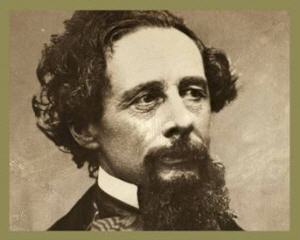
Concluding our review of Dickens in his bi-centenary year, local author and historian, Rose Collis writes about his connections with Brighton – from the New Encyclopaedia of Brighton.
Dickens was a regular visitor to Brighton, first visiting in 1836 while he was writing Oliver Twist. Four years later, he returned for a week and wrote chapters of Barnaby Rudge during his stay. In May 1847, Dickens and his wife Catherine stayed at the Bedford Hotel, while she recuperated from an illness, and he continued writing Dombey and Son. The book is partly set in Brighton, and Chichester House at 1 Chichester Terrace, is said to have been the house described in the novel as ‘Dr Blimber’s Academy for Young Gentlemen’, attended by Paul Dombey Jr. Continue reading Brighton Connections→
Charles DickensNo writer’s imagination has been more haunted by London than Charles Dickens (1812-1870) and no writer since has more haunted the spirit of London itself or had such an effect on literary treatments of it. The Dickensian vision of London, city of bustle and crossing-sweepers, the foggy river and the marshes, debtor prisons and old crooked lodging houses, ancient inns-of-court and smoky counting houses, ship chandlers’ stores, taverns and coaching inn yards, is the strongest literary vision of the capital we have. His books spill out its sights, smells, and human collisions. His writing captures the voice of London from the cockney of Sam Weller and Mrs Gamp to the chatter of Mr Jingle. However, he was not born there but in Portsmouth in 1812. In 1816, his father, a clerk in the Naval Office, at the end of the Napoleonic Wars, was sent to London for two years until he was moved to the dockyard town of Chatham, Kent, that “mere dream of chalk, and drawbridges, and mastless ships, in a muddy river” Dickens would often use in his novels. Continue reading Charles Dickens – The Man and his Books→
Brighton is a summer town. One of those places where people go when it’s sunny and hot – well, Britain’s version of hot, ie slightly less freezing than usual – to sunbathe, buy overpriced candyfloss on the pier, have barbecues on the beach, romantically gaze at the stars with a loved one, or strut down West Street in absurdly tight dresses, because even Oceana in Brighton is way better than Oceana anywhere else.
In Spain, where I grew up, July and August do not tend to make people happy. It’s great for the holiday-makers, who live in air-conditioned hotel rooms with private pools, enjoying the novelty of stifling humid heat compared to the subdued UK summer they’re used to. When you live there, however, you have to go to work, do the housework, deal with family obligations and attempt to keep your body functioning despite the unpleasantly high temperatures. Having complained about enduring this for ten years, I can’t complain about our summers, where no matter how hot it gets, every evening requires a cardigan and where you will wake up the day after a heat wave to the sound of torrential rain. But for those of you who disagree and dream of retiring to a Caribbean island, I have to say you should first try spending a winter in Brighton. Continue reading Brighton Life→
We are two Brighton-based writers, who have just set up our own website. It is called the Brighton COW. (The COW part stands for ‘Community of Writers’.) We are aiming to promote new writers and writing through a range of competitions. We will run several short story and flash fiction competitions throughout the year, some with an open-theme, some with specific ones. We are planning some fun free-to-enter contests too.
Our first writing competition has an open theme with a 3,000 word limit. There are three prizes to the top three winning writers of £100, £50 and £25. There will also be the opportunity for the stories to be published on our website as well as being recorded for Brighton’s Coastway Hospital Radio, which provides music and entertainment to a network of Brighton hospitals. The competition is just £4 (four pounds) to enter, via PayPal or cheque, and the competition is open to writers worldwide. Stories can be submitted online along with payment or by post with a cheque. The deadline is 1 November 2010. Continue reading Writing Competitions→
Everything you ever wanted to know about life in Brighton (OK, and Hove)



 The Whistler