
Tag Archives: gardening

Gardening Corner with Nancy Kirk – Sept 2024

Edibles for the back of the border. 

Surely not, I hear you say. Who grows edibles at the back of their borders? Often forgotten, some edibles provide the perfect backdrop to our borders. 

For beauty I am going to surprise you with my all time favourite edible within the herbaceous border; asparagus. Most of us are put off by the years of waiting prior to a crop, or the fact you assume they will take up lots of space. Scrub all your preconceptions away and consider this plant as a beautiful screening device for an ugly bit of fence or garden wall – the foliage is delicate, wispy and detracts the eye nicely from a potential eyesore. 

Many years ago in late summer I was fruit picking with my daughter and we passed fields of glorious foliage and I felt compelled to investigate what crop this could be, my delight at finding it was a mere asparagus solved my conundrum of trying to locate a screening plant for an ugly repair to my garden wall, and at just about 5 foot tall, this seemed perfect.

After a while I started incorporating asparagus into my client’s gardens. Perfect for that smaller, not so deep border in a town garden. I often paired it with verbena, oregano and sage for a maintenance free border. 

While we’re talking about the rear of the border, have you ever considered growing the humble fennel? There are delicious bronze varieties that don’t grow as high as their green cousins, but both can be shoe horned inbetween shrubs to provide a nice texture contrast. I rarely harvest the bulbs but the seeds are glorious addition to my kitchen cupboards.

One year, while waiting for a potato vine to find its feet I planted some spotty bolotto beans to romp up the trellising. Not only were the scarlet flowers plentiful, but the bean pods were a speckled red, adding to flash of colour after the annuals had done their stuff. Then I dried the beans and stored them in my kitchen to pop into stews throughout the winter; I suspect this was my family’s favourite crop.

Living at the top of a hill provides us with some pretty windy sites, so screening with tall plants that don’t take up the whole garden with their width is a tricky ask. Bamboo just invades everywhere and trees shade our small town gardens too much. Also you want light during the winter months when the sun is low in the sky, so how about trying Jerusalem artichokes? They grow up to 10 foot high plus they don’t mind at all if you chop them down a few feet during the growing season. They produce cheerful bright yellow sun flower type blooms and their sturdy stems withstand the windy battering West Hill experiences. They are easy to grow in our soil and have the all time advantage of needing very little attention.

So now you can plan those gaps lurking by your fences and walls with something that is not only pretty but can be consumed as well.

l Nancy Kirk is a retired gardener who provides bespoke gardening lessons in your own garden. Packages start at £250. 

westhillgardenoracle@gmail.com
Gardening Corner – July 2024

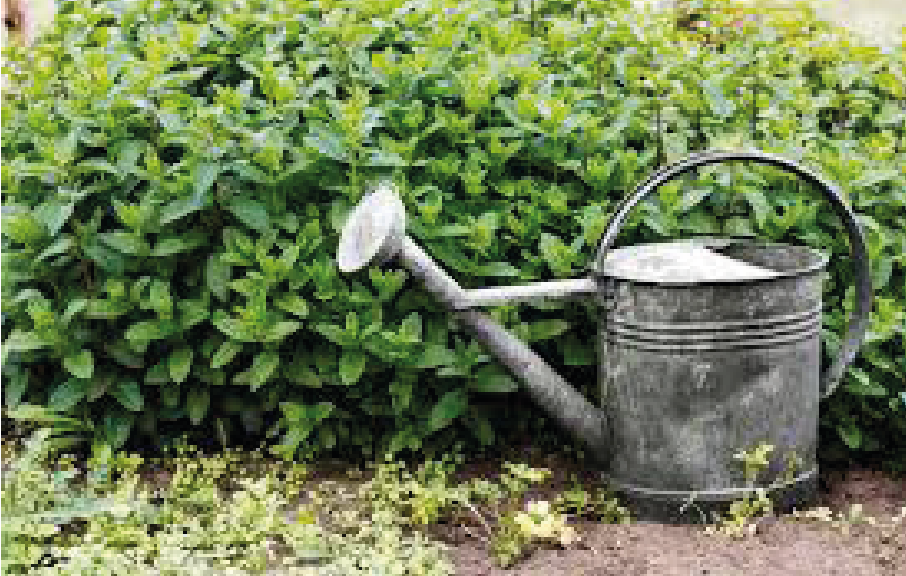
Probably the last thing on all your minds is the question of watering. This spring my window boxes have had a closer resemblance to a window pond, but summer is on it’s way and we must make plans. 

Most of you who read this column already have an established little green oasis but if you are heading to the garden centre, how you pick your plants is an important step to your garden surviving a dry summer. 

Whether your gap in the shrubbery is in the sun or shade, it is important to pick plants that are economical with water, so if you decide to go on a summer holiday for two weeks or a hose pipe ban is enforced, your garden will continue to be green. 

As a rule there is a split between plants that love the sun and those that fare better in the shade or at the foot of a tree. 

For the sun lovers look for plants with silvery leaves, these are the sun worshippers. Go for a purple Sage, not only beautiful but will be a handy herb for your kitchen or continuing the herb theme Rosemary and Thyme thrive on neglect. My personal favourite for a sun bleached terrace is Verbena Bonariensis, bullet proof, whispy and fragrant. 

For the shade, especially that tricky area under the canopy of a tree, go for dark glossy leaves. Acanthus Mollis is the perfect example of almost prehistoric fauna, shooting it’s white and purple spires up in spring to last all the way through to winter when they dry out and provide you with plenty of seeds to sow. A decent Weigela always does surprisingly well in the shade, it will reward you with a stunning display of flowers each spring. But we mustn’t forget the humble rose. A decent fragrant rose spreading at north end of your garden will bring fragrance and blooms over a long season if you dead head and prune sympathetically; you might get two shows in one year if you are lucky. 

For the established garden how you water and when you water are very important. 

Let’s start with the new plants that you purchased during the May bank holidays that haven’t had a chance to delve their roots deep into the soil for deep ground water. My best tip is to find a length of pipe, or an empty plastic bottle with the base snipped away and plant it at the edge of the rootball until almost submerged; this is where you are going to pour the water. Getting the water down to root level, rather than topically onto the soil is how you encourage deep roots that will survive future summers. 

Shallow watering equals shallow roots, and shallow roots will not survive very long during a dry spell. Water very well or not at all. If you have a delicate specimen that regularly wilts come summer time, do try the bottle/pipe option, even if the plant is established; you will be rewarded. 

Pots scattered around also suffer when they dry out. There are always those moisture granules that you can add but the real secret is to make sure all the roots get a decent soaking but are not waterlogged all the time. 

First find a bucket big enough to be able to submerge your pot fully, fill it with water and let your plant soak in the water. At first it will bob around on the 

surface then eventually sink – do not, whatever you do, remove the potted plant at this stage. Be patient and wait until all the air bubbles have stopped appearing on the water’s surface, only then can you be absolutely sure the whole root ball has been watered thoroughly. Using this method of watering sounds long winded, but you will have to water less often and the chances of death by drought is reduced significantly. 

Good luck with the summer and all your watering endeavours, hopefully these tips will help you keep your garden in tip top shape this summer. 

Nancy Kirk is a retired gardener who provides bespoke gardening lessons in your own garden. Packages start at £250.

westhillgardenoracle@gmail.com
West Hill Hall Garden

The  garden at back of West Hill Hall is crying out for some love and attention.  It has had a makeover recently in the form of a new retaining wall that was built to solve a damp problem in the Hall itself. There’s a newly cleared area of soil that could be used for growing vegetables or shrubs. If you’d like to expand your interest from a garden box to a 16m long space that you can tend to and grow things in, then please email Colette at westhillhall@gmail.com.

The antidote to flat-dwelling!


Stanmer Nursery

Choosing horticulture as a profession I receive many invites to lunch in springtime. It is a little like being a GP. ‘Oh you’re a gardener! I have this problem area maybe you could help me with…’ You are never off duty. Partly to address this issue and because I want to promote the right plant for the right place, we are offering a free advice service on our website. I also film seasonal updates to help with planting ideas. All the staff have specialist areas in their plant knowledge. I have a chalk downland wildflower grower and a perennial expert. We go that extra mile making sure customers go away with a plant that will grow; if nurtured correctly. We also sell trees, shrubs, herbs, edibles and bedding. Composts and pots are available to buy but we purposely stay away from the garden centre model.
Continue reading Stanmer Nursery