The French attitude to labelling wine strikes me as absurdly blinkered. Faced with continued domestic over-supply, dynamic New World competition and a government determined to control what they see as an unhealthy beverage, one might have thought the industry would have got the bit they can control (it’s just sticking the right info on the bottle, after all) done to perfection. Not so. Lavishly, they adhere to tradition. By law AOC (Appellation d’Origin Controlée) wines can’t mention the name of the grape variety the wine is made from on the front label. Instead, with the noble exception of the Alsace region (not really very French) you need to have an encyclopaedic knowledge of French geography and viticulture to know, for example, that when it says Pouilly Fumé on the label it’s Sauvignon blanc, when Pouilly Fuisse it’s Chardonnay. Continue reading Reading a Bottle of Wine→
Philip ReddawayThere cannot be many wine lovers who aren’t aware of the phenomenon that is Robert Parker, the American wine critic. For nearly 30 years controversy has raged around this man who, it is said, “makes and breaks the market” for fine wines. The pro-school point to his independence and integrity in relation to producers, his ‘ordinary bloke’ anti wine-snob stance, his awesome work rate – this is a man who can taste 10,000 wines a year and still write cogent notes and run a successful business, his wine review The Wine Advocate. The ‘not so keen’ school talk about his soulless scoring system – all wines tasted are graded out of 100, the ones collectors seek out are his 90+ wines; his mono-themed palate which favours huge testosterone-packed wines with ultra ripe fruit and high alcohol; and overall the sheer audacity/unfairness that one man’s palate can determine the success of a wine when, to most of us, it is perfectly obvious that taste is a subjective area and heavily influenced by location, ambience, food and company etc. Continue reading Pleasing the Emperor→
It’s the fourth most planted grape variety in the world, should be wholly familiar to anyone who has swigged cheap rosado on the Costa Brava through to classy Chateauneuf du Pape in the Rhone valley or old vine, dry-farmed examples from the Barossa valley in Australia, but when did you last hear anyone ask for a glass of Grenache in your local wine bar?
Grenache Wine
Never, I suspect. Grenache’s anonymity was the start point of a unique international gathering that took place just a few kilometres from us last month – the first ‘Grenache Symposium’.
Over 200 Grenache wine makers, wine critics, merchants and those, like us, with an interest in wine tourism met for 3 days to examine the status of this prolific grape, the reasons why it is so often overlooked and how we can all advance its cause on the world wine stage. It was a truly global event with participants coming from California, South Africa, Spain (Priorat makes some of the best Grenache in the world) and even Brazil. Some of the conclusions: this is a grape variety often found around the Med as a work horse producing big crops, usually a blending grape, but, in the right hands with low yields and careful craft in the winery, it is unquestionably capable of producing glorious wines, the match of its better known peers Pinot Noir and Cabernet Sauvignon. However, the consumer needs more help in recognising Grenache; we need more iconic wines like Chateau Rayas at Chateauneuf as totems to inspire consumers and producers alike, and it doesn’t help that the name of the variety never appears on the front of French wine labels – but that’s a wider issue about the French inability to surrender to international trends. That, absolutely, has to change.
The typically high alcohol content of Grenache, often 14.5 or even 15.0 degrees in this region, was much in debate – consumers need to be encouraged to think of these wines as the best “with food” red wine available, where the alcohol is tempered by being tasted with a meal, and also to serve them a little cooler than most do to avoid the alcohol subsuming the distinctive nose and palate of this great variety. It was wonderful for me to be in at the ground floor of a new initiative to promote the source of so much drinking pleasure at La Madelene!
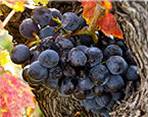
Grenache Grapes
My tips for top Grenache based wines you can sample in the UK: for a real treat try the big smooth red Chateauneuf du Pape Domaine Nalys “Chataigner”, the top notch 2007 vintage is stocked by Underwood Wine Warehouse at £23.32 and can be bought online; for a really classy, definitely “with food” rosé clocking in at 14.5 degrees alcohol try Domaine Maby’s “La Forcadiere”, summer pudding in your glass, available from the wonderful Rhone focused merchant Yapp Brothers; or for something very unusual with your dessert, a Rasteau Rancio, a Madeira-like, fortified Vin du Naturel made from 100% Grenache, deliberately oxidised to give it a nutty character, fabulous stuff, available at The Big Red Wine Company at £14.95. Would pour nicely over a vanilla ice cream. Happy summer drinking!
Philip and Jude Reddaway run La Madelene Rhone Wine Holidays (tours and educational residential holidays) www.rhonewineholidays.com.
If you are interested in bed and breakfast in their renovated 12th Century priory contact them through www.bighouseinprovence.com
or email rhonewineholidays@googlemail.com.
Want some inspiration as to what you might be sipping in your deck chair this summer?
Let’s start with a cheeky cocktail…I know it’s little “off piste” for a wine column but it’ll get you in the mood for some delicious wines later in the day.
When the temperature rises we reach for the Campari bottle. This bittersweet Italian is probably the marmite of the aperitif world…you’re just as likely to hate it as love it. I remember vividly stealing a sip of my mother’s Campari soda when on a Spanish holiday aged about 10, and trying hard not to gag. Now we can’t have enough of it. Two recipes: first, a long version, the Venetian “spritz”: in a jug mix one third Camapari with two thirds Prosecco or other sparkling wine, stir with ice and top up with some Perrier water. Serve in tall glasses and do as the Venetians do – drink lots of it! The second is more of a sipping cocktail, the classic Negroni: in a whisky tumbler mix equal parts of Campari, red Martini and Gin with some large ice cubes. Stir and feel the glow…you will only need one.
And the wines to follow? Rosé is the default choice for a really sunny afternoon; avoid anything too sweet (California, Anjou, and many New World examples). My personal favourite is our near neighbour here in the Rhone, Domaine Mourchon’s ‘La Loubié’, salmon pink, mid weight, aromas of crushed strawberry and refreshing acidity. Available by the glass at Balls Brothers wine bars in London and by the case from the Big Red Wine Company in the UK, £9.95 per bottle.
If, like me, you are constantly looking out for interesting whites that aren’t Chardonnay-based, here’s three that you should try. The first, a dry Muscat. Both the colour and the aroma of a dry Muscat can wrong-foot the unaware. Golden and with heavy scents of table grapes, most people assume they are about to taste a dessert wine, but in spite of its rich grapy flavour it is bone dry. My favourite local version is from Domaine des Bernardins at Beaumes de Venise but it is made in too small a quantity to export. Try the Aussie version, also excellent, such as Brown Brothers Dry Muscat, £6.49 at Sainsbury’s. Two other unusual whites for garden drinking this summer: the delicate, peachy Albarino from the relatively cool/wet north western Spanish wine region of Rais Baixas – Majestic sell a fine example from top producer Martin Codax at £9.95. Finally, from the south of Italy the blossom flower scented, mineral, herbal Falanghina from the vineyards around Naples. The version on sale this summer at Waitrose at a bargain £7.59 is well worth seeking out. Happy deck chair drinking!
If you are interested in one of our Provence based wine holidays please visit http://www.rhonewineholidays.com, or if you just want a fabulous place to stay as you drive through France we now do bed and breakfast – see www.bighouseinprovence.com
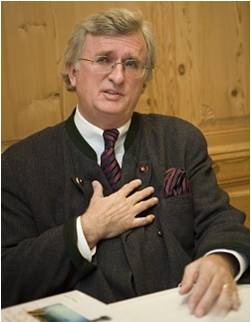
Hardy Rodenstock
Every now and again a scandal surfaces in the wine world, which reverberates beyond the confines of the connoisseur’s press to a wider public. The Austrian wine adulterated with antifreeze in 1985 springs to mind. This time the victims are less likely to be you or me, regular wine drinkers, but that rarefied world of super rich fine wine collectors.
The story starts with a wealthy German wine fan, Hardy Rodenstock, who had made his fortune promoting pop bands in the 60s and 70s. His social set was international, and included many showbiz celebrities, as well as wine critics and rich wine collectors. His tasting parties became legendary. I came across him reading Jancis Robinson’s autobiography years ago in which she describes a 7-day marathon tasting held in Munich at which 125 vintages of Chateau d’Yquem were shown, the oldest dating back to 1784 and including every vintage from the 20th Century – this was the biggest d’Yquem vertical tasting that has ever been held and all paid for – including five lunches and seven dinners – by Hardy.
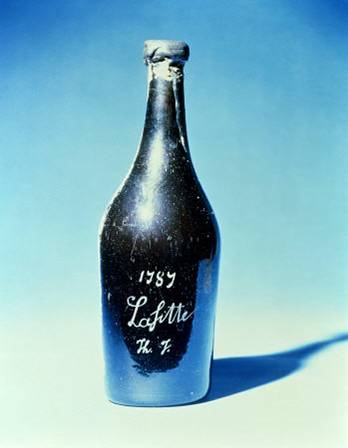
Chateau Lafitte 1787The provenance of his wines never seems to have been seriously under question (Emperor’s new clothes?) until an American collector Bill Koch filed a lawsuit. 17 years earlier Koch had purchased at auction in the US several bottles of what, to this day, remains the most expensive bottles of wine sold in the world. These were allegedly Chateau Lafitte from Bordeaux, the 1784 and 1787 vintages. Vintages this old are rare enough but what really made them special were the initials ‘Th. J’ inscribed on the bottles. They were said to have come from the Paris cellar of wine lover and future US President Thomas Jefferson, when he had served as the US’s ambassador to France 1785-1789. The value of each bottle was £105,000. The man who had ‘discovered’ these fascinating gems and brought them to market, allegedly via a Parisian (unknown to this day), who found them behind an old walled-up cellar in that city, was, of course, one Hardy Rodenstock.
It wasn’t until 2005 that Koch received information that made him suspicious and which spurred him to file the lawsuit. Koch assembled a crack team of forensic scientists, ex FBI detectives and wine experts to try and prove that he’d been swindled. A trial took place but due to Rodenstock’s German citizenship has never been satisfactorily concluded to this day one way or another.
As an addendum to this story a book about the case by Benjamin Wallace (The Billionaire’s Vinegar) was published in the US. It inferred that certain leading UK wine experts, notably Michael Broadbent, who had auctioned some of the Jefferson bottles whilst Head of Wine at Christies, had acted unprofessionally. Broadbent sued the publishers Random House for libel and won his case just before Christmas. As a result The Whistler readers won’t be able to get the full story as the book is banned in the UK! However I understand a Hollywood consortium has purchased the film rights to this splendid saga so we may be able to relax on our sofas with a glass of inexpensive Cotes du Rhone and be entertained by the goings on in the world of uber-rich wine fans.


 The Whistler