Category Archives: compost

Gardening Corner with Nancy Kirk – May 2024

Many of our properties in West Hill are Victorian or thereabouts and over the years, decades and centuries the soil has been enriched with all sorts of organic material. Many gardeners for the early part of the century would have incorporated vegetable peelings into the soil or sprinkled their borders with coal dust; one of my elderly clients regularly dusted the top of her lawn with coal dust claiming it kept the weeds at bay; I have no idea about the science of her decision, all I know is that her lawn was resplendent. 

Composting is a habit I gained in my 30’s when I moved from a flat into a house. I had tended to my communal garden in my flat, but all the decisions had to be made by all the freeholders, so the freedom to do as I pleased was new to me. Added to this, the local council was promoting it’s pledge to provide every garden in the borough with free composting bins. 

Getting a compost bin going to the hard part. It took years for me to work out a formula that worked for me. As my compost bins filled with grass clippings, prunings and raw vegetable waste I noticed nothing was happening, everything just sat there, belligerently not breaking down at all. I headed to the local library to mug up on the secrets of composting to find very little in the way of advice, but a visit to my father’s allotment answered all my questions and more. All the allotment folk had compost bins, and most importantly they had composters that worked and their owners were more than happy to show me the error of my ways.

Initially my new friends suspected I had plonked my compost bins on a hard standing, they explained that the worms need to be in contact with the soil; but I hadn’t broken this rule. Then they talked me through layering, and I was woefully guilty of this compost law. I would cut the grass and lob all the trimmings in one big heap, this was my first mistake. Thin layers of vegetable peelings, grass cuttings and pruned bits were required. Also my pruned bits and pieces were large branches of buddlejia, I needed to snip them down to hand sized pieces. The final rule surprised me, moisture. My bins were parched. As everything had dried out so much, just adding water was not going to cut it, as nothing would absorb the water quickly as it ran through to the soil. My solution was rather unpleasant but it really worked. I dug out a dusty old 1970’s blender which was hiding at the back of my kitchen cupboard and used it to store my vegetable peelings. When it was half full I would add water and blend the mixture to add it to the compost heap. The worms moved in and I never looked back. Once the internal temperature of the heap started to work there was no need for the blended mixture anymore. 

Here are the basic rules of thumb:

1.Always on soil, never on a hard standing

2.Think layers

3.Cut down pruned bits to hand size

4.Moisture. Try blending or mixing wet material with water to add to your heap

And the final hint I got for those wise allotment folk was male urine really helped get things going; I’m not going to publicly endorse such a thing because our gardens are so small. You didn’t hear it from me.

Composting is an art form. Every compost heap is different, but the pure gold it produces will continue to enrich our soil for the price of a small receptacle, so isn’t it worth a go?

Nancy Kirk is a gardener who provides bespoke gardening lessons in your own garden. Packages start at £250. Contact westhillgardenoracle@gmail.com for details 
Gardening Corner – July 2024

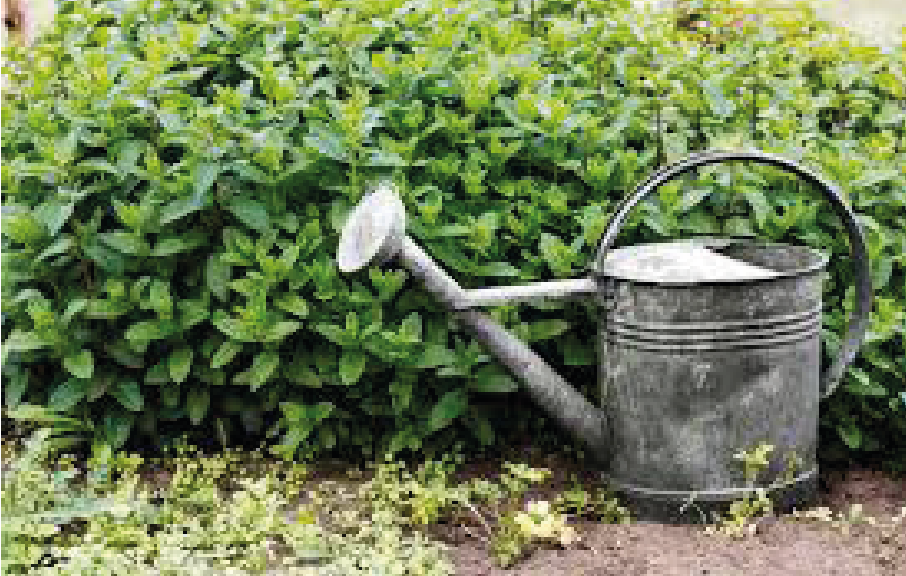
Probably the last thing on all your minds is the question of watering. This spring my window boxes have had a closer resemblance to a window pond, but summer is on it’s way and we must make plans. 

Most of you who read this column already have an established little green oasis but if you are heading to the garden centre, how you pick your plants is an important step to your garden surviving a dry summer. 

Whether your gap in the shrubbery is in the sun or shade, it is important to pick plants that are economical with water, so if you decide to go on a summer holiday for two weeks or a hose pipe ban is enforced, your garden will continue to be green. 

As a rule there is a split between plants that love the sun and those that fare better in the shade or at the foot of a tree. 

For the sun lovers look for plants with silvery leaves, these are the sun worshippers. Go for a purple Sage, not only beautiful but will be a handy herb for your kitchen or continuing the herb theme Rosemary and Thyme thrive on neglect. My personal favourite for a sun bleached terrace is Verbena Bonariensis, bullet proof, whispy and fragrant. 

For the shade, especially that tricky area under the canopy of a tree, go for dark glossy leaves. Acanthus Mollis is the perfect example of almost prehistoric fauna, shooting it’s white and purple spires up in spring to last all the way through to winter when they dry out and provide you with plenty of seeds to sow. A decent Weigela always does surprisingly well in the shade, it will reward you with a stunning display of flowers each spring. But we mustn’t forget the humble rose. A decent fragrant rose spreading at north end of your garden will bring fragrance and blooms over a long season if you dead head and prune sympathetically; you might get two shows in one year if you are lucky. 

For the established garden how you water and when you water are very important. 

Let’s start with the new plants that you purchased during the May bank holidays that haven’t had a chance to delve their roots deep into the soil for deep ground water. My best tip is to find a length of pipe, or an empty plastic bottle with the base snipped away and plant it at the edge of the rootball until almost submerged; this is where you are going to pour the water. Getting the water down to root level, rather than topically onto the soil is how you encourage deep roots that will survive future summers. 

Shallow watering equals shallow roots, and shallow roots will not survive very long during a dry spell. Water very well or not at all. If you have a delicate specimen that regularly wilts come summer time, do try the bottle/pipe option, even if the plant is established; you will be rewarded. 

Pots scattered around also suffer when they dry out. There are always those moisture granules that you can add but the real secret is to make sure all the roots get a decent soaking but are not waterlogged all the time. 

First find a bucket big enough to be able to submerge your pot fully, fill it with water and let your plant soak in the water. At first it will bob around on the 

surface then eventually sink – do not, whatever you do, remove the potted plant at this stage. Be patient and wait until all the air bubbles have stopped appearing on the water’s surface, only then can you be absolutely sure the whole root ball has been watered thoroughly. Using this method of watering sounds long winded, but you will have to water less often and the chances of death by drought is reduced significantly. 

Good luck with the summer and all your watering endeavours, hopefully these tips will help you keep your garden in tip top shape this summer. 

Nancy Kirk is a retired gardener who provides bespoke gardening lessons in your own garden. Packages start at £250.

westhillgardenoracle@gmail.com