Category Archives: Eating In

Gull About Town

Our new regular feature looking into what’s new in food and drink

SWOOPING INTO Jubilee Square, the Gull has sniffed the air and discovered a little Singapore-style hawker experience at the back of The Chilli Pickle. Those clever Sperrings, Alun and Dawn who brought their off-road family adventures in India to Brighton 11 years ago, have always loved a shrimp krupuk with plum sauce and black pepper lamb ribs and trialled Hawkerman as a pop-up to make the most of their space in the restaurant. And they’ve done it well; West Hillers will remember their Chilli Pickle pop up at the Polygon on Seven Dials in 2017. And despite an October launch ahead of an inevitable lockdown, this little toe dip in the rough waters of hospitality has gone down swimmingly with the local as Brighton’s spice lovers took advantage of the double take-away option from Jubilee Square’s Asian one-stop shop. 

THE GULL LOVES nothing better than rummaging around in the bins of West Hill on a Friday night and has been tucking into some rather exotic flavours from the newly arrived Dishoom, the Irani-Bombay experience so beloved by our London cousins. It’s only available via Deliveroo so far, but the menu is as top notch and includes plenty for vegans and vegetarians such as the Pau Bhaji, much-loved Mattar Paneer, Jackfruit Biryani, samosas and bowls of chole. It even delivers drinks – Bombay sodas, Limca and Thums Up alongside Dishoom’s Mango Lassi.  And the Gull is happy to report all the packaging is made from reclaimed and renewable sugar cane pulp packaging and carbon-neutral PLA (a smart compostable bioplastic made from plants), are recyclable once rinsed or compostable. And each take away is matched with the donation of a meal through Akshaya Patra, a charity in India which offers free school meals to hungry children. 

https://delivery.dishoom.com.

RIDING THE THERMALS towards Shoreham Port, the Gull has got wind of a new kitchen opening next summer. The Port Kitchen will be next to the lock gates at the award-winning Lady Bee Enterprise Centre and plans to serve visitors as they pass through the locks, as well as the Port’s thriving business community and tourists visiting the area. It seems that the council has a plan to make this hitherto industrial space into an iconic food destination with proper coffee, fresh food and, take it from a bird, unparalleled views across the harbour. 

Ready to snap into a new life

“It’s not what you get with Deliveroo”, Red Snapper’s Pam and Philippe tell Gilly Smith

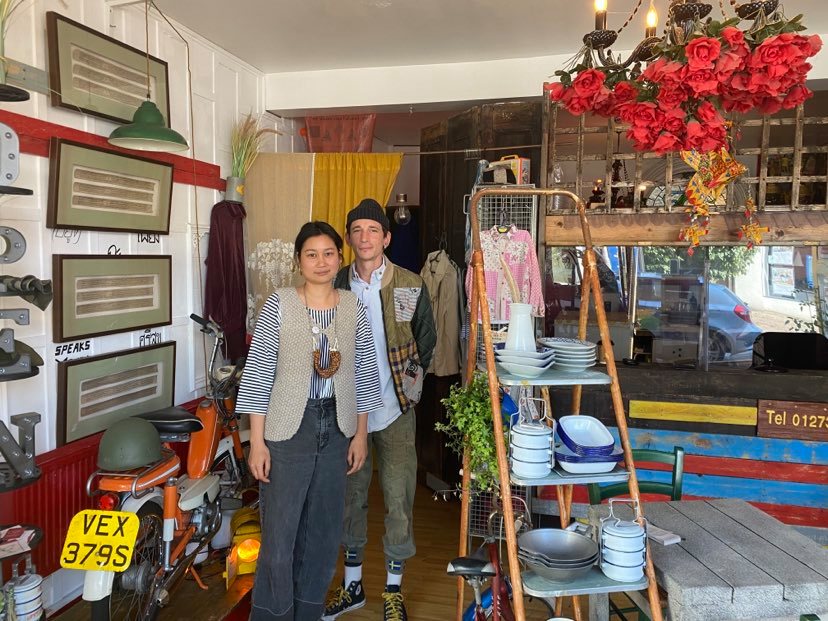
Panwad (Pam) ManeeTapho and her Belgian husband Philippe Ghenet are sitting at a table as the early autumn sunlight pours into the Red Snapper, until lockdown one of the most popular restaurants in Seven Dials. They’re talking about their plans to expand it into a casual lunch stop, a couple of tables outside and three inside. It’s all suitably distanced, which will add to the transformation of the busy buzzy evening eatery. 

The restaurant, which has always been a celebration of the fresh seafood and herb-flavoured dishes from their eastern Thailand home, has been replaced by a shop where customers can browse through the restaurant’s silver starter plates, the stacks of gluten-free fish sauce and Thai ginger shots stacked on the upcycled shelving. An orange 1977 Honda Novio scooter is the centrepiece, a cool, vintage reminder of where Red Snapper comes from. 

“That’s my mum’s” says Pam. The couple plan to use it for deliveries. “Imagine that turning up outside your door”, Philippe smiles. “It’s not what you get with Deliveroo.” 

Red Snapper is a triumph of creativity and lockdown lateral thinking. “We saw it coming” says Philippe who grew up in Italy and heard from relatives there what COVID was already doing to its economy. “It’s the end of the world, right? In a way it was like, come on guys, this is Nostradamus!”

At first, the couple held their heads in their hands, but they quickly realised that lock-down could give them time to think about what they really wanted from their life. “After 16 years of  working in the restaurant, sweeping, cooking, cleaning, it was spinning so fast that sometimes we didn’t have time to stop and think which way we want to channel the business”, says Pam who with her younger sister has worked with her parents in the restaurant since she was 16. “Four months of lockdown made us think, think, think, write down, plan, plan, plan. Which path are we going to take?” For them, it was always about the food. “We know what our customers like and what we can offer,” says Pam.  It’s the quality of the food. The flowery stuff, the service, the music, the smells, the incense, the candles… it all comes after.” 

They decided to offer the best take-away experience they could; while Pam and her father, Turmphan cook downstairs, Philippe chats to their customers upstairs, telling his stories and charming them with his laid-back style. “I like it this way. We’re done by 9pm and I can watch a movie with my son.” 

They first shared a flat when Philippe had just graduated in Media at Brighton University and Pam was studying Art, Design & Fashion at Northbrooke College, and they’ve spent months using their creativity, repurposing items from home for this cool, new look. “That was where we stored our linens,” says Philippe pointing to the beautifully battered vintage suitcase now housing an old set of scales and a pink neon heart light. “We choose to be our own bosses, so we might as well add our identity.”

He sees Red Snapper as a Thai market-style café. “Maybe you’re coming back from town; Churchill Square is closed but you still want to have a coffee”, he says. “We like to be a bit of a community market where you can pop in and get some ginger tea. Or maybe just a take-away.” 

As we sit in the late summer sunshine, nine-year-old Finlay is on his second day back at school and Pam and Philippe are feeling philosophical. As working owners, school is an essential part of the child-care, hence the move to daytime food which will reflect the ethos of the original Snapper; accessible, but made in-house from scratch. 

“We offer passion” says Pam. “This is our career, our life. Before COVID we were too busy, we had too much to lose. We might as well shape the life that we want.” 

Just close your eyes…

…and you could be there. Andrew Polmear takes us to windswept, rugged Corbières for a fine glass of cool Castelmaure 

I don’t usually recommend specific bottles of wine, being more interested in writing about the principles behind why we enjoy drinking. And I’m especially interested in relating how a wine tastes to where it comes from, who makes it and what they do to it that makes it special. But there’s a bottle available as I write that illustrates those principles so well that I’m breaking my rule. It’s Les Hauts de Castelmaure 2018, from the Corbières in France and Majestic has it for £11.99. If they’ve sold out, the Scottish wine merchant Exel will post you a case for not much more.

I found out about it because Decanter magazine recently published the results of a tasting of 55 Corbières reds and the Castelmaure came equal top with 95 points out of 100. That’s the sort of score Bordeaux wines selling for over £30 a bottle would be pleased to have. The tasters found it rich and powerful with an aroma of black fruits, fine leather and soft spice. 

The Corbières is that windswept, rugged part of France between Narbonne and the Pyrenees bordering the Mediterranean coast. It’s dotted with ruined castles where the last of the Cathars held out against persecution in the 13th century and they’ve been making wine there since the Romans. The village of Embrès-et-Castelmaure is perched on a hilly plateau just 22 miles in from the sea. That’s the first clue as to why their wine is special. It’s so hot in the Corbières that it’s easy to make bland, blousy wine with grapes that have ripened too quickly. Castelmaure’s altitude in the foothills of the Serre mountain keeps them that bit cooler. 

The second clue is that the vineyards are steep and the soil arid – hopeless conditions for making lots of cheap wine, prefect for
wine of quality. The grapes have to be picked by hand and the
yield is inevitably low. And, to ensure that none of the wine growers aims for quantity rather than quality, the Co-op pays by the size of the vineyard, not by the weight of grapes grown. A low yield means that the flavours are concentrated.

Which brings us to the third clue: all wine made under the Castelmaure label (and there are cheaper Castelmaure wines than this one) comes from the village Co-operative: it’s what the village does. It helps that the actual winemaker, Bernard Pueyo, who has been there since 1983, is passionate about what he does. As he says on the label, the Co-op prefers to make wine with the flavours of the local “garrigue” rather than bother with the flim-flam (the word he uses in French is “falbalas”) of professional experts.

Then there’s the detail of how the wine is made. At least half of the grapes are fermented by carbonic maceration. This means the grapes are not crushed but allowed to break open as they ferment. It gives more flavour to the wine, especially with Carignan; and 20% of the grapes of this wine are Carignan, the rest being Syrah and Grenache. Then the wine is aged for 11 months in small oak barrels (“barriques”) as in Bordeaux. I don’t find that the wine tastes of oak (that’s an unmistakable vanilla flavour) but it’s the oak that permits the development of those flavours of leather and spice. 

Why have I gone into such detail? Because I find that understanding all those points adds hugely to my enjoyment of this gorgeous, rich and complex wine.

Lockdown Reads: Cooking The Books

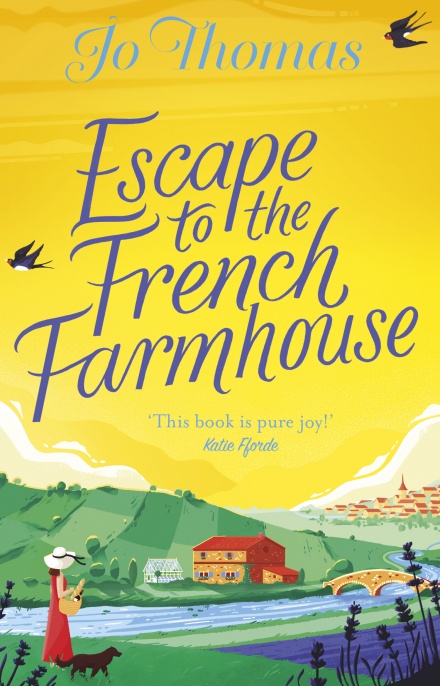
After a couple of months of Lockdown, even the view across Devil’s Dyke and a low tide beach at sunset might be wearing thin. Time then to pop over to Provence, or maybe down to Devon? In Cooking the Books podcast, I’ve curated some of the latest foodiest reads for you.  I talk to the authors about the food that takes us to Provence in Jo Thomas’ Escape to the French Farmhouse,  a 1950’s Scarborough summer in Benjamin Myers’ The Offing, downtown Chicago in Sara Paretsky’s Dead Land and 1600’s Norway in Kiran Millwood Hargrave’s Sunday Times Bestseller, The Mercies.  Joanne Harris takes us to her fictional Lansquenet -sous-Tannes for her latest in the Chocolat series, The Strawberry Thief and Veronica Henry is in Devon for A Wedding at the Beach Hut.


Gilly Smith


Click here to listen


Wine to go with cheese

Most of us are finding ourselves eating at home a lot more than in pre-Covid-19 times. In my household it means we eat a lot more cheese than usual, since we consider a cheese course an important part of a proper meal at home. With the cheese it’s very tempting to continue drinking whatever wine we’ve already opened. I think we can do better than that. Here are my thoughts.

When it comes to wine that goes with cheese, it’s got to be red. The only exception is a heavy sweet wine, like Sauternes, that goes wonderfully with very tasty blue cheeses. Roquefort is the usual example. That aside, any red will do, although in principle the stronger the cheese the more powerful the wine. Red is good but it’s not perfect.

To move up a notch we have to go to fortified wines. A dry austere Amontillado sherry is thrilling with any cheese, although it will dwarf a mild cheese, for which you might try a Fino. For those who get confused by the different types of sherry, remember that sherry is made at first like any white wine, but then left in barrels open to the air. If the wine develops a creamy layer of yeast on top, called flor, it becomes a Fino – dry, light in colour with a sharp yeasty tang. If the flor dies off or is killed off by adding alcohol, the wine is exposed to air and darkens, developing that distinctive, austere, almost bitter, nutty flavour with overtones of tobacco and spices from the oak barrel.  That’s an Amontillado. An Oloroso, that’s an even darker sherry which never had flor on top, would be marvellous too, but it, too, must be bone dry. They are much harder to find. Don’t use sweet sherry, not even anything with the word “cream” in the title. Save that for the pudding.

Equally wonderful would be a Tawny Port, again because it’s got that austere dry nutty, leathery tang. Ruby port wouldn’t do. It hasn’t been oxidised so it has a rich fruity flavour that goes with fruity puddings but not cheese. Ruby port is either matured in huge barrels or in tanks or even in the bottle. Tawny ports start off like ruby ports but spend longer – much longer – in much smaller barrels, slowly oxidising, turning brown and leathery, losing all that fruitiness but developing that spicy, nutty, leathery essence.

If we were really celebrating I’d ask for a glass of Madeira. Malmsey is my favourite but I’d settle for any of them. It’s not unlike port in the way it’s made but it’s from a different grape, different terroir and, unlike port, it’s gently heated while oxidising. Like port it needs to be at least 10 years old; then it’s heavenly.

But how can anyone manage to drink wine with the meal and a fortified wine with the cheese? The secret is to stick to small amounts. You only need a mouthful of the fortified wine. Then put the stopper back on and keep it somewhere cool. That way you’ll stay within your 14 units a week. And the joy of these fortified wines is they will last for months once opened. After all, at Downton Abbey they sit for years in decanters on the sideboard without going off.

Andrew Polmear