It can be said that Brighton is a hub for cinema. There are a wide variety of cinemas in the area, ranging from multiplexes to independents, with someone to offer for anyone somewhat interested in film. But what if cinemas don’t offer a specific niche that you happen to be craving? That is where film clubs come into play.
Brighton itself has a few film clubs to go around, ranging a variety of genres and niches. One of these clubs is the Toad Lickers Collective (TLC), although it is not strictly a film club. Founded last year by Keziah Keeler and Liz Rose, TLC’s wider programme includes free exhibitions and workshops alongside film screenings once a month at the Rose Hill, an independent music venue.
Regarding why they wanted to do more than just film screenings, Kez said, “There’s a lot of things you can express through film that can reach a wider audience, and we’re quite interested in the idea of film as the eye of the workers. We thought it was a cool way to get a lot of people in a room talking about the same subject which feels a bit missing in this era.”
TLC themselves don’t make much of a profit, due to being a Community Interest Company, so any profit made from screenings goes towards running free workshops and exhibitions, due to their desire to make themselves as accessible as possible.
The choice of The Rose Hill as their venue for film screenings was one that TLC are happy with, as Rose points out the difficulty of finding places to host events. Rose said, “The Rose Hill are really welcoming and really care about the community, and I think you feel that in the atmosphere they create, it’s all very casual and we really like how comfortable it is as well, it’s cosy and intimate.”
TLC’s most recent exhibition was Folklore, which set out to explore why folklore is having a revival and how contemporary artists are using its legends, techniques and aesthetics to describe their experiences. This fits in with what Kez describes as the core of the club, “this idea that storytelling is really important, and there are all these different ways of storytelling that we can use the rules and the methods to help us describe social issues and real problems.”
Whilst they’ll be looking at other interests when their film screenings return after the summer in September, Liz wishes to explore working class culture in a potential future film season, looking at joyful working-class films such as Billy Elliot and The Full Monty. Their reasoning is because, to them, “Folklore has a history that belongs to people and has the potential to be much more linked to working class cultures. As funding disappears, it’s becoming increasingly hard to see diverse voices, and if you’re working class or from an underrepresented background, those stories don’t get told in a genuine way by people telling them.”
Similarly to TLC’s recent folk-based exhibition, Bom-Bane’s Folk Horror Film and Ice Cream Club may be of interest as well, a film club that explores the many films belonging to the folk horror genre. Hosted by David Bramwell at Bom-Bane’s in Kemptown, each film screening features an intermission, a discussion halfway through the screening, a food break, and what David describes as ‘an avant-garde unsettling performance from a group calling themselves the Bewilderkin’
David himself is no stranger to folk horror, having been performing a Wicker-Man singalong for 16 years. To him, the club is a chance for him to ‘explore the genre and see how far we can stretch the boundaries of the definition of folk horror, and not present the obvious choices like The Wicker Man. We try and delve into weirder fringes of Folk Horror, including folk horror films from around the world, not just Anglo-centric, and presenting films from parts of the world that wouldn’t necessarily be associated with the genre.’
The difficulty of running any film club largely revolves around the financial aspects. Despite most screenings at Bom-Banes selling out tickets-wise, thanks in part to the venue capacity being just 25, David notes there is difficulty in spreading the word about his folk horror film club. He said, ‘It’s too expensive to put posters up around town, and I’d be making a loss on the night if I paid for 50 posters to go up for a week or two.’
Regardless of the financial aspect of keeping the film club going, David is still optimistic for the club’s future. Whilst there is no showing at Bom-Bane’s in May due to David’s work during Brighton Fringe, his next screening will be the film ‘Wake in Fright’ from 1971. As David describes it, ‘It’s one of Nick Cave’s favourite films, it’s similarly themed to ‘Straw Dogs’, about the breakdown of civilisation in remote places and about the schoolteacher through unfortunate circumstances finds himself trapped in this town and how he descends into this toxic-machismo culture.’
While these two clubs are just two examples of film clubs across Brighton, there are undoubtedly more than these two, and if your interest is not in folk horror or folk in general, there will likely be other film clubs that will satisfy any cravings for film clubs of a certain genre.
RECEIVED WISDOM, seldom the most reliable or durable of guides, has it that Paths of Glory kicked off Stanley Kubrick’s freakish streak of groundbreaking movies. Fortunately, we here at Cinerama know better.
That honour, we insist, belongs to The Killing, arguably the greatest of all heist movies and certainly the most intricate and imaginative. Spoilers R Not Us, as you know, so let’s just say the climax is as profoundly unexpected and shocking as the end of the first half of Full Metal Jacket.
Yet while Kubrick’s own “My way or the highway” story is as celebrated as any in Hollywood history, his determination to march to the beat of his own drum had nothing on the actor around whom The Killing revolves, Sterling Hayden, a name all-but erased from widespread awareness. Such was the price one had to pay in paranoid post-WW2 America for being outed as a pinko Commie traitor. Not that Hayden gave a damn. Never has Tinseltown harboured a more radical or reluctant star.
The Library of Congress testifies to Hayden’s talent. The US National Film Registry housed there lists no fewer than five of his films as “culturally, historically or aesthetically” significant: The Asphalt Jungle, Johnny Guitar, Dr Strangelove (Or How I Stopped Worrying And Learned To Love The Bomb), The Godfather and The Long Goodbye.
Yet Hayden was disdainful of his craft, which he pursued primarily to finance whichever new boat took his fancy. “Bastards,” was how he described most of his celluloid appearances, “conceived in contempt of life and spewn out onto screens across the world with noxious ballyhoo; saying nothing, contemptuous of the truth, sullen and lecherous.”
Born Sterling Relyea Walter and poor, Hayden was adopted by his stepfather, James Hayden, and, after a nomadic childhood, ran away to sea at 17, rising rapidly to renowned ship’s captain. Encouraged by friends, he approached producer Edward Griffith and came away clutching a Paramount contract. Needless to add, his looks didn’t hurt his reinvention.
Towering over co-stars at an intimidating 6ft 5in, unsmiling, granite-jawed and Nordic-featured, he was dubbed “The Most Beautiful Man in the Movies” and “The Beautiful Blond Viking God” (as well as the somewhat less macho “Shirley”). “Incredible, really, how I got away with it,” he would reflect, “parlaying nine years at sea into two decades of posturing.”
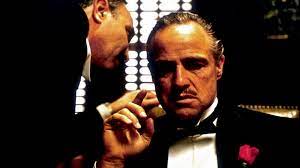
But beneath the beauty lay plenty of beastly. Francis Coppola knew what he was doing when he lured Hayden from the wilderness to play the corrupt cop in The Godfather. Nobody else could have punched Al Pacino’s clean-cut face with such convincingly vicious power and ferocity that he transformed Michael Corleone from a clean-cut war hero into a savage mobster. One who, the next time they met, would blow his brains out.
Imperishable as those scenes were, Hayden only had a cameo in The Godfather, but that stubborn minimalism was centre stage in the other four of his movies preserved by the Library of Congress. He was Dix Handley, a loyal henchman, in The Asphalt Jungle (1950), another hypnotic heist movie as well as one of the most gripping of noirs, In the title role of Johnny Guitar (1954) he’s a reformed gunslinger neck-deep in a love-hate tryst with Joan Crawford’s titanium-tough bar-owner Vienna.
In The Long Goodbye (1973), he steals the show as Roger Wade, a spouse-beating alcoholic author castrated by writer’s block. Most unforgettably of all, in Dr. Strangelove (1964) he’s General Jack D. Ripper, the blackly comic gung-ho part that bore closest resemblance to his public persona while subverting it: General Ripper blames his sexual impotence on “the Russkis” and issues irreversible orders to bomb Moscow.
Hayden’s journey from blond bombshell to Red renegade was as typical of a man allergic to standing still as the fact that he wed one of his four wives three times. If the title of Woody Allen’s memoir, Apropos of Nothing, represents one extreme of the aptness spectrum, Hayden’s choice, The Wanderer, marks the opposite.
Quitting Paramount before the Japanese blitzed Pearl Harbour (and just after the studio bought him the boat used in Captains Courageous), he shrewdly signed up for the Marines as “John Hamilton” to eliminate the prospect of being teased as a Hollywood pretty boy, and soon joined the Office of Strategy Services, the forerunner of the CIA. The OSS had been founded by his chum “Wild Bill” Donovan, the barely-disguised model for Robert De Niro’s character Bill Sullivan in his grossly underrated self-directed epic The Good Shepherd.
Hayden thus had a busier war than most. The only American selected to receive commando training in Scotland, he parachuted into Croatia and ran guns and supplies to Yugoslav partisans behind German lines. He also befriended Yugoslavia’s growing band of Communists; the partisans’ leader, the future President Tito, pinned a medal on his chest.
Hayden was not only a vocal anti-capitalist; he supported the Hollywood Ten, the writers and directors banished by the studios after refusing to testify to the House UnAmerican Activities Committee over their Communist links. In stark contrast to Elia Kazan, he was ashamed for “ratting” to HUAC, with whom he co-operated in naming names during Joe McCarthy’s communist witch-hunts. No regret haunted him more.
IF HAYDEN WAS a “posturer”, he fooled an awful lot of clever people, including the stellar directors of that quintessential quintet of movies: Robert Altman, Francis Coppola, John Huston, Stanley Kubrick and Nicholas Ray. In fact, Jack D. Ripper was Hayden’s second plum role for Kubrick; the first was Johnny Clay in The Killing.
Released six years after The Asphalt Jungle and another masterly exercise in sunless noir, The Killing, according to Kubrick, was his first “mature” feature. Like all his best screenplays, this one was adapted from a novel, in this instance Lionel White’s Clean Break. Clay is the stick-up man and conductor of a meticulously orchestrated racetrack robbery that we see unfold in episodic, overlapping and, most daringly for the era, non-linear fashion.
“Seeing it without his credit, would you guess it was by Kubrick?” wondered Roger Ebert rhetorically. As the esteemed critic asserted, every Kubrick movie stands alone, a gem of unique hue and gleam even when the subject is war, as it was on three occasions. Narrated by Art Gilmore, a well-known if uncredited radio announcer, The Killing is less about guns and hitmen than precise timings, chess and the domino effect.
Revelling in pulp novelist Jim Thompson’s quickfire contributions to the diamond-hard dialogue, Hayden moulds Clay into a canny cookie with a keen eye for the tiniest details. He enlists specialist “pros” while refusing to reveal the identities of their accomplices, let alone any broader elements of his audacious plan to plunder $2m – the killing in question – from the Lansdowne racetrack in San Francisco. The horses are shot thrillingly by Sam Peckinpah’s favourite cinematographer, Lucien Ballard, though the actual venue was Bay Meadows, then the most venerable track in California.
Art steals more blatantly from life in an early scene where Clay hires Maurice, a pro wrestler, to create a distraction by instigating a bar brawl. Not only do they meet at the same chess club Hayden frequented as a boy; Kubrick himself was a chess junkie who played zealously between scenes.
Not that the chess connection is solely worth pointing out as tasty trivia. Clay plots the heist as Kubrick plotted a chess game. Every rook, bishop and pawn has their job to do and place to be at a synchronised juncture. Everything depends on making the right move at the right time and in the right order. Even the slightest mis-step could cause the dominos to fall. Even in the dying moments, when he has every excuse to rip off that mask of stoical cool, Hayden, like any experienced chess player, remains poker-faced. It is impossible to imagine anyone else as Clay. Perhaps all that posturing was simply Sterling playing Sterling.
The Killing is about as romantic as The Texas Chainsaw Massacre, but the heart still weeps and snaps, especially as we spy on Sherry and George, a cruelly ill-wed couple. Marie Windsor, who made Marlene Dietrich look innocent, is at her ruthless best as the faithless femme fatale, every contemptuous quip a dagger in the chest of the mousey husband she looks down on literally as well as figuratively. As the sexless cashier desperate to win back her unblind faith, Elisha Cook regales us with the most vividly pathetic of all the fall guys he’d portrayed in noir classics such as The Big Sleep and The Maltese Falcon. All Clay has to do to make Sherry behave is threaten to beat her duplicitous face into “hamburger meat”.
Cook is such a brilliant sap, in fact, that it’s hard to stifle a guilty giggle upon re-glimpsing that grim, hope-drained face. And yes, given the extensive pleasures we derive from the tragedies that fuel noir, we viewers, of course, are sadistically complicit.
The last line is right up there with “Nobody’s perfect” and “Shut up and deal”: urged to run from the law by his childhood sweetheart, Clay replies, “What’s the point?”. That could so easily have been the sign-off to every noir.
To reveal any more truly would be an unforgiveable crime.
THERE ARE FEW THINGS in life truly worth loathing, but received wisdom is undeniably this column’s noirest bête noir. Take “The Best Concert Movies of All Time” (Rolling Stone and Rotten Tomatoes) or variations such as “20 Greatest Concert Films” (The Guardian).
For one thing, the words “Pop” and/or “Rock” so implicit in those titles are missing, never mind “Soul”, “Jazz” and “Reggae”, much less any other musical genre. To these eyes and sensibilities, the two most uplifting concert scenes on screen could hardly offer a starker sonic or visual contrast: Bruce Springsteen and The E St Band’s 20-minute re-bonding on Tenth Avenue Freeze-Out from their 2000 NYC reunion (a gift from HBO that never stops giving) and, in Maestro, Bradley Cooper’s imperious impersonation of Lenny Bernstein electrifying Ely Cathedral in 1973, wringing out every ounce of his vast if not always pious passions conducting Mahler’s 2nd.
It feels safe to presume, nonetheless, that a classical music gig will never be a) called a gig, or b) qualify for one of the aforementioned Guardian or Rotten Tomatoes charts. The sticking-point, box-office-wise, is that orchestras are essentially dress-alike covers acts whose idea of stagecraft is leaning forward. So why not clarify matters? Why not bill the ones that do dominate said charts as “Gig Movies”? If nothing else, Mahler fans won’t get miffed.
For another thing, even now, in what may turn out to be their heyday, gig movies are far from 10 a penny. As a genre, unlike musicals, westerns, horror and noir, they’ve barely reached middle-age. Commemorating the inaugural pop/rock festival, Monterey Pop (1968) was the first member of the litter, though aside from Jimi Hendrix setting his guitar alight and Pete Townshend bashing his to bits, its impact was but a pinprick next to Woodstock (1970), the three-hour, multiscreen epic on which Martin Scorsese cut his teeth.
And because gig movies were only ever intended to be a secondhand experience, at best, and thus lacked box-office appeal, it has taken this century’s documentary boom, and the recent advent of simultaneous live Odeon transmissions, to thicken the best-of-breed contenders to any significant degree.
The latest nauseating spot of consensus has it that the best gig movie is Stop Making Sense. David Byrne’s baggy suit, an irresistible electro-funk stew and Jonathan Demme’s imaginative staging are all tremendous fun, granted, but ambition was limited. As Geoffrey Cheshire’s stirring essay for The Criterion Collection put it, this column’s choice, Gimme Shelter (1970), gave the Rolling Stones “what no one had bargained for: a terrifying snapshot of the sudden collapse of the sixties”.
Having only just seen the latter on a big screen for the first time, as part of a European re-release (you can stream it on Amazon), I can only concur wholesouledly with the view that, when it comes to cinema verité, the Maysles brothers’ sickening documentary of the anti-Woodstock, held on the West Coast at Altamont, struck the motherlode.
Sure, the cameras miss Marty Balin, the Jefferson Airplane vocalist, being knocked out by Hell’s Angels, foolishly hired as security (in exchange for a barrel of beer) and brandishing pool cues in a way even Ronnie O’Sullivan might never have countenanced. As it is, we get more than enough of the prelude (Balin mouthing off at the abusive leatherjackets) and the aftermath (Balin’s battered face). And those peace and love vibes at Hyde Park just a few months earlier, where Mick Jagger bid farewell to Brian Jones by releasing a fleet of doves and reading a poem by Shelley? Gone for good.
No scene in the annals of gig movies, nevertheless, is more chilling than when those beer-pumped Angels seize the mile-high, gun-toting Meredith Hunter as he advances towards the stage, then knife and bludgeon him to death.
There had been good reason to fear such a grisly outcome. Not only had Jagger been subjected to death threats, hence the insistence that no audience member be allowed to invade the stage; as he stepped off the helicopter on arrival, he was punched by someone he might reasonably have assumed to be a fan.
Watching him watch Hunter’s murder unfold on a monitor backstage is like surfing an emotional pendulum. No matter how you feel about rock’s first and foremost frontman, it would take an act of astonishing anatomic control not to gulp or shudder at the way his face slides from preening pride – in a terrific band performance, in the way the filming was going – to grim, guilty stupefaction. And the song he happened to be singing as Hunter was savaged? Sympathy for the Devil, what else?
In The New Yorker, Pauline Kael, by no means a rock chick, derided it all as wish-fulfilment and a sham, alleging – wrongly, according to the Mayleses – that the show was designed and lit for the cameras. The ingredients, though, were all in place: a free festival headlined by their satanic majesties for 300,000 drugged-up if not loved-up fans at a San Francisco speedway track in the final month of the most radical yet delusional of decades.
“I think it affected all of us very profoundly,” guitarist Mick Taylor reflected on recordings released only last year. “The only thing we were very upset about was being accused and held responsible for what happened. You can’t really blame anybody in that kind of mass hysteria.”
Nonetheless, Don McLean’s dream that drums and wires could “save your mortal soul” was in tatters. On American Pie, there was nothing ambivalent about his allusions to Jagger (“Jack Flash”): “I saw Satan dancing with delight the day the music died.”
Well, it didn’t die, did it? And Jagger, who has done more than most to keep it alive and rocking, certainly didn’t deserve crucifixion. Understandably, forgivably, he still shies clear of the topic with religious fervour. Even so, one can only imagine how many times his nights have been ruptured by those visual scars.
On the infinitely brighter side, the Stones were in marvellous nick for the Maylses, majestic as well as satanic. MC Mick struts like a coked-up peacock, the consummate rabble-rouser; Bill Wyman cuddles his bass and plucks it with infinitely more dexterity than you ever remembered; from the opening chords of Jumpin’ Jack Flash, Richards and Taylor’s complementary twin guitars – so much more diverse and fascinating than the riff-heavy Keef-Ronnie combo – lock into a funky fusion of flying fingers. Needless to add, Charlie was bloody good that night too.
And, as you watch them, you can’t help but be reminded why the other act you’ve known for all these years has now been going more than half a century longer than Sgt Pepper’s squabbling slackers. Love ’em or merely tolerate them (how can you possibly loathe an octogenarian-led band that can still persuade tens of thousands of Brazilians to stump up a week’s wages to see them?), the Stones remain England’s hardiest Sixties tribute act.
Within five years of Altamont, they would be in freefall recording-wise, yet even now, the sellouts (literal, never spiritual) persist. Mick and Keef have pretty much always known that sticking to the same seat in the same carriage on the same track could pay considerable dividends. Happily, Gimme Shelter, which showcases the chemistry responsible, works as celebration as well as damnation.
Top 10 Gig Movies
Gimme Shelter (Rolling Stones)
Live In New York City (Bruce Springsteen & The E St Band)
The Last Waltz (The Band, Joni Mitchell, Bob Dylan, Muddy Waters et al)
Summer of Soul (Stevie Wonder, Sly & The Family Stone, Nina Simone, Staple Singers et al)
Stop Making Sense (Talking Heads)
Get Back (The Beatles)
Sign O’ The Times (Prince)
Monterey Pop (Jimi Hendrix, Mamas & Papas, Otis Redding, Ravi Shankar et al)
Live At Pompeii (Pink Floyd)
Woodstock (Janis Joplin, The Who, Santana, Crosby, Stills & Nash, Joan Baez et al)
The satanic majesty of Gimme Shelter
By Ruby Ephstein
THERE ARE FEW THINGS in life truly worth loathing, but received wisdom is undeniably this column’s noirest bête noir. Take “The Best Concert Movies of All Time” (Rolling Stone and Rotten Tomatoes) or variations such as “20 Greatest Concert Films” (The Guardian).
For one thing, the words “Pop” and/or “Rock” so implicit in those titles are missing, never mind “Soul”, “Jazz” and “Reggae”, much less any other musical genre. To these eyes and sensibilities, the two most uplifting concert scenes on screen could hardly offer a starker sonic or visual contrast: Bruce Springsteen and The E St Band’s 20-minute re-bonding on Tenth Avenue Freeze-Out from their 2000 NYC reunion (a gift from HBO that never stops giving) and, in Maestro, Bradley Cooper’s imperious impersonation of Lenny Bernstein electrifying Ely Cathedral in 1973, wringing out every ounce of his vast if not always pious passions conducting Mahler’s 2nd.
It feels safe to presume, nonetheless, that a classical music gig will never be a) called a gig, or b) qualify for one of the aforementioned Guardian or Rotten Tomatoes charts. The sticking-point, box-office-wise, is that orchestras are essentially dress-alike covers acts whose idea of stagecraft is leaning forward. So why not clarify matters? Why not bill the ones that do dominate said charts as “Gig Movies”? If nothing else, Mahler fans won’t get miffed.
For another thing, even now, in what may turn out to be their heyday, gig movies are far from 10 a penny. As a genre, unlike musicals, westerns, horror and noir, they’ve barely reached middle-age. Commemorating the inaugural pop/rock festival, Monterey Pop (1968) was the first member of the litter, though aside from Jimi Hendrix setting his guitar alight and Pete Townshend bashing his to bits, its impact was but a pinprick next to Woodstock (1970), the three-hour, multiscreen epic on which Martin Scorsese cut his teeth.
And because gig movies were only ever intended to be a secondhand experience, at best, and thus lacked box-office appeal, it has taken this century’s documentary boom, and the recent advent of simultaneous live Odeon transmissions, to thicken the best-of-breed contenders to any significant degree.
The latest nauseating spot of consensus has it that the best gig movie is Stop Making Sense. David Byrne’s baggy suit, an irresistible electro-funk stew and Jonathan Demme’s imaginative staging are all tremendous fun, granted, but ambition was limited. As Geoffrey Cheshire’s stirring essay for The Criterion Collection put it, this column’s choice, Gimme Shelter (1970), gave the Rolling Stones “what no one had bargained for: a terrifying snapshot of the sudden collapse of the sixties”.
Having only just seen the latter on a big screen for the first time, as part of a European re-release (you can stream it on Amazon), I can only concur wholesouledly with the view that, when it comes to cinema verité, the Maysles brothers’ sickening documentary of the anti-Woodstock, held on the West Coast at Altamont, struck the motherlode.
Sure, the cameras miss Marty Balin, the Jefferson Airplane vocalist, being knocked out by Hell’s Angels, foolishly hired as security (in exchange for a barrel of beer) and brandishing pool cues in a way even Ronnie O’Sullivan might never have countenanced. As it is, we get more than enough of the prelude (Balin mouthing off at the abusive leatherjackets) and the aftermath (Balin’s battered face). And those peace and love vibes at Hyde Park just a few months earlier, where Mick Jagger bid farewell to Brian Jones by releasing a fleet of doves and reading a poem by Shelley? Gone for good.
No scene in the annals of gig movies, nevertheless, is more chilling than when those beer-pumped Angels seize the mile-high, gun-toting Meredith Hunter as he advances towards the stage, then knife and bludgeon him to death.
There had been good reason to fear such a grisly outcome. Not only had Jagger been subjected to death threats, hence the insistence that no audience member be allowed to invade the stage; as he stepped off the helicopter on arrival, he was punched by someone he might reasonably have assumed to be a fan.
Watching him watch Hunter’s murder unfold on a monitor backstage is like surfing an emotional pendulum. No matter how you feel about rock’s first and foremost frontman, it would take an act of astonishing anatomic control not to gulp or shudder at the way his face slides from preening pride – in a terrific band performance, in the way the filming was going – to grim, guilty stupefaction. And the song he happened to be singing as Hunter was savaged? Sympathy for the Devil, what else?
In The New Yorker, Pauline Kael, by no means a rock chick, derided it all as wish-fulfilment and a sham, alleging – wrongly, according to the Mayleses – that the show was designed and lit for the cameras. The ingredients, though, were all in place: a free festival headlined by their satanic majesties for 300,000 drugged-up if not loved-up fans at a San Francisco speedway track in the final month of the most radical yet delusional of decades.
“I think it affected all of us very profoundly,” guitarist Mick Taylor reflected on recordings released only last year. “The only thing we were very upset about was being accused and held responsible for what happened. You can’t really blame anybody in that kind of mass hysteria.”
Nonetheless, Don McLean’s dream that drums and wires could “save your mortal soul” was in tatters. On American Pie, there was nothing ambivalent about his allusions to Jagger (“Jack Flash”): “I saw Satan dancing with delight the day the music died.”
Well, it didn’t die, did it? And Jagger, who has done more than most to keep it alive and rocking, certainly didn’t deserve crucifixion. Understandably, forgivably, he still shies clear of the topic with religious fervour. Even so, one can only imagine how many times his nights have been ruptured by those visual scars.
On the infinitely brighter side, the Stones were in marvellous nick for the Maylses, majestic as well as satanic. MC Mick struts like a coked-up peacock, the consummate rabble-rouser; Bill Wyman cuddles his bass and plucks it with infinitely more dexterity than you ever remembered; from the opening chords of Jumpin’ Jack Flash, Richards and Taylor’s complementary twin guitars – so much more diverse and fascinating than the riff-heavy Keef-Ronnie combo – lock into a funky fusion of flying fingers. Needless to add, Charlie was bloody good that night too.
And, as you watch them, you can’t help but be reminded why the other act you’ve known for all these years has now been going more than half a century longer than Sgt Pepper’s squabbling slackers. Love ’em or merely tolerate them (how can you possibly loathe an octogenarian-led band that can still persuade tens of thousands of Brazilians to stump up a week’s wages to see them?), the Stones remain England’s hardiest Sixties tribute act.
Within five years of Altamont, they would be in freefall recording-wise, yet even now, the sellouts (literal, never spiritual) persist. Mick and Keef have pretty much always known that sticking to the same seat in the same carriage on the same track could pay considerable dividends. Happily, Gimme Shelter, which showcases the chemistry responsible, works as celebration as well as damnation.
Top 10 Gig Movies
Gimme Shelter (Rolling Stones)
Live In New York City (Bruce Springsteen & The E St Band)
The Last Waltz (The Band, Joni Mitchell, Bob Dylan, Muddy Waters et al)
Summer of Soul (Stevie Wonder, Sly & The Family Stone, Nina Simone, Staple Singers et al)
Stop Making Sense (Talking Heads)
Get Back (The Beatles)
Sign O’ The Times (Prince)
Monterey Pop (Jimi Hendrix, Mamas & Papas, Otis Redding, Ravi Shankar et al)
Live At Pompeii (Pink Floyd)
Woodstock (Janis Joplin, The Who, Santana, Crosby, Stills & Nash, Joan Baez et al)
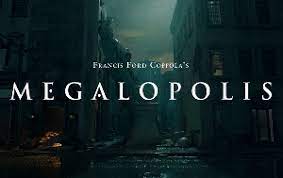
The Whistler kicks off its new Arts section – coming soon to a website near you – with a new film column. To start, our new columnist Ruby Ephstein looks forward to Francis Ford Coppola’s new opus Megalopolis and looks back at his greatest hits.
YOU WOULD THINK he’d had enough masochism for one lifetime, but no. Nearly half a century after shooting began on Apocalypse Now, a brutal three-year marathon during which he almost blew up his career and killed himself (never mind several others, including his long-suffering wife Eleanor), the godfather of modern American filmmaking is still hellbound on the trail of his holy grail.
That I feel compelled to identify Francis Ford Coppola as Papa Coppola – in deference to Sofia, herself an extraordinary director, and Roman, Wes Anderson’s favourite co-scripter – confirms how long it’s been since the chef behind the juiciest slices of prime Hollywood beef and dripping devoured by multiple generations concocted something meaty or beaty, or even merely big and/or bouncy.
Happily, Megalopolis, a dish nearly half a century in the prepping and blending and revising and reheating, will finally be served this year, quite possibly as the main course for the Cannes opening gala on May 14.
Has there ever been a more quotable screenwriter? Not unless you don’t have the foggiest what napalm smells like in the morning, don’t consider making offers that can’t be refused or don’t prefer cannolis to guns. Like Van Morrison, Papa deposited enough, early enough and in enough memory banks, not to have to fret overmuch when muse deserted and magic fizzled.
Yet still that soul-naked ambition burns inside Papa like no filmmaker since Orson Welles, the fellow rebel colossus he resembles in too many ways for his own comfort, not least a Jupiternian ego and an obsession with Conrad’s Heart of Darkness, the legendarily unfilmable novella that thwarted Welles and confined Nic Roeg to a TV movie adaptation yet sired Apocalypse Now, perhaps the most audacious and purely cinematic of all Oscar winners (for sound and camerawork).
The vast cast for Megalopolis, oft-characterised as “a Utopian parable”, ranges from the tried and trusted (Talia “Connie” Shire, Laurence “Mr Clean” Fishburne) to old masters (Dustin Hoffman and Jon Voight, Ratso and Joe Buck reunited) and new (Adam Driver, Jason Schwartzman, Shia LaBeouf). The woman around whom that hefty pack of chaps revolves, Nathalie “Missandei” Emmanuel, is Julia, a sow in the middle tugged between father pig and lover pig, the latter an idealistic architect designing a post-disaster NYC, played by the ever-noble Forrest Whitaker. Then, inconveniently, came 9/11.
For rather more enlightening insights, dig into Sam Wasson’s terrific The Path To Paradise: A Francis Ford Coppola Story (2023). Note that disarmingly honest and indefinite “A”. This is but one Papa story.
It spins around Zoetrope, Papa’s utopian dream factory, which collapsed under the weight of hubris and what most punters saw, wrongly, as a gossamer-thin romantic musical: One From The Heart, a lavish, adventurous project that suffered most from one of the few times Eleanor wasn’t so tolerant of the philanderer whose agonies birthing Apocalypse Now in the Philippines she chronicled so brilliantly and compassionately in Hearts of Darkness: A Filmmaker’s Apocalypse.
By May 2021, Papa had plunged $120m of his own money into Megalopolis, plus a fair chunk of that Napa Valley wine empire. Even this February’s release of the title card was an event. So tightly have the wraps been kept, I can’t whet your appetite any further, although the principals’ names (Caesar, Cicero) might just indicate the script’s origins. Instead, let’s consult Papa himself.
“I am vicino-morte,” Wasson relates him saying while poring over one recent “final” draft, the sense of déjà vu presumably acute. In the vicinity of death. Just as it was in the days of Kilgore and Kurtz.
How can you not love the smell of impending triumphant resurrections in the morning?
Every horror fan recognises this line as one of the most iconic moments of 90s cinema when spoken by Ghostface in Wes Craven’s 1996 film Scream.
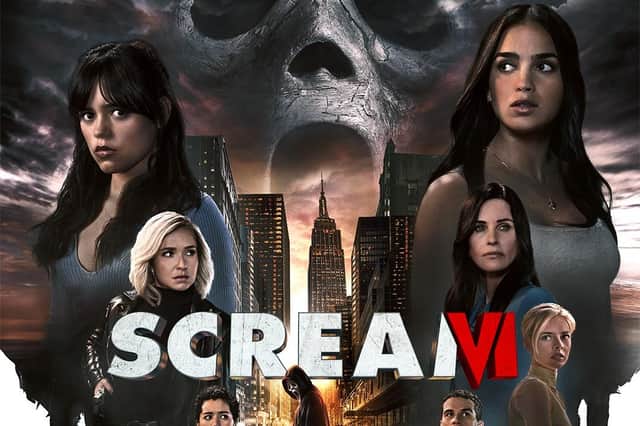
I’m a massive fan of this franchise and grew up watching the films any opportunity I could. Halloween? Scream marathon. New year? Scream marathon. Procrastinating work? Scream marathon. And with the reboot of the series with 2022’s reboot Scream and the highly anticipated Scream VI, I have yet another film to add to the list.
In anticipation of the newest instalment to the franchise, Scream VI releasing worldwide on March 10th, ODEON Brighton is hosting a one-night-only double feature of 2022’s Scream followed by Scream VI two whole days before the international premiere on Wednesday, March 8th at 6pm.
If you are a fan of 90s slasher films, metacommentary horror, murder mystery films, or just some good ol’ fashioned blood and gore this four hour double feature is an absolute must-see.
Tickets are available now via ODEON’s online booking platform.
By Tallulah Gray
Everything you ever wanted to know about life in Brighton (OK, and Hove)






 The Whistler