Category Archives: Health Matters

Be well, stay well

Back home for one more adventure

What do you do after the jungles of French Guiana and Chicago? Jed Novick finds out
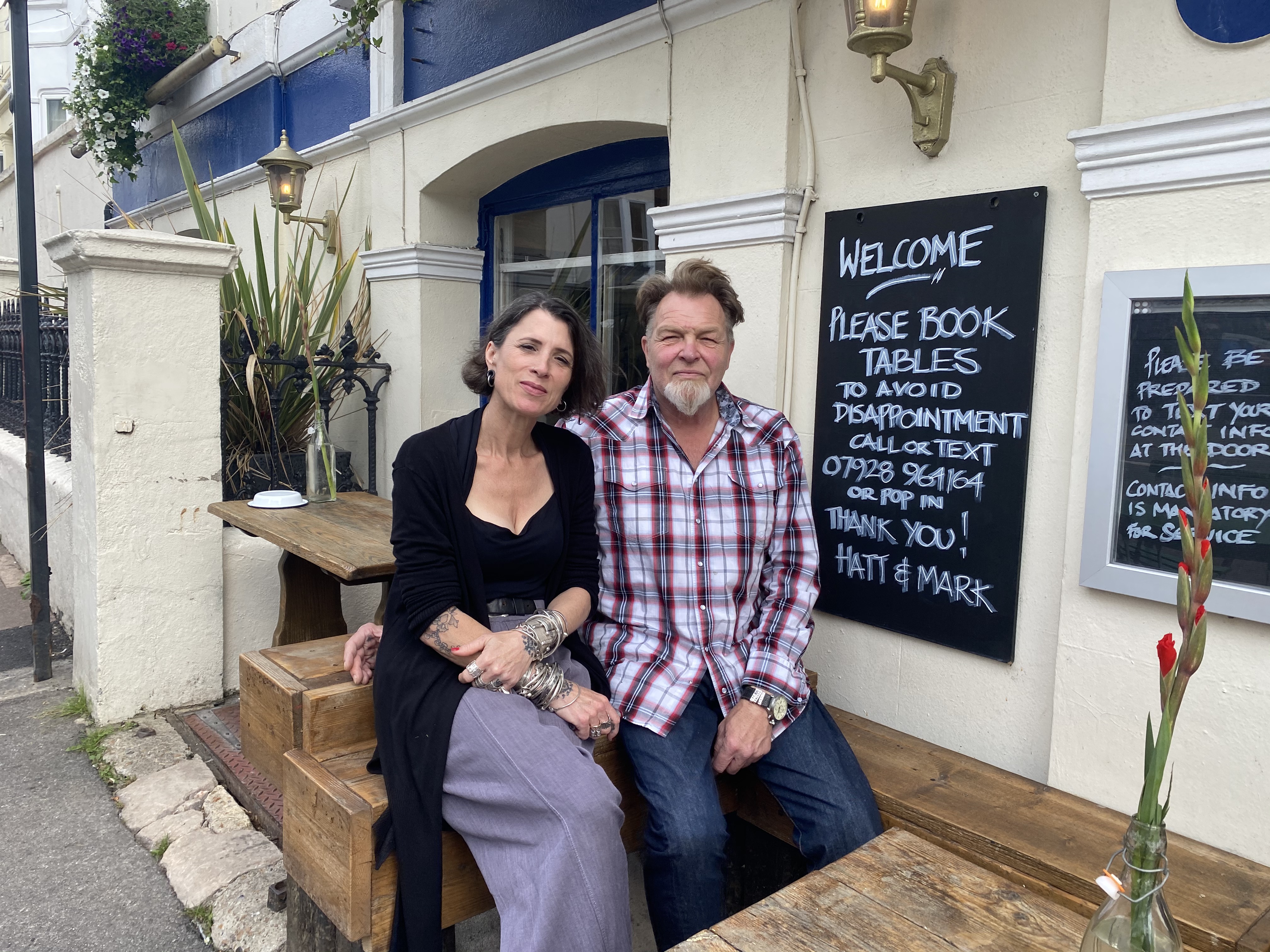
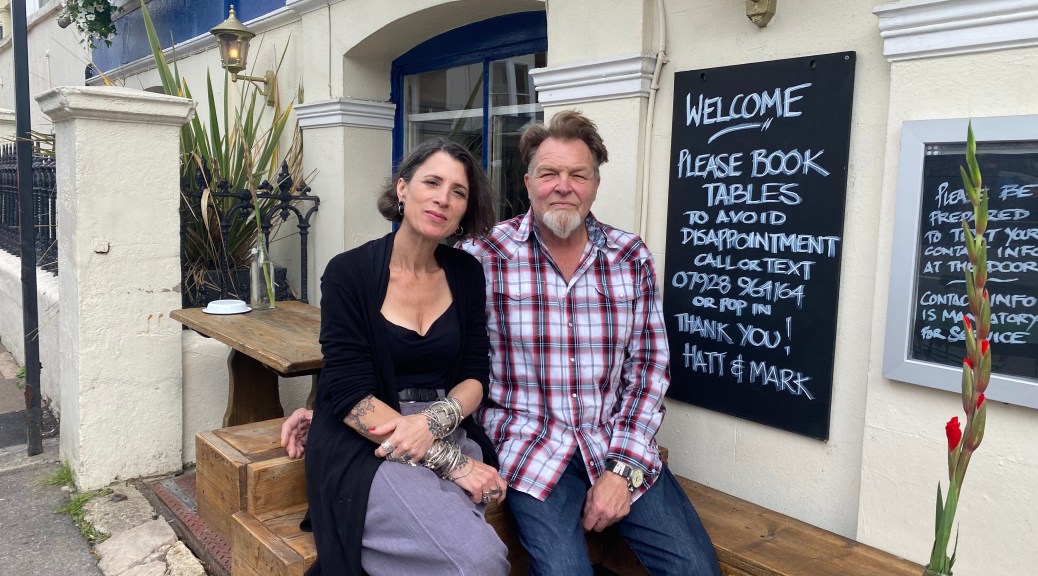
I’m outside the newly revamped Eddy, enjoying an afternoon drink and chat with Mark and Hatt, the new guardians of this particular galaxy. A car comes down the road and stops outside the pub. I don’t even notce, but Mark’s up and over there. Hatt turns, looks, smiles, carries on. Seconds later, a young lad, all muscles and tatts and with a face like a kid who’s been told to clear up his dinner plates, is walking over to the recycling bins carrying a lone bottle. He drops the bottle in the bin and throws us a half-hearted sneer, but Mark’s already back with us and the story is done. “He was just going to leave the bottle on the pavement” says Mark. “This is our community. We live here. We all live here. Have a bit of respect”. 

Hatt – Harriet Eaton – and Mark – Mark Reed – took over The Eddy in January and from there till now, it hasn’t been a straight line. But one look at Hatt and Mark and somehow you know they’re familiar with picaresque journeys. They’ve got stories.

She’s all bangles, tattoos and rings. An artist. Originally from West Sussex, the road to West Hill hasn’t been a straight one. Went to Paris when she was 18, worked in fashion, married a doctor. “He wanted to specialise in the tropical diseases. So we went and lived in South America for three years in French Guiana in a place called Maripasoula, right in the middle of the jungle. It’s like a tiny plane or three days on a boat to get out. So that was interesting. Mostly”. 

As you do when you find yourself in the middle of the jungle days away from anywhere, Hatt set up a textile business “because that’s what I’d done in Paris and that went really well – beach towels and robes” but then life intervened – kids, parents, school, the usual – and the path led back to Brighton working behind the bar in a pub not far from where we’re sitting now. 

Originally from Hastings, Mark also took a few detours before getting the keys to The Eddy. “I had a few pubs and clubs in Hastings, pubs and clubs in Brighton”. Anything I’d know? “Yeah. The old Club Savannah, which is where Club Revenge is now above Harry Ramsden”. How far are we going back here? “This is back in the early to mid-Eighties. Then I moved to America and I worked in the music industry in America, going on tour with bands for a number of years, lived out hotel rooms for about five. I worked for EMI and then I was a writer for a while and then my…  Then the music industry career got parlayed into partnerships in nightclubs and bars and restaurants in Chicago, um, over, uh, over a long period of time. And then alongside that, I also got into the car industry and worked for a major US Volkswagen dealership”. But then Mark’s life intervened…

So Mark came back after 25 years away, and Hatt taught herself how pubs worked and when the landlord of the pub where Hatt worked moved on… Well, opportunity knocks.  
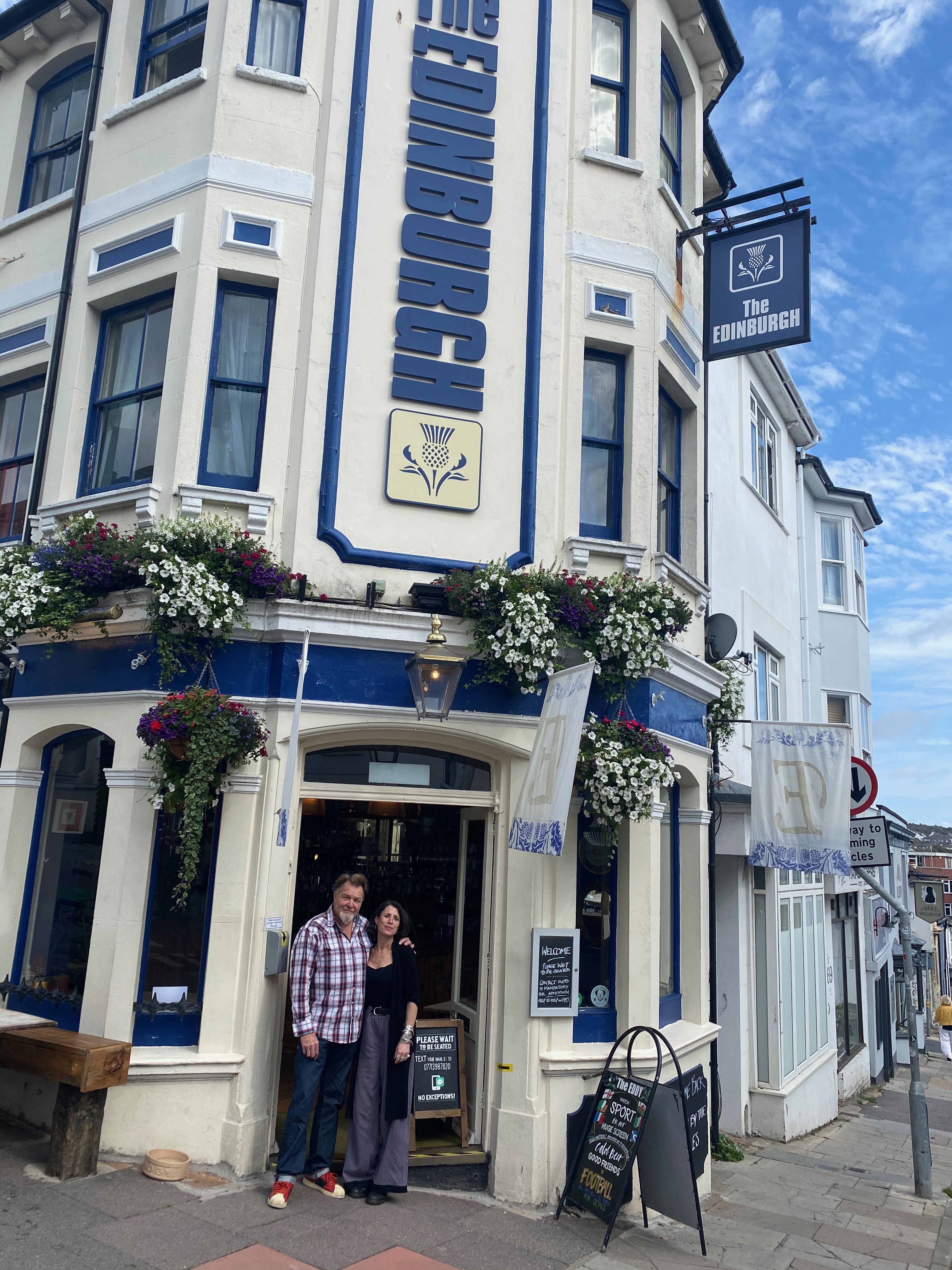
Opportunity knocks and then opportunity pulls the rug away.  In January they got the keys. A couple of months later… the world stopped. Words like “global pandemic” and “lockdown” probably weren’t in the original business plan. What was the conversation like on March 19th, the night before the lights went out?  “We’ve got a lovely little film of the last night before we shut and there was great atmosphere and everybody was wow, this is our last night for a while.

“I think people just thought it was going to be about a month or a couple of weeks, and then we’d be back open again. And I think that we were sort of ignorant of how long it was going to be. But, you know, things happen and it’s just a question of how you look at it. For us, lockdown was fantastic. We just completely embraced it and changed the pub to who we are. Re-painted everything, cleaned everything, changed everything. The cellars, the toilets, everything.  It’s like being in my front room really, you know, we really, really have made it our own.

One sweet thing that came out of lockdown was that the idea of community really kicked in. “When we closed down, John at The Yeoman created a WhatsApp group for the four pubs on the block. We called ourselves The Manor and there’s definitely a sense of care between us, but yeah, it’s very sad that some of these pubs are too small to open. John’s been there for 15 years and his whole business plan has had to change. And it’s really tough”.

What do you want from all this? “The last owner was more…, um, he didn’t really understand the concept of the community, but that’s what we love. We live here. We live above the pub. It’s our home”.

Getting To Slee…zzzzz

SO SLEEP IS BECOMING a bit of an issue at the moment for many people. It is horrible not to be able to fall asleep, because your mind is out of control or waking up again in the early hours and not being able to go to sleep. Stress and anxiety are contributing hugely to this current issue of insomnia. To be able to go to sleep the brain needs to switch to the relaxed alpha state as opposed to being in the busy beta brain state. How do we get into that state? Meditation and relaxation techniques are key to calming ourselves down. We need sleep to function properly as lack of sleep will also compromise our body systems including the immune system. According to the Chinese Medicine body clock, waking up between 3 and 5 am is likely to do with adrenal exhaustion or between 1 and 3 am indicates the liver might be struggling for example. 

There are many reasons why we don’t sleep well so the key is to get to the root cause of the problem. Here are some other tips to get a better night sleep.

Avoid caffeine after 3pm. It is a stimulant and can take a long time to be eliminated from the body.

Alcohol, even though it can make us feel sleepy it tends to wake us up again in a couple of hours and it is difficult to go to back to sleep again.

Large meals in the evening should be avoided as they might promote a high insulin release which might lead to low blood sugar which then releases adrenaline into the blood stream and that would often wake us up and we might struggle to fall asleep again. 

Add more tryptophan foods into your diet. Tryptophan is the precursor to serotonin (the happy hormone which also helps us sleep). Include fish, legumes, avocado, bananas in your diet. A little bit of banana or an oat cake with a little avocado before bed could be beneficial.

Make sure your diet contains enough Magnesium as it is the nature’s tranquilliser, and finding a good Magnesium supplement might also help.

Aim to go to bed earlier 22.30 -23.00 and try not to use phones or computers two hours before bedtime.

Melatonin is a hormone secreted by
the pineal gland in the brain which
regulates our sleep wake cycle. To help
our body to make more melatonin
naturally, get out in the sunshine
during the day and at night sleep in a dark room. Bright lights inhibit the release of melatonin.  

Exercise regularly as this can often improve sleep patterns, but do not exercise too late as this could be stimulating for the body.

Reducing stress levels is key – meditation and yoga are great tools to help achieve this.

Helena Taylor

Book a free 20-minute call to discuss stress, female health and hormonal balance and how I might support you on your journey to optimal health.
Email: helena@nutritiouspantry.co.uk, http://www.nutritiouspantry.co.uk.

Lockdown Ideas: Global Sharing Week

Globally, we have enough surplus food, shelter and water to end poverty, hunger and homelessness. Global Sharing Week is the largest annual mass engagement campaign to promote and enable the sharing of vital resources with those who need them most, whilst protecting the planet at the same time. Created by the Brighton-based charity I created, The People Who Share, Global Sharing Week reaches over 100 million people worldwide. This year, with the world suffering the challenges of the Covid-19 crisis, Global Sharing Week will see a phenomenal online campaign to ensure that those in need receive the resources they need to survive the crisis. Projects and vital resources from food banks, to groups making PPE for frontline healthcare workers will be listed on a global map at globalsharingweek.org

Participation is open to all, everyone can play their part by adding projects and available resources to the Global Sharing Week map and sharing what’s there. Global Sharing Week helps us to demonstrate that where we have poverty, we can have prosperity, where we have loneliness, we can have community and where we have landfill we can have reuse.

The People Who Share is currently running Covid-19 Food Relief, a campaign to ensure that nobody in the UK goes hungry during the Coronavirus crisis. Currently, 1.5 million adults and 830,000 children in the UK are not getting enough food, whilst 53% of NHS workers are concerned about accessing supplies during the Coronavirus pandemic. (The Food Foundation, YouGov Poll, March 2020).

Covid-19 Food Relief is a mass call to action and a one-stop source of information to help people find food urgently, donate or volunteer. By making vital supplies easy to access, and galvanising the UK’s population to act now, we can help save lives. At The People Who Share, we believe that a united effort can mean that nobody goes hungry during this crisis.

Covid-19 Food Relief has been created to promote and support organisations including FareShare, The Trussell Trust, FoodCycle, Independent Food Aid Network, Meals for the NHS, The Careworkers’ Charity and many other community groups working on the frontline to ensure that everyone in the UK has sufficient food.

If you are hungry to help, you can volunteer or donate to a range of organisations working to provide #FoodRelief to those who need it most during the Covid-19 crisis at www.thepeoplewhoshare.com To get involved or find out more information email: foodreliefC19@thepeoplewhoshare.com Let nobody go hungry during the Covid-19 crisis.


Benita Matofska

Global Sharing Week 2019, saw 540 events take place in 211 cities across 49 counties on every continent, creating massive social impact. To get involved, find or register a project or shared resource head to globalsharingweek.org


Gut instinct

How do we build a robust immunity?

Immunology has over the years been a fast developing field. It is clear to all of us today more than ever that building strong immunity will be something to strive for as it is the key to keeping dis-ease at bay.

The immune system is a complex integration of synergistic segments that are continuously bombarded by stimuli – from both internal and external sources. If we want to truly support our immune system we need to have a long look at our lifestyle, diet, exercise regime, stress management and sleep patterns. More stressed we are more the body uses vitamin C. If we don’t sleep enough less time the body has to repair and we are also likely to go for more alcohol or caffeine which are not helping. Movement of any kind is important to keep the lymphatic system healthy which produces B and T cells which are the special forces of the immune system. Many of us are now shifting our priorities around self-care. We want to feel calmer and are more intrigued about our immunity and about our body and health in general. These are good signs.  

Eating more plants and fermented food like fruit, vegetables, legumes, nuts and seeds are rich antioxidants and will help with decreasing inflammation in our bodies by fighting free radicals. Berries are rich in phytonutrients anthocyanidins which support the fight against bacterial, viral and fungal infections. They contain plenty of fibre which will support your gut function populating it with good bacteria which in turn can improve your immunity. Our gut contains 2/3 of the body’s immune system and it is the largest barrier against the outside world together with our skin. 

Book your free 20 minute chat with Helena to discuss any of your heath concerns and how she might be able to support your health. Please email helena@nutritiouspantry.co.uk to book your space.

Helena Taylor

Coronavirus Actions

  1. Think of others, consider your actions and be kind. All of us face the challenges of COVID-19 in some way, from needing basic provisions to help if we are unwell.
  2. Reach out to your neighbours. As self-isolation increases, stay connected and check in on one another for our physical and mental well-being. Share phone numbers and stay in touch. Continue reading Coronavirus Actions