
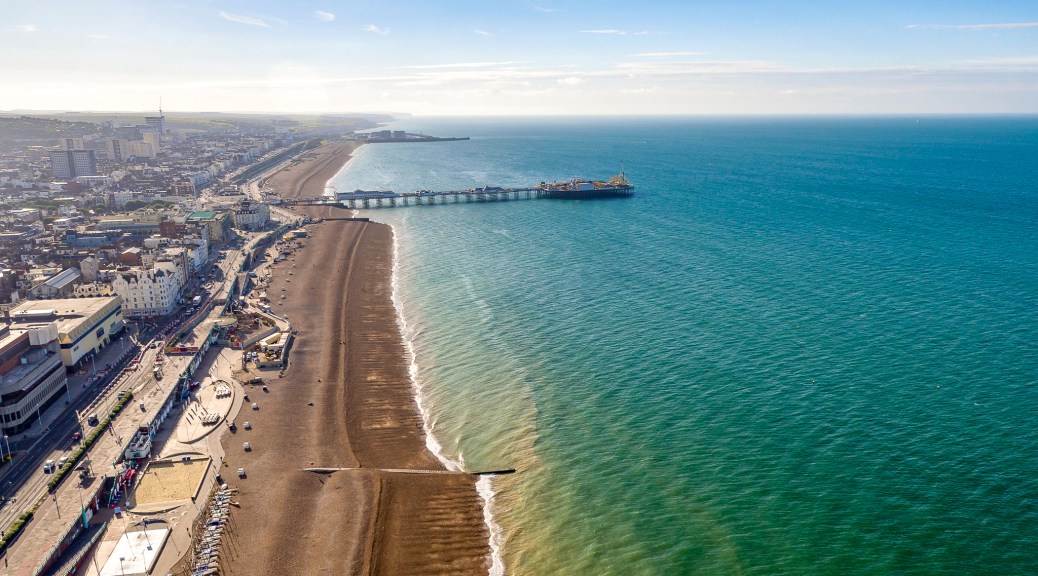

I’ve long been fascinated by the wonders of our waterscapes and how vital ocean conservation is to our very existence. 70% of our planet is covered in water – from seas and salt marshes, to rivers and inland coastal waterways, these shape the land, the way we live, eat and breathe – they’re vital to our health, wealth and happiness and we need them to survive. When they thrive collectively, this is Blue Magic.
I grew up in land-locked Leeds and the first time I saw the sea, I was 18 months old and stood and stared and was silent for the first time. It was my first encounter and it would come to shape my life.
Fast forward to when I was 10. Riddled with eczema, my parents took me to the Dead Sea. They’d heard about its healing powers and had been told that if you submerge yourself in the water for seven minutes, it can heal even the most damaged skin. Willing to give it a go I gripped his hands tightly and in we walked. The pain in my open sores was terrible, but I persevered and managed to stay submerged. Within three weeks, my eczema had cleared. It felt like a miracle. Nature’s minerals in the Dead Sea – magnesium, calcium and potassium – had worked their Blue Magic.
So what does all this have to do with us Brightonians? Well a new initiative called Sussex Bay is set to bring Blue Magic to our very own shores, so we can reap the benefits. Sussex Bay is a mission to regenerate, restore and revive 100 miles of our Sussex coastline. Paul Brewer, the Director for Sustainability and Resources at Adur and Worthing Council and Dean Aragon-Spears, Head of Blue Natural Capital are spearheading this incredible project.
Dean describes Sussex Bay as ‘a movement initiated by Adur & Worthing Councils, powered by civic organisations, local businesses, communities and people.’
Through what they describe as ‘bold collaboration’ they aim to generate £50 million by 2050 to accelerate local seascape recovery along this incredible coastline – from Selsey in the west to Camber
Sands in the east including its river systems, coastline and marine area out to 12 nautical miles.
Sussex Bay came about after Adur & Worthing Council declared a climate emergency in 2019. Two local projects inspired the next step: the Knepp Estate which has rewilded 951 hectares of farmland and seen massive increases in wildlife and biodiversity, and secondly the work of the Sussex Inshore Fisheries Association to introduce a 300 km2 trawler exclusion zone off West Sussex to restore the decimated historic kelp forest. If yoiu could rewild the land, why couldn’t you rewild the sea?
“There’s an urgent need to reverse the catastrophic decline in marine biodiversity. Sea-based rewilding projects are far less common than those on land. The Blue Marine Foundation defines rewilding the sea as ‘any effort to improve the health of the ocean by actively restoring habitats and species, or by leaving it alone to recover’. Healthy seabed drive a richer marine ecology, so when habitats recover so does everything that relies upon it.
“Now more than ever we must bring nature back to our seabed, reefs and rivers. Restoring these ecosystems and their blue natural capital helps protect our coasts from storms, clean our waters, store carbon and support biodiversity.
And as nature recovers, people and the coastal economy will benefit too; from sustainable fisheries to enhanced health and wellbeing, and new commercial opportunities in ecotourism and leisure.” And that is magic.
Benita Matofska is a speaker and author of Generation Share, a collection of 200 stories of changemakers.
benita@benitamatofska.com
Reasons to believe in the power of the seas
1.Globally, the Blue Economy is worth $1.5 trillion, provides over 30 million jobs and food for three billion people. And that’s predicted to double by 2030. A similar initiative to Sussex Bay is The Great Blue Wall, an African initiative to secure livelihoods for 70 million people, restoring two million hectares of ocean, capturing 100 million tonnes of CO2. The network of seascapes will be connected by a living blue wall that act as regional ecological corridor created by conserved and restored blue ecosystems such as mangroves, seagrass and corals.
2.Another initiative is Ireland’s Eco Showboat, the brainchild of Anne Cleary and Denis Connolly who travelled the coast of Ireland by solar powered electric boat on a zero carbon journey to connect scientists, artists, communities to spark climate action.
3.We’ve lost half of our coral reefs in the last 30 years and are estimated to lose 90% by 2050 because of climate change, pollution and over fishing. The better news is that scientists have found that marine ecosystems recover very fast and we can restore marine life by 2050 if we act now.
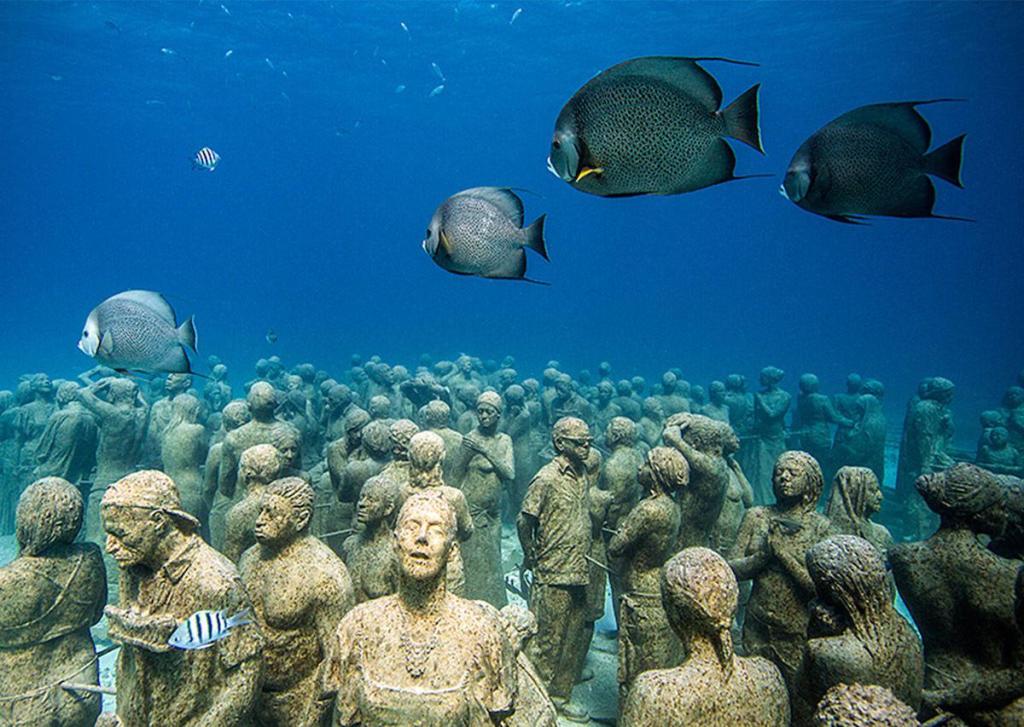
At the Museum of Underwater Art in Australia, underwater sculpture artist Jason DeCaires Taylor has created installations and beautiful artificial environments installations also lure divers and visitors away from the Great Barrier Reef, helping to protect it.
4.Wetlands are biological super systems that store up to 50 times more carbon than rainforests. 40% of all plants & animals live and breed in wetlands and over a billion people depend on them for their living. We need to preserve our wetlands and our waterways to survive. The floating gardens is a project in Bangladesh to bring wetlands back to life using ancient Aztec traditions providing food, livelihoods and flood defences, combating impacts of climate change.
5.The South African charity Waves for Change is a project offering surf therapy to children. By making the ocean accessible, children are learning new skills, and having a magical, life changing experience.
6.Alejandro Duran, a Mexican environmentalist and artist, has created The Museum of Garbage and Washed Up, an installation and photography project using rubbish that washes up on Mexico’s Caribbean coast, a UNESCO world heritage site. His mission is to wake us up to the impacts of plastic pollution and consumerism. Alejandro and a team of volunteers found trash washed up from 58 countries and 6 continents.
How You Can Get Involved
1.Help to regenerate Sussex Bay by donating to the crowdfunding campaign.
2.Volunteer with one of the Sussex Bay projects such as Sussex Underwater, the Sussex Kelp Project or the Sussex Dolphin Project.
3.Document wildlife sightings at the coast and get involved in citizen science. For more information, visit sussexbay.org.uk
4.Submit your idea. What’s your vision for Sussex Bay? Be part of the region’s biggest, boldest coastal collaboration ever.
Contact hello@sussexbay.org.uk
 The Whistler