Category Archives: sustainability

Climate Cafe – Rewilding The Sea

Brighton’s seaside is a playground, a health spa and a boon to the local economy. But in our crazy industrial food culture, we’re much more likely to buy our fish already battered in a shrink-wrapped plastic package from the supermarket than one of the lovely fish stalls on the beach or the fish shops – Andrew’s in the Open Market or Brighton & Newhaven Fish Sales next to Hove Lagoon, where the fish come straight off the day boats, supporting the environment and the local fishers.

Our coastline has been through its own boom and bust, with fish stocks on the critical list and the ocean’s eco-system becoming decimated by the heavy hand of the industrial food system. But there’s good news coming in on the Sussex waves; Dolphin Head, south of Selsey Bill, was designated a Highly Protected Marine Area (HPMA) last year, after years of campaigning. Following decades of bottom-towed trawling, the site has become degraded, but these new protections will allow the area to fully recover. The area is a hotspot for bio-diversity, with several habitats found there and is used by numerous seabirds and marine mammals, including Risso’s dolphins and Harbour porpoises.

It was a lone fisherman we met on a dog walk on the beach at Shoreham who told us that Rampion wind farm has brought all sorts of fish back to its waters, that the sea bass and plaice come right up to the beach now, and there are plenty of sea bream further out. “It doesn’t just stop the trawlers. It’s created a reef which provides new habitats.” 

And that creates a whole new eco-system. 

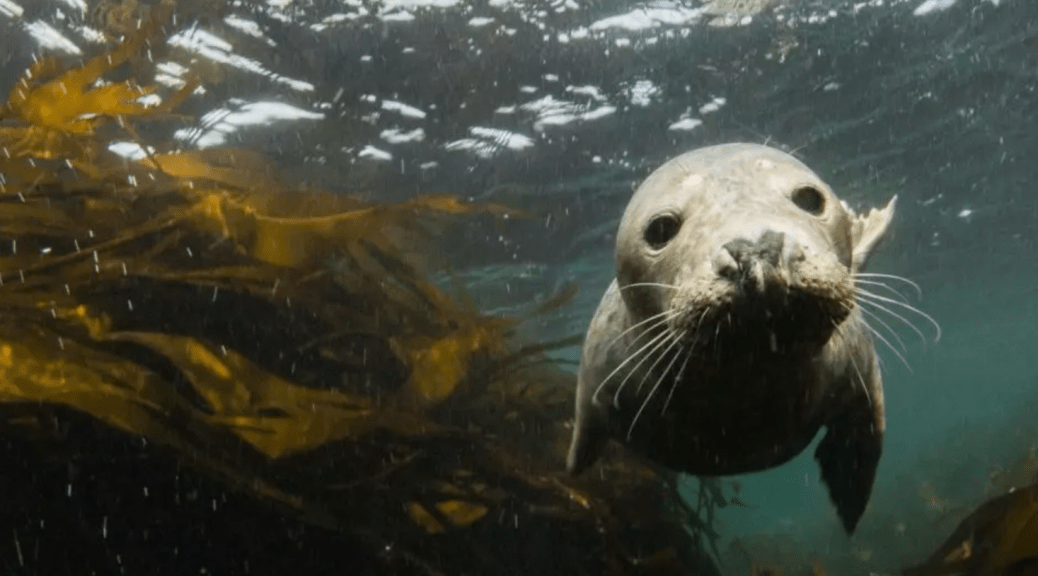
Local campaign group, Sussex Underwater, which only this autumn won a coveted Maritime Award for their film Our Sea Forest, reports that mussel beds are returning. Like oysters, these biovalves create important habitats for other species, and provide food for rays and other fish. 

It’s an astonishing reminder of a world that turns out of our view. Charles Clover, author of Rewilding the Sea, and seasoned environmental journalist says that we need to dive deep and wake up to what’s happening in our oceans not just to save the planet but to remind ourselves of what the Channel might have been like many years ago. “The dynamism of nature is just quite fantastic” he tells me. “If you leave it alone and harvest it really sustainably, using methods that don’t damage the rest of the ecosystem, then it does you multiple favours.”

Co-founder of the campaigning Blue Marine Foundation, Clover is bringing life back to our oceans and writing about it beautifully. Margaret Atwood calls his book “a game changer”. Knepp’s Isabella Tree says it’s “desperately needed”. George Monbiot says, “What if our seas became productive again with giant sturgeon, halibut and skate? It’s closer than you think.”

 “It’s not about not eating fish”, Clover tells me. “It’s about making sure the fish are managed properly. An extremely good example of the resurgence is the Bluefin Tuna around Britain’s shores. It’s not been there for 70, 80, 90 years, but it’s back. And it’s back principally because of a fisheries management decision.”

Industrial fishing has an enormous impact upon biodiversity; trawling and dredging smashes up the seabed, destroying “the forests of the sea” where the humble seaweed draws down CO2 and locks it away forever. But as Charles explains, Sussex Kelp has turned the tide on trawling.

“Sussex Kelp brings together the three reasons why we must rewild the sea: for greater food security, for biodiversity and for climate,” he says. In his book, he tells the story of Eric Smith, the Shoreham free-diver with Sussex Underwater who campaigned for the protection of the kelp belt, and continues to report on the astonishing recovery of this area from trawling. As a result of his work, mussel beds are expanding, stingrays have been sighted and the kelp is returning, says Clover.

“Kelp is one of many as-yet unquantified mechanisms that can help sequester carbon from the atmosphere and lock it up in sediments, though where its leaves go to that are not washed up on the shore is complicated and hard to quantify. But in the end, it will take its place with seagrass, saltmarsh, mangrove and, I believe, other forests of the seabed, in being recognised as an important mechanism that must be protected, that makes our planet more resilient.”

With the protection of the Sussex kelp, fish have come back as well as lots of other organisms, and local fishermen are happy too. “It shows what we could do all round our shores and it shows that in some places at least, we are moving in the right direction. As Eric puts it, “we are winning.”’

l Rewilding The Sea: How To Save Our Oceans by Charles Clover (Penguin) 

l Hear more from Charles Clover on Gilly Smith’s podcast “Cooking The Books with Gilly Smith”
Climate Cafe: Circles

Continuing our virtual Climate Café where we look at people and places making a positive contribution to our future. By Benita Matofska 

The Climate Fashion Destination: Circles

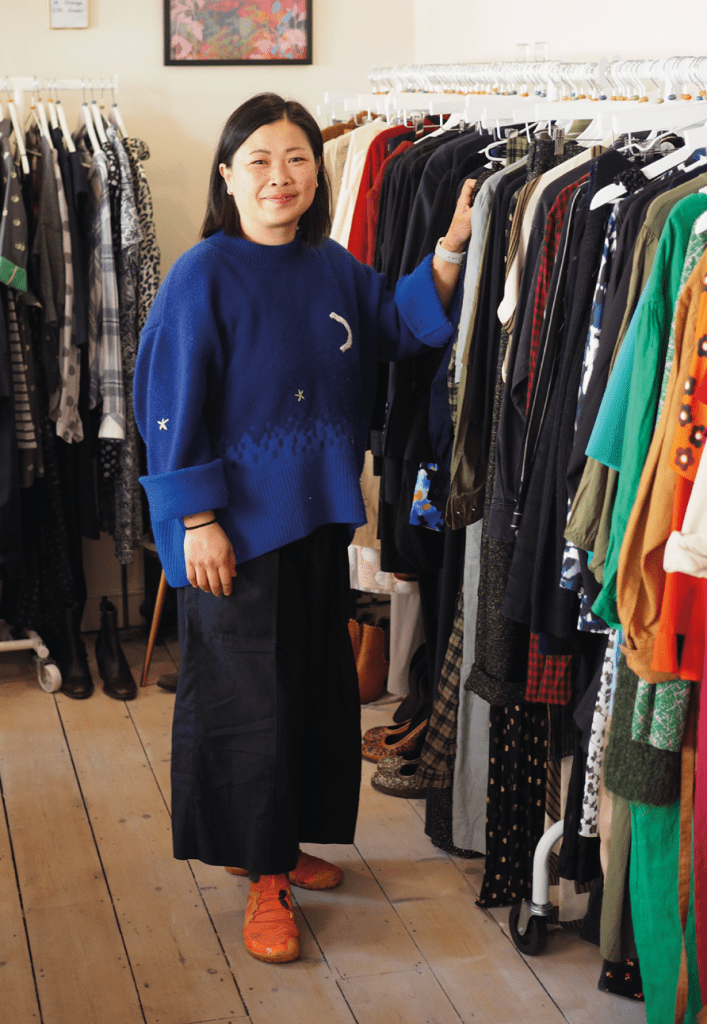
More than a store, this new Brighton gem of a place prides itself on being a home for the circular economy. And it’s easy to see why. Beautifully curated, high quality pre-loved clothes and creatively repaired pieces brush shoulders with timeless homewares just waiting to be rediscovered and reloved. 

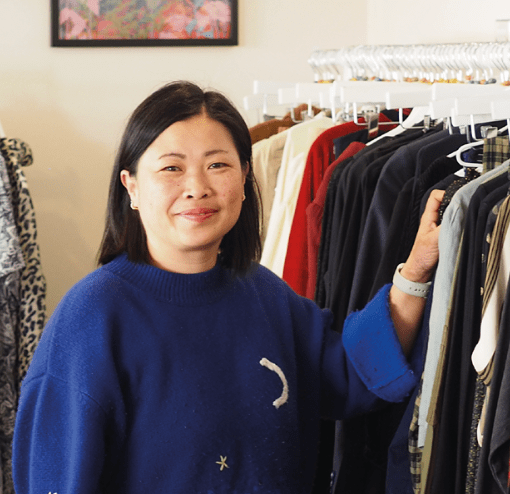
Circles was founded by Brighton-born ethical fashion aficionado Jules Hau. With over 30 years spent in eco fashion, Jules is on a mission to inspire a sustainable, mindful and creative lifestyle. It’s not just about circles of fashion, but circles of wellbeing and community too. Downstairs hosts a treasure trove of second-hand designer, boutique, vintage clothes and accessories. On my recent visit I found brands ranging from Isabel Marant, Diane Von Furstenburg, Stella McCartney, to my personal favourite Essential Antwerp. All the glamour minus the guilt – so I snapped up a vintage Biba silk, embroidered, red-green-orange top. 

But Circles is more than your average consignment store. Yes, you can sell your designer items by appointment, or discover something unique to buy, but upstairs is another part of the story. Here you’ll find a wellbeing space offering massage, qi-gong, mindful treatments and sustainably focussed events. I’m something of a connoisseur of Brighton’s many pre-loved haunts, but Circles feels different. Maybe it’s Jules’s innate knowledge of ethical fashion, or her personal style that’s infused throughout. I can’t help but feel that it’s her loveliness and genuine care for the planet that will warm the heart of any discerning eco fashionista. 

Circles Store is open Tuesday to Sunday and can be found at 21-23 Church Street, BN1 1RB. For info: https://www.circlesstore.co.uk/ 

The Climate Network: Climate Women

OK so full disclosure (now she tells us), Jules is also Co-founder of Climate Women, an initiative we started together in January this year. The concept is simple – a monthly circle and network for women who are passionate about the planet. We gather (in the Circles wellbeing space) on the last Wednesday of the month to create, support, swap ideas and deliver climate action. Having been active as a speaker, writer and campaigner, with most of my activities focussed nationally and globally, it felt time to turn attention to starting something on my Brighton doorstep. 

Both Jules and I feel that given women’s role in taking climate action, it’s time to build something for ourselves. Notably, women lead on political environmental change, and once elected to office are more likely to deliver social and climate legislation – from Caroline Lucas, to Jacinda Ardern, Christiana Figueres, and Wangaari Mathai. Women lead more eco lifestyles too. A British study by Mintel showed that 71% of women try to live more ethically compared to 59% of men. 

In the global South, women recycle more frequently, buy organic food and support energy efficiency. Women are also building more sustainable businesses, with greater investments into environmentally friendly business processes to reduce emissions. But all this comes at a price, with many women climate actors suffering burnout, climate anxiety and depressions. Climate Women provides a safe space to talk, listen, create and act. It has proven to be popular with (each event sold out well in advance. Each circle focusses on a theme from climate optimism, to wellbeing and our relationship with fashion. 

We make individual pledges to act, as we believe small actions create ripples of impact and lead to big change. March saw our first local fundraiser in aid of The Real Junk Food Project raising £600 in a two-hour clothes swap bonanza. We’ve been asked to bring Climate Women to other cities, but for now at least our focus is to think global and change local.

Climate Women events take place on the last Wednesday of the month from 6.30 – 9pm at Circles, 21-23 Church Street, BN1 1RB. 

Tickets: https://www.eventbrite.com/e/climate-women-brighton-a-monthly-circle-for-planet-conscious-women-tickets-796010668337 

The Climate Event: The Great Big Green Week (June 8th-16th)

The UK’s biggest ever celebration of community action to tackle climate change, protect nature and talk about local action. The theme this year is ‘swap together for good’ – inspiring swaps created by communities to make a better tomorrow. Climate Women are joining forces with the lovely folks at the community-owned Exeter Street Hall who are organising the Prestonville Great Big Green Weekend on June 8 & 9. On Sunday 9th, we’ll be delivering another clothes swap from 2.30pm with tea, coffee and cakes. Funds raised will support Exteter Street Hall and The Real Junk Food Project. You can sign up for plant and pot swaps, the Prestonville litter pick, a skills share (learn to crochet?); there’s bug house making for kids or why not join the repair café? What’s not to love?

Prestonville Great Big Green Weekend will take place on Saturday 8th and Sunday 9th June at Exeter Street Hall, For more info visit: https://exeterstreethall.org/ For The Great Big Green Week full list of events visit https://greatbiggreenweek.com/ 

Benita Matofska is a public speaker, writer, consultant and author of Generation Share, available from independent bookstores. Each copy is ethically produced, feeds and educates a girl in the slums in Mumbai and plants a tree. 

Climate Cafe – People, Planet, Pint

We’ve been thinking a lot about what we can do at Whistler Towers about Climate Change. And it was in the book Spinning Out by the brilliant activist, Charlie Hertzog Young that we first heard about climate cafes. These are spaces where people can talk about their eco anxiety, share ideas and feel like they’re not alone that first inspired this page. 

But mostly, they’re physical spaces; in the last issue, we read about Circles’ monthly meet-up for women involved in sustainability, either through activism or business, and in this issue, we meet Sam Zindle, managing director of Brighton B Corp certified digital marketing company, Propellernet who organises Brighton’s People, Planet, Pint monthly get togethers which have spread all over the world. Over to you, Sam.

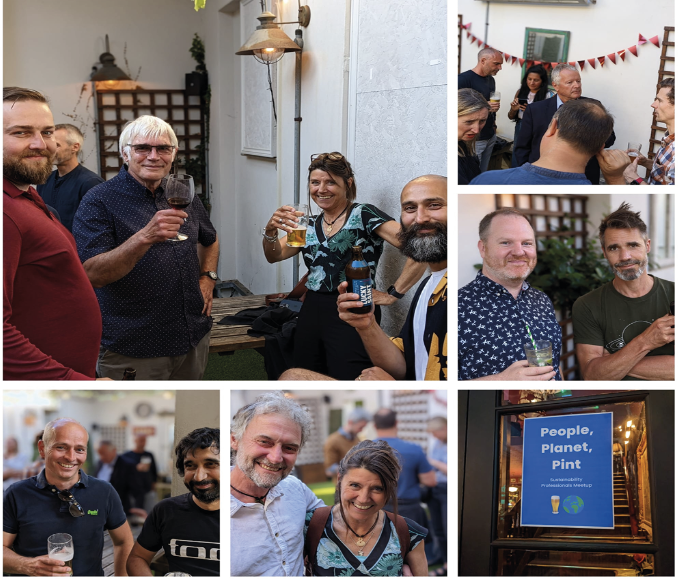
“People, Planet, Pint is an international meet-up group now. It was started by Adam Bastock, who founded Small99, which creates carbon reduction plans for small businesses. I was there when he ran the first one in 2021 at Cop 26 in Glasgow. It was essentially just a room in the back of a pub in Glasgow, and it’s grown and grown. Brighton was one of the first other cities to start running people planning meet-ups. 

We meet once a month, alternating between The Walrus – that’s the one that I’m responsible for – and at the old Albion. It’s always the third Thursday of the month from six until whenever people want to go home. It needs to be regular for people. You just sign up at Eventbrite, and it’s completely free. 

This is for anyone who’s interested in sustainability, but it’s purposefully non agenda based. We get people from all walks of life, from people in academia to startups in the kind of tech sustainability space. Or they may simply care about the environment. So, if you’re just curious people in the city who want to talk more, you can come down. There are never any speakers. There’s never a running order. It’s literally that you get your first drink bought for you, courtesy of our sponsors, Crystal Hosting and Propellernet. And then you can have your chats. It’s just a place where you’re surrounded by people who feel the same way. 

I think Brighton is awash with some brilliant independently run, volunteer-based community groups and it thrives on that. There used to be something in Brighton years ago called like, the Green Drinks, but back then sustainability wasn’t mainstream or a conscious thought for many people. I think attendance didn’t really last; it was always the same people. Every time we do People, Planet, Pint, we get about 40% of people that are new. So, it does have an amazing kind of new energy to each one. 

You do get maybe 20 people or so I’d say that are there for most of them. But you just get an array of different people coming through the door of the pub that each meetup which makes it keeps it fresh, keeps it exciting and keeps new conversations happening. We get somewhere between 50 and 100 people each month which makes it the largest sustainability meet up in the city. I guess it’s just a really vibrant and active community around sustainability and Brighton.

In the last month alone, I’ve spoken with a guy who’s pressing plant-based vinyl records who’s now done a deal with a major label, and a guy who works in agri tech and is using AI to direct plant-enhancing products onto the crops to grow them better in a really sustainable way. I speak to people who work in marketing and we talk about green washing and green hushing and how to help companies navigate that whole space. I mean, I could go on… you meet people from 101 different backgrounds. 

And my hope is that the conversations go on beyond the evening. I know for a fact there’s been some connections made and people who’ve kind of collaborated, which is a really big part of this and that everyone has there has a shared interest in doing something for the planet and environment in whatever form that may take. 

So it’s a very successful meetup and it will endure, I have no doubt, for years to come and hopefully grow in attendance. There’s no move to change how we do it. It seems to work for people 

There are People, Planet Pints all over the world now. I think it’s in 30 different cities in the UK, including Manchester, London and Bristol, and even smaller places like Cheltenham. But there’s one in California, there’s one in Berlin, there’s a couple I think in Scandinavia. You can go onto the People, Planet, Pint website to find out more about where the local events are happening all over the world. 

We don’t have big budgets to advertise. We don’t have massive sponsors. And actually, that’s part of its attraction, I think, because the minute you start kind of having to deliver a sponsored message or advertised, you know, to certain people that it becomes something different. So I’m pretty comfortable with the kind of grassroots scene in Brighton but of course, we’re always always looking for new people to find out about us and come along and spread the word. 

GILLY SMITH

https://small99.co.uk/people-planet-pint-meetup/

Surface appeal

We wanted to revamp our kitchen. New surfaces, new worktops, new doors. We wanted something stylish, individual, sustainable and didn’t cost a fortune, something a little more “us” than going into a kitchen store and buying something off the shelf. How hard could that be? 

Actually, we tried that, went to the usual places and saw the usual stuff. Things with names like Nordic Noir and made of granite or Corian. Nice enough, but a bit uninspiring. It started to become a little bit of an obsession. Eventually, we decided on a radical, if familiar, course of action. “Let’s go for a drink and something to eat”. 

We went to Fumi, the new Japanese in Circus Street. The food’s great there and it’s been designed beautifully, a very stylish clean aesthetic. Sitting there, we couldn’t help notice the furniture. The tables looked like marble, but clearly weren’t. 

“We had them made for us. They’re really interesting, they’re made from used coffee”. 

What? 

Two days later I was talking to Jani Lemut in, obviously, a coffee shop. 

“It was just an obvious thing to do. I was working with an interior design company who were importing all their furniture from India, but wanted to be more local and sustainable and so on, so they contacted me. We started talking about new designs and what we can do and what different materials to use, local materials. I started thinking ‘What else can I use?’ And coffee was very obvious, because it was just on the table. It was just there”.

How many cups of coffee get thrown away?

“Probably a lot”, said Jani. “I heard a statistic, I don’t know whether it’s right or not, but the average person in UK spends £25 pounds a year on coffee. In Brighton, it’s £75”. 

Apparently there are more coffee shops here per head than anywhere else in the UK. And in Seven Dials… 

“Yes. Most probably. Yeah, and it’s still gaining popularity. It’s quite incredible”.

Jani is a “classically trained furniture maker” from Slovenia who came here after the war in Yugoslavia started in 1990.  “I made wooden children’s toys and we had quite a nice steady business, but then after three or four months, the war started and that was it. Lost everything. The country came to a standstill and basically that’s what brought me here. “I came to see a friend of mine in Gloucestershire and I just loved it. Absolutely loved it. I love the freedom of expression here. When I got to London, I just loved it so much. I said to my friends, ‘Look you go back. I’m staying here’. And that was pretty much it.” 

He moved to St Ives and “had a really good time, doing mainly designing and building furniture, cottages. I was doing lots of artwork as well, art exhibitions and so on. Everything was always based in recycled materials. I was always fascinated by what gets thrown away. What can one do with the challenge? I still feel excited by the idea we can turn objects into a different life. So that’s my main motivation”.

Had you seen coffee used before? 

“People have tried using coffee in all sorts of products, but only as an additive. People have tried make composites are made of coffee and thermoplastics…” At this point Jani started talking about binding processes and chemistry. I ordered another coffee and waited for him to start speaking English again.

How long did it take you to work all this out?

“Two years”. 

And you kept going with it? Because you were certain that it would work?

“Well, I wasn’t certain certain, but there was a promising sign. The problem with it was stabilising the coffee because it’s organic it moves, it does all the the things that any organic stuff does. So to bind it in organic way, it’s quite difficult, but this is exactly what we were trying to do, to make a plastic free component”. 

And you have now?

“Yes, we have. Yes.”

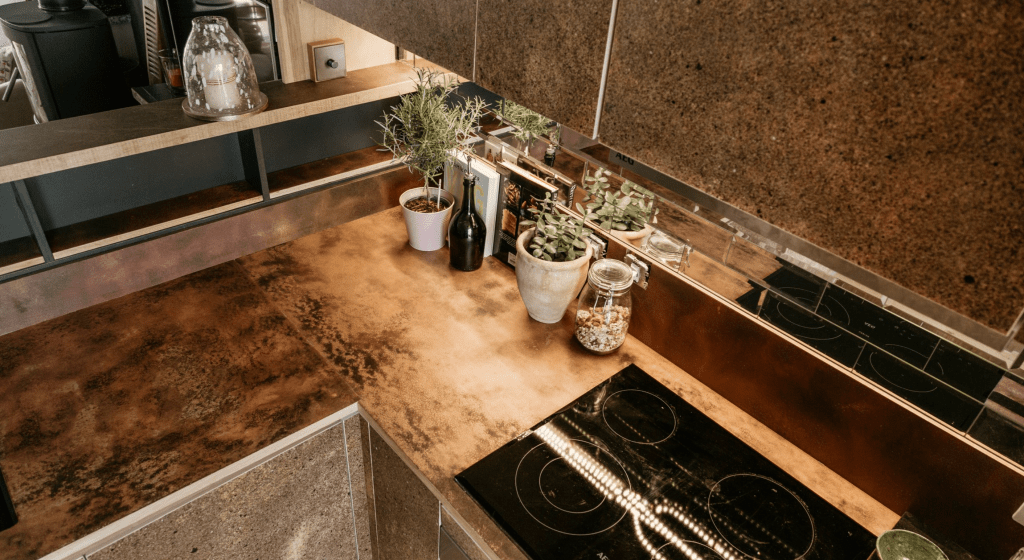
The results are really lovely, but it doesn’t only look lovely, it looks real. Organic. 

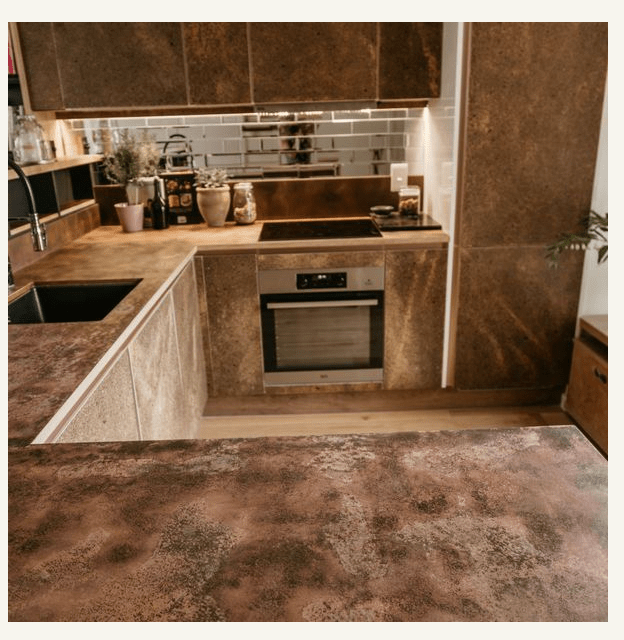
“Of course, because all the ingredients that we use are purely by-products of different materials. marble dust, copper, dust, metal. Then you’ve got spices, natural pigments and so on and so forth, all sorts of stuff like charcoal”. 

You could make something beetroot colour?

“Yeah, we do that”.

Could you make something that blue? 

“Yes. Turquoise oxidize copper dust, a very intense turquoise”.

There are other uses for the materials but “I’m a bit wary of mixing too much either plastic or any chemicals with our product, because then it’s difficult to recycle further. So wherever we create, we try to create in such a way that is easy to dispose of or reuse later on. This is the main point of doing this. At the moment, our product, if you leave it out in a field for a couple of years, it will just disintegrate and it will go back to where it came from. That’s pretty much it”.

Everything here is about sustainability. On their website (below) they say “We are carbon neutral. We plant a tree for every sale we make. Our materials are sourced locally and much of it from waste”. They are “a circular business. Everything gets recycled, everything gets re-used”. 

We had the worktops done, the kitchen island and the dining table, and went for a copper sheen finish that looks great and always gets comments. It’s hard-wearing, waterproof, almost completely heatproof and can be made to any size or shape. It also cost about a third of what we were quoted in the high street. 

“Why make something that will be extortionate? Why make something nobody can afford? If you can make something that’s beautiful and accessible and sustainable, then what’s not to like?” 

https://tomasandjani.co.uk

07930 944906

info@tomasandjani.co.uk