Category Archives: Sustainable Brighton

Benita Matofska looks at Sussex Bay

I’ve long been fascinated by the wonders of our waterscapes and how vital ocean conservation is to our very existence. 70% of our planet is covered in water – from seas and salt marshes, to rivers and inland coastal waterways, these shape the land, the way we live, eat and breathe – they’re vital to our health, wealth and happiness and we need them to survive. When they thrive collectively, this is Blue Magic.

I grew up in land-locked Leeds and the first time I saw the sea, I was 18 months old and stood and stared and was silent for the first time. It was my first encounter and it would come to shape my life. 

Fast forward to when I was 10. Riddled with eczema, my parents took me to the Dead Sea. They’d heard about its healing powers and had been told that if you submerge yourself in the water for seven minutes, it can heal even the most damaged skin. Willing to give it a go I gripped his hands tightly and in we walked. The pain in my open sores was terrible, but I persevered and managed to stay submerged. Within three weeks, my eczema had cleared. It felt like a miracle. Nature’s minerals in the Dead Sea – magnesium, calcium and potassium – had worked their Blue Magic. 

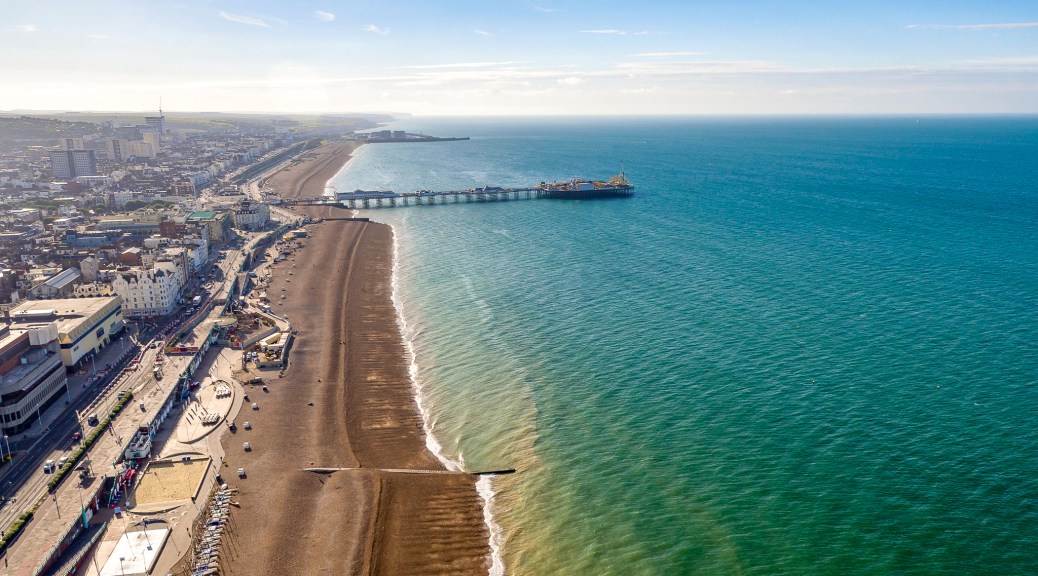
So what does all this have to do with us Brightonians? Well a new initiative called Sussex Bay is set to bring Blue Magic to our very own shores, so we can reap the benefits. Sussex Bay is a mission to regenerate, restore and revive 100 miles of our Sussex coastline. Paul Brewer, the Director for Sustainability and Resources at Adur and Worthing Council and Dean Aragon-Spears, Head of Blue Natural Capital are spearheading this incredible project. 

Dean describes Sussex Bay as ‘a movement initiated by Adur & Worthing Councils, powered by civic organisations, local businesses, communities and people.’ 

Through what they describe as ‘bold collaboration’ they aim to generate £50 million by 2050 to accelerate local seascape recovery along this incredible coastline – from Selsey in the west to Camber
Sands in the east including its river systems, coastline and marine area out to 12 nautical miles.

Sussex Bay came about after Adur & Worthing Council declared a climate emergency in 2019. Two  local projects inspired the next step: the Knepp Estate which has rewilded 951 hectares of farmland and seen massive increases in wildlife and biodiversity, and secondly the work of the Sussex Inshore Fisheries Association to introduce a 300 km2 trawler exclusion zone off West Sussex to restore the decimated historic kelp forest. If yoiu could rewild the land, why couldn’t you rewild the sea?

“There’s an urgent need to reverse the catastrophic decline in marine biodiversity.  Sea-based rewilding projects are far less common than those on land. The Blue Marine Foundation defines rewilding the sea as ​‘any effort to improve the health of the ocean by actively restoring habitats and species, or by leaving it alone to recover’. Healthy seabed drive a richer marine ecology, so when habitats recover so does everything that relies upon it. 

“Now more than ever we must bring nature back to our seabed, reefs and rivers. Restoring these ecosystems and their blue natural capital helps protect our coasts from storms, clean our waters, store carbon and support biodiversity.

And as nature recovers, people and the coastal economy will benefit too; from sustainable fisheries to enhanced health and wellbeing, and new commercial opportunities in ecotourism and leisure.” And that is magic. 

https://www.sussexbay.org.uk/

Benita Matofska is a speaker and author of Generation Share, a collection of 200 stories of changemakers.

benita@benitamatofska.com


Reasons to believe in the power of the seas
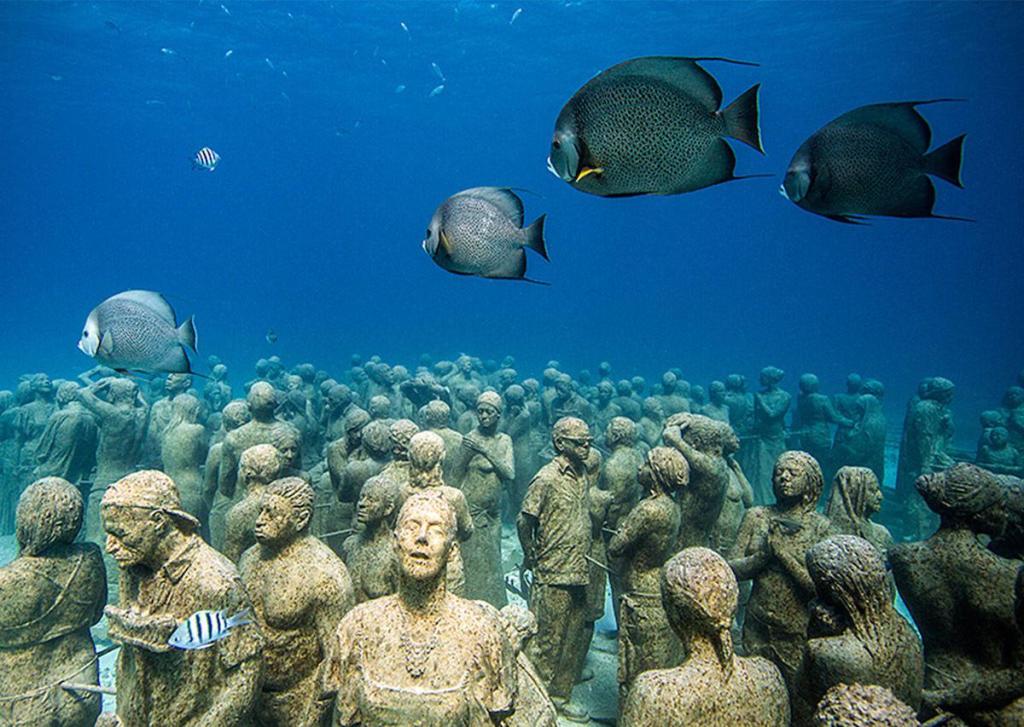
1.Globally, the Blue Economy is worth $1.5 trillion, provides over 30 million jobs and food for three billion people. And that’s predicted to double by 2030. A similar initiative to Sussex Bay is The Great Blue Wall, an African initiative to secure livelihoods for 70 million people, restoring two million hectares of ocean, capturing 100 million tonnes of CO2. The network of seascapes will be connected by a living blue wall that act as regional ecological corridor created by conserved and restored blue ecosystems such as mangroves, seagrass and corals.

2.Another initiative is Ireland’s Eco Showboat, the brainchild of Anne Cleary and Denis Connolly who travelled the coast of Ireland by solar powered electric boat on a zero carbon journey to connect scientists, artists, communities to spark climate action.

3.We’ve lost half of our coral reefs in the last 30 years and are estimated to lose 90% by 2050 because of climate change, pollution and over fishing. The better news is that scientists have found that marine ecosystems recover very fast and we can restore marine life by 2050 if we act now. 

At the Museum of Underwater Art in Australia, underwater sculpture artist Jason DeCaires Taylor has created installations and beautiful artificial environments installations also lure divers and visitors away from the Great Barrier Reef, helping to protect it. 

4.Wetlands are biological super systems that store up to 50 times more carbon than rainforests. 40% of all plants & animals live and breed in wetlands and over a billion people depend on them for their living. We need to preserve our wetlands and our waterways to survive. The floating gardens is a project in Bangladesh to bring wetlands back to life using ancient Aztec traditions providing food, livelihoods and flood defences, combating impacts of climate change. 

5.The South African charity Waves for Change is a project offering surf therapy to children. By making the ocean accessible, children are learning new skills, and having a magical, life changing experience. 

6.Alejandro Duran, a Mexican environmentalist and artist, has created The Museum of Garbage and Washed Up, an installation and photography project using rubbish that washes up on Mexico’s Caribbean coast, a UNESCO world heritage site. His mission is to wake us up to the impacts of plastic pollution and consumerism. Alejandro and a team of volunteers found trash washed up from 58 countries and 6 continents.

How You Can Get Involved

1.Help to regenerate Sussex Bay by donating to the crowdfunding campaign. 

2.Volunteer with one of the Sussex Bay projects such as Sussex Underwater, the Sussex Kelp Project or the Sussex Dolphin Project.

3.Document wildlife sightings at the coast and get involved in citizen science. For more information, visit sussexbay.org.uk

4.Submit your idea. What’s your vision for Sussex Bay? Be part of the region’s biggest, boldest coastal collaboration ever. 

Contact hello@sussexbay.org.uk
Climate Cafe: Circles

Continuing our virtual Climate Café where we look at people and places making a positive contribution to our future. By Benita Matofska 

The Climate Fashion Destination: Circles

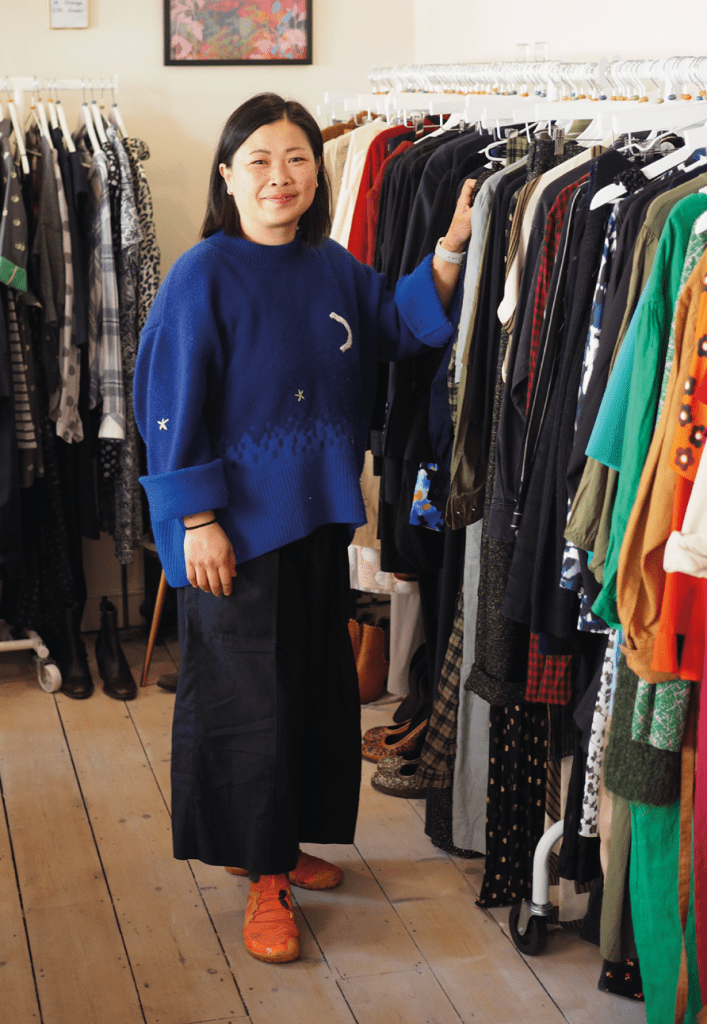
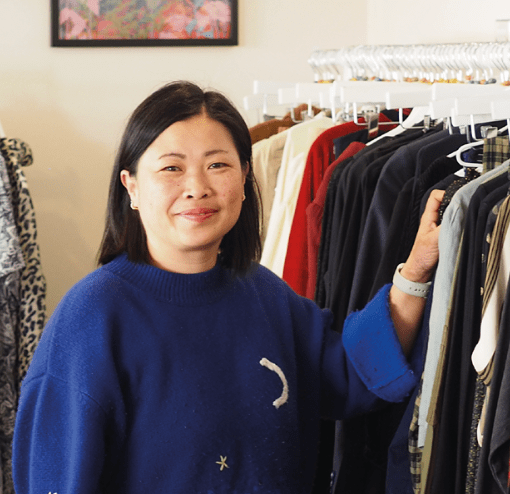
More than a store, this new Brighton gem of a place prides itself on being a home for the circular economy. And it’s easy to see why. Beautifully curated, high quality pre-loved clothes and creatively repaired pieces brush shoulders with timeless homewares just waiting to be rediscovered and reloved. 

Circles was founded by Brighton-born ethical fashion aficionado Jules Hau. With over 30 years spent in eco fashion, Jules is on a mission to inspire a sustainable, mindful and creative lifestyle. It’s not just about circles of fashion, but circles of wellbeing and community too. Downstairs hosts a treasure trove of second-hand designer, boutique, vintage clothes and accessories. On my recent visit I found brands ranging from Isabel Marant, Diane Von Furstenburg, Stella McCartney, to my personal favourite Essential Antwerp. All the glamour minus the guilt – so I snapped up a vintage Biba silk, embroidered, red-green-orange top. 

But Circles is more than your average consignment store. Yes, you can sell your designer items by appointment, or discover something unique to buy, but upstairs is another part of the story. Here you’ll find a wellbeing space offering massage, qi-gong, mindful treatments and sustainably focussed events. I’m something of a connoisseur of Brighton’s many pre-loved haunts, but Circles feels different. Maybe it’s Jules’s innate knowledge of ethical fashion, or her personal style that’s infused throughout. I can’t help but feel that it’s her loveliness and genuine care for the planet that will warm the heart of any discerning eco fashionista. 

Circles Store is open Tuesday to Sunday and can be found at 21-23 Church Street, BN1 1RB. For info: https://www.circlesstore.co.uk/ 

The Climate Network: Climate Women

OK so full disclosure (now she tells us), Jules is also Co-founder of Climate Women, an initiative we started together in January this year. The concept is simple – a monthly circle and network for women who are passionate about the planet. We gather (in the Circles wellbeing space) on the last Wednesday of the month to create, support, swap ideas and deliver climate action. Having been active as a speaker, writer and campaigner, with most of my activities focussed nationally and globally, it felt time to turn attention to starting something on my Brighton doorstep. 

Both Jules and I feel that given women’s role in taking climate action, it’s time to build something for ourselves. Notably, women lead on political environmental change, and once elected to office are more likely to deliver social and climate legislation – from Caroline Lucas, to Jacinda Ardern, Christiana Figueres, and Wangaari Mathai. Women lead more eco lifestyles too. A British study by Mintel showed that 71% of women try to live more ethically compared to 59% of men. 

In the global South, women recycle more frequently, buy organic food and support energy efficiency. Women are also building more sustainable businesses, with greater investments into environmentally friendly business processes to reduce emissions. But all this comes at a price, with many women climate actors suffering burnout, climate anxiety and depressions. Climate Women provides a safe space to talk, listen, create and act. It has proven to be popular with (each event sold out well in advance. Each circle focusses on a theme from climate optimism, to wellbeing and our relationship with fashion. 

We make individual pledges to act, as we believe small actions create ripples of impact and lead to big change. March saw our first local fundraiser in aid of The Real Junk Food Project raising £600 in a two-hour clothes swap bonanza. We’ve been asked to bring Climate Women to other cities, but for now at least our focus is to think global and change local.

Climate Women events take place on the last Wednesday of the month from 6.30 – 9pm at Circles, 21-23 Church Street, BN1 1RB. 

Tickets: https://www.eventbrite.com/e/climate-women-brighton-a-monthly-circle-for-planet-conscious-women-tickets-796010668337 

The Climate Event: The Great Big Green Week (June 8th-16th)

The UK’s biggest ever celebration of community action to tackle climate change, protect nature and talk about local action. The theme this year is ‘swap together for good’ – inspiring swaps created by communities to make a better tomorrow. Climate Women are joining forces with the lovely folks at the community-owned Exeter Street Hall who are organising the Prestonville Great Big Green Weekend on June 8 & 9. On Sunday 9th, we’ll be delivering another clothes swap from 2.30pm with tea, coffee and cakes. Funds raised will support Exteter Street Hall and The Real Junk Food Project. You can sign up for plant and pot swaps, the Prestonville litter pick, a skills share (learn to crochet?); there’s bug house making for kids or why not join the repair café? What’s not to love?

Prestonville Great Big Green Weekend will take place on Saturday 8th and Sunday 9th June at Exeter Street Hall, For more info visit: https://exeterstreethall.org/ For The Great Big Green Week full list of events visit https://greatbiggreenweek.com/ 

Benita Matofska is a public speaker, writer, consultant and author of Generation Share, available from independent bookstores. Each copy is ethically produced, feeds and educates a girl in the slums in Mumbai and plants a tree. 

Loved and Loved Again

Style correspondent Ceri Barnes Thompson finds out how to dress to kill while having a “nothing new” pact

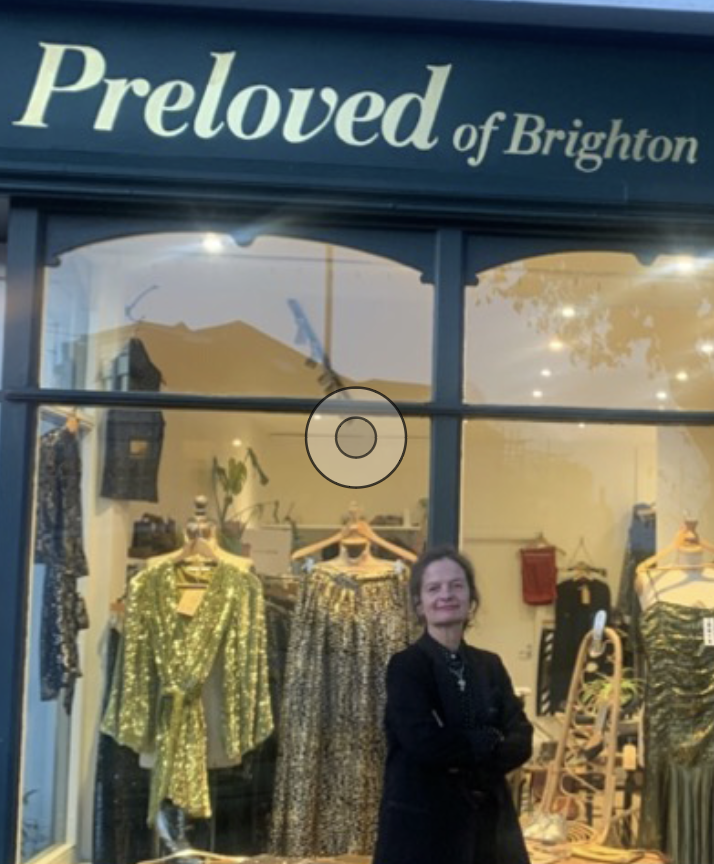
When Vanessa Wright was a little girl, she played shops when her peers played teachers and doctors. You’d be more likely to find her rummaging through a jumble sale than a rumbling round the playground, and for little Vanessa easily the best sweet shop was a haberdasher. A career in social work and a family followed alongside a move to Brighton, and as she walked the streets of her new home she would wonder every time a new shop came up for rent why someone didn’t open an old-school dress agency like the ones she grew up around. Until one day…. 

‘Preloved of Brighton’ opened its doors 10 years ago – with its stylish owner ever present to hear how you are, what gigs you’ve been to, what exhibitions have impressed you as well as what you are looking for clothes-wise. Never pushy, always happy for you just to check out any new additions (her stock updates daily with new contributions) Vanessa’s edge is curating her store like a boutique. The jeans are all in one place, the sizes separated up, the sparkly clothes for events and Christmas presented together. Shoes, bags, belts dotted around, there’s even a £10 rail – very worth a rummage for a bargain. And crucially she knows her customers and the fashion zeitgeist so well. There’s no point trying to get her to sell your skinny jeans if wide and cropped is what’s happening at the moment.. she knows what will sell and it’s what makes people happy. Her lovely shop has gone from strength to strength with so many following suit – the market for vintage having massively expanded, and apps  like Depop and Vinted giving new life to old clothes. I see my younger son in someone’s old French-blue Ralph Lauren hoody he’s found on line and snagged for a steal and know that for him it delivers that spark – it’s new to him. 

When Preloved started it was the only place of its kind here – chic and thoughtfully stocked with people’s preloved clothing – splitting the proceeds 50/50 with the people who bring her their treasures. And so often for Vanessa the real treasure is in the stories of the clothes, the connection to her customers and the lives that they have lived.

Initially her clientele was probably between 30 and 60 years old, but now Vanessa reckons it’s more like 15 to 80, and this is so much down to the atmosphere that she’s created. She believes clothes aren’t ‘just’ clothes; they are key to how you feel. Her warmth and interest in the people who come in and their stories wraps you up like a friendly hug. I can’t think of a time I’ve visited when there hasn’t been a lovely chat or a serendipitous exchange of information. I’ve even found a physiotherapist who knows about knees whilst in the shop with Vanessa literally getting on the floor and showing me the best joint exercises to do. 

What gets her up in the morning is a real mission to change people’s minds about buying all their clothes new – it truly makes her day if even one person makes a decision to buy vintage and feels great in it. 

And it’s because of pioneers like Vanessa that I’ve started asking those questions I’d never asked myself – what really do I wear that makes me feel properly myself? The answer is a very limited list, truly. 

This year my husband and I have had a pact to buy no new clothes and it’s been HARD. 

The biggest test of our ‘nothing new’ pact came in the form of a wedding and our oldest son’s graduation. Could I ever feel ‘dressed up’ wearing something ‘old’ to events like that?. Hovering over the ‘add to basket’ on the Cos website too many times, I headed up to Preloved. There was Vanessa, the shop lit up by the early summer sunshine and her smile, a lovely scent filling the air from an aromatic little steamer on her desk. Behind her, hanging up waiting to go on the rails, was a bright orange and pink summer dress, long length, short sleeves, two layers of cotton. ‘I’d never wear that it’s just not my thing’, I thought and dismissed it immediately. Vanessa held it up. “Why don’t you try it, Ceri? it’s a good length for you”. So I did. And when I opened the curtain Vanessa said “Look at that smile!”. I felt fantastic. Worried that my idea of pairing it with my dark blue clutch bag would ‘kill the dress’ (she has a very, very good fashion eye) Vanessa found a gold and orange one and that was that. For £40 I had an outfit that made me feel a million dollars. 

People like Vanessa and their passion for design, designers, textiles and stories really do make the world go round. She’s recently launched a ‘what are you looking for?’ service and she also uses her Instagram presence to promote other local business generously. It’s from her that I really do understand that new doesn’t have to be ‘brand’-new. It can be new to ME. And that not only has to be good enough it’s just plain great. 

Climate Cafe

Changing the Game: How Brighton’s companies are leading the way to a greener future. Gilly Smith reports

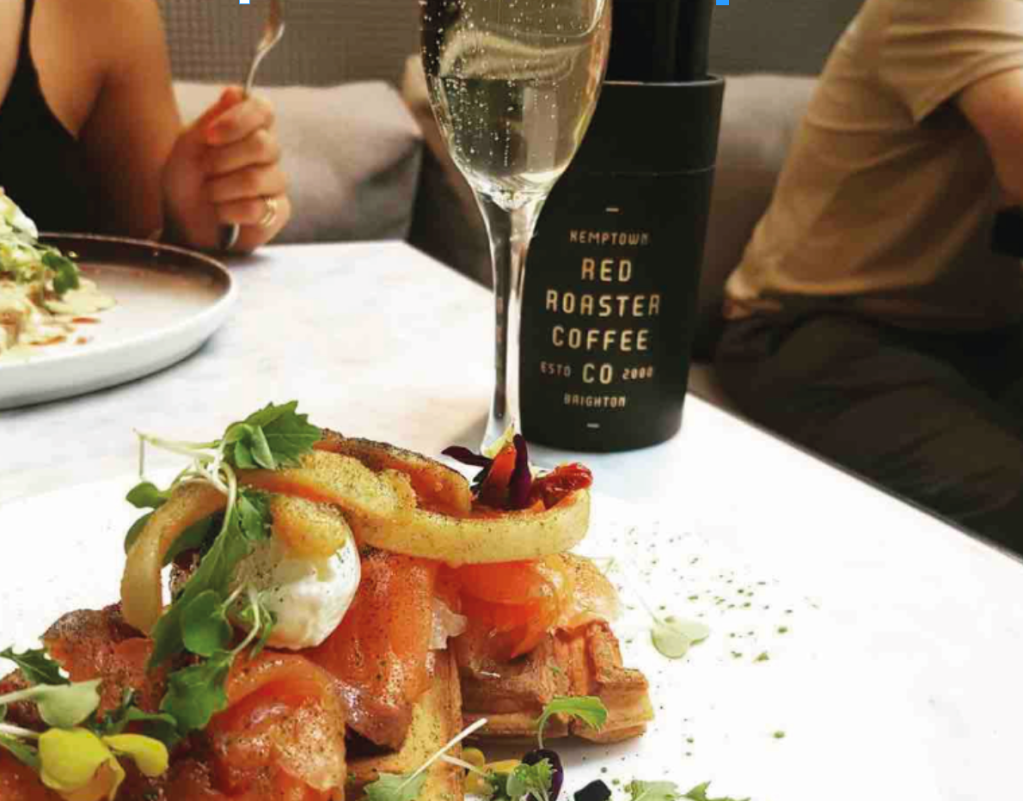
I’m waiting for Ella Byass from Marketing at the new Red Roaster restaurant in New Road on a warm afternoon in November. The nice young waiter asks me where I’d like to sit, and I choose the quieter terrace outside as I’m about to record Ella’s interview. He fiddles with a remote and pops off to get my coffee. He’s turned the heating on. Outside.

It’s not a great start to an interview about Red Roaster’s hard-won battle for B Corp, the global accreditation that aims to shift the behaviour, structure and very culture of capitalism by exacting excellence in every inch of a business. As Ella tells me that they’re one of just 7000 companies in the world to be given its stamp of approval after its rigorous three-year assessment process, I’m still trying to square the heater issue.

Red Roaster has been one of Brighton’s most sustainable companies for years; its coffee roastery in Kemp Town is the only organic coffee roastery in the South East, and its beachfront café, Lucky Beach which won the Food Made Good People’s Favourite Restaurant award in partnership with delicious. Magazine in 2017, has been collecting gongs ever since. 

Membership of the Sustainable Restaurant Association keeps the company focussed on sourcing responsibly, which includes supporting farmers who employ good animal husbandry and contribute positively to carbon capture with regenerative farming techniques to keep the soil healthy. The SRA keeps its members up to date on how best to trade, use energy and keep its carbon footprint low, but also how to interact with the community and treat its teams. 

In Brighton, they’ve switched all of their delivery vehicles to electric or bikes, and are the largest employer of learning-disabled adults in Brighton. Ella tells me that 75% of their produce for their Brighton cafes are sourced locally; its cider comes from Whistler favourite, Trenchmore Farm which operates its own micro circular economy. Its organic eggs are from Rookery Farm in West Sussex and most of its seasonal produce are from Shrub Provisions, one of the increasing numbers of sustainable food hubs working with regenerative or organic local farms for next day delivery to restaurants.  And where it can’t buy local, it supports the farmers’ own communities; Red Roaster’s coffee beans come from Brazil, Honduras and most notably from Rwanda where they run most of their social projects, including building schools and medical centres. 

Led by early sustainability adopters, Diana and Mike Palmer, Red Roaster’s B Corp badge is only the beginning.  “With B Corp, you have to constantly show how you’re improving” Ella tells me. “They’ll come back in three years’ time and say, ‘Right, this is was great three years ago, but what have you done since?’ We can’t just be like, great, we’ve got the B Corp. They’ll want to know how we’ve reduced our carbon footprint even further. They don’t allow you to use it as a green washing technique.”

As businesses try to attract and retain late millennials and Gen Z into a post Lockdown workplace where all the rules have been thrown out of the pram, sustainability is one of the most popular keywords in the search for employment. According to the Institute for Advertising Ethics, 64% of millennials will no longer work for a company that fails to show a strong corporate social responsibility. The data also shows that Gen Z are so concerned about what their peers think of their employers, that their choices are increasingly those that can prove they’re doing the right thing.

It’s an amazing story, but how will anyone know while the only connection the customer has is with a waiter who turns an outdoor heater on without even asking? Ok, so it turns out that the heaters are solar powered, but the point is how would we know?  A brunch with a mate a couple of days after our interview revealed the waitresses weren’t acquainted with the company line either, and the bacon was from Ireland.  

“Our sustainability story is on the menu”, Ella tells me.  Now, come on; who salivates over the food options, ponders over the cocktails and then scrolls through to the last page to read the diversity pledge? We’re Whistling big time for Red Roaster, but maybe by the time the B Corp team come back to check, their waiters will be wearing the t-shirt.

Of the tiny clutch of B Corp companies in the world, we’ve got quite a handful in Brighton. And if you’re thinking about booking your next holiday, you might like to know that one of them is a sustainable travel company which says that it’s not really very cool to fly at all. “There is no denying the fact that if you fly long haul, it will make up a very, very significant proportion of your year’s carbon footprint,” says Nick Pulley, founder of Selective Asia. You’re not even going to get a virtue signalling offset plan as part of the cost of your flight at Selective Asia.  “With an increasing number of reports casting doubt on the benefits of carbon mitigation, we don’t have the necessary clarity and confidence on this approach that we would ideally like,” proclaims the website. 

Instead, the travel agency works with Brighton-based carbon calculating company, C-Level which works directly with environmental scientists and communities on the front line of climate change to develop conservation projects that can provide locals with an income. This is not so much about mitigating the impact of travel, but actively supporting local economies to thrive.  Call it distribution of wealth.

“Travelling with a tour operator like us means introducing clients properly to the cultures and steering them away from the heavy footfall area”, says Nick. Encouraging them to eat on the streets and in family-run restaurants rather than in the larger hotels means shaking the hands that feeds, while keeping the tourist spend local. Travelling in-country by train not only avoids the carbon heavy short hop flights, but gives the traveller a chance to see the landscape and feel the distance.  

Eco-tourism is about understanding impact, and we’ve got to stop flying if we’re to save the planet. But if you’ve just got to make that trip of a lifetime, make sure it helps to secure the D’ering-Dibru Saikhowa Elephant Corridor in the northeast Indian states of Assam and Arunachal Pradesh or support Lone Buffalo, the Laos community project giving free English tuition, sport and creative skills tutoring to local kids.