
https://viewer.joomag.com/the-whistler-may-june-2024-final/0860821001714468107


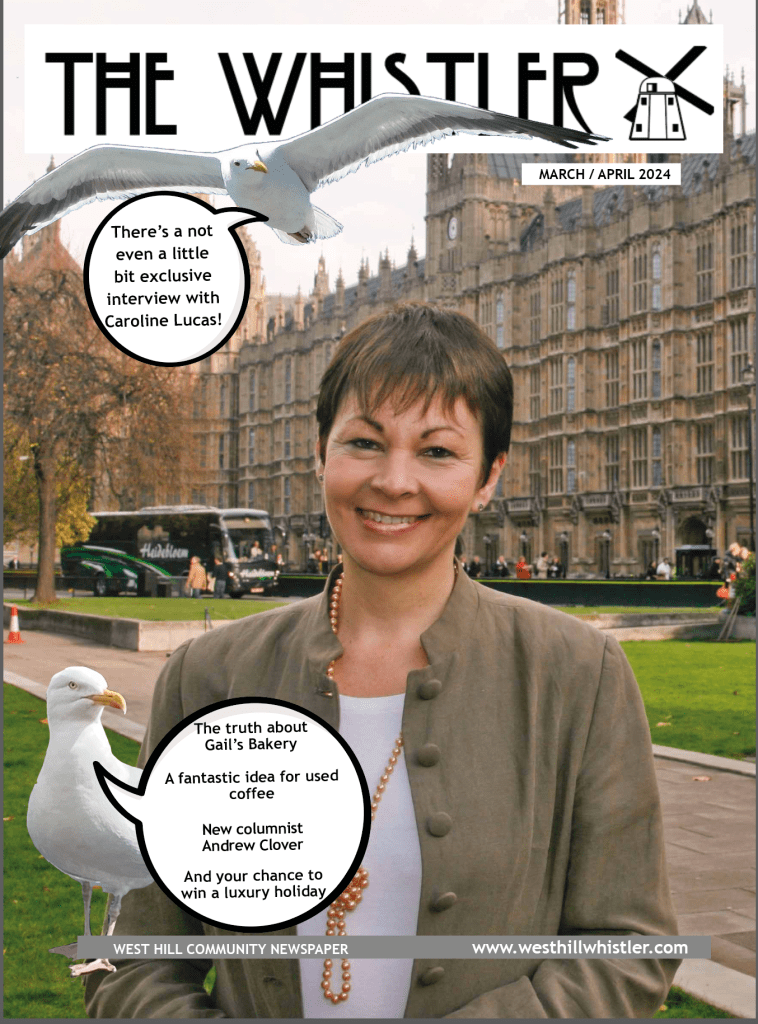
The Whistler kicks off its new Arts section – coming soon to a website near you – with a new film column. To start, our new columnist Ruby Ephstein looks forward to Francis Ford Coppola’s new opus Megalopolis and looks back at his greatest hits.
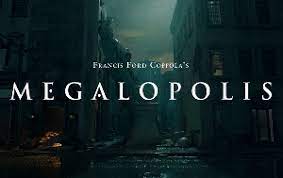
YOU WOULD THINK he’d had enough masochism for one lifetime, but no. Nearly half a century after shooting began on Apocalypse Now, a brutal three-year marathon during which he almost blew up his career and killed himself (never mind several others, including his long-suffering wife Eleanor), the godfather of modern American filmmaking is still hellbound on the trail of his holy grail.
That I feel compelled to identify Francis Ford Coppola as Papa Coppola – in deference to Sofia, herself an extraordinary director, and Roman, Wes Anderson’s favourite co-scripter – confirms how long it’s been since the chef behind the juiciest slices of prime Hollywood beef and dripping devoured by multiple generations concocted something meaty or beaty, or even merely big and/or bouncy.
Happily, Megalopolis, a dish nearly half a century in the prepping and blending and revising and reheating, will finally be served this year, quite possibly as the main course for the Cannes opening gala on May 14.
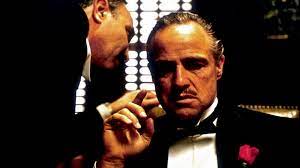
Has there ever been a more quotable screenwriter? Not unless you don’t have the foggiest what napalm smells like in the morning, don’t consider making offers that can’t be refused or don’t prefer cannolis to guns. Like Van Morrison, Papa deposited enough, early enough and in enough memory banks, not to have to fret overmuch when muse deserted and magic fizzled.
Yet still that soul-naked ambition burns inside Papa like no filmmaker since Orson Welles, the fellow rebel colossus he resembles in too many ways for his own comfort, not least a Jupiternian ego and an obsession with Conrad’s Heart of Darkness, the legendarily unfilmable novella that thwarted Welles and confined Nic Roeg to a TV movie adaptation yet sired Apocalypse Now, perhaps the most audacious and purely cinematic of all Oscar winners (for sound and camerawork).
The vast cast for Megalopolis, oft-characterised as “a Utopian parable”, ranges from the tried and trusted (Talia “Connie” Shire, Laurence “Mr Clean” Fishburne) to old masters (Dustin Hoffman and Jon Voight, Ratso and Joe Buck reunited) and new (Adam Driver, Jason Schwartzman, Shia LaBeouf). The woman around whom that hefty pack of chaps revolves, Nathalie “Missandei” Emmanuel, is Julia, a sow in the middle tugged between father pig and lover pig, the latter an idealistic architect designing a post-disaster NYC, played by the ever-noble Forrest Whitaker. Then, inconveniently, came 9/11.
For rather more enlightening insights, dig into Sam Wasson’s terrific The Path To Paradise: A Francis Ford Coppola Story (2023). Note that disarmingly honest and indefinite “A”. This is but one Papa story.
It spins around Zoetrope, Papa’s utopian dream factory, which collapsed under the weight of hubris and what most punters saw, wrongly, as a gossamer-thin romantic musical: One From The Heart, a lavish, adventurous project that suffered most from one of the few times Eleanor wasn’t so tolerant of the philanderer whose agonies birthing Apocalypse Now in the Philippines she chronicled so brilliantly and compassionately in Hearts of Darkness: A Filmmaker’s Apocalypse.
By May 2021, Papa had plunged $120m of his own money into Megalopolis, plus a fair chunk of that Napa Valley wine empire. Even this February’s release of the title card was an event. So tightly have the wraps been kept, I can’t whet your appetite any further, although the principals’ names (Caesar, Cicero) might just indicate the script’s origins. Instead, let’s consult Papa himself.
“I am vicino-morte,” Wasson relates him saying while poring over one recent “final” draft, the sense of déjà vu presumably acute. In the vicinity of death. Just as it was in the days of Kilgore and Kurtz.
How can you not love the smell of impending triumphant resurrections in the morning?
Papa’s Primest Cuts

The very word Gail’s got the armchair grumpies and keyboard warriors out in force, but slow down. Put away your prejudices. Just because somewhere has more than one branch doesn’t meant they’re the bad guys. Gilly Smith reports

Once upon a time in Brighton, you could gauge the feel of a neighbourhood by whether or not it had a Tin Drum. The family-run chain of bars and eateries, latterly serving charcuterie boards from the owners’ home-raised pigs, first opened on Dyke Road, home now to The Cow, and became a badge of gentrification. These days, it’s a Wolfox. Or maybe a Gail’s.
The number of Gail’s opening across the south east has long exceeded a bakers’ dozen. Our new one in the Dials will be the 130th to opens its doors since the first bakery over 30 years ago in Hampstead High Street. The new Gail’s set up shop in Night Shift, formerly the collaboration between Flour Pot, Curing Rebels, Curio Wines, and local artist, She Paints, which has camped out there since the demise of Brighton-born Small Batch. And it’s already had a pasting. It was daubed with graffiti declaring it ‘boring’ before it had even opened, a spray-painted penis summing up the outpouring of anti-establishment feelings all over social media.
Which is odd really, as Gail herself was a bit of a radical.
Gail’s began with a mission to do things differently. Back in the early 1990s, it created a bit of a rise in the restaurant industry by taking the values of sour dough – slow, crafted, natural, like bread used to be, as bread should be.
At its helm was artisanal baker, Gail Mejia, whose ironically named Bread Factory had been a wholesale retailer in Hampstead. She and her tiny team of bakers quickly realised that what they were making for top notch restaurants just wasn’t available in most neighbourhoods. They decided to fix that, and Gail’s Bakery was born.
Thirty years later, Gail is a biodynamic farmer in Portugal, as Tom Molnar (pictured), Gail’s CEO tells me as we chat about the new opening in The Dials. “She spent 10 really hard years before I met her, putting together the bakers, working with some top chefs, and building the thing that I fell in love with.” A disruptor, a visionary, she was part of the Slow Food movement that has been so influential in making us rethink our relationship with food.
“She represents a whole bunch of hippies in food who changed so much,” says Tom. He means chefs like Rose Gray, Alistair Little and Sally Clarke who came back to London from America in the 80s and 90s with a dream of a simpler way of eating fresh, organic food, as championed by restaurateur and food legend, Alice Waters. Fermented sour dough was just part of the mix. ‘When everything was becoming mass (market), they just stuck to their guns and said, ‘Look, that doesn’t make sense’. It wasn’t the engineers and the business people that got it right” says Tom, a former management consultant who recognised the potential for Gail’s back in 2005, “it was the hippies and the food pioneers.”
Now 130 Gail’s bakeries are quietly changing the food industry, not least by working with Natoora, a distribution hub on a mission to fix the food system by building direct relationships with small-scale growers and independent producers. Gail’s distributes its surplus food through Neighbourly, a network of over 29,000 charities and community groups and an award-winning giving platform “that connects company funds, surplus and volunteer time with local causes to make a positive impact.” But does any of that matter to the customers?
Presumably it doesn’t to Juliet who wonders on Instagram how they justify £5 for a pain au chocolat in a cost-of-living crisis. Or Laura on Seven Dials Facebook group who’s boycotted Gail’s since they stopped taking cash. “Maybe not all of them”, concedes Tom. “Maybe there’s 10-20% that do care.” So who tells them about the spirit of Gail that’s still stirred into every loaf of bread so long after she left the building to sow her own seeds. “Yeah, it’s tricky”, admits Tom. There’s no messaging in the shops, and you’d have to read the website to get any real sense of what Gail’s is all about. Tom says he struggles with how loud the revolution should be. “You don’t want to be the person at the party who talks all the time, and you don’t want to be that person who doesn’t say anything. You’ve got to be somewhere in between to be heard. And I don’t know if we found the right balance yet.”

I think he’s missing a trick; give me some blackboards in a café telling the back stories of growers and carbon reducing mission statements, and I’m in. Tom doesn’t think it would have been Gail’s style. “She’s still one of my teachers’, he says. “I’m just trying to do my best to keep her view on food alive. I didn’t want to destroy what she had built. My job was to just let it flourish, I guess.”
Like a good loaf of bread, one might say.
l Gail’s in Seven Dials is opening soon
In the meantime, you can sample their wares at:
93 North Rd, BN1 1YE
Mon – Fri: 7.15am-5.30pm; Sat: 7.30am-6pm; Sun: 7.30am-5pm

 The Whistler