Tag Archives: art

50 Plus… and a chance meeting by David Collyer

I spent my teenage years in the South West of Surrey, pretty much equidistant between London and Brighton, and it was always one of those two places that called my friends and I when we needed a touch of metropolitan sophistication, or of course to strengthen our wardrobes. In my early twenties, London won and I moved there, the bright lights of the Big Smoke pulling me away from my leafy childhood home.

Brighton, however, always felt like a magical place. I visited often. My younger brother, a musician, moved there, and as many a musician does ended up working a side hustle. In his case, the cook in Hotel Pelirocco. I’d been an early 1980s mod revivalist, and of course with thoughts of Quadrophenia in mind, Brighton always felt like a pilgrimage.

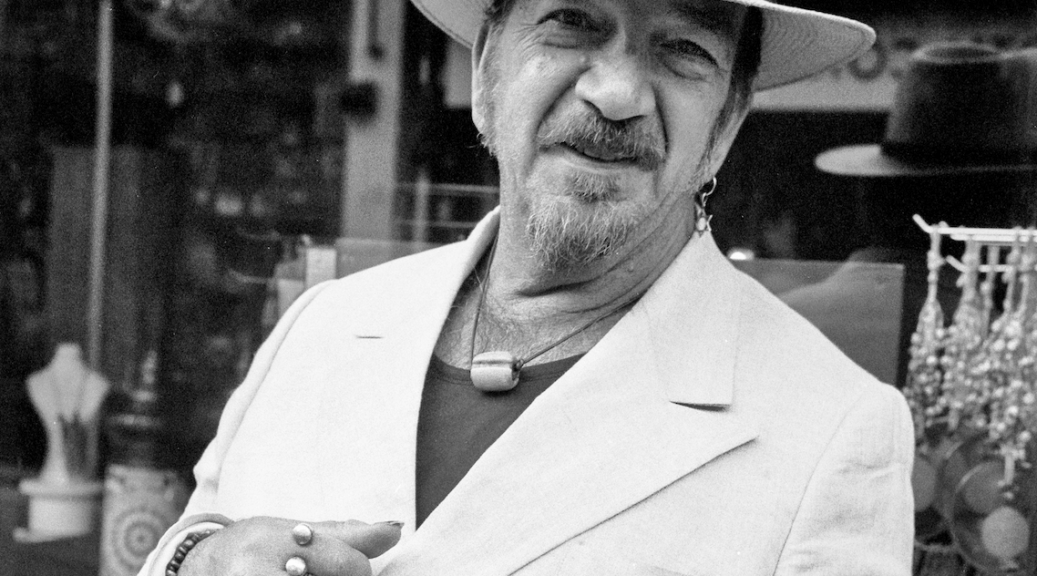
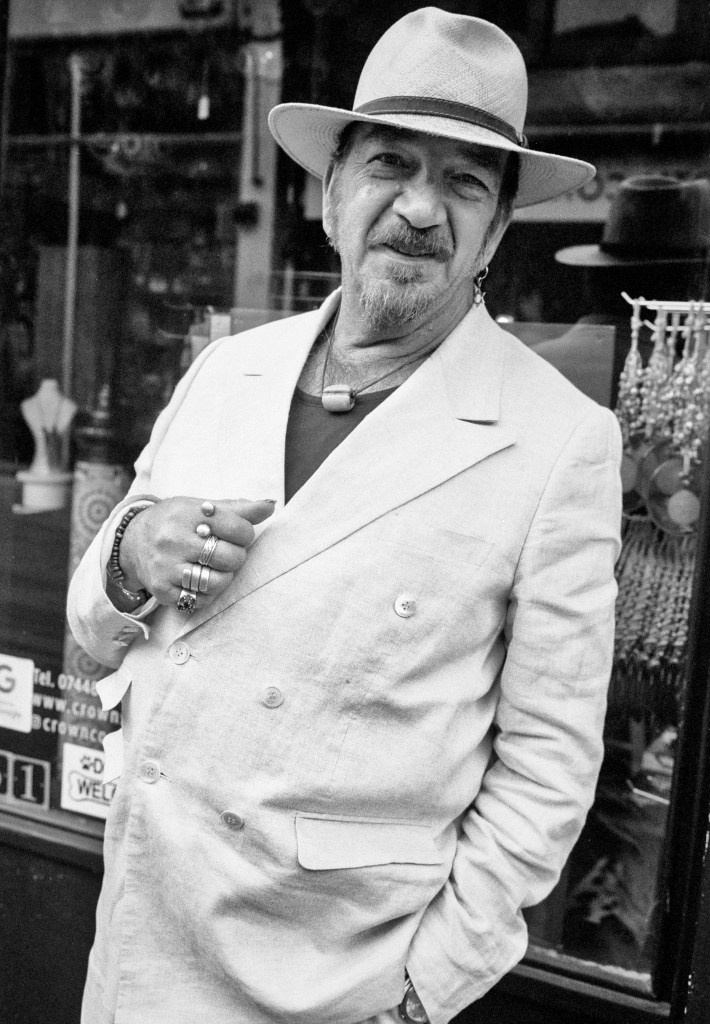
Scroll forward almost 40 years and I’m now living in rural South Wales, dividing my work life between the NHS and as a photographer. Having not visited Brighton in almost twenty years, my partner and I decided to take a city break, staying in an AirBnB off Marine Parade, and catching up with one of my old London friends who has long since made the city his home. After a very pleasant meal my partner and I were strolling through The Lanes as the last light was fading, when I spotted a very dapper man in double-breasted cream linen suit, correspondent shoes, a wide brimmed hat at a rakish angle, and standout silver jewellery. I had a 1959 Leica M3 camera slung around my neck, and two frames left on a roll of black and white film. I had to photograph this man, although with the light quickly diminishing, it was touch and go whether any frame would be useable.
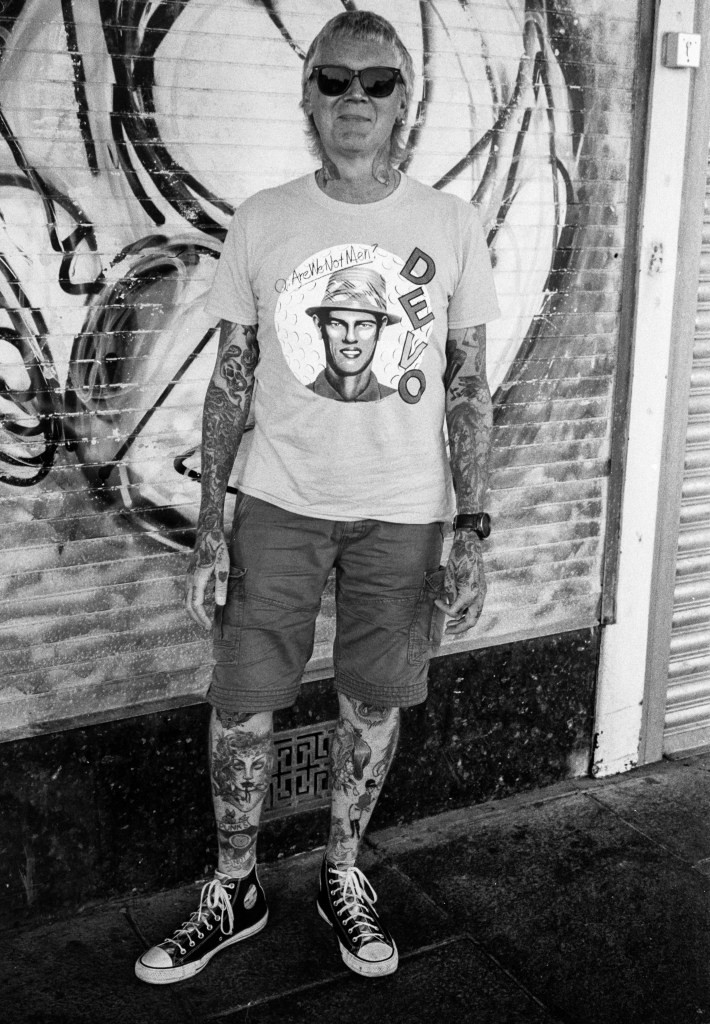
In 2017 when I turned 50, I started shooting a project called 50 Plus… The generation that didn’t have to grow up. It examines my generation of men and explores the freedoms that we have which weren’t available to our fathers’ generation. We are at liberty to cling on to our teenage subcultures and styles well into and beyond middle age. Always obsessed with clothes and music, I still consider myself a modernist. Since my initial re-visit to Brighton I’ve been back a handful of times. In 2023 I photographed the Mod Weekender for Detail Magazine, and as a result came away with a yearning to buy a scooter again, which I did, and it’s been ridden to Brighton a couple of times since. In many ways the photographic project was autobiographical. I have the luxury of holding down professional jobs whilst also indulging my inner teenage rebel. 

50 Plus… grew and grew, and on my 58th birthday in June, it was released by specialist documentary photography publisher Fistful of Books. I start the book with these words:

“As growing old is a privilege, so too is it a privilege of youth to rebel against the elder generation. Unlike when we were young, however, how do you shock the generation who have spent their lives rebelling? I’ve often said to my boys that the only way they could shock me is by playing golf and voting Conservative. Thankfully, as far as I’m aware, neither has experimented with such depravity!…

In the woods behind my house were the rusting remains of a Morris Oxford, and minus its wheels, the monocoque body of a long-trashed Vespa scooter. I used to sit on said scooter, and imagine I was riding to Brighton with my school’s equivalent of Jimmy the Mod’s on/off girlfriend Steph on the pillion. It’s safe to say, I wasn’t the Ace Face!”

50 Plus… is a hardback containing 84 portraits, over 156 pages. There is an essay by myself, a preface by an ex-pat British journalist now living and working in California, who published some of the photos in a magazine in 2022, and although the vast majority of portraits are anonymous, twelve of the men have been kind enough to write a testimony about themselves.

Fortunately the two shots of the dapper gent in The Lanes worked out, and he is one of those who kindly agreed to contribute. If you’re asking yourself why you are reading this in The West Hill Whistler, and you’ve not yet worked it out, that man was Jed Novick, editor of the title, and we’ve since become friends. Last time we met up we enjoyed a good Mexican meal and Margueritas on an early summer evening. Jed and Mike Baller who I photographed on a subsequent visit to Brighton are pictured here.

The book is available from the publisher Fistful of Books, or I have some copies for sale at £30 plus postage. Contact me through my website 

New England House deadline looms By Tyler Burgess

Brighton’s cultural identity is rooted in its people. A city full of artists, musicians, and small-business owners, Brighton is a hub for creative visionaries. But as closures mount and rents soar, the city’s identity feels increasingly under threat.

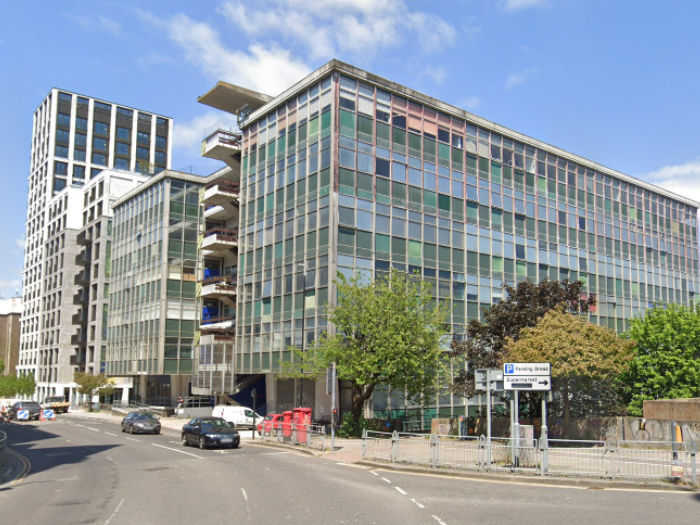
In March, Brighton and Hove City Council announced plans to vacate New England House, an eight-story commercial building near Brighton Station. For years, it has been home to some of the city’s most vital creative artists, photographers and performers who rely on its affordability and collaborative atmosphere to sustain their work.

The building opened in 1963, described as “the world’s first high-rise industrial business centre,” and is home to over 100 different enterprises. It is owned by Brighton and Hove councils and is one of the few publicly controlled workspaces in a city dominated by private rentals.

The decision to close its doors was made after serious fire risks were identified after months of deliberation. A fire safety report identified severe issues, inadequate fire protection, insufficient fire detection and no accessible evacuation options for disabled people. The required renovations would be extensive, and with no clear timeline, tenants have been told to vacate by September.

In March, a group of 11 business owners from the House submitted a deputation to the council’s cabinet, appealing for a more generous notice period. Along with assistance in finding a suitable alternative, the council has maintained its deadline.

While it is difficult to contest decisions concerning fire safety, particularly in the shadow of the Grenfell disaster, the impact on Brighton’s creative community is undeniable. As affordable industrial and commercial spaces become rarer, many of these tenants will likely be pushed further out of the city. And a closure such as this is sure to devastate the creative industry Brighton is known for.

Cllr Jacob Taylor, Deputy Leader of Brighton & Hove City Council, said:

“We inherited a nightmare situation with New England House, a creative hub for decades, which unfortunately is having to be evacuated because of fire safety issues. But we are determined to help rehouse tenants where we can, and are exploring using other council buildings to do so. Looking to the future, I’m determined to recreate the spirit of what we had at New England House in a new or refurbished building.”

New England House is not an isolated case. The City has seen a rapid decline in commercial spaces. Independent cafes, art venues and longstanding local businesses have all quietly disappeared, being replaced by big chains, Airbnb and high-end flats.

Beloved Shops like Hisbe, Gak and Dockerhills were all important local businesses that have shut their doors. Venues, cafes and community hubs have disappeared, often replaced by big chains or luxury flats designed for investors, not residents.

“One of the things that makes Brighton & Hove so special is its creativity, and the vibrancy of small business in the sector. But – we should be honest – this is under threat, because of unaffordable housing and a lack of light industrial and creative space in the city. We need to build more affordable properties, and we need to ensure new developments have affordable and appropriate commercial space for our industries,” Cllr Taylor added.

A decision on the future use of New England House is expected to be made in the summer by the council cabinet. However, tenants will now be looking to move their business elsewhere as the September deadline looms.

Nadine Shah and The Brighton Festival by Jed Novick and Gilly Smith

“I’m a little breathless”, whispered Ganavya to a packed audience as she joined her harpist and double bass combo on stage. “It’s probably because I’m a little heart-broken. I may need your help tonight. Would you sing with me?”  

Ganavya, a New York born, Tamil Nadu-raised sonic shapeshifting multi-instrumentalist and guilt tripper and star of Indian music, supporting reigning queen Aruna Sairam was probably the show of the Festival. Hard-bitten cynics in that audience have since confessed that they did sing with her. My friend and I sang with her. Everyone sang. And as we did, so her breath returned, filling her lungs with a soaring song of heartache that rocked the Theatre Royal, a transcendent mix of spiritual jazz and South Asian devotional music that many of us may never have heard before. Yes, it was in Tamil and in Hindi. Yes, we understood every word.  

The Brighton Festival. It’s one of the highlights of the calendar, but it’s difficult. How do you know what to go to? A reworking of Philip Glass and Ravi Shankar’s “Passages” aside, there were no big “must see that” shows, and if you didn’t know your South Asian arts scene, Anoushka Shankar’s Festival was a bit of guesswork. There’s absolutely no doubt there was some marvellous stuff – as evidenced by the Sairam and Ganavya gig, but if you’re not an aficionado of Indian music, would you have known that was going to be such a hot show?  

There’s something else– let’s call it May Fatigue. There’s so much going on in Brighton in May. The Festival, the Great Escape, the Fringe… the Open Houses. Yes, the Open Houses. A lovely thing to do, seeing some art, nosing round other people’s homes. And it might be free, but you’re out and being out, maybe you’ll stop for a drink. Or a bite.   So yes, lots going on and all demand your attention and your time and your energy and, maybe more importantly, all demand your wallet. Nothing’s cheap. We went to the Spiegel Gardens last night and bought a bottle of wine to share. £39.50.  

For a whole month, the streets are alive with the sound of, well, everything. Not just music but everything, and if the Weather Gods smile, there’s no finer place to be. Just maybe… it could all be spread out a bit more? The Great Escape in June maybe?  

Anyway, back to the Festival. The best non-music thing I saw was Emma Rice’s Wise Children production of North by Northwest, also at the Theatre Royal. A triumph of parody and comic timing and, well, you can read all about it here in The Mighty Whistler.  https://westhillwhistler.com/2025/05/17/north-by-northwest-at-the-theatre-royal/

Saturday night’s showstopping gig was Nadine Shah at The Dome. Again, Mercury nominated she might well be, but she’s not “Bloody hell, cancel everything, this we have to see”. As it turned out, she was great and, while we didn’t have to cancel anything, it was very cool. And this is the glory of the creative directorship of the Brighton Festival; if Anoushkar’s already shown you her record collection and opened a door into a whole new world of music and arts, how could Nadine Shah be anything other than an exciting new find?  

Like a cross between Shirley Bassey, PJ Harvey and Patti Smith, South Shields-born Shah is as loud and opinionated as any girl from the Geordie Shores. But her mash up of her own singular influences from Afrobeat to Eastern scales – apparently her father sang Urdu ghazals, a form of Arabic poetry, around the house as she grew up – became a roar of pain as she took us with her on her personal journey of grief, rehab and recovery as she pranced like a dressage pony across the stage. The music was hard, her voice sharp, the roar raw.  

The spiritual delicacy of Sairam and Gavanya, the joy and verve of North by Northwest, the raw noise of Nadine Shah. All in one Festival. And how cool is that?

Film clubs in Brighton: By Fraser Simpson

It can be said that Brighton is a hub for cinema. There are a wide variety of cinemas in the area, ranging from multiplexes to independents, with someone to offer for anyone somewhat interested in film. But what if cinemas don’t offer a specific niche that you happen to be craving? That is where film clubs come into play.

Brighton itself has a few film clubs to go around, ranging a variety of genres and niches. One of these clubs is the Toad Lickers Collective (TLC), although it is not strictly a film club. Founded last year by Keziah Keeler and Liz Rose, TLC’s wider programme includes free exhibitions and workshops alongside film screenings once a month at the Rose Hill, an independent music venue.

Regarding why they wanted to do more than just film screenings, Kez said, “There’s a lot of things you can express through film that can reach a wider audience, and we’re quite interested in the idea of film as the eye of the workers. We thought it was a cool way to get a lot of people in a room talking about the same subject which feels a bit missing in this era.”

TLC themselves don’t make much of a profit, due to being a Community Interest Company, so any profit made from screenings goes towards running free workshops and exhibitions, due to their desire to make themselves as accessible as possible.

The choice of The Rose Hill as their venue for film screenings was one that TLC are happy with, as Rose points out the difficulty of finding places to host events. Rose said, “The Rose Hill are really welcoming and really care about the community, and I think you feel that in the atmosphere they create, it’s all very casual and we really like how comfortable it is as well, it’s cosy and intimate.”

TLC’s most recent exhibition was Folklore, which set out to explore why folklore is having a revival and how contemporary artists are using its legends, techniques and aesthetics to describe their experiences. This fits in with what Kez describes as the core of the club, “this idea that storytelling is really important, and there are all these different ways of storytelling that we can use the rules and the methods to help us describe social issues and real problems.”

Whilst they’ll be looking at other interests when their film screenings return after the summer in September, Liz wishes to explore working class culture in a potential future film season, looking at joyful working-class films such as Billy Elliot and The Full Monty. Their reasoning is because, to them, “Folklore has a history that belongs to people and has the potential to be much more linked to working class cultures. As funding disappears, it’s becoming increasingly hard to see diverse voices, and if you’re working class or from an underrepresented background, those stories don’t get told in a genuine way by people telling them.”

Similarly to TLC’s recent folk-based exhibition, Bom-Bane’s Folk Horror Film and Ice Cream Club may be of interest as well, a film club that explores the many films belonging to the folk horror genre. Hosted by David Bramwell at Bom-Bane’s in Kemptown, each film screening features an intermission, a discussion halfway through the screening, a food break, and what David describes as ‘an avant-garde unsettling performance from a group calling themselves the Bewilderkin’

David himself is no stranger to folk horror, having been performing a Wicker-Man singalong for 16 years. To him, the club is a chance for him to ‘explore the genre and see how far we can stretch the boundaries of the definition of folk horror, and not present the obvious choices like The Wicker Man. We try and delve into weirder fringes of Folk Horror, including folk horror films from around the world, not just Anglo-centric, and presenting films from parts of the world that wouldn’t necessarily be associated with the genre.’

The difficulty of running any film club largely revolves around the financial aspects. Despite most screenings at Bom-Banes selling out tickets-wise, thanks in part to the venue capacity being just 25, David notes there is difficulty in spreading the word about his folk horror film club. He said, ‘It’s too expensive to put posters up around town, and I’d be making a loss on the night if I paid for 50 posters to go up for a week or two.’

Regardless of the financial aspect of keeping the film club going, David is still optimistic for the club’s future. Whilst there is no showing at Bom-Bane’s in May due to David’s work during Brighton Fringe, his next screening will be the film ‘Wake in Fright’ from 1971. As David describes it, ‘It’s one of Nick Cave’s favourite films, it’s similarly themed to ‘Straw Dogs’, about the breakdown of civilisation in remote places and about the schoolteacher through unfortunate circumstances finds himself trapped in this town and how he descends into this toxic-machismo culture.’

While these two clubs are just two examples of film clubs across Brighton, there are undoubtedly more than these two, and if your interest is not in folk horror or folk in general, there will likely be other film clubs that will satisfy any cravings for film clubs of a certain genre.

Crazy Comic Club

Crazy Comic ClubAre you aware of Crazy Comic Club workshops run after school on Mondays and Wednesdays at the West Hill Hall? I’ve been hosting these popular sessions for 5 years now, sharing cartooning skills with kids, and developing drawing and literacy by creating characters and telling stories. As a combination of words and pictures, comics are a hugely accessible art form, especially to those who may be lacking in confidence.

Workshops are a relaxed and fun environment to be in after a long day at school. We follow three threads of approach. Individually crafted workshops focus on specific aspects of cartoonery, from anatomy and expression, to setting, shading, perspective, dynamism, design, and speech. During free drawing sessions, kids can create what they want, how they want – their own characters and strips – guided and encouraged by me. We also work on longer term collaborative projects culminating in a beautifully printed comic at the end of the course. They’re sold locally at Dave’s Comics, and the kids get to share the profits. Bonus!
Continue reading Crazy Comic Club