
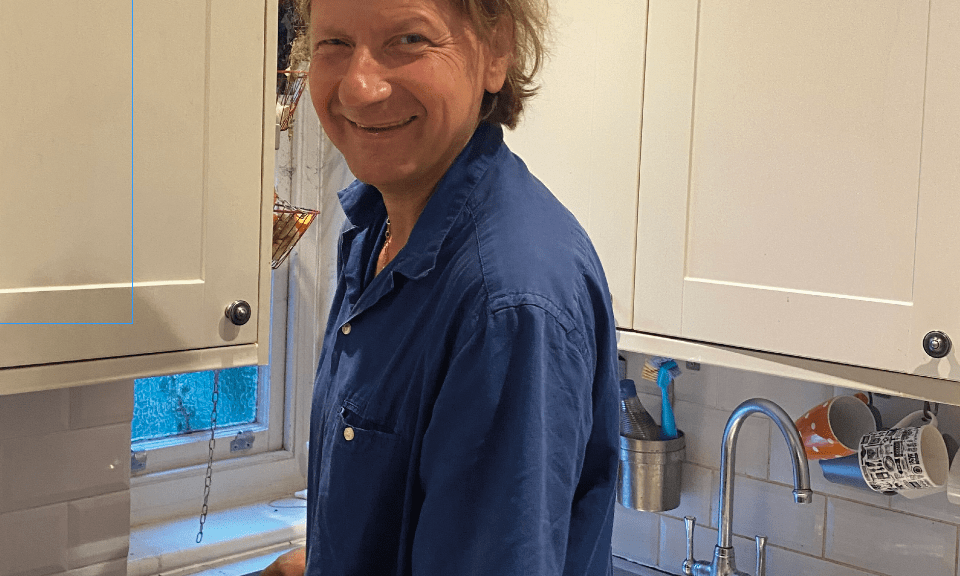
We wanted to revamp our kitchen. New surfaces, new worktops, new doors. We wanted something stylish, individual, sustainable and didn’t cost a fortune, something a little more “us” than going into a kitchen store and buying something off the shelf. How hard could that be?
Actually, we tried that, went to the usual places and saw the usual stuff. Things with names like Nordic Noir and made of granite or Corian. Nice enough, but a bit uninspiring. It started to become a little bit of an obsession. Eventually, we decided on a radical, if familiar, course of action. “Let’s go for a drink and something to eat”.
We went to Fumi, the new Japanese in Circus Street. The food’s great there and it’s been designed beautifully, a very stylish clean aesthetic. Sitting there, we couldn’t help notice the furniture. The tables looked like marble, but clearly weren’t.
“We had them made for us. They’re really interesting, they’re made from used coffee”.
What?
Two days later I was talking to Jani Lemut in, obviously, a coffee shop.
“It was just an obvious thing to do. I was working with an interior design company who were importing all their furniture from India, but wanted to be more local and sustainable and so on, so they contacted me. We started talking about new designs and what we can do and what different materials to use, local materials. I started thinking ‘What else can I use?’ And coffee was very obvious, because it was just on the table. It was just there”.
How many cups of coffee get thrown away?
“Probably a lot”, said Jani. “I heard a statistic, I don’t know whether it’s right or not, but the average person in UK spends £25 pounds a year on coffee. In Brighton, it’s £75”.
Apparently there are more coffee shops here per head than anywhere else in the UK. And in Seven Dials…
“Yes. Most probably. Yeah, and it’s still gaining popularity. It’s quite incredible”.
Jani is a “classically trained furniture maker” from Slovenia who came here after the war in Yugoslavia started in 1990. “I made wooden children’s toys and we had quite a nice steady business, but then after three or four months, the war started and that was it. Lost everything. The country came to a standstill and basically that’s what brought me here. “I came to see a friend of mine in Gloucestershire and I just loved it. Absolutely loved it. I love the freedom of expression here. When I got to London, I just loved it so much. I said to my friends, ‘Look you go back. I’m staying here’. And that was pretty much it.”
He moved to St Ives and “had a really good time, doing mainly designing and building furniture, cottages. I was doing lots of artwork as well, art exhibitions and so on. Everything was always based in recycled materials. I was always fascinated by what gets thrown away. What can one do with the challenge? I still feel excited by the idea we can turn objects into a different life. So that’s my main motivation”.
Had you seen coffee used before?
“People have tried using coffee in all sorts of products, but only as an additive. People have tried make composites are made of coffee and thermoplastics…” At this point Jani started talking about binding processes and chemistry. I ordered another coffee and waited for him to start speaking English again.
How long did it take you to work all this out?
“Two years”.
And you kept going with it? Because you were certain that it would work?
“Well, I wasn’t certain certain, but there was a promising sign. The problem with it was stabilising the coffee because it’s organic it moves, it does all the the things that any organic stuff does. So to bind it in organic way, it’s quite difficult, but this is exactly what we were trying to do, to make a plastic free component”.
And you have now?
“Yes, we have. Yes.”
The results are really lovely, but it doesn’t only look lovely, it looks real. Organic.
“Of course, because all the ingredients that we use are purely by-products of different materials. marble dust, copper, dust, metal. Then you’ve got spices, natural pigments and so on and so forth, all sorts of stuff like charcoal”.
You could make something beetroot colour?
“Yeah, we do that”.
Could you make something that blue?
“Yes. Turquoise oxidize copper dust, a very intense turquoise”.
There are other uses for the materials but “I’m a bit wary of mixing too much either plastic or any chemicals with our product, because then it’s difficult to recycle further. So wherever we create, we try to create in such a way that is easy to dispose of or reuse later on. This is the main point of doing this. At the moment, our product, if you leave it out in a field for a couple of years, it will just disintegrate and it will go back to where it came from. That’s pretty much it”.
Everything here is about sustainability. On their website (below) they say “We are carbon neutral. We plant a tree for every sale we make. Our materials are sourced locally and much of it from waste”. They are “a circular business. Everything gets recycled, everything gets re-used”.
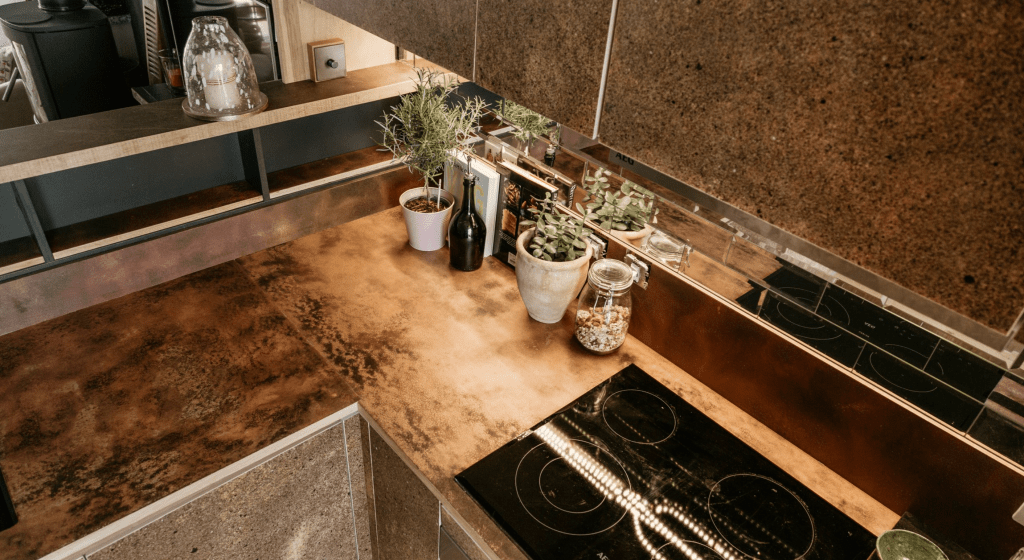
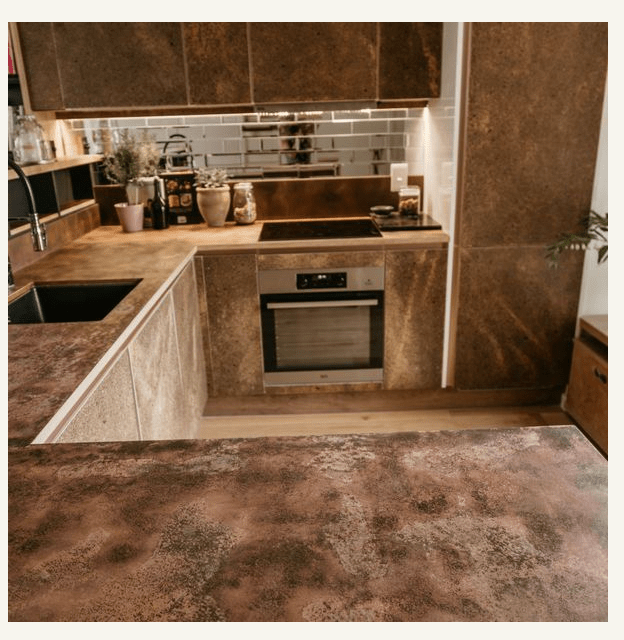
We had the worktops done, the kitchen island and the dining table, and went for a copper sheen finish that looks great and always gets comments. It’s hard-wearing, waterproof, almost completely heatproof and can be made to any size or shape. It also cost about a third of what we were quoted in the high street.
“Why make something that will be extortionate? Why make something nobody can afford? If you can make something that’s beautiful and accessible and sustainable, then what’s not to like?”
07930 944906
info@tomasandjani.co.uk


 The Whistler