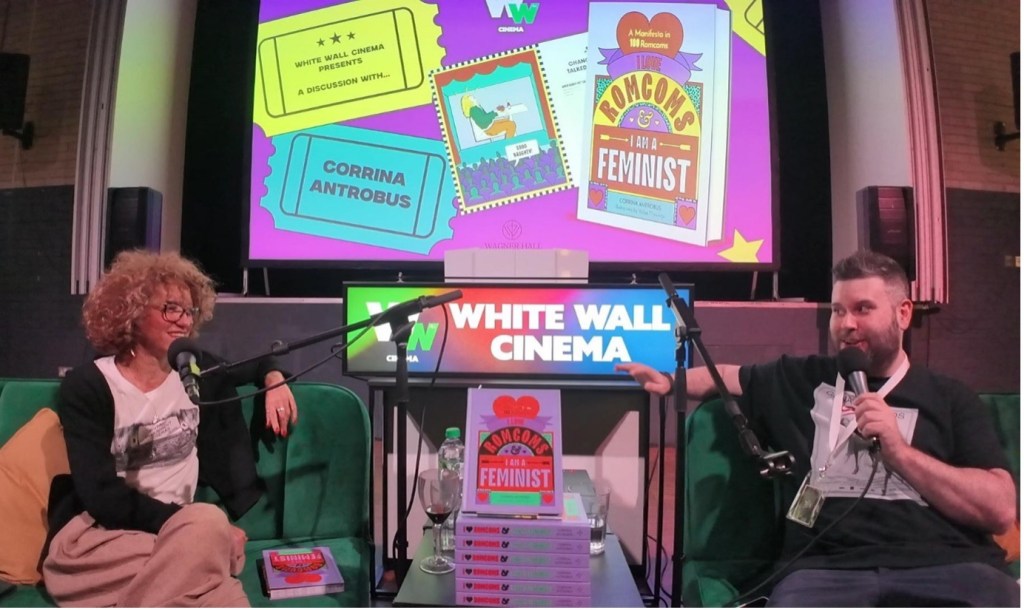
White Wall Cinema has been an ongoing pop-up cinema since 2015 and has undergone significant changes in its activity. Whereas before, it would be two to three screenings a year at venues ranging from clothing stores to church halls, it is now celebrating its 10th anniversary, having increased its frequency of screenings to one or two a week, having been at their permanent home in Wagner Hall since 2019, and currently enjoying their busiest year to date.
Henry Ray is one of the founders of White Wall Cinema and believes what makes White Wall special to him and those who attend screenings is that it’s all personal. To him, “It’s not done along the lines of business or to impress anybody, we just do it because we really love doing it and we have a passion for cinema. When people discover something that they previously thought wasn’t exciting to them, but someone has opened their door for them, they’ll want to come back and find more of that.”
It could also be said that White wall’s success has inspired other people to set up pop-up cinemas across Brighton. Henry himself has been told by people that “You’ve been the inspiration”, and he is happy that more has happened because of his work with White Wall, although he jokes that “If you’ve been doing it for 10 years, you’d hope that would be the case.”
The venue choice of Wagner Hall, which has seating ranging from 112 to 130, has been something that has benefited both White Wall and the people that own Wagner Hall. Henry said that, having used it once for an event, ‘We’re now fully involved with the place, which means a closer relationship, which is always good because venues are very difficult for pop-up cinemas.’
When it comes to the programming at White Wall, the screenings will range from as far back as the 1930s to something released relatively recently. As described on their website, White Wall’s screenings aim to “cover all types of film, from all genres and eras with a focus on those films that are a little off the beaten path, that you generally won’t find screened at your local multiplex.”. Henry expands on this philosophy, saying, “When we see something we liked and enjoyed, we think other people will enjoy it, and it isn’t primarily an audience thing, rather than ‘Will we get lots of people to it’, it’s ‘Will someone come to it and think it was great’. The sky’s the limit, how we decide is totally on instinct”.
The main worry with any cinema, especially a pop-up cinema, is the finances of the whole operation. Whilst Henry knows this is the biggest challenge for White Wall Cinema, he also isn’t fazed by the difficulty it may provide. He said, ‘You’ll take a hit on things financially, but as long as we’re sensible, and don’t be too ambitious as we go along, then you don’t have to worry too much. You’re very unlikely to ever make any money, but that’s not the point. If we were in it for money, we’d be doing something else entirely.’
The COVID-19 pandemic back in 2020 was detrimental to all aspects of life, but for a pop-up cinema like White Wall, it provided a unique scenario compared to other cinemas in the area. Henry recalls, ‘When things opened up in a socially distanced way, we could be swift and nimble and just do something because we’re not a major corporation. We started doing weekly or sometimes nightly screenings of different things in a socially distanced way. That was one of the things that really connected us to where we are now because we were doing it so consistently all through these periods when the rules allowed it. Because it was so unpredictable, because we were small and were just people, we could be “Oh, they’re opening again in 10 days, let’s do it.”
When it comes to the future, Henry is undeniably hopeful. With this year being the busiest for White Wall Cinema, Henry and his team are taking it as a year to be the best version of themselves, alongside planning something in the second half of the year that can be deemed as a birthday to celebrate 10 years since opening. Ultimately, Henry wishes to make White Wall Cinema and the venue of Wagner Hall ‘less of a pop-up, more of a hub for cinema. Part of the mission of the cinema was to create the thing that I thought should be here, and since it wasn’t here, so let’s just make it ourselves. We’ll do what feels right, but people seem to want more of it, so we’re going to grow organically with that and see how far they can take it.
Ultimately, Henry can be happy with where White Wall is currently at, and how it has transformed into a more frequent and vibrant place for people to watch films they might not have thought about watching in the first place. He feels grateful to those who keep attending screenings and believes the connection shared with them has become stronger since the pandemic. He said, “Since that time, people come up to me after screenings and say ‘You’ve saved my life’ because that was absolutely what they needed at that time. For us, it’s made a real connection between us and the audience and helped us decide that we wanted to keep doing this in a more serious way.”
As the summer months draw near, the ability to be outdoors in more desirable weather is more than possible for local residents. Even for activities held indoors, there will be outdoor events for those hobbies to provide an alternative to sitting inside a venue for a few hours this summer.
If you’re keener on films, then Picturehouse will have you covered. Organised by staff members at the Duke of York’s Picturehouse, Picturehouse Outdoor Cinema is an ongoing addition for over a decade to Brighton’s cinema landscape, taking place at Preston Manor South Lawn & Garden.
The benefit of the Outdoor Cinema, according to Sam Harris, a regional marketing executive for Picturehouse’s London and Brighton cinemas, is the increased amount of freedom they have when it comes to going about their showings. As Sam puts it, “It gives us a bit more space to have more fun, it’s not just people turning up for the film, getting their popcorn, and going into the screen, it’s more like event cinema, and everyone there is on the same page and relaxed.”
Outdoor Cinema will have 12 different screenings over two weekends each in June and August. Cult classics, personal favourites, and films from the 1970s to today, Sam ensures that the programming offers films that cater to everyone’s taste. He believes that because of the wider freedom of Outdoor Cinema, “You can have a lot more fun with the programming in that sort of way.”.
Undeniably, the higher temperatures during the summer months can result in higher chances of extreme weather, which could lead to screenings being cancelled. Sam is aware of this, and jokes that “You can’t go to an outdoor cinema in Britain and expect it to be sunny all of the time”. However, depending on the film, it could add to the experience. Sam remembers doing a screening of Top: Gun Maverick a few years ago on an incredibly windy day, and noted “It’s like 4DX, it’s like you’re really in the sky flying.”
Previous showings at Preston Manor have included the likes of Jaws, Mamma Mia, and Rocky Horror Picture Show. Whilst the selection for this year’s offerings at Preston Manor is still undecided, Sam promises that there are “some really fun ideas, there’s going to be some music, some bangers, some old favourites, the lineup is maybe the best we’ve ever done, I hope.”
If outdoor cinema isn’t appealing, perhaps outdoor theatre may interest you. Brighton Open Air Theatre (or BOAT for simplicity) has been at Dyke Road Park since 2015, founded by the late Adrian Bunting, whose vision of an outdoor theatre has lived on through the founding trustees of BOAT. Last year, to mark 10 seasons since opening in 2015, BOAT opened with Adrian’s play ‘Kemble’s Riot’, an Edinburgh Fringe award-winning play.
BOAT themselves are a charity organisation, meaning they don’t get any funding, and instead fundraise themselves each year through ticket sales, donations and profits from the bar. Nevertheless, Tanya Macleod, the operations manager at BOAT since 2018, believes there is a certain kind of magic about the venue. Calling it ‘the theatre that friendship built’, she said, “The site and location are gorgeous, when all the wildflowers and the sun are out, it’s magical, and it’s quite traditional, not just because it’s a Greek amphitheatre, but because we’re part of a touring circuit of companies who arrive, they perform their show and then they go off. It has that village community feel to it that’s quite rustic.”
The longstanding nature of BOAT has meant they have built strong relationships with companies over the past decade. Whilst Tanya understands that some companies might not come back, owing to reasons such as some shows not translating to outdoor theatre compared to indoor theatre, she said: “We’re always encouraging new companies, there’s a lot of handholding, to begin with, whilst they get used to this unique setup. It’s an overview of a giant puzzle, but we want to give everyone a fair chance.”
BOAT’s lineup this year starting from the 2nd of May, as described in their brochure, ‘offers a wide selection of shows, including some old favourites as well as new and exciting productions’. From the likes of Shakespeare plays such as A Midsummer Night’s Dream, to their annual Summer Comedy Festival, where the showing featuring famous comedian Romesh Ranganathan sold out in a record 8 hours, to I Joan, a modern re-telling of the story of Joan de Arc, there is something for everyone this summer.
As the summer draws nearer, perhaps it might be worthwhile to experience a new change of scenery and experience screenings in the warm and sunny outdoors at either Preston Manor or Dyke Road Park. You’re more than likely to end up finding something worthwhile that you won’t regret attending.
It can be said that Brighton is a hub for cinema. There are a wide variety of cinemas in the area, ranging from multiplexes to independents, with someone to offer for anyone somewhat interested in film. But what if cinemas don’t offer a specific niche that you happen to be craving? That is where film clubs come into play.
Brighton itself has a few film clubs to go around, ranging a variety of genres and niches. One of these clubs is the Toad Lickers Collective (TLC), although it is not strictly a film club. Founded last year by Keziah Keeler and Liz Rose, TLC’s wider programme includes free exhibitions and workshops alongside film screenings once a month at the Rose Hill, an independent music venue.
Regarding why they wanted to do more than just film screenings, Kez said, “There’s a lot of things you can express through film that can reach a wider audience, and we’re quite interested in the idea of film as the eye of the workers. We thought it was a cool way to get a lot of people in a room talking about the same subject which feels a bit missing in this era.”
TLC themselves don’t make much of a profit, due to being a Community Interest Company, so any profit made from screenings goes towards running free workshops and exhibitions, due to their desire to make themselves as accessible as possible.
The choice of The Rose Hill as their venue for film screenings was one that TLC are happy with, as Rose points out the difficulty of finding places to host events. Rose said, “The Rose Hill are really welcoming and really care about the community, and I think you feel that in the atmosphere they create, it’s all very casual and we really like how comfortable it is as well, it’s cosy and intimate.”
TLC’s most recent exhibition was Folklore, which set out to explore why folklore is having a revival and how contemporary artists are using its legends, techniques and aesthetics to describe their experiences. This fits in with what Kez describes as the core of the club, “this idea that storytelling is really important, and there are all these different ways of storytelling that we can use the rules and the methods to help us describe social issues and real problems.”
Whilst they’ll be looking at other interests when their film screenings return after the summer in September, Liz wishes to explore working class culture in a potential future film season, looking at joyful working-class films such as Billy Elliot and The Full Monty. Their reasoning is because, to them, “Folklore has a history that belongs to people and has the potential to be much more linked to working class cultures. As funding disappears, it’s becoming increasingly hard to see diverse voices, and if you’re working class or from an underrepresented background, those stories don’t get told in a genuine way by people telling them.”
Similarly to TLC’s recent folk-based exhibition, Bom-Bane’s Folk Horror Film and Ice Cream Club may be of interest as well, a film club that explores the many films belonging to the folk horror genre. Hosted by David Bramwell at Bom-Bane’s in Kemptown, each film screening features an intermission, a discussion halfway through the screening, a food break, and what David describes as ‘an avant-garde unsettling performance from a group calling themselves the Bewilderkin’
David himself is no stranger to folk horror, having been performing a Wicker-Man singalong for 16 years. To him, the club is a chance for him to ‘explore the genre and see how far we can stretch the boundaries of the definition of folk horror, and not present the obvious choices like The Wicker Man. We try and delve into weirder fringes of Folk Horror, including folk horror films from around the world, not just Anglo-centric, and presenting films from parts of the world that wouldn’t necessarily be associated with the genre.’
The difficulty of running any film club largely revolves around the financial aspects. Despite most screenings at Bom-Banes selling out tickets-wise, thanks in part to the venue capacity being just 25, David notes there is difficulty in spreading the word about his folk horror film club. He said, ‘It’s too expensive to put posters up around town, and I’d be making a loss on the night if I paid for 50 posters to go up for a week or two.’
Regardless of the financial aspect of keeping the film club going, David is still optimistic for the club’s future. Whilst there is no showing at Bom-Bane’s in May due to David’s work during Brighton Fringe, his next screening will be the film ‘Wake in Fright’ from 1971. As David describes it, ‘It’s one of Nick Cave’s favourite films, it’s similarly themed to ‘Straw Dogs’, about the breakdown of civilisation in remote places and about the schoolteacher through unfortunate circumstances finds himself trapped in this town and how he descends into this toxic-machismo culture.’
While these two clubs are just two examples of film clubs across Brighton, there are undoubtedly more than these two, and if your interest is not in folk horror or folk in general, there will likely be other film clubs that will satisfy any cravings for film clubs of a certain genre.
I KNOW, I KNOW, I KNOW. Calling a cinema a fleapit is not the most generous of compliments to pay the source of so many of our most treasured memories, but please bear with.
In those nigh-on unimaginable days before TV so brusquely usurped it as the planet’s most popular screen, cinemas were called any number of things, even ‘theaters’ (as, somewhat perversely, they still are in the US, as if nobody could be bothered to invent something more distinctive). The Merriam-Webster dictionary lists no fewer than 28 synonyms for ‘cinema’, from nickelodeon to grind house, among which linger other such anachronisms as fleapit. This British coinage was designed to convey a rather grubby, not to say sneering sense of the oiks who began cramming in to watch the Pathé and Gaumont newsreels when they were launched in 1910.
Smoking might have been permissible for most of the rest of the century, but comfort was low down the list of the owners’ priorities – unless, that is, you were lucky enough, say, to be familiar with The Tuschinski just off Rembrandtplein in Amsterdam, which opened in 1921 and remains an outstanding monument to the art of building picture palaces.
Together with his brothers-in-law, Hermann Gerschtanowitz and Hermann Ehrlich, Abraham Tuschinski, a Rotterdammer who already owned four fleapits in his home city, had decided the time was ripe to open something altogether grander in Amsterdam. The stunningly sumptuous art deco construction took more than two years, but it was worth it.
Incorporating the latest electronic advances, the most welcome innovation was a heating and ventilation system that ensured a uniformly even temperature. ‘We declare before us generously that the wildest expectations have been exceeded,’ rhapsodised the Het Vaderland newspaper, ‘and that Mr. Tuschinski has donated a theatre to our country, of which are unparalleled.’
Not everyone was quite so impressed. Tuschinski and his brothers-in-law would be fired by the Nazis, who renamed their pride and joy and dispatched the creators to concentration camps. By way of resistance, on Queen Wilhelmina’s birthday, a British as well as a Dutch and flag were flown from one of the cinema’s windows.
Happily, those ghosts live on. Post-Liberation, Max Gerschtanowitz, one of the families’ only three survivors, inherited The Tuschinski, reinstating the original name; in 1967, not before time, it was declared a national monument in due recognition of that endlessly alluring design.
Now sandwiched unobtrusively between a clothes store and a cheese shop, walking unwittingly past that imperious Gothic frontage is immeasurably easier than resisting climbing the steps to check out what’s showing in the palatial Screen 1, easily the biggest auditorium I’ve ever come across. Or hear an organ recital on a Saturday morning. Even Pieter den Besten’s murals, lost in a fire in 1941, have been rediscovered and restored.
In the same bracket, architecturally and aesthetically speaking, is Manhattan’s four-storey Radio City Music Hall. Opening in December 1932 as a venue for stage shows, it was rebranded within two weeks, primarily as the world’s largest cinema. Half a century later, that regal interior was celebrated with wistful and captivating nostalgia by Woody Allen in Radio Days.
When it comes to contemporary design, a Lifetime Achievement Award goes unabashedly to the recently redesigned and tarted up National Film Theatre. Known initially as the Telekinema and run by the British Film Institute, it originally opened as part of the 1951 Festival of Britain, next to the railway arches separating the Royal Festival Hall from Waterloo Station, before moving six years later to the Southbank, where it nestles invitingly alongside the National Theatre, the Queen Elizabeth Hall and the Hayward Gallery.
Even for those of us who have spent our lifetimes walking from Waterloo or the Embankment to discover something new or rediscover something old, the NFT still has plenty to commend it besides hosting the glittering London Film Festival: increasingly inclusive and varied themed seasons and a splendidly revamped and overflowing book and DVD shop, but above all the Mediatheque, where you can investigate the world’s largest film and TV archive for absolutely literally nothing.
All the same, having called the Netherlands home for nearly half a decade, my architectural cravings have lately found stern competition in a pair of postmodern Dutch masters. While none of its five screens can be characterised as unusually spacious, The Forum in Groningen is a 10-floor arts complex also encompassing libraries, restaurants, a museum, rooftop screenings and easily the most humungous indoor TV screen I’ve ever seen. More visually ambitious and arresting is The Eye, such a glorious Sydney Opera House-ish eyecatcher to any traveller entering Amsterdam airspace.
AMONG THE MANY incentives to leave bedroom, café or library to watch a movie, the opportunity to marvel at and wallow in the surrounding environment – especially now you can pay top dollar to share a sofa and order food and drink – is among the most compelling. Most vitally of all, nevertheless, is what’s on the bill.
Having recently seen The Wizard of Oz for the very first time there, and also caught large chunks of a splendidly comprehensive Coen Brothers retrospective – complete with items the brothers themselves sanctify such as Ivan Passer’s grotesquely neglected neo-noir thriller Cutter’s Way – I can vouch only too readily for The Eye’s sagacious programmers. The field, nonetheless, is highly competitive.
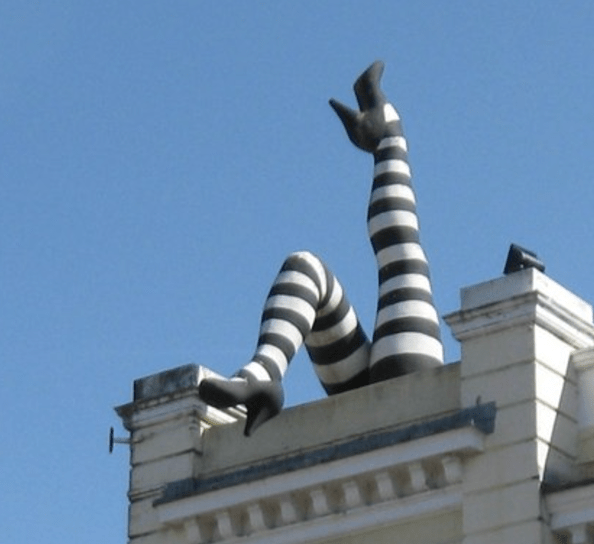
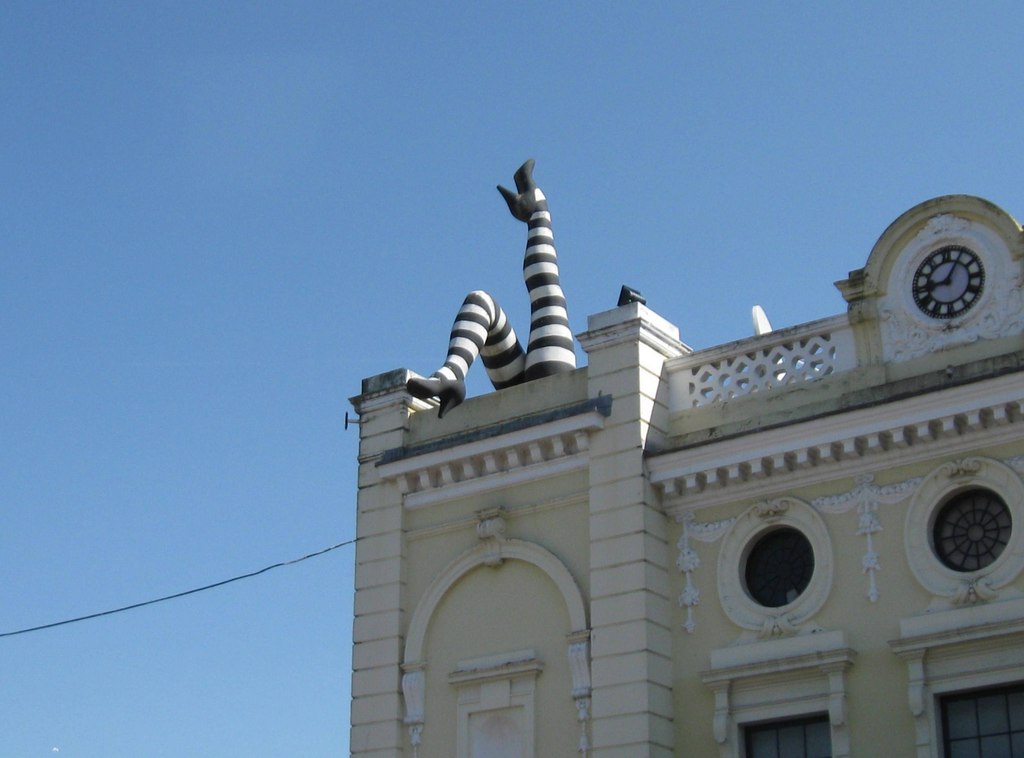
Let’s start with the crown jewel of Brighton, the grand old Duke of York’s, erected at a cost of £3000 by actress-manager Violet Melnotte-Wyatt on the site of the Amber Ale Brewery, whose walls still constitute the back of the auditorium. Artfully restored after being purchased by the Picturehouse group in 1994, fact junkies might like to learn that the 20-foot pair of can-can dancer’s legs now adorning the roof were acquired from the Not The Moulin Rouge Theatre in Oxford.
In my experience of arthouses, nonetheless, you can’t get much more idiosyncratic than Burg Kino. Even now, fully 76 years since my favourite movie was released, this intimate arthouse/grind house in the heart of Vienna still boasts two showings per week of Carol Reed’s The Third Man, which was shot in the devastated city shortly after the end of WW2. In fact, as I type, I’m wearing the t-shirt I bought there: Orson Welles-as-Harry Lime on the front, 3 on the back.
Then there’s the Prince Charles in Soho, where I took out a lifetime membership a decade ago (at 60 quid, a steal worthy of Bonnie and Clyde, and it’s ‘only’ 100 now). Sing-a-long fancy dress parties for The Sound of Music and The Rocky Horror Picture Show are regulars, likewise all-nighters devoted to specific genres, stars or directors. There’s just a handful of other cinemas I know of that I could walk into any day of the week, at just about any time, and find something worth getting lost in.
One stands, once again, in Amsterdam, another in New Amsterdam, a third on Paris’s handsomely stocked Left Bank. Uncoincidentally, the first of these, LAB111, is but a short hop from Flo’s, a fantabulous bagelry on the south side of Amsterdam where us Seinfeld tragics can find The Jerry, The Kramer, The Newman and even my own daringly non-kosher creation The Elaine (bacon and cream cheese on an exquisitely boiled cinnamon bagel, should you ever summon the intestinal fortitude).
That said, I wouldn’t have discovered Flo’s had I not already been a habitual visitor to the only cinema an expat can rely upon for English versions (or versions with English subtitles) of classics and obscurities as well as acclaimed new releases from Dubrovnik to Dubai. That the name of the bar commemorates Stanley Kubrick’s timelessly magnificent satire Dr Strangelove should tell you all you need to know about the taste of its programmers.
The New Amsterdam challenger is another Forum in another SoHo, the NYC one. Best-loved for its continuous celebration of black-and-white, pre-digital filmmaking, it has a Parisian counterpart, Filmothèque du Quartier Latin. The latter’s reliably enticing offerings lose their allure, from a Rosbif’s perspective, not only by scorning English subtitles, but primarily because the venue is the closest I have ever come to spending evenings in a genuine fleapit. If nothing else, those shabby seats and dusty floors and urine-stained toilets made it the ideal place to watch, as I did a few weeks ago, the Coen Brothers’ scuzzy debut Blood Simple.
In keeping with Parisian tradition, a neighbouring duo serving movie nerds and Sorbonne students alike, Christine and Écoles, are both barely more inviting, public health-wise, than Filmothèque. All is forgiven by a steady diet of largely American and French classics spiced up by a variety of clubs from Kino Pop (independent shorts) to the Afrocentric Air Afrique.
TIME TO RETURN to Dutchland. One reason I felt so comfortable after flying into Schiphol in June 2020 was a news story: cinemas were reopening. In Britain, they would stay shut for most of the year. A month later, Rotterdam sealed the deal.
Bombed about a bit during the war, as Carol Reed would doubtless have put it, Europe’s busiest port boasts a towering IMAX on Schouwburgplein (three of the world’s five hulkiest IMAXes, I was soon surprised to discover, are Dutch). Better yet, I speedily discovered three spiffing arthouses within walking distance of NH Atlanta, the art deco hotel off Coolsingel I called home until last summer.
But for the daily alternatives proffered by Lanteren Venster, Cinerama and neighbour-brother Kino, I would probably have retreated back to Amsterdam. Then I found out about the glories of the Cineville card: £20 per month for all the movies you can consume and every single Dutch arthouse at your beck and call. Yes, heaven by any other name.
A city of Rotterdam’s size boasting a trio of such unquestionably fine venues is rare indeed. Each of these anti-fleapits, moreover, has its own distinctive appeal. Home to the Arab Film Festival, Lantaren Venster, for instance, lies just over the Erasmusburg dividing north from south Rotterdam, and is also a major jazz venue. It has just undergone an elegant renovation and claims the further advantage of a waterside café.
Another recipient of a recent refresh is the expanded Kino, now home to six screens. The newish menu is bulging with appetising burgers, the walls chockfull of Chad Gerritsen’s delicious photographs from the set of Apocalypse Now. Seeing Martin Scorsese’s The Last Waltz there on Thanksgiving has become an annual ritual.
Nevertheless, this four-movie-a-week (minimum) junkie’s preferences and loyalties lie with Cinerama, which opened its doors in 1960 and was faithfully rebuilt in 1980. In fusing the best of the elements already mentioned, it adds two special ingredients: the art deco décor and the perfect name. And a Pyjamarama of a Bananarama of a Barbarella of a panorama is truly what it offers.
It was, I admit, love at first sight and second, a now long-running affair that soon prompted me to request permission to photograph every nook and cranny. No lush carpets or flamboyant wallcoverings like The Tuschinski or Radio City, sure, but interiors to faint for. Even the posters lining the staircase and first floor are distinctive: plenty of originals (Death in Venice, Black Orpheus and no fewer than three different Barbarellas) but also cheeky reimaginings by local artists ranging from Sin City and Baby Driver to Jobs and Get Out. Such distinctiveness is further aided by a board game club (bring your own), but be warned: Monopoly is now banned owing to a historical propensity for histrionics.
The seven screening rooms, to be frank, put 90% of their British counterparts to shame – as most Dutch arthouses do – for size of screen, leg-friendliness and bumfort (sorry, couldn’t resist). Plopping my own bum in the middle of the front row of the vast Screen 1 in the middle of the day is now my most shameless hobby, not to mention the closest I will ever get to feeling like David O. Selznick lounging in his own palatial screening room.
Annual attractions include the Wildlife Festival and the refreshingly unsnobbish weekly schedule is never less than varied. Over the past month I’ve seen a raft of movies ranging all the way from newies such as Flow, A Real Pain and Mr K to Andrey Tarkovsky’s Mirror, one of the monthly ‘Classics’. The latest wheeze is Groundhog Day Cinema: on the second of each month for the rest of 2025 you can wallow in the eponymous Bill Murray gem.
I can only conclude with a soulfelt plea. Right now, scandalously, Cinerama and the Prince Charles are both threatened with closure, for the simple and profoundly dispiriting reason that apartment blocks are miles more profitable. And if pre-eminent picture palaces of that ilk are allowed to fade away, whither the less renowned? Let’s just say joining the tens of indignant thousands who have already signed their petitions seems more socially responsible than snorting ‘Hasta la vista baby’.
Everything you ever wanted to know about life in Brighton (OK, and Hove)





 The Whistler