Tag Archives: Nancy Kirk

Gardening Corner with Nancy Kirk – Sept 2024

Edibles for the back of the border. 

Surely not, I hear you say. Who grows edibles at the back of their borders? Often forgotten, some edibles provide the perfect backdrop to our borders. 

For beauty I am going to surprise you with my all time favourite edible within the herbaceous border; asparagus. Most of us are put off by the years of waiting prior to a crop, or the fact you assume they will take up lots of space. Scrub all your preconceptions away and consider this plant as a beautiful screening device for an ugly bit of fence or garden wall – the foliage is delicate, wispy and detracts the eye nicely from a potential eyesore. 

Many years ago in late summer I was fruit picking with my daughter and we passed fields of glorious foliage and I felt compelled to investigate what crop this could be, my delight at finding it was a mere asparagus solved my conundrum of trying to locate a screening plant for an ugly repair to my garden wall, and at just about 5 foot tall, this seemed perfect.

After a while I started incorporating asparagus into my client’s gardens. Perfect for that smaller, not so deep border in a town garden. I often paired it with verbena, oregano and sage for a maintenance free border. 

While we’re talking about the rear of the border, have you ever considered growing the humble fennel? There are delicious bronze varieties that don’t grow as high as their green cousins, but both can be shoe horned inbetween shrubs to provide a nice texture contrast. I rarely harvest the bulbs but the seeds are glorious addition to my kitchen cupboards.

One year, while waiting for a potato vine to find its feet I planted some spotty bolotto beans to romp up the trellising. Not only were the scarlet flowers plentiful, but the bean pods were a speckled red, adding to flash of colour after the annuals had done their stuff. Then I dried the beans and stored them in my kitchen to pop into stews throughout the winter; I suspect this was my family’s favourite crop.

Living at the top of a hill provides us with some pretty windy sites, so screening with tall plants that don’t take up the whole garden with their width is a tricky ask. Bamboo just invades everywhere and trees shade our small town gardens too much. Also you want light during the winter months when the sun is low in the sky, so how about trying Jerusalem artichokes? They grow up to 10 foot high plus they don’t mind at all if you chop them down a few feet during the growing season. They produce cheerful bright yellow sun flower type blooms and their sturdy stems withstand the windy battering West Hill experiences. They are easy to grow in our soil and have the all time advantage of needing very little attention.

So now you can plan those gaps lurking by your fences and walls with something that is not only pretty but can be consumed as well.

l Nancy Kirk is a retired gardener who provides bespoke gardening lessons in your own garden. Packages start at £250. 

westhillgardenoracle@gmail.com

Gardening Corner with Nancy Kirk – May 2024

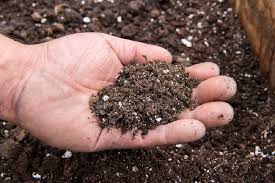
Many of our properties in West Hill are Victorian or thereabouts and over the years, decades and centuries the soil has been enriched with all sorts of organic material. Many gardeners for the early part of the century would have incorporated vegetable peelings into the soil or sprinkled their borders with coal dust; one of my elderly clients regularly dusted the top of her lawn with coal dust claiming it kept the weeds at bay; I have no idea about the science of her decision, all I know is that her lawn was resplendent. 

Composting is a habit I gained in my 30’s when I moved from a flat into a house. I had tended to my communal garden in my flat, but all the decisions had to be made by all the freeholders, so the freedom to do as I pleased was new to me. Added to this, the local council was promoting it’s pledge to provide every garden in the borough with free composting bins. 

Getting a compost bin going to the hard part. It took years for me to work out a formula that worked for me. As my compost bins filled with grass clippings, prunings and raw vegetable waste I noticed nothing was happening, everything just sat there, belligerently not breaking down at all. I headed to the local library to mug up on the secrets of composting to find very little in the way of advice, but a visit to my father’s allotment answered all my questions and more. All the allotment folk had compost bins, and most importantly they had composters that worked and their owners were more than happy to show me the error of my ways.

Initially my new friends suspected I had plonked my compost bins on a hard standing, they explained that the worms need to be in contact with the soil; but I hadn’t broken this rule. Then they talked me through layering, and I was woefully guilty of this compost law. I would cut the grass and lob all the trimmings in one big heap, this was my first mistake. Thin layers of vegetable peelings, grass cuttings and pruned bits were required. Also my pruned bits and pieces were large branches of buddlejia, I needed to snip them down to hand sized pieces. The final rule surprised me, moisture. My bins were parched. As everything had dried out so much, just adding water was not going to cut it, as nothing would absorb the water quickly as it ran through to the soil. My solution was rather unpleasant but it really worked. I dug out a dusty old 1970’s blender which was hiding at the back of my kitchen cupboard and used it to store my vegetable peelings. When it was half full I would add water and blend the mixture to add it to the compost heap. The worms moved in and I never looked back. Once the internal temperature of the heap started to work there was no need for the blended mixture anymore. 

Here are the basic rules of thumb:

1.Always on soil, never on a hard standing

2.Think layers

3.Cut down pruned bits to hand size

4.Moisture. Try blending or mixing wet material with water to add to your heap

And the final hint I got for those wise allotment folk was male urine really helped get things going; I’m not going to publicly endorse such a thing because our gardens are so small. You didn’t hear it from me.

Composting is an art form. Every compost heap is different, but the pure gold it produces will continue to enrich our soil for the price of a small receptacle, so isn’t it worth a go?

Nancy Kirk is a gardener who provides bespoke gardening lessons in your own garden. Packages start at £250. Contact westhillgardenoracle@gmail.com for details