

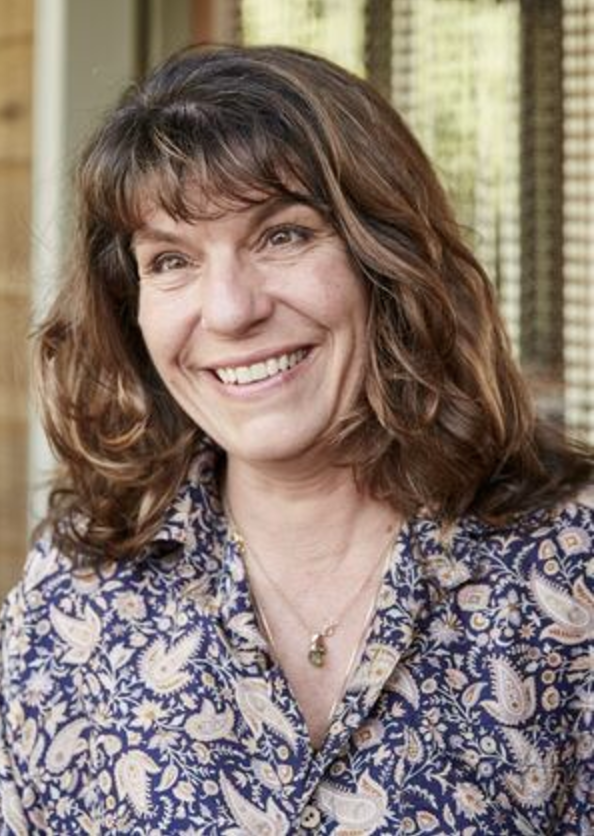
Who are you?
A secondary school teacher, specialising in drama with neurodiverse students, turned food psychotherapist. I trained as a therapist and in parallel began teaching cooking in the community. Early on, I realised the impact of working with food and cooking as part of the therapeutic journey and the power of food to heal. Therapy Kitchen (private practice) and Kitchen Sessions (CIC) were born.
What do you do and how do you do it?
I use a mixture of my personal and professional experience as a parent, teacher and psychotherapist who adores good food and learned its value growing up – through my working mum’s boil-in-the-bag TV dinners and my traditional grandmother’s home cooked – to create food-based, fun, delicious and empowering therapeutic events. I work with family groups, of all ages, in particular people on the margins and those who are financially disenfranchised who wouldn’t usually access therapy. The cooking workshops usually take place outside and a meal is made using seasonal and local goods eaten around a campfire. While chopping, prepping and cooking the food, we explore issues such as life changes (menopause) health (such as diabetes) and mental health (anxiety, addiction, depression) or social issues (loneliness, isolation, low income). As people are involved in relatively mundane tasks, their eyes on the chopping board or stirring spoon, they can relax and allow their feelings to be shared in the safety and warmth of the kitchen space.
As people engage with this basic creative activity, their sense of inclusion and capability encourages a refreshing sense of calm. From here people have the opportunity to naturally explore their unique human experience with each other. There is also the opportunity to learn about how ingredients work together that has a reflection on how we work with one another, each adding our particular flavour to the whole event and going away with a sense of belonging.
Why do you do it?
My upbringing and experience of life have shown me the importance and power of cooking good food that can be shared. Food unites people and I believe this approach is one we need as a global community – to come home to who we are as a species. In a world hurtling along on machine time, with AI type technologies dominating a materialistic, consumerist culture, we need a return to what makes us human. Food is our first taste of love, cooking is our first conversation. By returning to this primary human experience, we may well be able to answer the pressing issues of the day.
What’s your mission?
To change the world, one meal at a time. If we reorientate our attention to how we eat, understanding the value of love in our cooking, we can create a paradigm shift from profit to people.
What difference do you hope to make?
Enabling people to take responsibility for their welfare, fostering networks of useful exchange within our community that strengthen social bonds. By empowering people’s sense of creative confidence we can make healthier life choices, for long term welfare.
Tell me about the families you work with the difference you have made to their lives?
I have been working with families from Whitehawk Primary School (as it was then) and now Chomp for the last 15 years. These are low income families, who might also be struggling with culinary knowledge, mental and physical health issues. By using cooking as a therapeutic medium, I can offer a wide range of practical interventions that meet people where they are. The idea is to offer preventative social medicine. By that I mean that social networks of support are created in workshops that centre around the campfire inside or outside. While people are doing something practical with food, they will naturally share information and conversation with one another. This gives people a sense of connection and confidence that they can take into life. I’ve seen these sessions inspire cooking clubs in people’s homes so that each workshop continues to work its magic long after the event. Meals create memories and provide the ongoing ‘attachment nutrition’ we need. Food and love make a whole meal.
If you could achieve anything in the next 5 years what would it be?
To create ‘kitchen sessions’ all over the country that have a life of their own, addressing and responding to the needs of that community, all linked in the overall aim of using food-making as our primary medicine.
What is a changemaker and are you one?
A changemaker is someone or something who is able to use the ingredients around them creatively to make a difference, to find an applicable solution to current dilemmas, responding to the specific needs of the moment with imagination, compassion and future based thinking. Yes, I do see myself as a changemaker. By cooking a meal that adapts to the specific needs of the moment, I am making change and helping others to do so, one meal at a time. Currently, our attention is being hijacked into the external, commercial world – through Kitchen Sessions, I want to empower people to find their ability to change, and unleash the potential for healing and nourishment within the individual and the community at large.
Describe the world you want to create through food therapy.
I’d like to create a world where people understand the value of their personal potential, the essential magic of community and cooperation that is at the heart of being human. Here we can shift our focus from profit first to people first. We’ve lost ourselves in consumption. The world I’d like to help create is one where we shift from external, extrinsic and mechanised concerns, to internal, intrinsic and natural, human needs.
How can people find out more/ get in touch?
www.therapykitchen.co.uk (private practice)
kitchensessions.org CIC gives a flavour of my work.
I’m on Insta @therapy.kitchen and I always love to hear from you!
l Benita Matofska is a speaker, sustainability consultant and author of Generation Share
l Do you you know a Brighton Changemaker? Get in touch with us
and let’s get them in the spotlight
 The Whistler