Tag Archives: West Hill

Climate Cafe – Rewilding The Sea

Brighton’s seaside is a playground, a health spa and a boon to the local economy. But in our crazy industrial food culture, we’re much more likely to buy our fish already battered in a shrink-wrapped plastic package from the supermarket than one of the lovely fish stalls on the beach or the fish shops – Andrew’s in the Open Market or Brighton & Newhaven Fish Sales next to Hove Lagoon, where the fish come straight off the day boats, supporting the environment and the local fishers.

Our coastline has been through its own boom and bust, with fish stocks on the critical list and the ocean’s eco-system becoming decimated by the heavy hand of the industrial food system. But there’s good news coming in on the Sussex waves; Dolphin Head, south of Selsey Bill, was designated a Highly Protected Marine Area (HPMA) last year, after years of campaigning. Following decades of bottom-towed trawling, the site has become degraded, but these new protections will allow the area to fully recover. The area is a hotspot for bio-diversity, with several habitats found there and is used by numerous seabirds and marine mammals, including Risso’s dolphins and Harbour porpoises.

It was a lone fisherman we met on a dog walk on the beach at Shoreham who told us that Rampion wind farm has brought all sorts of fish back to its waters, that the sea bass and plaice come right up to the beach now, and there are plenty of sea bream further out. “It doesn’t just stop the trawlers. It’s created a reef which provides new habitats.” 

And that creates a whole new eco-system. 

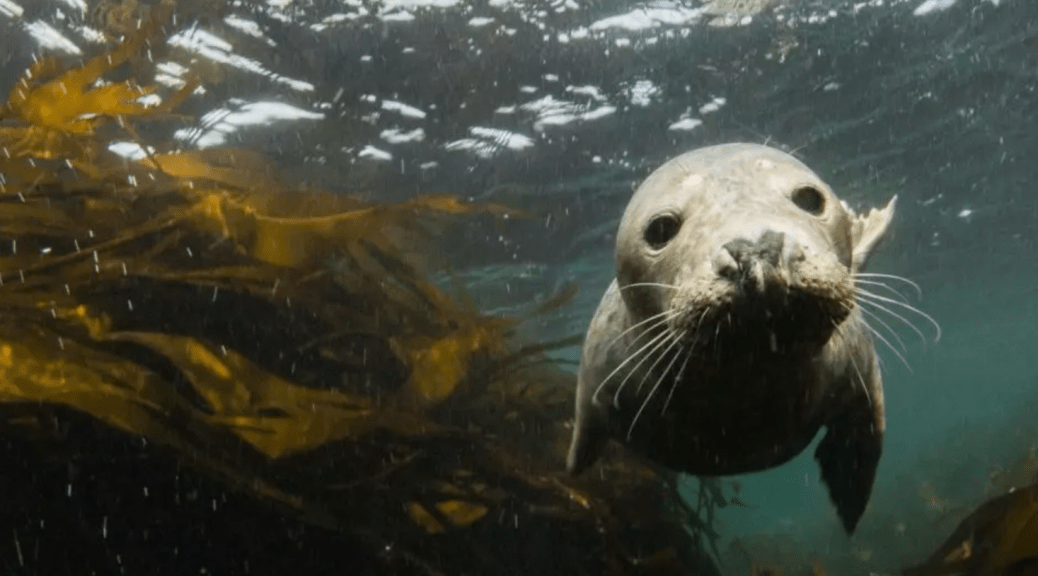
Local campaign group, Sussex Underwater, which only this autumn won a coveted Maritime Award for their film Our Sea Forest, reports that mussel beds are returning. Like oysters, these biovalves create important habitats for other species, and provide food for rays and other fish. 

It’s an astonishing reminder of a world that turns out of our view. Charles Clover, author of Rewilding the Sea, and seasoned environmental journalist says that we need to dive deep and wake up to what’s happening in our oceans not just to save the planet but to remind ourselves of what the Channel might have been like many years ago. “The dynamism of nature is just quite fantastic” he tells me. “If you leave it alone and harvest it really sustainably, using methods that don’t damage the rest of the ecosystem, then it does you multiple favours.”

Co-founder of the campaigning Blue Marine Foundation, Clover is bringing life back to our oceans and writing about it beautifully. Margaret Atwood calls his book “a game changer”. Knepp’s Isabella Tree says it’s “desperately needed”. George Monbiot says, “What if our seas became productive again with giant sturgeon, halibut and skate? It’s closer than you think.”

 “It’s not about not eating fish”, Clover tells me. “It’s about making sure the fish are managed properly. An extremely good example of the resurgence is the Bluefin Tuna around Britain’s shores. It’s not been there for 70, 80, 90 years, but it’s back. And it’s back principally because of a fisheries management decision.”

Industrial fishing has an enormous impact upon biodiversity; trawling and dredging smashes up the seabed, destroying “the forests of the sea” where the humble seaweed draws down CO2 and locks it away forever. But as Charles explains, Sussex Kelp has turned the tide on trawling.

“Sussex Kelp brings together the three reasons why we must rewild the sea: for greater food security, for biodiversity and for climate,” he says. In his book, he tells the story of Eric Smith, the Shoreham free-diver with Sussex Underwater who campaigned for the protection of the kelp belt, and continues to report on the astonishing recovery of this area from trawling. As a result of his work, mussel beds are expanding, stingrays have been sighted and the kelp is returning, says Clover.

“Kelp is one of many as-yet unquantified mechanisms that can help sequester carbon from the atmosphere and lock it up in sediments, though where its leaves go to that are not washed up on the shore is complicated and hard to quantify. But in the end, it will take its place with seagrass, saltmarsh, mangrove and, I believe, other forests of the seabed, in being recognised as an important mechanism that must be protected, that makes our planet more resilient.”

With the protection of the Sussex kelp, fish have come back as well as lots of other organisms, and local fishermen are happy too. “It shows what we could do all round our shores and it shows that in some places at least, we are moving in the right direction. As Eric puts it, “we are winning.”’

l Rewilding The Sea: How To Save Our Oceans by Charles Clover (Penguin) 

l Hear more from Charles Clover on Gilly Smith’s podcast “Cooking The Books with Gilly Smith”

Cllr Jacob Taylor – Nov 2024

It’s a pleasure to be writing a new column in The Whistler on behalf of your Labour council. As councillors, we try to read all of the wonderful community publications across the city – from the Hovarian and the Brightonian, to Rottingdean Village News, the Moulsecoomb & Bevendean Newsletter, the North Laine Runner, and many more. Each of these publications are a brilliant representation of our vibrant communities, but none are as witty, irreverent and jolly as The Whistler! 

I wanted to start this new series of regular columns by setting out our stall as an administration. We were elected in May 2023 with the first full majority on the council for over 20 years, on a promise to make change and get the basics right. As a proactive Labour council, we are focused on four key missions to try and transform Brighton & Hove. 

The first is to restore the quality of basic services, and improve the ‘look and feel’ of the city. Brighton & Hove is an amazing place to live and visit – but the honest truth is that it hasn’t looked it’s best in recent years. A refuse and recycling service that isn’t as reliable as it should be, and certain streets and public areas that look neglected. The sad fact is that the working culture at Cityclean had become unacceptable. This was impacting staff, but also the quality of the service. Many people suspected this was the case, but we acted. Following a KC-led investigation, we have been making important structural changes to try and fix this service. We know there is a long way to go. 

Refuse and recycling weren’t the only services that needed restoring. A city that doesn’t have free public toilets is a city that’s not accessible for families, for older people and for disabled people. That’s why it was such a mistake for the previous Green council to shut so many public toilets, and why we’re delighted to have reopened 15 since taking office – including the long-shuttered toilets in Pavilion Gardens. 

The second area of focus is housing. This city has a housing crisis that is both deep and broad. From people who are forced to sleep rough, to private renters paying a fortune for poor standards, to families that leave the city because they can’t afford a suitable property – the last 14 years has seen a failure to properly tackle a genuine national crisis. That’s why we are so focused on increasing the amount of affordable housing in the city. We are building and buying new council houses from Portslade to Rottingdean, and everywhere in between – to try and make Brighton a more affordable place to live. 

Our third mission is to tackle inequality in the city. Which is why we have created the Brighton & Hove Fairness Fund, with over £800,000 to support residents struggling with cost-of-living, and why we’ve introduced a ground-breaking policy to give priority in school admissions to children on Free School Meals. 

Sitting above everything is the issue that will impact all of our lives and generations to come: climate change and the need to transition our economy. The city council declared a climate emergency in 2018, but so far has not created a plan to transition the entire city to net zero (having previously focused on just the emissions from council buildings). We are going to change that, and have just hired a new head of Net Zero at the council to help drive the city towards genuine energy transition. 

There is a long way to go in rebuilding the city, and the country, after a period of decline – but your local council has started the work to do exactly that. 

l Councillor Jacob Taylor is Deputy Leader of Brighton & Hove City Council

The secret diary of a microdoser #3

It all started with a Nordic Blond. She explained to me how the shamans in the north of her country, above the arctic circle, gave Fly Agaric mushrooms to the reindeer and then drank their urine. I felt my left eyebrow raise. The right one joined it shortly after. 

We’re an odd species, aren’t we? I pondered on how a human being might stumble across that one, what kind of story a shepherd would drum up as an excuse for arriving late for dinner. The perplexed expression on the face of his wife. Her husband looking more squiffy than usual, admitting it was all too intriguing, too tempting not to have a sip. A pattern began to form in my mind as I remembered Morocco and the revelation of how Argan oil is made. Fresh almond husks are “passed through” a goat’s digestive system which strips off the outer layers to reveal the gold inside, gold that is somewhat tarnished on exit, but brushes up well.

Human intrigue is the birth of invention. Mine led me to ask the question “What is the difference between a reindeer’s gastric tract and a human’s?” This triggered a familiar swell of hyperfocus which escalated through my torso and surged up my scalenes to become the tsunami of my mind. I had to know why the shamans chose this strategy to process the alkaloids of a psychedelic mushroom. Hundreds of hours of rabbit hole research followed. Minimal sleep. Many answers. But I can only give you the 7 inch version here.

The reason why fungi are regarded as an entirely separate kingdom by biologists is because the plant world is constructed with cellulose and the world of mushrooms is architected with chitin. When it comes to fungi, the difference between a reindeer’s digestive system and us humans is this: reindeer have a much higher level of chitinase, the enzyme specialises in breaking down the chitin cell wall. We have an abundance of cellulase in our bodies. Our level of chitinase however is minimal. The reindeers’ stomachs can also handle the toxic compounds in Fly Agaric that would make us vomit, but I digress… 

When you dose on mushrooms, your body gives it its best shot, but it will unfortunately only absorb around 35% of the psychedelic compounds they contain. The remaining percentage passes straight through. Sadly, your body is not very efficient at this game and, essentially, your money could go a lot further. 

If you have taken mushrooms, you will recognise the warmth of the cuddle, be stunned by the visuals, some of you may well see aliens. However, before all that kicks in, many of you will experience another more uncomfortable emotion, erring on anxiety, a stage which you’re told by your friends to “push through and you’ll be alright”. I have found, through my own obsessive experimentation, that that unnerving feeling is also connected to the lack of chitinase in your body. 

Now, you will find plenty on the web on how to make up for this shortfall, “Lemon Tek” tea being the most common. But you will not find what I’m about to tell you. In my research, I found that certain foods are particularly high in chitinase, for a completely different reason. They use chitinase as a defence mechanism for protecting their seeds against fungal pathogens and attacking insects (whose exoskeletons also happen to be made with the same chitin building blocks). Those foods include banana, avocado, chestnut and my two favourites: kiwifruit and papaya. Kiwifruit helps with the acidity. Papaya has wonderful anti-inflammatory properties, although avoid it if you are trying for a baby, it is an ancient contraceptive used in indigenous tribal medicine.

But I have different thoughts about the hot water element of Lemon Tekking. Us Brits do love serving up tea at boiling point, for some ungodly reason. However, something tells me that it distorts the psilocybin in the process. Because, when we cook anything, it physically changes, yes? Why should that be different for naturally-occurring psychedelics? I have found this cold enzymatic extraction method produces a cleaner high, that arrives quicker, and bypasses the anxiety, although it shortens the trip, lasting closer to 3 hours than 4.

Once blended, the mushroom-papaya-kiwi mix should be left to steep for no less than half an hour, to allow the chitinase to breach the cell walls which conceal the psychedelic alkaloids, and no longer than 45 minutes, otherwise your brew will lose potency. Best to keep the papaya seeds, they are packed with chitinase, and I’m a fan of their peppery flavour anyway. Season with a pinch of salt. And, importantly, remember to use three times less shrooms. We are talking about microdosing after all… 😉 

Might the arctic shamans ever realise they had inspired a cold enzymatic extraction process? I think they probably have other things on their minds. In the same way, the Argan oil producers of Morocco most likely spotted almonds poking out of their goats’ droppings and realised, with the entrepreneurial spirit so characteristic of their culture, that there’s money in shit. Either way, I love the human capacity for lateral thinking. Because, at the end of the day, you can’t polish a turd, but you can roll it in glitter…

Stay safe. 

Ray, Brighton, 2024. 

For back issues visit http://www.instagram.com/sdoam.therayman

Editor’s note: The Whistler does not condone Ray’s opinions. We chose to publish this as we know there are many microdosers in the city. But remember, what works for Ray may not work for anyone else. BH

Editorial – Nov 2024

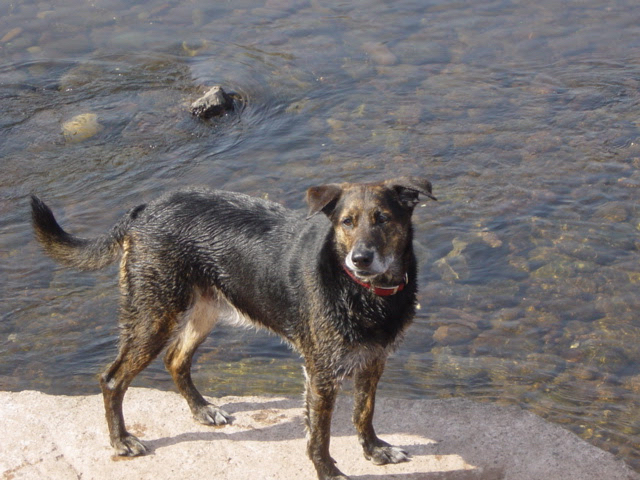
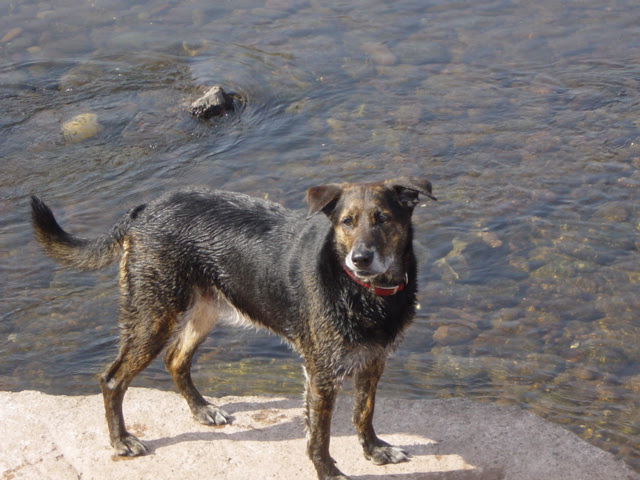
It’s 1996, possibly 1997. I’m in Regent’s Park, London Town, with my best friend, Maxwell Wolf. That’s him in the picture. I’m reading poetry and Maxwell is indulging his favourite pastime, putting the squirrels back in the tree. He’s good at it. He runs after them, they wait till he gets just this close and then… from nowhere they find a tree and run up it. Maxwell jumps up the tree impressively high – he’s a fine figure of a hound – but doesn’t jump high enough. He looks around, pleased with himself, satisfied that the squirrel is back in the tree. He knows though that the squirrel is just one of many. And they all need to go back in the tree. I have a little fantasy that “Putting The Squirrel Back In The Tree” has become an Olympic sport with time trials, different difficulty levels. Well, if breakdancing… when Maxwell lets out a yelp. He’s chasing… he’s very close… Actually that is very close. I’m not sure the squirrel is going to make it. 

From nowhere, the squirrel finds the tree (they really are sneaky) and runs up it, Maxwell hot on his tail. Literally. Maxwell’s got the squirrel by the bum. He’s excited but this isn’t supposed to happen and he doesn’t really know what to do next. The squirrel does. He stops running, turns round and bites Maxwell on the nose. 

I promised Maxwell I wouldn’t say what happened next. We went home and never spoke of it again. 

More than any other dog we’ve had since Maxwell went to chase the Big Ball In The Sky, Polly has picked up the mantel. She looks like him, moves like him, has the same sense of responsibility… You should have seen Maxwell when we had our first child. Really, the best babysitter. I can’t begin to think what Maxwell Wolf would have made of St.Ann’s Well Gardens, a park so laden with squirrels you almost trip over them. 

By the time you read this, Polly and Harry   will have had their first anniversary with us. It feels like they’ve been here forever, but it’s barely been a year. Sometimes I wonder whether they can remember their past life when they were called Freckle and Domino, and lived at the extraordinary Healing Paws Rescue in Greece. 

And yes, here comes the serious bit. This is the Xmas issue and it’s that time of year when we say yes, get a dog, but remember – as the old phrase has it – a dog is for life, so give the idea some proper thought. And when you realise it’ll be the best thing you ever did, get a dog from a rescue centre. Somewhere like Raystede, which is a really good place. Or maybe from further afield, like Healing Paws. There are so many lovely dogs that need rescuing, need a home. So if you’re going to do it, do it right. 

Gull About Town – Nov 2024

As winter approaches, it’s a time to batten down the hatches, put a head under a wing and settle in for the dark nights ahead. It’s not a good look for most restaurants, but wait, what’s this? Your gull has spotted has spotted a new dining experience coming out of hibernation. 

Amari is the reborn Amarillo, the partnership headed up Mo and Ali from Halisco and Michelin-starred former Murmur chef, Ian Swansain who has been feeding his delicious morsels for private hires and pop ups while simmering ideas for his new Spanish diner in Baker Street. Sourcing local fish and British pigs from farms where they’re positively encouraged to run around and have a good time, the vibe is definitely Latin. With excellent pickings for the finer palate, the Serrano and Iberico hams will come from the best Spanish producers while his Halisco fans will still find his legendary tacos on the table. The culture though is more modern British; the suckling pig will have had a longer life than its local Spanish equivalent, and Ian will be proudly breaking down the beast to make sure there’s zero waste. 

Hovering over Hove, your gull finds herself in a renovated Victorian terrace with best friends, Lauren Mullany and Ben Smith, also staying at home with their monthly lunch club, The Sunday Joint. Word had already reached the ears of your gull about this lovely little supper club in May this year; the young gulls in the family, disillusioned with work and lack of work life balance, had heard of this Millenial chef who wanted to prioritise the things she truly enjoys, such as cooking, recipe development and helping people to bond over shared culinary experiences. And so your gull happily flew over to peck at the windows. Spotting a cheffing certificate from Ireland’s Ballymaloe Cookery School on Lauren’s kitchen wall, your intrepid bird spent a fine Sunday afternoon pecking at the exquisite leftovers, particularly enjoying Lauren’s home brews for a little winter well-being boost. 

Over in Portland Road, your gull’s sticky beak happened upon a renovation at The Spice Circuit where Kanthi Thamma, the former Chilli Pickle chef and co-founder of Palmito, has just opened the smallest restaurant in town. At the back of a cocktail bar, he invites just four people to a South Indian feast at a table in his kitchen, a home from home. Cracking open the idea that South Indian food is all about dosas, each menu represents his best finds from the five different states in south of India, each with completely different cuisines. The Jaffna black pork, a rich and fragrant slow-cooked curry with black pepper, coconut vinegar and pandan combined with dark roasted curry powder from Sri Lanka is a gull favourite, and also available from Uber Eats.

Hopping on a thermal to West Sussex, your gull finds herself at home at Four. Tucked away in his own home in residential Worthing, former Smoking Goat chef and single dad, Aaron Dalton is putting food on his own table while his kids sleep upstairs. Your gull followed the aromas of local mackerel and Sussex beef to peck at the windows of his purpose-built kitchen with gull-friendly outside smoke-house and barbecue, and to taste some of the locally sourced slow braised, home-smoked dishes she’s scavenged.

As your bird glides home, the sun sets on a glassy sea. The curtains are closed early across town but for a food fan, it’s going to be a cosy few months ahead.