Tag Archives: West Hill

Hear the Lioness roar

Skip Kelly, coach of Montpelier Villa Women, explains
why women’s football has transcended nationalism

It’s hard to predict the future, and what I’m about to write could come back to haunt me. For a man with a name like mine and a background like mine and a cultural upbringing like mine… Are these the words I’m commiting to print in the finest local magazine to be read by millions? The words that will finally see me charged and convicted? 

I like the English football team. No, not that one. Let’s not get carried away. The English football  team that puts a smile on your face. It’s been another incredible summer for The Lionesses and many of you will wonder if I am referring to the Lionesses of Singapore or the indomitable Lionesses of Cameroon or the humble, but local English Lionesses. 

This summer was spent reacquainting ourselves with women’s football teams from around the world such as the Super Falcons (Nigeria), The Reggae Girlz (Jamaica) and, of course, The Girls in Green (Ireland).

Nationalism is one of those concepts like organised religion or low emission zones that emits a guttural reaction ignoring the sometime possible benefits. Such as laughing at your neighbours when they are knocked out of international football tournaments. 

Like all those concepts, it’s often the subtlety that provokes shock – and Irish nationalism is no different. After sitting through a school curriculum that had the Gaelic language as a compulsory subject until the age of 18, a history syllabus that taught the wrongs of imperial nations in far flung places like India and Congo, the litany of English football failures serves as a small serving of revenge every couple of years. International football doesn’t allow for nuance and it was always a joy to watch England lose at anything. 

It was suggested that the Australian team – the Matildas – success in the World Cup was the culmination of a co-ordinated online media campaign that itself was a response to the traditional media that supposedly reflects what middle Australia think and espouse good old-fashioned traditional Australian values had for a long time taken a dim view of women’s football. The Matildas were successful because they weren’t seen as representing good old-fashioned Australian values and good old-fashioned Australian morality – they were just seen as Australians. 

I heard this argument and thought it reflected precisely why I found the Lionesses easy to like. The Lionesses had names like Niamh and Mary. Surnames like Daly, Walsh and even Kelly. My initial resentment was at their refusal to declare for Ireland but that has slowly but surely subsided when I realised that these surnames are no longer considered de facto Irish names. 

The Lionesses and The Matildas have somehow transcended nationalism in favour of a more inclusive world for all of us. One that seeks to include rather than exclude. And it’s really hard to root against that, especially when you see first-hand the impact it has on people who’ve previously felt uncomfortable in their own sexuality. Those who felt they had to be in a metaphorical closet now get to see openly gay athletes being celebrated for their athleticism. 

I’m fortunate enough to have a front row seat to this at Montpelier Villa. Our players have always been footballers first, and yet I see how much it means to players when they wear rainbow laces or put up Pride flags at our matches. Our little football team is one of many  that has subverted what’s expected of a ‘traditional’ football team. 

The only court I will be convicted in for liking another football team is the one of public opinion. In the most extraordinary act of self-sabotage ever seen before this court, I would like to present the footage captured by the BBC immediately after Chloe Kelly’s winning goal last summer. Although it’s not clear initially, I am featured in the crowd shot, and I can be seen celebrating wildly with 90,000 others . . . And, yes. I’m wearing my emerald green cap. 

Jim Gowans Conservation Matters – Oct 2023

Bath Street (land east of The Sycamores)

The developer of the land previously used for car parking (see picture) is making what seems to be a pig-headed attempt to remove important conditions placed on the planning permission finally granted on appeal in March this year. Despite the planning inspector making it clear that, in order to preserve the character of the conservation area, conditions are needed in respect of external materials such as roof slates, rainwater goods, render finishes and window frames. A further planning application BH2023/01843 has been submitted in the hope that cheap and no doubt nasty materials can be used to maximise the developer’s profit. The Council’s Heritage Team has inevitably recommended refusal.

Red Pillar Box Blues

The MP for Pavilion has been in correspondence with Royal Mail over its decommissioning of the pillar box (see picture) outside the T@the Dials café in Dyke Road. During the Covid pandemic this was designated a “priority post box” but has been decommissioned for more than a year. According to Royal Mail, the café owners claim ownership of the land on which the pillar box is situated and will not allow the box to be removed (and perhaps re-positioned) during the working day. This would seem to be an unreasonable stance; the café has, after all, been allowed to use the pavement, which it clearly does not own, to place its tables, chairs, and planters. The loss of what was probably the most convenient pillar box for many West Hill residents is further depressing news about a postal service which fails to deliver (and now fails to collect).                            

Reasons to be cheerful

Homes in Clifton Street and Compton Avenue have been restored and are now enhancing the character of the West Hill conservation area. 

The pictures below of  2, Clifton Street show the front elevations before and after the works were carried out. The disfiguring of the original façade probably occurred in the latter part of the last century. The balcony in particular is now an attractive feature.

At no 18 Compton Avenue the flint and brick front wall has been repaired, and new cast iron railings set in particularly good stone coping. The balcony has  been reinstated, the steps refurbished and the garden replanted.

Matt Whistler grills Artist Dotty

Artist Dotty found himself interviewing me after hearing about my mission to run up and down every street in Brighton and accidentally join the London to Brighton marathon for the British Heart Foundation. But after I stopped prattling on about myself for 10 days and whinging that BBC comedy had relocated to Manchester, normal interviewing procedures resumed play with Artist Dotty. 

Creased coffee stained journo pad on table, with naff pencil and dried up pen, I asked: So Artist Dotty what have you being doing recently? “Listening to you banging on” came the reply. Artist Dotty seemed disgruntled and proceeded, in a confessional way, to spew out his recent new direction at embracing AI digital art. 

AD2023 was on the one hand singing the praises on new AI art and its fantastic capabilities and on the other hand looking facially perplexed, as if his face was saying, “Have I sold out as an art purist to the power of technology?” 

He proceeded to tell me that pitching art concepts is now far easier, but was a touch upset when he discussed a digital piece that was generated on the strength of a prompt description. The description read as follows: 

“An architect-style Dotty art gallery, with a space age Dotty band, jamming music”. Within seconds the piece auto generated, through the multiplex dottyverse algorithm and produced a fantastic piece of digital art. 

Dotty explained how he racked his brain to try to multiprocess the digital art in order to put his own artistic stamp on the composition. Then he came to a resigned conclusion, that the piece held its own as a visually great piece of art and narrative. 

Dotty began breaking up his wooden coffee stirrer and dropped each piece in his drink, as if to demonstrate an act of defiance and disdain at a robot creating a robot band and kicking the artist out of his arty processes. AD2023 was also concerned about the future of media and journalism; any number of fake scenarios could go out with photorealistic AI dark web wizardry. “Is there not a board of ethics by now?” 

The other side of the AD2023 coin is that his responses for his new strand of art, is causing quite a stir. 

The other day AD2023, while musing in Powis Square, it recreated the Royal Pavillion as a piece of digital art, with colourful Dotty designs on the side. This caused a class war debate on the Facebook page, Keep Brighton Weird, proving if nothing else, that there’s still life in the old prankster. 

Matthew Marke’s West Hill Cautionary Tales – Oct 2023 

The last time I cooked for Lee Marvin, we ate snake. I was sceptical. He was adamant. As ever he was right, the reptile was excellent. But then it would have to be, if it were to be cooked for one of the greatest men of the 20th century. Actor, lover, fighter. Man of action. Man of few words. 

Every man alive, without exception, secretly wishes he were Lee Marvin.  

The day I cooked for him, we were riding the sierra that ran through his ranch. He was an incomparable caballero. He could do anything on a horse. He taught me to ride and whilst I can handle myself, I will never come close to his horsemanship.

We had started at dawn, after a breakfast of beans and coffee and stopped every so often, dropping from our horses, fully clothed, into the cool, clear water that pooled in the bends of the creeks we passed. It helped wash away the sweat of the long riding and nights of heavy drinking under stars that were engaged in celestial shootouts.

The sun was getting low in the sky and I watched as he leaned down out of his saddle, fully extended his arm and picked up a stone the size of a wolf’s testicle. He hoisted himself back up and twisted round and threw the stone straight at me. 

Luckily, he wasn’t actually aiming at me. He was aiming at a snake in a tree we were passing. A diamondback, he told me later. 

Nasty snake, bad bite – was how he put it.

He hit the snake fully on the head and killed it outright. 

He drew to a halt and dismounted, walked over and toed the inert, defunct mother of all sin. As soon as the boot made contact with the snake, it sprang back into action. Not to back life, just action. It was writhing and convulsing but he simply pinned the snake to the ground just behind its head with his boot. He slowly withdrew a knife from within his clothes, crouched down and cut the snake’s head off. 

He lifted his boot but it still jumped and writhed. It reminded me of the way chickens run around when decapitated, seemingly trying to escape the end that they had already met. He picked it up, put it into a sack. 

‘Sorry kid, you’re cooking,’ he said, handing me the sack.

An hour later, we made camp next to the creek and I began to get ready for the night – a night with Lee Marvin was never predictable and was often quite hard work. Particularly the next day. 

I waded into the water and removed the snake from its sack. I was fairly appalled to see that it was still moving. Not so vigorously, but writhing nonetheless. I took out my knife and made a small cut in its skin, enough to be able to peel it back. I bit down on the fleshy, bony stump where the head used to be and pulled the skin off its body. Still the creature writhed, but slowly now, like a dancer using his arms to pretend to be a snake. 

I washed the skin before turning it back, right side out. When I had finished I hung it to dry from the limb of a tree that was overhanging the river. I still have the snakeskin. I keep it on the dashboard of my car. I then washed the snake in the cold water. Finally it was inert, a good couple of hours after its death. 

I walked back up to the fire wondering how I was going to grill it, when I saw him coming towards me with the branch of a tree, cutting away its limbs. What now? I thought and took a step back. But all he did was to take the snake from me and lay the two things alongside each other, near the fire. 

‘Wait,’ he said, and disappeared into the woods.

So I waited. It started a couple of minutes after he reappeared carrying a bundle of leafy oak cuttings. “It” was the unaided union of the snake and stick. Right there on the ground by the fire, the snake began to move once again. It twisted its rattle around the end of the stick and curled and rolled until it was completely corkscrewed around the stick’s length. 

‘Shit,’ I said. 

‘Yep,’ he said, and threw the cuttings on to the fire. 

He sat with his arm out straight, holding the weird snakestick in the smoke just above the heat, whilst he went into a monologue at full volume about a night’s drinking with Bob Mitchum and some French sex workers, only he didn’t call them that, in a town he claimed had been liberated by the two them at the end of the war.

He talked for half an hour without pausing, without even seeming to draw breath, all the while feeding the smoke and holding the snakestick in it. He finished up by saying  ‘Okay, now you,’ and he handed it to me.

I poked about in the embers until I had them nice and white with a red glow beneath. I put two rocks about a foot apart in the fire and laid the snake across them, turning it every minute or so. Juices dripped on to the embers and hissed. 

Its flesh, a pinkish white to begin with, had now turned a beautiful, golden brown. It smelled good. 

I pulled the stick out of the long coil and cut it into two halves and we ate. 

Snake is just one long spine and ribs so it can be tricky to eat if it’s thin. But this was a diamondback and about four foot long and weighing five pounds or so. We could pull off whole hunks with our teeth. It was young so its flesh was reasonably tender for a creature that is all muscle. 

I sat chewing, thinking about its flavour. It tasted like mackerel. And we were about 400 miles from the sea.

Mr Marvin liked it. He didn’t say as much. In fact he didn’t say anything. I could just tell he was enjoying it. Every now and then he would shake a few drops of Tabasco onto his next mouthful and chew it slowly. 

He wiped  his mouth with his sleeve as the last mouthful went down. ‘Right, I’m ready.’

The sun had gone down.

And the drinking began.

You can find Matthew Marke’s killings every Tuesday at matthewmarke.substack.com

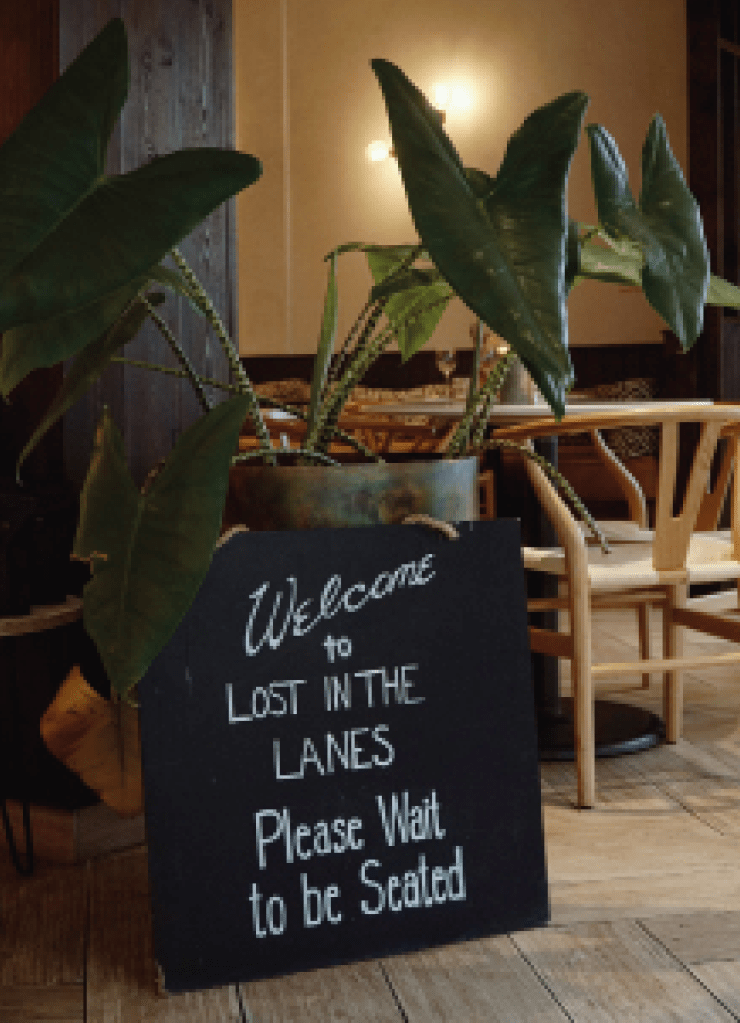
Lost for somewhere to go?

We love The Lanes with all its nooks and crannies and jewelery shops and maybe the odd tourist, but it’s easy to get Lost In The Lanes. And that’s a terrible line about a very nice place. Food editor Gilly Smith found out more

LOST in the Lanes has been a bit of a tranquil refuge in the middle of tourist Brighton, a place for a coffee and a sit down away from the buzz since it opened in 2017. But who knew that its owners were all about local produce, that it had sustainability at its core? 

Since August, its launch of LOST Nights has been showcasing an evening menu, plucked from Brighton’s natural pantry, with meat from the South Downs, fish from the day boats, dairy from our neighbours at Downsview and wines from Wiston, Stopham and Hallgarten. 

Owner Natalie Demetriou and chef Sophie Taverner are keeping it simple and slow, evolving it gently to keep its values at its heart. One day, all restaurants will be like this. I asked chef, Sophie Taverner why local sourcing is so important to her.

“The reasoning behind keeping a short and changing menu in the evenings at LOST is that it really allows us to work closely with local suppliers and make the most of produce when it is at its peak. 

“Sourcing locally isn’t just an ethical choice but also means getting the best produce at the peak of its flavour. Part of the ethos we have built is grounded in excellent relationships with suppliers who will tell us what the best catch is coming in off the fishing boats, or they’ll send us a message when new crops are being harvested. It means being able to put food on a plate that has been harvested that same day which then allows us to create menus that really showcase those ingredients”.

Tell me about your favourite local product right now and what you love to make with it.

“Right now we are coming to the end of the season for the most wonderful Culver corn from Culver Farm in Sussex. It is exactly what corn should be, so sweet and fresh with a perfect crisp to it. We have been serving it as fritters with a chilli vinaigrette, keeping it simple to allow the flavour of the corn to really shine through. It is also the most amazing time of year for fruit and we have strawberries, raspberries, redgages and damsons dotted around the menu and plans for preserving so we can also enjoy these later in the year. Part of really working with the seasons is thinking ahead to what we can make into jams or ferments so that in those months where less is growing, we have stores of things that can add some interest to our menus”. 

How do you let your customers know how much care you put into sourcing well? 

“We keep telling our story and reflecting our ethos in the menus we are creating as well as constantly highlighting our suppliers and the work they are doing. Shrub, who are our produce supplier for LOST Nights, work with small organic farms to get their produce to restaurants like LOST and that means we know exactly where our produce is coming from and who is growing it. That kind of transparency we hope will translate in what we are doing and is something that customers increasingly value. 

What’s the stand out dessert on the menu right now? 

“Like the rest of our menu, our desserts change regularly to reflect the seasons and what´s coming from the farms. This week’s standout favourite was fresh Sussex poached quince, baked cream and almonds. The quince right now is perfect and sits so well to balance out the tart sweetness of the lemon. It was so good we might keep it on for another week”.

Lost In The Lanes, 

10 Nile St, BN1 1HW

01273 525 444