Tag Archives: West Hill

Climate Cafe: Cat Fletcher


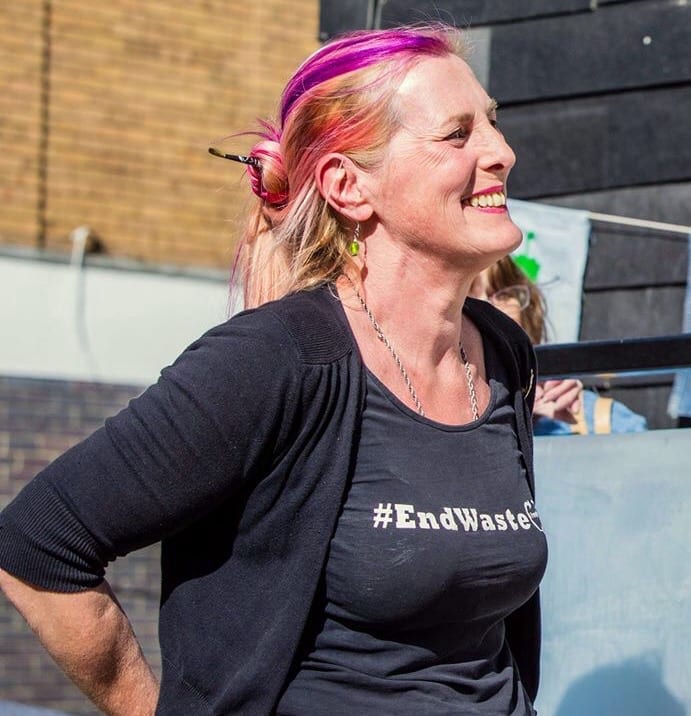
Continuing our virtual Climate Café where we look at people making a positive contribution to the planet, Gilly Smith talks to Brighton’s queen of reuse Cat Fletcher

Cat Fletcher has always been a trailblazer when it comes to environmental consciousness. She moved to England from Sydney in 1992 for love, but quickly became passionate about waste. 

Recycling had been a part of Cat’s everyday life back in Sydney; it was easy and efficient. “People simply set out their recyclables by their doors, and they were collected weekly without much hassle,” she says. The absence of a similar system in Brighton had Cat initially just sorting the leftovers at her friends’ houses after parties, collecting their bottles, cans and cardboard to recycle. “They just thought I was a bit bonkers,” she laughs.   

Her passion for reducing waste was rooted in her Sydney upbringing. Her father, a professional yachtsman, instilled in her an appreciation for materials and the work that goes into making things. “I had a good understanding of materials and the work that goes into making something. I look at things and have this X-ray vision of how have they made that? What’s that made of?” 

This hands-on approach was particularly useful when she had three young children and a tight budget.  “I just had to get a bit creative,” she says. “I used to pick things up off the street, you know, chest of drawers, a bag of stuff, and I’d take it back and see if I couldn’t paint it or fix it.” 

With an eye for an upcycling bargain, she took on a stall for years at Brighton Station’s legendary Sunday car boot. “ It was a place full of old school duck and dive guys. There were the Victorian antique boys who used to get there at three in the morning with their mining lamps, and they’d be gone by 7am.” With the kids asleep in the back of her van, she was perfecting her craft while making a name for herself and enough cash to pay the bills. It was this vibrant reuse scene that inspired Cat to take her passion to the next level. 

In 2007, when she had to downsize her home, she discovered Freecycle – an online platform for giving away unwanted items. Impressed by the concept, Cat decided to launch her own local group, Brighton Freecycle which quickly gained a loyal following. But frustrated by the rigid rules imposed by the US-based company,  she began to think about upcycling the group itself.  “I just thought, you know, I don’t need their Yahoo group. The group doesn’t even have to be called Freecycle. I can just make another Yahoo group. And so I did, at three o’clock in the morning, I just made up a name called a Greencycle Sussex, and I just transferred all the members of Brighton Freecycle onto that new group.” 

This bold move caught the attention of a Guardian journalist, who wrote a story about Cat’s independent venture. The article sparked a domino effect, with Freecycle groups across the UK abandoning the US organisation to join Cat’s new network. “By Friday night, I think 60 Freecycle groups had gone.”

A

nd so Freegle was born – a decentralised, volunteer-led network of reuse groups across the country. Over the next 15 years, Freegle would grow into a well-organized, legally recognised cooperative, with a team of dedicated volunteers supporting local groups, winning Cat a Sussex Eco Volunteer Award. 

It also won the attention of the head of sustainability at Brighton and Hove Council who was one of the judges. He invited her to join its sustainability partnership along with the main players in the city’s infrastructure. “So I turn up there and there’d be a skip outside full of furniture. I was like, ‘Guys, there’s a pile of reusable stuff being smashed to pieces outside. What’s wrong with you? Either give it to someone to use, or you can get money for metal that could be income for the council. Why are you paying a waste management company for a skip?’” 

Using Freegle to shift everything from desks to filing cabinets, windows to heaters to NHS surgeries, schools and individuals, she was soon emptying Council buildings, 16.9 tons of furniture from Bartholomews House alone. “I even gave away the carpet tiles on the floor”, she laughs. 

The clearance of the old Council HQ at Kings House won her a Naticnal Recycling Award, but also an introduction to the CEO of the UK’s largest waste management company bidding for a contract in Greater Manchester, valued at £50 million annually. As the contract demanded an element of social value, Cat spotted the opportunity to recycle the work that she was doing for the Council in Brighton and Hove and adapt it for Manchester’s specific needs. 

“They deconstructed this huge anaerobic digester, a great big industrial building, hollowed it out, brought in 20 shipping containers, turned them into art galleries and makers’ units. They brought in all the people that I’d found around Manchester that could fix, reupholster, upcycle, repair, jewellery and they all came in and got a hub, a place to work. And then they retrained 650 staff all around the tips, so now, when anyone in Manchester goes to the tip with anything that’s upcyclable, it goes back to all the different makers in that one hub and back out shops at the tips where they sell it. It makes over a quarter of a million in profit every year which goes back into the community.”

Cat can be found at the Freegle Free Shop in the Open Market on Thursdays to Saturdays

Andrew Clover: Talks to the trees

The Hidden Life of Trees, Peter Wohlleben’s 2016 bestselling novel may have revealed trees talk to each other: but what would trees say to us? 

Yes… the idea seems odd – but it wouldn’t to Druids, The Sioux, or early Buddhists. It’s no surprise that the Buddha found nirvana by the Bodhi Tree, or that the Old Irish word for oak is duir: a druid is someone who connects to the oak – which brings wisdom, strength, and – even – vision.

But how does this work? How would you do that? Well…

1) Walk to your favourite oak. Already you’ll be feeling good. (Trees’ dappled light calms the mind; they emit chemicals that boost our immune systems). 

2) Greet your oak in some way. I fancy they like a hum. So I place lips and heart, and hum the question, “Can I sit, and be your sapling?” 

3) Most oaks will seem to say “Yes”. (Most yews will tell you to sod off). 

4) Sit, shut eyes, breathe slowly out. This stimulates the parasympathetic nervous system – releasing oxytocin – the body’s own version of the valium.

5) Meanwhile, mouth the seven magic words, ‘I breathe down and push down roots’. You’ll get a sense of fears and worries being drained down into the earth. 

6) Breathing up, mouth: “I breathe up and breathe up strength”. Imagine energy coming up, from the ground, filling your chest, your head, and passing up into the oak’s strong trunk. (By now you’ll be feeling way stronger).

7) Next time, breathe up to the oak’s calmly spreading boughs, mouthing, “I breathe up and breathe up calm”.

8) Next, breathe to the oak’s playfully wiggly twigs. In Latin, the oak was called quercus: and the oak is quirky. It’s the playful grandad of trees. Mouth, “I breathe up and breathe up lightness”.

9) Now, don’t hurry. If the oak might wish you to do one thing it’s that -never hurry. But when you’re feeling very calm indeed, breathe on the essential invitation the oak offers: think, “I am safe, to imagine, the future, that I need”

10) Let your imagination fly, like a bird, five years into the future. Imagine a tree, growing by the house, that you need. How big is it? What can you see in the garden?

11) Imagine entering its front door. What’s the floor like? 

12) You might see a photo of you, on the wall. What are you doing?

13) When you’ve returned home later, write down what you saw. The oak is known as The Gatway To The Mysteries. Your vision could be the start of something. 

Perhaps imagine the oak as Phil Oakey, singer of The Human League, a strange but trusted figure, inciting you to Open Your Heart. Imagine its rutted trunk is leading you into a better future. And it may.

When I first did this exercise, I saw the future I needed involved a shack, surrounded by jungle trees, that I’d helped plant, which, a year later, inspired me to sail the Atlantic, to plant 2500 trees. I lead this meditation, once, for a coaching client, who saw herself creating a company to empower female sport. Six months later, she’d raised a hundred million in investment. 

Now… hang on… I’m not saying breathing on trees makes you rich. Far more likely, you’ll embrace the lesson of the chestnut, “I want nothing… I have it all right now.” I’m just saying that there’s powerful magic, in the oak – and in all trees. 

And that connecting to them can bring a powerful, quirky magic into your life.

What’s your favourite tree? Would you like me to walk to it with you, to tell something of its magic? If so, get in touch. You’ll know what I’ll say. 

mrcloverthefamoussnail@gmail.com 

Mrs Wilson’s Children: The Welly Club

When stars such as Katy Perry, Coldplay and Enter Shikari, along with the current Government and Brighton and Hove council rally to the same cause, we have to pay attention. After successful lobbying by the Music Venue Trust, they are all supporting grassroots music venues. This is a real issue across the country as venues are regularly under threat from developers, gentrification and the cost of living. Here, the iconic Prince Albert was not so long ago battling closure.

As Brighton-based author Caraline Brown says, “Music is life. It is the blood in our veins. It’s what made us and will keep us sane”. Her book, Mrs Wilson’s Children: Adventures at the Welly Club, Hull 1979-81, tells the story of why these venues are crucial to the social, cultural, and economic life of our cities. Think what Brighton would feel like without The Hope and Ruin, The Green Door Store, Chalk and so many others.  

Stuffed with rare, fascinating pictures, tickets and posters of the gigs, Brown’s book illustrates the enduring importance of these venues through the prism of the punk/ post-punk/ 2-Tone moment (1979-81) and tells us about life away from the bigger cities such as London, Manchester and Liverpool. The Welly – which could be the Concorde or, well, pick your own favourite venue – became the centre of a community, a place where fans, bands and promoters could meet and chat and drink and ferment ideas. These places provided a space to build a scene. As Welly regular Jon Nelson says: “We had to build our own revolution, one gig at a time”.  

“I owe my whole career to those early days at the Welly”, says Brown. Managed by the formidable Mrs Wilson, like a “stern ward matron”, the Welly opened as a working men’s club in 1913, and was still hosting darts matches when Brown was promoting gigs there. A proper sweaty venue with character and sticky floors. However, it didn’t appeal to everyone. Bauhaus were supposed to support Magazine, but their singer Pete Murphy took one look at the stage, pronounced the venue a “shithole” and refused to play. His loss.  

Another highlight was the reproduced pages from Brown’s contemporaneous notebooks with the phone numbers of music industry executives such as legendary Factory Records boss, Tony Wilson, as well as the costs for the gigs. Refreshingly, there’s no sign of a mobile phone or an Excel spreadsheet. Local musician, Vince Coulman says that, while the gigs might not have made much money, the real benefit “might lay, not in cash, but in the thrill of bringing an ace band to our favourite place in the city. In short, making stuff happen.” 

The nights that Brown had organised at the Welly were still being talked about reverently when I arrived in Hull in the mid-1980s, even though Brown and the Wilsons were long gone. 

Thankfully, The Welly is still going strong playing host to the new generation of alternative groups. Music is indeed life.

l ‘Mrs Wilson’s Children: Adventures at The Welly Club, Hull 1979-1981’ by Caraline Brown costs £14.99 plus postage and is available from http://www.karibrown.uk

Johnny Hopkins 

Editorial – Jan 2025

Happy New Year. Glad tidings we bring. By the time you read this I’m guessing you’re halfway through your resolutions – that Direct Debit to the gym is already looking as appealing as Dry January. We here at Whistler Towers don’t buy into that “New Year, New Me” thing because, well, the old me’s still basically OK. A few tweaks and it’ll be fine. It’s not that often we sit down with a box of Quality Street and a small Jack. A little something sometimes, it’s OK. And walking to the bamboo Hawaiian drinks cabinet to get another glass… That’s exercise. 

We have though been watching a fair bit of telly and recently watched a rather fine series about the early days of the American airline PamAm. It’s set in 1963 and essentially it’s about style, and the style is to die for. The clean lines, the attention to detail. The clothes they wore, the angle of their hats, everything was about the cut, the line, the style. And nowhere was the style more stylish than the cars. 

You should watch PanAm just for the cars. These extraordinary, exquisite creations, all chrome and fins, were the ultimate in style over purpose. On almost every measure we’d use today, they’re ridiculous. They were unfeasibly big – the Ford Galaxie 500, an extraordinary thing of beauty, was 18ft long and did about 12 miles to the gallon – but it’s heart-breaking that that idea, the idea that style comes first, fell out of fashion. 

No one ever got frothy saying “Oh look, there’s a five-door hatchback” or “Look at the lines on that SUV”. What’s happened to car design is nothing short of tragic. 

Take away the style and all there’s left is purpose. And if all there is is purpose, then there’s little argument against getting an electric car. It’s quiet. It’s cheap to run. It doesn’t use fossil fuels. It doesn’t spit out emissions. And, for those who care, they’re surprisingly very fast. No engine, no weight. It goes from A to B. There’s no road tax. Insurance is polite. And it costs next to nothing to run. Plug it in, go to bed. Wake up, full tank, less than £20. The other thing is, you won’t only feel good, you’ll look good too . You’ll be fit and svelte because you’ll never go to a petrol station, so you never buy a useless Twix or raisin and biscuit Yorkie Double. 

And here in Brighton, electric cars make even more sense, because we’re Green. First Green MP, don’t you know? So you’d think everything is geared to supporting these environmentally friendly if slightly dull cars. Well, no it isn’t. There are precious few street chargers, which you need because if you live in a house on a street with a pavement between you and the road, you can’t charge at home because even if you could park right outside your house/flat, you’d have wires trailing out of your window across the pavement. You need a street charger. But there are precious few street chargers and they’re all in parking permit bays and so people with ordinary cars and permits park there. So, unless you’re very lucky, you can’t charge your car. If the Council was serious about supporting electric cars, it would a) provide more street chargers and b) make it so that only electric  cars can use those bays. 

We’ve got a new column by two of our Green councillors (see opoosite page). Maybe next time they can address this. 

Just a quick line to say how sad we here at Whistler Towers are about the sad demise of the i360. It’s not in our manor, but it’s in our city and we care. Take away the money, the costs, the politics, all the miserable stuff, all the practical stuff and what you’ve got is a phallus, complete with ring, rising up from the beach. It’s a little odd. Brighton’s got a rich heritage of mad stuff – think about Magnus Volk’s “Daddy Long Legs” train in the sea. It’s very Brighton. Make it more accessible – or, better, free. And make it part of our landscape

Comment: Cllr Ellen McLeay and Cllr Sue Shanks

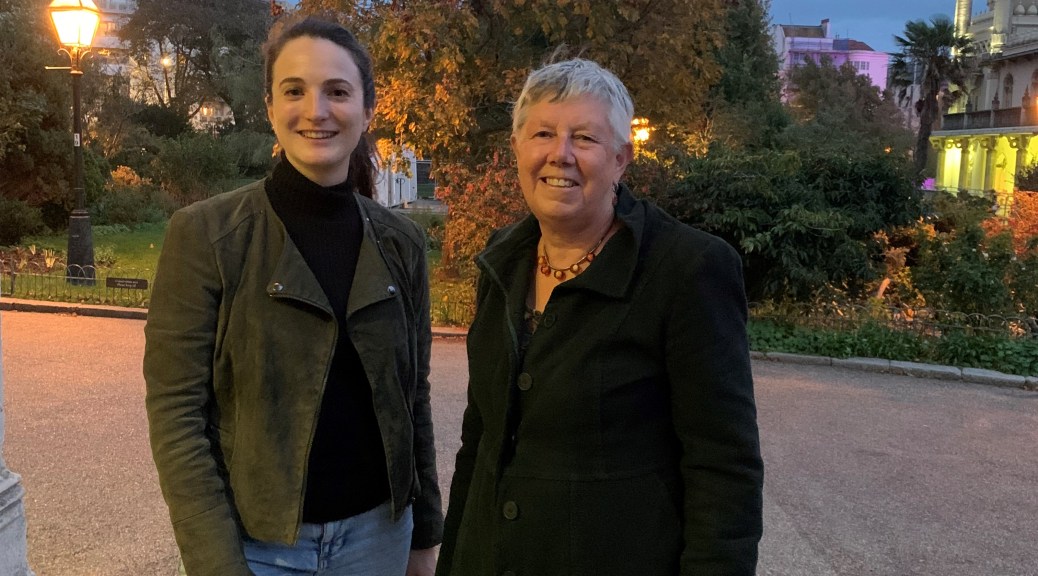
As the two ward councillors for West Hill and North Laine, we are delighted to be invited to write a regular column for The Whistler

We are representing residents in this area as Green Party opposition councillors, now Labour is the administration running the council. Sue is the opposition spokesperson for Children and Families, as well as a committee member for Planning. Ellen is the opposition spokesperson for Housing, and a co-Chair for the Central Area Housing Panel. We are both are committee members for the People Overview and Scrutiny committee, however our main role is to represent the community of West Hill and North Laine. You can contact us via the council website, just search for Brighton and Hove Contact Your Councillor.

Elected in May 2023, we have been supporting the community with a wide range of local issues, ranging from putting forward a request for a crossing on Buckingham Place, to more bike hangers on Compton Avenue, and steering better communication between Govia Thameslink Railway and CityClean for the clean up of the private land around Brighton Station.

The roads around and nearby Brighton Station have seen a lot of improvement works over the past year. In September, we saw the introduction of a new school streets initiative on St Nicolas Road for St Paul’s School to help children travel to school more safely and reduce traffic issues. As we’ve not received reports since the launch week, we hope that means it is now working for all those who shared initial concerns.

Two junctions along Trafalgar Street were redesigned to improve safety for pedestrians. The closing of the Trafalgar Street/Blackman Street junction was decided following a number of collisions over a three-year period, many involving cyclists. However, we are receiving equally troubling reports about the new junction where Whitecross Street meets Trafalgar Street. We’re engaging with transport officers, and they’re reviewing the situation.

Housing issues make up a lot of our case work, and we’re supporting council tenants and leaseholders in high-rise blocks across the ward to address their need for housing repairs or regarding reports of anti-social behaviour (ASB) in their blocks. Fire safety is another major concern for these residents and others in the New England Quarter. Following the Grenfell Tower fire, it’s more important than ever for residents have greater transparency on the fire safety of their building. 

Many residents contact us about antisocial behaviour and drugs in our ward – which is a huge challenge for the city. It has been reported that over the past year, the Combatting Drugs Partnership has closed down 38 county lines, which led to 99 arrests and over 8,000 drug seizures and added 80 young people to prevention programmes. These are impressive numbers, but residents still say that drug related ASB is more prevalent than ever. Ellen has been supporting residents badly impacted by this on Zion Gardens. There have been council organised community meetings focused on these issues in other wards. We are asking for one to be hosted in our ward. 

An important part of being a councillor is seeing all sides of a situation. Following reports from the community concerning residents occupying supported accommodation at William Collier House and St Mungo’s, we paid both housing providers a visit. During our time speaking with the housing managers and their residents, we were struck by the incredible work they do. We met some of their success stories – people who have experienced trauma you couldn’t imagine, are now on a journey of recovery, have benefited from training opportunities, and are working to move on into private rental accommodation. Or another resident whose needs were so complex it took the housing team two years to earn his trust. If anything, the visit reinforced the importance of these services for a fair society that gives everyone the opportunity to change, grow and live. 

Many businesses have contacted us about the challenges on New Road relating to anti-social behaviour. Sue represents the council on the Pavilion Trust who have been successful in a bid to improve the gardens which will put new fencing on New Road and the council are looking at a change for the benches. 

We were so sorry to see the loss of a very mature tree on Buckingham Road due to Elms disease – an extremely difficult decision made by the arboriculture team who work hard to conserve the city’s trees. Every summer, the team battle to protect Brighton’s historic collection of beautiful elm trees, and there are two key ways you can support them. Avoid bringing diseased elm wood into the city (that includes logs or timber you might burn). Keep an eye out for elm trees with leaves wilting or turning yellow or brown ahead of autumn (you can report it by emailing elmdisease@brighton-hove.gov.uk with a photo and the tree’s ‘what3words’ location). 

The council’s net zero strategy is hugely important for the city. We hope they will support these efforts with an additional commitment to protecting biodiversity. Protecting the natural world is an important component in achieving net zero. That’s why the reintroduction of glyphosate to the 

city and a recent decision to increase wild verge mowing to six cuts over the summer is concerning.  We are campaigning for an “opt-out” option for neighbourhoods who want to avoid glyphosate being sprayed on their streets. We can support with arranging weed clearing action days for your street. If this would be of interest to you, please reach out.

We are keen to work with the current Labour administration during this challenging economic time. Under the previous administration there was plenty of cross-party collaboration, and it would be great to see that continue in some capacity. We›d like to take this opportunity to respond to misinformation in the previous edition of The Whistler regarding our previous administration, 2020 to 2023. To represent what happened with toilets more accurately, we wanted to share the following timeline – where only one toilet was permanently closed: 

• Early 2020 saw many toilets close in response to the Covid-19 pandemic; these were gradually reopened in the latter part of 2020 / early 2021.

• Norton Road toilets closed permanently in April 2022 due to significant repair issues.

• 11 sites were closed in October 2022 due to financial pressures. These have subsequently reopened, apart from The Level.

• Four sites were closed in autumn 2022 pending refurbishment. These have subsequently reopened. 

We regularly attend community meetings with the London Road Action Team and the North Laine Community Association and would be pleased to meet with residents in the West Hill area as a group and to support the community association. 

We wish you a restful and restorative and a happy 2025.