Corinne Sweet – Growing Old(er) Disgracefully – Jan 2025

It happens every year – regular as solstice clockwork. We gorge and party our way through the winter months and then bang on the midnight hour (Ist Jan) cry: “That’s it. I’m done. No more drinking/eating/indulging/spending….”

I see so many of my clients doubled-up like veritable pretzels chastising themselves for that extra slice or that ATM splurge. Not to mention the binge-watching and zero-exercise routine. “I’m going to be ‘good’ in the new year”, they plead, “Honest…no more take-aways”.

I see grumpy friends, colleagues and clients in ‘Dry January’, racing out the door on 1st February to turn on the beer taps with a collective ‘Phew’. Then the binge-indulge-remorse cycle starts all over again and by March people are back on the couch, bemoaning their waistlines (and their waste).

Resolution, Schmezolution. It can be a punitive start to the year.

Here’s the thing: I’ve come to believe that the annual roundabout of splurge and restraint has many threads to it: cultural, religious, environmental, elemental, familial. However, the way we approach being either ‘Good’ (= restraint) or ‘Bad’ (= indulging) is not really helpful. It’s too polar a perspective: black and white.

In my book Overcoming Addiction (Amazon) I look at how we can meet our real needs for ourselves without ‘filling up’ on the phoney, ersatz habits that we are told we must have in order to like ourselves. Or to feel better. (Or not to feel to all). Or to have fun, relax and relate.

I genuinely believe ditching the ‘good’ and ‘bad’ labels attached to food, drink, chocolate, spending, sex, exercise, money, TV and other daily necessities, is actually the healthy place to start. 

Instead, we need to get in touch with our real needs and ask ourselves: “What do I really want, really need, right now?” Or “What am I feeling?” A bit of emotional literacy goes a long way. All too often we simply numb out before we can answer any of these questions. 

We need to look after ourselves and our needs first and foremost – all the time. Not just in January. Instead of wrestling with new year’s resolutions, try and identify just one habit you’d like to curb or another one you’d like to adopt, as a new, more fulfilling, healthier, happier way of life. You may even enjoy it.

Instead of thinking about things as ‘naughty’ or ‘nice’, ask yourself what you really want. It could be contact with a friend, a dance round the living room or simply a good night’s sleep. 

Make sure there’s a good dollop of leisure and pleasure in your daily life, too. Living in West Hill, and in Brighton, that’s not too hard to find. A stroll to the sea, a coffee in a funky café or simply a night sky over the West Pier can work wonders.

A healthy habit isn’t just for Christmas. It can be for life.

l Growing Old(er) Disgracefully by 

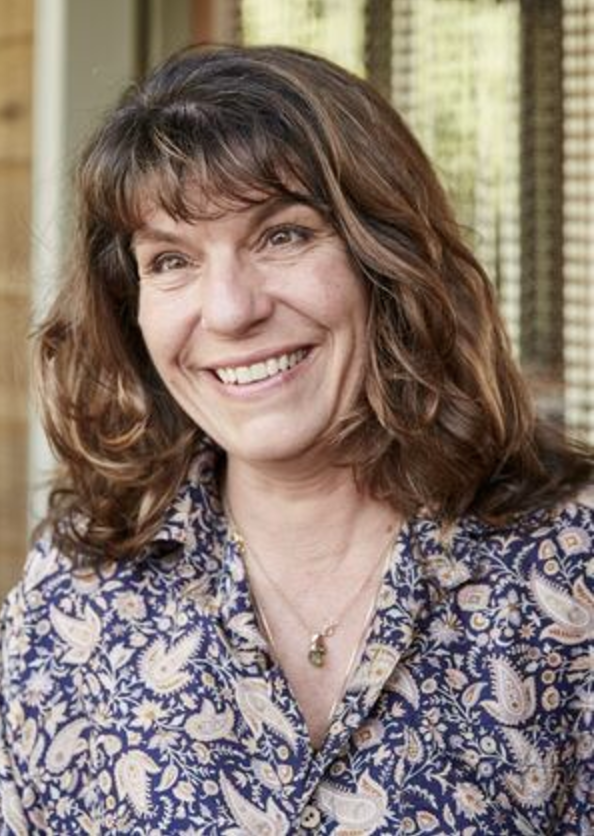
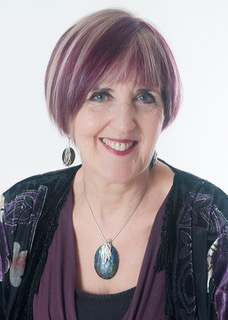
Corinne Sweet

Psychotherapist, writer, broadcaster 
www.corinnesweet.com

Climate Cafe: Cat Fletcher


Continuing our virtual Climate Café where we look at people making a positive contribution to the planet, Gilly Smith talks to Brighton’s queen of reuse Cat Fletcher

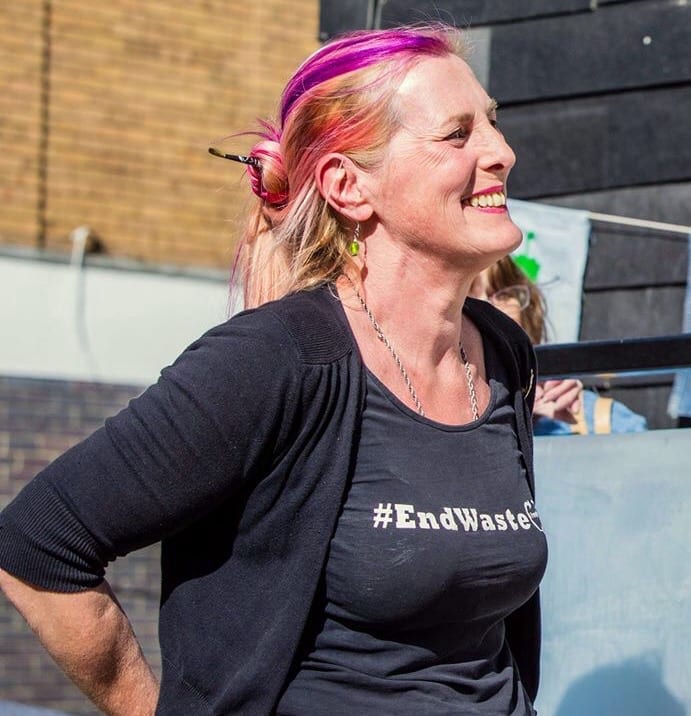
Cat Fletcher has always been a trailblazer when it comes to environmental consciousness. She moved to England from Sydney in 1992 for love, but quickly became passionate about waste. 

Recycling had been a part of Cat’s everyday life back in Sydney; it was easy and efficient. “People simply set out their recyclables by their doors, and they were collected weekly without much hassle,” she says. The absence of a similar system in Brighton had Cat initially just sorting the leftovers at her friends’ houses after parties, collecting their bottles, cans and cardboard to recycle. “They just thought I was a bit bonkers,” she laughs.   

Her passion for reducing waste was rooted in her Sydney upbringing. Her father, a professional yachtsman, instilled in her an appreciation for materials and the work that goes into making things. “I had a good understanding of materials and the work that goes into making something. I look at things and have this X-ray vision of how have they made that? What’s that made of?” 

This hands-on approach was particularly useful when she had three young children and a tight budget.  “I just had to get a bit creative,” she says. “I used to pick things up off the street, you know, chest of drawers, a bag of stuff, and I’d take it back and see if I couldn’t paint it or fix it.” 

With an eye for an upcycling bargain, she took on a stall for years at Brighton Station’s legendary Sunday car boot. “ It was a place full of old school duck and dive guys. There were the Victorian antique boys who used to get there at three in the morning with their mining lamps, and they’d be gone by 7am.” With the kids asleep in the back of her van, she was perfecting her craft while making a name for herself and enough cash to pay the bills. It was this vibrant reuse scene that inspired Cat to take her passion to the next level. 

In 2007, when she had to downsize her home, she discovered Freecycle – an online platform for giving away unwanted items. Impressed by the concept, Cat decided to launch her own local group, Brighton Freecycle which quickly gained a loyal following. But frustrated by the rigid rules imposed by the US-based company,  she began to think about upcycling the group itself.  “I just thought, you know, I don’t need their Yahoo group. The group doesn’t even have to be called Freecycle. I can just make another Yahoo group. And so I did, at three o’clock in the morning, I just made up a name called a Greencycle Sussex, and I just transferred all the members of Brighton Freecycle onto that new group.” 

This bold move caught the attention of a Guardian journalist, who wrote a story about Cat’s independent venture. The article sparked a domino effect, with Freecycle groups across the UK abandoning the US organisation to join Cat’s new network. “By Friday night, I think 60 Freecycle groups had gone.”

A

nd so Freegle was born – a decentralised, volunteer-led network of reuse groups across the country. Over the next 15 years, Freegle would grow into a well-organized, legally recognised cooperative, with a team of dedicated volunteers supporting local groups, winning Cat a Sussex Eco Volunteer Award. 

It also won the attention of the head of sustainability at Brighton and Hove Council who was one of the judges. He invited her to join its sustainability partnership along with the main players in the city’s infrastructure. “So I turn up there and there’d be a skip outside full of furniture. I was like, ‘Guys, there’s a pile of reusable stuff being smashed to pieces outside. What’s wrong with you? Either give it to someone to use, or you can get money for metal that could be income for the council. Why are you paying a waste management company for a skip?’” 

Using Freegle to shift everything from desks to filing cabinets, windows to heaters to NHS surgeries, schools and individuals, she was soon emptying Council buildings, 16.9 tons of furniture from Bartholomews House alone. “I even gave away the carpet tiles on the floor”, she laughs. 

The clearance of the old Council HQ at Kings House won her a Naticnal Recycling Award, but also an introduction to the CEO of the UK’s largest waste management company bidding for a contract in Greater Manchester, valued at £50 million annually. As the contract demanded an element of social value, Cat spotted the opportunity to recycle the work that she was doing for the Council in Brighton and Hove and adapt it for Manchester’s specific needs. 

“They deconstructed this huge anaerobic digester, a great big industrial building, hollowed it out, brought in 20 shipping containers, turned them into art galleries and makers’ units. They brought in all the people that I’d found around Manchester that could fix, reupholster, upcycle, repair, jewellery and they all came in and got a hub, a place to work. And then they retrained 650 staff all around the tips, so now, when anyone in Manchester goes to the tip with anything that’s upcyclable, it goes back to all the different makers in that one hub and back out shops at the tips where they sell it. It makes over a quarter of a million in profit every year which goes back into the community.”

Cat can be found at the Freegle Free Shop in the Open Market on Thursdays to Saturdays

Andrew Clover: Talks to the trees

The Hidden Life of Trees, Peter Wohlleben’s 2016 bestselling novel may have revealed trees talk to each other: but what would trees say to us? 

Yes… the idea seems odd – but it wouldn’t to Druids, The Sioux, or early Buddhists. It’s no surprise that the Buddha found nirvana by the Bodhi Tree, or that the Old Irish word for oak is duir: a druid is someone who connects to the oak – which brings wisdom, strength, and – even – vision.

But how does this work? How would you do that? Well…

1) Walk to your favourite oak. Already you’ll be feeling good. (Trees’ dappled light calms the mind; they emit chemicals that boost our immune systems). 

2) Greet your oak in some way. I fancy they like a hum. So I place lips and heart, and hum the question, “Can I sit, and be your sapling?” 

3) Most oaks will seem to say “Yes”. (Most yews will tell you to sod off). 

4) Sit, shut eyes, breathe slowly out. This stimulates the parasympathetic nervous system – releasing oxytocin – the body’s own version of the valium.

5) Meanwhile, mouth the seven magic words, ‘I breathe down and push down roots’. You’ll get a sense of fears and worries being drained down into the earth. 

6) Breathing up, mouth: “I breathe up and breathe up strength”. Imagine energy coming up, from the ground, filling your chest, your head, and passing up into the oak’s strong trunk. (By now you’ll be feeling way stronger).

7) Next time, breathe up to the oak’s calmly spreading boughs, mouthing, “I breathe up and breathe up calm”.

8) Next, breathe to the oak’s playfully wiggly twigs. In Latin, the oak was called quercus: and the oak is quirky. It’s the playful grandad of trees. Mouth, “I breathe up and breathe up lightness”.

9) Now, don’t hurry. If the oak might wish you to do one thing it’s that -never hurry. But when you’re feeling very calm indeed, breathe on the essential invitation the oak offers: think, “I am safe, to imagine, the future, that I need”

10) Let your imagination fly, like a bird, five years into the future. Imagine a tree, growing by the house, that you need. How big is it? What can you see in the garden?

11) Imagine entering its front door. What’s the floor like? 

12) You might see a photo of you, on the wall. What are you doing?

13) When you’ve returned home later, write down what you saw. The oak is known as The Gatway To The Mysteries. Your vision could be the start of something. 

Perhaps imagine the oak as Phil Oakey, singer of The Human League, a strange but trusted figure, inciting you to Open Your Heart. Imagine its rutted trunk is leading you into a better future. And it may.

When I first did this exercise, I saw the future I needed involved a shack, surrounded by jungle trees, that I’d helped plant, which, a year later, inspired me to sail the Atlantic, to plant 2500 trees. I lead this meditation, once, for a coaching client, who saw herself creating a company to empower female sport. Six months later, she’d raised a hundred million in investment. 

Now… hang on… I’m not saying breathing on trees makes you rich. Far more likely, you’ll embrace the lesson of the chestnut, “I want nothing… I have it all right now.” I’m just saying that there’s powerful magic, in the oak – and in all trees. 

And that connecting to them can bring a powerful, quirky magic into your life.

What’s your favourite tree? Would you like me to walk to it with you, to tell something of its magic? If so, get in touch. You’ll know what I’ll say. 

mrcloverthefamoussnail@gmail.com 

Brighton Changemaker: Charlotte Hastings

Who are you? 

A secondary school teacher, specialising in drama with neurodiverse students, turned food psychotherapist. I trained as a therapist and in parallel began teaching cooking in the community. Early on, I realised the impact of working with food and cooking as part of the therapeutic journey and the power of food to heal. Therapy Kitchen (private practice) and Kitchen Sessions (CIC) were born.

What do you do and how do you do it?

I use a mixture of my personal and professional experience as a parent, teacher and psychotherapist who adores good food and learned its value growing up – through my working mum’s boil-in-the-bag TV dinners and my traditional grandmother’s home cooked – to create food-based, fun, delicious and empowering therapeutic events. I work with family groups, of all ages, in particular people on the margins and those who are financially disenfranchised who wouldn’t usually access therapy. The cooking workshops usually take place outside and a meal is made using seasonal and local goods eaten around a campfire. While chopping, prepping and cooking the food, we explore issues such as life changes (menopause) health (such as diabetes) and mental health (anxiety, addiction, depression) or social issues (loneliness, isolation, low income). As people are involved in relatively mundane tasks, their eyes on the chopping board or stirring spoon, they can relax and allow their feelings to be shared in the safety and warmth of the kitchen space. 

As people engage with this basic creative activity, their sense of inclusion and capability encourages a refreshing sense of calm. From here people have the opportunity to naturally explore their unique human experience with each other. There is also the opportunity to learn about how ingredients work together that has a reflection on how we work with one another, each adding our particular flavour to the whole event and going away with a sense of belonging. 

Why do you do it? 

My upbringing and experience of life have shown me the importance and power of cooking good food that can be shared. Food unites people and I believe this approach is one we need as a global community – to come home to who we are as a species. In a world hurtling along on machine time, with AI type technologies dominating a materialistic, consumerist culture, we need a return to what makes us human. Food is our first taste of love, cooking is our first conversation. By returning to this primary human experience, we may well be able to answer the pressing issues of the day.

What’s your mission? 

To change the world, one meal at a time. If we reorientate our attention to how we eat, understanding the value of love in our cooking, we can create a paradigm shift from profit to people.

What difference do you hope to make? 

Enabling people to take responsibility for their welfare, fostering networks of useful exchange within our community that strengthen social bonds. By empowering people’s sense of creative confidence we can make healthier life choices, for long term welfare.

Tell me about the families you work with the difference you have made to their lives? 

I have been working with families from Whitehawk Primary School (as it was then) and now Chomp for the last 15 years. These are low income families, who might also be struggling with culinary knowledge, mental and physical health issues. By using cooking as a therapeutic medium, I can offer a wide range of practical interventions that meet people where they are. The idea is to offer preventative social medicine. By that I mean that social networks of support are created in workshops that centre around the campfire inside or outside. While people are doing something practical with food, they will naturally share information and conversation with one another. This gives people a sense of connection and confidence that they can take into life. I’ve seen these sessions inspire cooking clubs in people’s homes so that each workshop continues to work its magic long after the event. Meals create memories and provide the ongoing ‘attachment nutrition’ we need. Food and love make a whole meal.

If you could achieve anything in the next 5 years what would it be? 

To create ‘kitchen sessions’ all over the country that have a life of their own, addressing and responding to the needs of that community, all linked in the overall aim of using food-making as our primary medicine.

What is a changemaker and are you one? 

A changemaker is someone or something who is able to use the ingredients around them creatively to make a difference, to find an applicable solution to current dilemmas, responding to the specific needs of the moment with imagination, compassion and future based thinking. Yes, I do see myself as a changemaker. By cooking a meal that adapts to the specific needs of the moment, I am making change and helping others to do so, one meal at a time. Currently, our attention is being hijacked into the external, commercial world – through Kitchen Sessions, I want to empower people to find their ability to change, and unleash the potential for healing and nourishment within the individual and the community at large.

Describe the world you want to create through food therapy. 

I’d like to create a world where people understand the value of their personal potential, the essential magic of community and cooperation that is at the heart of being human. Here we can shift our focus from profit first to people first. We’ve lost ourselves in consumption. The world I’d like to help create is one where we shift from external, extrinsic and mechanised concerns, to internal, intrinsic and natural, human needs.

How can people find out more/ get in touch? 

www.therapykitchen.co.uk (private practice) 

kitchensessions.org CIC gives a flavour of my work. 

I’m on Insta @therapy.kitchen and I always love to hear from you!

l Benita Matofska is a speaker, sustainability consultant and author of Generation Share 

l Do you you know a Brighton Changemaker? Get in touch with us
and let’s get them in the spotlight

Mrs Wilson’s Children: The Welly Club

When stars such as Katy Perry, Coldplay and Enter Shikari, along with the current Government and Brighton and Hove council rally to the same cause, we have to pay attention. After successful lobbying by the Music Venue Trust, they are all supporting grassroots music venues. This is a real issue across the country as venues are regularly under threat from developers, gentrification and the cost of living. Here, the iconic Prince Albert was not so long ago battling closure.

As Brighton-based author Caraline Brown says, “Music is life. It is the blood in our veins. It’s what made us and will keep us sane”. Her book, Mrs Wilson’s Children: Adventures at the Welly Club, Hull 1979-81, tells the story of why these venues are crucial to the social, cultural, and economic life of our cities. Think what Brighton would feel like without The Hope and Ruin, The Green Door Store, Chalk and so many others.  

Stuffed with rare, fascinating pictures, tickets and posters of the gigs, Brown’s book illustrates the enduring importance of these venues through the prism of the punk/ post-punk/ 2-Tone moment (1979-81) and tells us about life away from the bigger cities such as London, Manchester and Liverpool. The Welly – which could be the Concorde or, well, pick your own favourite venue – became the centre of a community, a place where fans, bands and promoters could meet and chat and drink and ferment ideas. These places provided a space to build a scene. As Welly regular Jon Nelson says: “We had to build our own revolution, one gig at a time”.  

“I owe my whole career to those early days at the Welly”, says Brown. Managed by the formidable Mrs Wilson, like a “stern ward matron”, the Welly opened as a working men’s club in 1913, and was still hosting darts matches when Brown was promoting gigs there. A proper sweaty venue with character and sticky floors. However, it didn’t appeal to everyone. Bauhaus were supposed to support Magazine, but their singer Pete Murphy took one look at the stage, pronounced the venue a “shithole” and refused to play. His loss.  

Another highlight was the reproduced pages from Brown’s contemporaneous notebooks with the phone numbers of music industry executives such as legendary Factory Records boss, Tony Wilson, as well as the costs for the gigs. Refreshingly, there’s no sign of a mobile phone or an Excel spreadsheet. Local musician, Vince Coulman says that, while the gigs might not have made much money, the real benefit “might lay, not in cash, but in the thrill of bringing an ace band to our favourite place in the city. In short, making stuff happen.” 

The nights that Brown had organised at the Welly were still being talked about reverently when I arrived in Hull in the mid-1980s, even though Brown and the Wilsons were long gone. 

Thankfully, The Welly is still going strong playing host to the new generation of alternative groups. Music is indeed life.

l ‘Mrs Wilson’s Children: Adventures at The Welly Club, Hull 1979-1981’ by Caraline Brown costs £14.99 plus postage and is available from http://www.karibrown.uk

Johnny Hopkins 

Everything you ever wanted to know about life in Brighton (OK, and Hove)