
Four days, 450 artists, 35 venues…


Alex Hill takes his pick of The Great Escape
“Yeah, I saw  them a few years ago at The Great Escape”. Everyone likes to be ahead of the game, everyone likes to catch the New Big Thing before they become the new big thing. And there’s no better place to do that than at The  Great Escape. But so many bands, so many venues, so many names, so many… places to go and have a drink. What do you do? Where do you go? Who do you see? 

Man/Woman/Chainsaw 

A fascinating band with an intriguing and unrevealing name. They’ve been described as ‘one of the most exciting and unpredictable young acts in the town’, and with their mix of atmospheric indie style, joint vocals, melodic guitar and bass and haunting violin playing, you can understand why. It’s not their first time in Brighton either – they put on a brilliant show at Green Door Store a few months ago and I’ve been awaiting their return ever since.

Rizzle Kicks

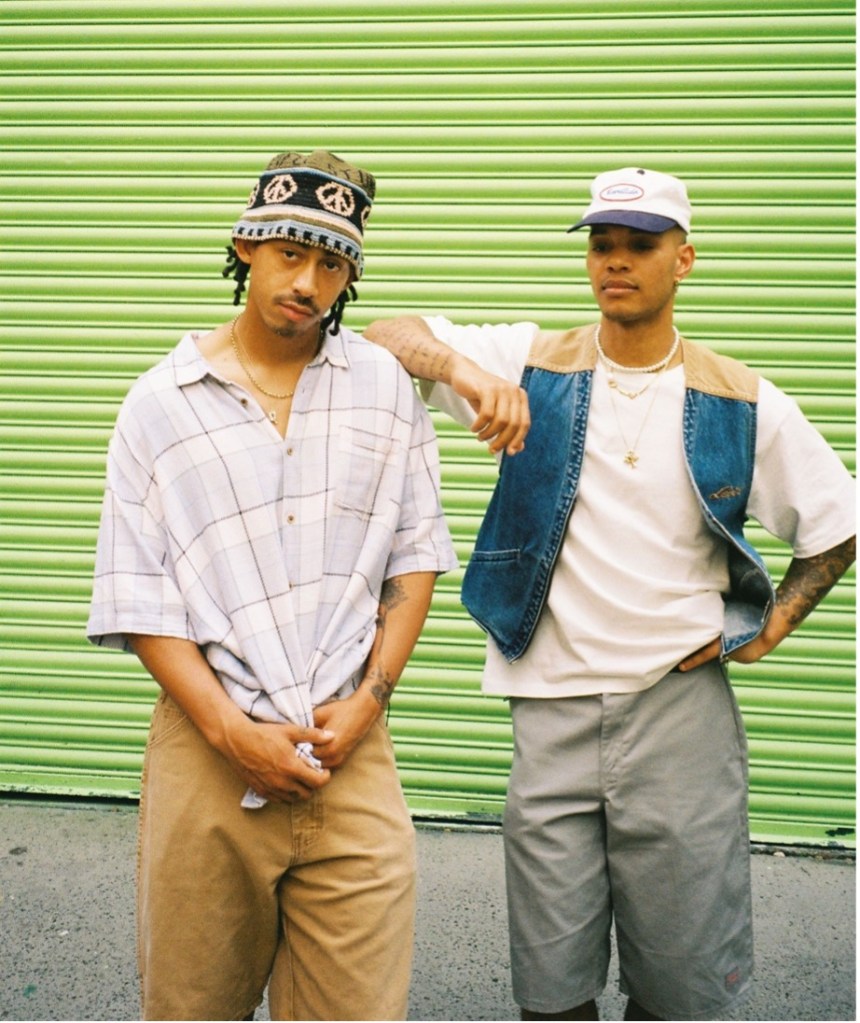
OK, not new, but they’re Brighton legends – yes they are – and we love them. This local hip hop duo grabbed national attention with their fresh sounding, early 2010’s hits ‘Down With The Trumpets’ and ‘Mama Do The Hump’ encapsulating a groovy and upbeat spin on hip hop which incorporates elements of reggae, funk and jazz – they’ve even sampled classic punk tracks for their tunes. These guys definitely have the knack needed to get a crowd moving with their unique and catchy feel-good sound that’s immediately recognisable. It’s great to have them back. 

Heavy Lungs 

One of the heaviest bands playing this year’s festival, as their name might have led you to believe, and their hardcore punk sound immediately grabbed my attention. With riff driven songs, relentless drumming and Johnny Rotten-esque vocals – they pay homage to classic punk while making it their own; I’d liken their sound to an intriguing mix of Black Flag and The Damned brought to the modern era – which can be heard in their most popular ‘(A Bit of a) Birthday’.

Peter Doherty 

Again, not new, but am I looking forward  to this. The daring, yet loveable frontman of The Libertines and Babyshambles is one of the headliners for this year’s festival and an obvious choice for first place on this list. He plays Brighton beach on the 14th May championing the release of his new album.

I saw Doherty play live last year in a grotty industrial estate in Wolverhampton. While perhaps an unlikely location, this intimate acoustic set with Doherty playing a mix of Libertines and Babyshambles songs along with his solo material was a fantastic gig. He has the brilliant ability to captivate an audience with just his guitar, oftentimes accompanied by Bob Dylan style harmonica playing. Doherty maintains the poetic songwriter charm that made him famous.

Queen Cult

One of the newest acts around are one to keep an eye on. With a high energy indie rock sound and heavily distorted instruments, Queen Cult have hints of garage rock greats Royal Blood and Queens of the Stone Age and are unforgivingly loud and proud. Just the thing we need to see. Their new single, ‘Figure It Out’, last month is hard not to like.

Check out https://greatescapefestival.com/

Column: Are the Seagulls becoming a new Bird of Prey? by Sam Kavakli

The story of Brighton & Hove Albion Football Club and how they have evolved over the last few decades is one of the most remarkable in modern football, but has success led to a feeling of imposter syndrome for many of their fans?

Jimmy Case was sacked as Brighton manager on Wednesday 4th December 1996. The Seagulls had been relegated into Division 3 (today’s League 2) but were on course to be sent down in back-to-back seasons. The club were 13 points adrift at the bottom of the table and their stadium, Goldstone Ground, was set to be sold to pay off the ever-increasing debts.

Despite an improvement in performance under new management, Brighton became under greater threat that season, after a two-point deduction was imposed when fans invaded the pitch in protest of the club’s stadium being sold. The future of the seaside club looked troubling.

However, lifelong supporter Dick Knight took control of the club in 1997 after ousting the previous board for eventually selling the stadium. Despite having to share a home stadium with Gillingham for two seasons, Knight helped the Seagulls slowly and steadily get back on track. Brighton had managed to maintain their Football League status based on goals scored and finished above Hereford United.

Division 3 remained Brighton’s home for a few years, but it could have been a lot worse if it wasn’t for Knight stepping in. They finally moved to playing their home games at converted athletics track, Withdean Stadium, in 1999. Two years later, Micky Adams finally led the Seagulls to league triumph and promotion back to Division 2 (today’s League 1).

A new league saw new management and this transition proved to be a successful one. Peter Taylor led the club to back-to-back promotions into Division 1. All thanks to Dick Knight, Brighton had gone from being a near-non-league side, being one division under the Premier League in the space of five years.

The decade that followed saw the Seagulls drift between the second and third tiers of the football pyramid. Their final season at Withdean in 2010/11 saw them promoted from League One, back into the Championship. Brighton moved to Falmer and remained in the new second tier for a considerable period.

After years of fighting various demons – whether it be money problems, stadium issues or pure bad luck in promotion play-offs, the 2016/17 season saw Brighton finally promoted into the Premier League. They became a topflight outfit for the first time in 34 years and fans were buzzing. Dick Knight and later Tony Bloom, who were not just chairmen for the Seagulls, but lifelong supporters too and it means a lot when having pure love for the club rather than for money, finally and deservingly rewards you.

In a Guardian article written just before their first Premier League season, Brighton fan Alan Wares said: “At the end of last season, the sense of pride was massive. This was a club that was almost extinct, that had to fight tooth and nail to be here,” which shows how lifelong fans have kept on believing in their team through thick and thin.”

So, where are the Seagulls been flying nowadays?

Well, they haven’t flown downwards that’s for sure. The Premier League has been Brighton’s home for almost eight seasons and therefore they have grown into an even more respectable club, delivering plenty of talented players.

The first few seasons were a fight to survive but in 2022/23, something amazing happened. Brighton finished in sixth place and therefore qualified for European football for the first time in their history. Roberto De Zerbi truly transformed the Seagulls into a new ‘Bird of Prey’ in English football terms and even led his team to the FA Cup semi-finals for the second time in four years.

Brighton were unlucky with injuries during their time in the Europa League but still managed to achieve a round-of-16 finish and topped a group that included European giants Marseille and Ajax.

As of now, the Seagulls currently sit in ninth place in the Premier League table; holding on to their status as a topflight club and they definitely won’t be taking flight anytime soon. It’s a competitive league but new manager Fabian Hurzeler has made sure that his team keeps going.

The story of Brighton & Hove Albion is a genuinely underrated tale, and it is truly amazing how thirty years can turn you from the brink of becoming a non-league club to a top half Premier League team.

The story of a seaside club with passionate fans has made the Seagulls a force to be reckoned with.

Imposter syndrome? What is that?

When a football club evolves, so does its identity and Brighton have been able to reach these levels of achievement at a deserving rate. The evidence of their success is there, and they no longer have a reason to feel inadequate – supporters know who they are and where they have come from and that is what will continue to shape the future of the club.

Raising the oof with John Shuttleworth

Hello, is that John?” 

“No, no, it’s Graham”

That makes sense. There’s none of that “being in character” with these guys because if we know anything about Graham and John we know they’re very down to earth. 

Graham is Graham Fellows and John is John Shuttleworth and John is Graham’s… I was going to say creation, but that sounds a bit Frankenstein, so let’s say friend who he’s been touring as – or with – for 40 years. 

You might know Graham from his 1979 hit ‘Jilted John’. “Yeah, of course, though weirdly, a lot of people don’t know that. They know “Gordon is a moron”, which wasn’t even the title of the song.” And then Graham met John. Or maybe found John. 

“I was trying to be a serious songwriter like John Shuttleworth is trying to be a serious songwriter. I had a songwriting deal, and I used to hear these awful demos that they were used to get. They called them Turkey tapes, and they were very funny. And it was people just like John Shuttleworth sitting with their organs, usually a keyboard with the built-in drums, and you could hear someone washing up in the background, that sort of thing. Very funny and but very heartfelt. And I decided to do my own version of that. So that’s how John Shuttleworth was created. 

“I sent a tape into my publisher in disguise thing, hoping to trick them, and for a few days, they didn’t know who it was”.

What was the reaction? “Well, it got the right reaction – or maybe the wrong reaction because they lost interest in my serious, Graham Fellows songs and suddenly wanted more John Shuttleworth. So then, yeah, put all my stuff on the back burner and start doing more Shuttleworth – and 40 years later, here we are.”

And John, with respect, has done rather better than Graham. A Perrier aeward, a Eurovision Special, supporting Blur and Robert Plant, two highly successful books with a third on the way along with a new CD (The Pumice Stone and Other Rock Songs)… Do you ever get a bit grumpy, a bit resentful and think ‘he gets all the attention, but I’m better than he is’. 

“Well, no, it’s funny because it’s taken a long time, but I‘ve realised that when I write my own songs, they’re like John Shuttleworth songs. Or put it the other way around. When I do a John Shuttleworth song, it’s a Graham Fellows song. It’s got my sense of humour, but it’s putting it in a kind of dramatic scenario, you know.

Do you like him? “Yes, I do. I like him immensely, though I also slightly I pity him. He’s totally asexual, isn’t he? You just cannot imagine John talking about sex or doing it. I mean, I’m not saying I’m, you know, I’m not a particularly sexy man but I am more sexy than John. Definitely.”

 That’s not a high bar. Graham.

“No, but I do like him. I don’t know if I’d want to hang out with him for too long though”.  

Raise the ‘Oof, Corn Exchange, March 4

Sense of belonging: Brighton Bound by Cath Senker

You might have moved to West Hill from London so you could commute to work. When I lived in Alexandra Villas, my partner was on that train every day. 

As a coastal city with a mild climate, Brighton has been a magnet for migrants for centuries. Brighton and London have been strongly connected since the 19th-century development of the railways turned the seaside town into a popular destination for leisure and pleasure. The London to Brighton train line was electrified in 1933, and the ‘service was considered to be fast, frequent, clean and reliable.’  The journey took 60 minutes – little longer than the fastest trains today. 

With the ability to commute to work, alongside comparatively lower rents and house prices, many Londoners have opted to move to Brighton, particularly in recent decades. 

“I didn’t want to spend the rest of my life in London, and there were various reasons for choosing Brighton, one of them was… that it wasn’t terribly far from London, another was that my parents lived in Sussex.” Rachel

The growth of the creative industries in Brighton from the 1980s has brought migrants to the city. 

“I had a job in London working for the Arts Council, but the daily commute was exhausting and I was searching for a Brighton-based role.’  Alongside Chris Bailey, I set up Same Sky, which became the largest community arts charity in the south-east, and is best known for the annual winter solstice festival Burning the Clocks.” 

Pippa Smith, moved down in 1986

Brighton has been a destination for gays and lesbians for nearly a century. In the 1950s and 1960s – before the legalisation of male homosexuality in 1967 – many LGBTQIA+ people moved to the city. The relative freedom was a revelation. 

“When I came to Brighton I discovered that there were real bars only for men who liked other men. And that there were a lot of these kind of men here. And so I suddenly found myself like a pig in clover. I was here in paradise, a paradise which in my wildest dreams I’d never seen as possible” Pat

The settlement of newcomers has helped to create a Brighton and Hove multiculture. Thousands line the streets to watch the colourful Pride Parade every August, ice-cream parlours provide a welcome space for non-alcohol drinkers, and there is a greater ease with difference. The city has drawn migrants from outside Brighton, too. Many have come for jobs or have set up small businesses. Italian couple Eugenio and Enza run Buon Appetito in Western Road, Hove. Eugenio moved to England in 1995 to learn English and work in a pizza restaurant to see if his dream of opening a restaurant was realistic. He decided it was.

He and Enza married in 1997, and five days later, they moved to England, where they frantically saved money to buy their own restaurant. The first restaurant the couple owned was in Haywards Heath. They set up two other successful restaurants in the South East, and then established Buon Appetito near Palmeira Square. 

“It’s still run as a family business. My wife is involved, my brother, my brother-in-law. So we are a big family. Everybody cooking in the kitchen…. And all the staff around like to work with me because they feel like their own home. Some [of] them call me Papa” Eugenio

Nowadays, Brighton is full of eateries established by entrepreneurs like Eugenio and Enza. 

One of those places is right on our doorstep. Luqman Onikosi, originally from Nigeria, helped to establish the Jollof Café at the West Hill Community Centre. Every Wednesday lunchtime, refugee volunteers cook a hearty, nutritious vegetarian meal on a ‘pay as you feel’ basis. Local West Hill residents are most welcome to come along.

Brighton Bound features these and other stories, the stories of people and communities who have made Brighton their home over the past 100 years. 

l Brighton Bound: Stories of moving to, around and out of the city, 1920s–2020s

By Cath Senker, Ben Rogaly and Amy Clarke (QueenSpark Books, 2024) is available from Kemptown Bookshop, City Books and from QueenSpark Books: 

Seven ways to a stress-free, nourishing new year 

When we talk about making changes in the new year, we often fall into the trap of feeling like we need to be a “new version” of ourselves. However, consider this: You are already whole and enough just as you are. As we turn the page into a new year, many of us may feel a little sluggish, a little heavier, a little tired after the Christmas festivities… and there’s no shame in that. It’s all part of the beautiful balance of life. So, let’s start the year with self-compassion and a commitment to nourishing ourselves in ways that feel good. Start Small, Think Big

1.Nourish Your Body with Colour 

After indulging, it’s natural to crave lighter and more nourishing foods, but this doesn’t have to mean deprivation or strict regimes. You can embrace balance instead. The key to feeling good after the holidays is nourishment – filling your plate with vibrant, nutrient-dense foods that your body will love.

Think colourful fruits and vegetables, healthy fats, and quality proteins. Make time to really slow down and appreciate the textures, colours and tastes. Allow your food to not only fuel your body but also delight your senses. There’s something so satisfying about eating a plate full of gorgeous, bright colours to lift your mood and fill you with energy. A celebration of life with each bite!

2.Take a Walk

A 30-minute walk outdoors can work wonders. It’s free, it’s easy, and it’s effective. Walking helps with mental clarity, boosts brain function, and gives you a natural dose of daylight to increase serotonin. Spending time in nature is soothing for your soul too, so walk in the forest or by the ocean, if you can. 

3.Sip Your Way to Health

We often forget to drink enough water, especially in the colder months, but staying hydrated is one of the simplest ways to feeling better fast. Start your day by drinking a glass of water as soon as you wake up. It helps kickstart your metabolism and sets the tone for a day of mindful hydration.

If plain water feels boring, infuse it with fresh herbs like mint, or slices of citrus and cucumber. And let’s not forget about herbal teas. They’re a wonderful way to hydrate and soothe yourself in the colder weather. Right now, I’m loving Yogi Tea for a lovely way to warm up, hydrate, and give my body a little Ayurvedic TLC.

4.Move in Ways That Make You Smile

The gym isn’t for everyone, and movement doesn’t have to feel like a chore. It’s best to embrace activities that make you feel good. Whether it’s dancing, hiking in nature, or yoga – find something that brings you joy and makes you feel alive. Forget about what’s trendy or what you should be doing. It’s about what makes you feel good, what gets your heart pumping and your body moving in a way that feels natural.

I’ve personally fallen in love with outdoor swimming in my forest health club – I started it during the pandemic and haven’t looked back.

5.Sleep: Your Secret to Wellness

When you sleep well, everything else falls into place – your energy, focus, mood, and even your cravings. If you’re not getting the restful sleep you need, it’s time to make some adjustments.

Create your own sleep sanctuary. Make your bedroom a peaceful, calming space that helps your body wind down. Stop using screens one to three hours before bed, dim the lights, and perhaps enjoy a cup of herbal tea or a calming bedtime routine. When you treat sleep as a priority, you’ll start to notice how much better you feel during the day. During the winter months to support optimal circadian rhythm, I recommend using a Lumie Lamp beside your bed to simulate the setting and rising of the sun.

6.Top Up Your Stress Kitbag

Stress is inevitable, but how you handle it makes all the difference. One of my priorities across the week is to top up my stress kitbag – a collection of activities that calm me down and help me relax and build stress-resilience. Whether it’s walking by the ocean, meditation, or snuggling up with a furry friend – these top up my tool bag when life feels overwhelming.

Everyone’s kitbag is different, and that’s what makes it powerful. Fill yours with whatever makes you feel calm and use it whenever you need to ground yourself.

7.Enjoy The Journey: Celebrate Every Step

Lastly, let’s make this year about progress, not perfection. Every step forward is worth celebrating. Did you choose a nourishing meal over a quick snack? Celebrate that! Did you take a walk outside for some fresh air? Celebrate that too! Small victories, when celebrated, pave the way for big transformations. This is your health journey – encourage yourself and be your own best cheerleader.

So, as we step into 2025, let’s choose a path of self-love and balance. No pressure, no rush – just a gentle journey towards a healthier, happier you. Here’s to making 2025 your best year yet – one small, joyful step at a time.

Happy New Year, friends.

Jo Rowkins is a Nutritional Therapist at Awakening Health. She uses nutrition and lifestyle medicine to help people align with a healthier way of living. She specialises in helping people who are feeling stressed, and women for hormonal balance.

www.awakeninghealth.co.uk

Everything you ever wanted to know about life in Brighton (OK, and Hove)