Tag Archives: nutrition

Jo Rowkins – November / December 2025

There’s something freeing in remembering that the cycles of feasting and fasting are part of an ancient ancestral rhythm we all share. My clients often find relief in this perspective as it reframes indulgence as something not to fear, but as a natural celebration.

So, this Christmas give yourself permission to feast mindfully, to nurture your body and to celebrate fully. When you approach feasting with intention and kindness you can indulge without guilt. I believe mindful festive eating is not about restriction or pressure, but a gentle tuning in; savouring the tastes and textures of the season while honouring your body’s needs. 

Supercharge with Superfoods

Nature provides everything we need for flavour and wellness. This season jazz up your plates with festive superfoods:

• Golden turmeric for its anti-inflammatory properties

• Ginger to aid digestion after hearty meals

• Rosemary for antioxidant support 

• Cinnamon for blood sugar balance and reduction of cravings

• Garlic to keep immunity strong when days get hectic

Tip: Sprinkle rosemary over roasted veg, sip ginger as a warming tea and add garlic to sauces. Simple tweaks bring powerful benefits.

Nourishing Breakfasts for All-Day Balance

How you start the day matters, especially in December. Try:

• Eggs with wilted garlic spinach and a dash of turmeric

• Greek yoghurt topped with nuts, berries and cinnamon

Tip: These combos steady your blood sugar and keep cravings at bay helping you make mindful choices later.

Savour Sweets, Don’t Scoff

Festive indulgence is part of the joy. No guilt required! I encourage clients to slow down over their favourite sweets noticing each texture, flavour and the sense of comfort it brings.

Tip: Bake a batch of wholesome, spiced biscuits and enjoy them mindfully. Turning treat time into a ritual of real self-care can completely transform how you feel.

Choose Nature’s Fats

Nature doesn’t make bad fats, factories do. Healthy fats are your friend all year round, especially this season. All too often, festive foods are laden with processed fats that can leave you feeling sluggish, heavy and low. Skip the processed oils and instead reach for:

• Avocado

• Nuts and seeds

• Extra virgin olive oil and grass-fed butter

• Oily fish and grass-fed meats

• Virgin coconut oil

Tip: These nourishing fats support your mood, hormones and energy, helping you feel tip top and balanced all day.

Mindful Festive Tips:

• Focus on quality: Pick foods you truly love and let every mouthful be meaningful

• Eat the rainbow: Aim for colourful veg and salads at each meal for immune support

• Use a smaller plate: This simple trick helps you tune into enjoyment without overeating

• Make cooking a ritual: Slow everything down; take in colours, smells and textures

• Limit distractions: Turn off screens and connect at the table

• Check in with your hunger: Pause before extra helpings – ask if you’re satisfied or just following a habit

• Pace yourself: Eat slowly and alternate alcoholic drinks with water or herbal teas

• Move with joy: Go for a post-lunch stroll, dance to your favourite song or try a few gentle stretches

• Practice gratitude: Before a meal take a moment to give thanks for the food and company

Gentle Guidance Through the Season

If you’d like support weaving healthy habits into daily life, get in touch for a free discovery call. And in the new year I’ll be opening my 30 Day Body Reset programme filled with recipes, gentle routines and mindful habits designed to help you feel your best after Christmas. (Email to register your interest at jo@awakeninghealth.co.uk).

When you approach feasting with intention you give yourself permission to fully indulge. Wishing you and your loved ones a Christmas filled with meaningful moments, mindful indulgence and true wellbeing.

l http://www.awakeninghealth.co.uk

Jo uses nutrition and lifestyle medicine to help people align with a healthier way of living. She specialises in helping people who are feeling stressed, and women for hormonal balance.


Seven ways to a stress-free, nourishing new year 

When we talk about making changes in the new year, we often fall into the trap of feeling like we need to be a “new version” of ourselves. However, consider this: You are already whole and enough just as you are. As we turn the page into a new year, many of us may feel a little sluggish, a little heavier, a little tired after the Christmas festivities… and there’s no shame in that. It’s all part of the beautiful balance of life. So, let’s start the year with self-compassion and a commitment to nourishing ourselves in ways that feel good. Start Small, Think Big

1.Nourish Your Body with Colour 

After indulging, it’s natural to crave lighter and more nourishing foods, but this doesn’t have to mean deprivation or strict regimes. You can embrace balance instead. The key to feeling good after the holidays is nourishment – filling your plate with vibrant, nutrient-dense foods that your body will love.

Think colourful fruits and vegetables, healthy fats, and quality proteins. Make time to really slow down and appreciate the textures, colours and tastes. Allow your food to not only fuel your body but also delight your senses. There’s something so satisfying about eating a plate full of gorgeous, bright colours to lift your mood and fill you with energy. A celebration of life with each bite!

2.Take a Walk

A 30-minute walk outdoors can work wonders. It’s free, it’s easy, and it’s effective. Walking helps with mental clarity, boosts brain function, and gives you a natural dose of daylight to increase serotonin. Spending time in nature is soothing for your soul too, so walk in the forest or by the ocean, if you can. 

3.Sip Your Way to Health

We often forget to drink enough water, especially in the colder months, but staying hydrated is one of the simplest ways to feeling better fast. Start your day by drinking a glass of water as soon as you wake up. It helps kickstart your metabolism and sets the tone for a day of mindful hydration.

If plain water feels boring, infuse it with fresh herbs like mint, or slices of citrus and cucumber. And let’s not forget about herbal teas. They’re a wonderful way to hydrate and soothe yourself in the colder weather. Right now, I’m loving Yogi Tea for a lovely way to warm up, hydrate, and give my body a little Ayurvedic TLC.

4.Move in Ways That Make You Smile

The gym isn’t for everyone, and movement doesn’t have to feel like a chore. It’s best to embrace activities that make you feel good. Whether it’s dancing, hiking in nature, or yoga – find something that brings you joy and makes you feel alive. Forget about what’s trendy or what you should be doing. It’s about what makes you feel good, what gets your heart pumping and your body moving in a way that feels natural.

I’ve personally fallen in love with outdoor swimming in my forest health club – I started it during the pandemic and haven’t looked back.

5.Sleep: Your Secret to Wellness

When you sleep well, everything else falls into place – your energy, focus, mood, and even your cravings. If you’re not getting the restful sleep you need, it’s time to make some adjustments.

Create your own sleep sanctuary. Make your bedroom a peaceful, calming space that helps your body wind down. Stop using screens one to three hours before bed, dim the lights, and perhaps enjoy a cup of herbal tea or a calming bedtime routine. When you treat sleep as a priority, you’ll start to notice how much better you feel during the day. During the winter months to support optimal circadian rhythm, I recommend using a Lumie Lamp beside your bed to simulate the setting and rising of the sun.

6.Top Up Your Stress Kitbag

Stress is inevitable, but how you handle it makes all the difference. One of my priorities across the week is to top up my stress kitbag – a collection of activities that calm me down and help me relax and build stress-resilience. Whether it’s walking by the ocean, meditation, or snuggling up with a furry friend – these top up my tool bag when life feels overwhelming.

Everyone’s kitbag is different, and that’s what makes it powerful. Fill yours with whatever makes you feel calm and use it whenever you need to ground yourself.

7.Enjoy The Journey: Celebrate Every Step

Lastly, let’s make this year about progress, not perfection. Every step forward is worth celebrating. Did you choose a nourishing meal over a quick snack? Celebrate that! Did you take a walk outside for some fresh air? Celebrate that too! Small victories, when celebrated, pave the way for big transformations. This is your health journey – encourage yourself and be your own best cheerleader.

So, as we step into 2025, let’s choose a path of self-love and balance. No pressure, no rush – just a gentle journey towards a healthier, happier you. Here’s to making 2025 your best year yet – one small, joyful step at a time.

Happy New Year, friends.

Jo Rowkins is a Nutritional Therapist at Awakening Health. She uses nutrition and lifestyle medicine to help people align with a healthier way of living. She specialises in helping people who are feeling stressed, and women for hormonal balance.

www.awakeninghealth.co.uk

SOYA – THE GOOD,THE BAD AND THE UGLY

Doctors are confused by it; many health practitioners’ views differ on it, and you’ll find articles that sing its praises and those that slander it. So, let’s look at some of the facts about soya.

Soya is now in the top ten of allergenic foods, mainly because big food manufacturers are using it to bulk out their processed foods. Soya derived ingredients can be found in all manner of foods such as bread, breakfast cereals, sauces and many more.

Generally, people in the west over-consume soya due to using it as a replacement for cow’s milk, as well as their growing reliance on processed foods. 

In Eastern cultures soya foods are traditionally eaten in their fermented forms, such as miso, tempeh and natto, making them easy to digest. 

Until the discovery of fermentation techniques, the soya bean was not used as a food. In fact, its early use was for its root structure to enable effective crop rotation and its ability to fix nitrogen in the soil.

Soya in and of itself is not good or bad. There are however many considerations regarding its use, and more so regarding its source.

The Good

• Isoflavones and cancer prevention. Two substances genistin and diadzin are isoflavones present in soya beans. However, they are inactive and unusable unless fermentation has occurred, after which they turn into their active forms genistein and diadzein, shown to have cancer-protecting properties.

• Isoflavones can effectively help to balance oestrogen, without negative side-effects.

• Fermentation of these isoflavones can occur in the human digestive tract via the action of friendly bacteria. A healthy gut flora is needed for healthy hormone metabolism and is crucial if using soya therapeutically for hormonal balancing.

• Soya aids bone health and may reduce osteoporosis risk in menopausal women.

• The gentle oestrogen-like effect helps control menopausal symptoms such as hot flushes.

• Phytosterols in soya lower cholesterol and help prevent cardiovascular disease.

• Soya is a complete protein, containing all 8 essential amino acids and is a good source of vitamins and minerals.

The Bad

• Soya contains potent enzyme inhibitors that block the action of trypsin in the body, needed for protein digestion. It also contains phytic acid, a substance that blocks the uptake of calcium, magnesium, iron, zinc and copper in the digestive tract. The only way to effectively neutralise these substances is through fermentation.

• Too much soya acts as a goitrogen, meaning it can slow down thyroid function. Many soya products are genetically modified and contaminated with pesticides with soya being one of the most highly sprayed crops on the planet.

The Ugly

• Soya milk and soy protein isolate are made in large aluminium vats and “washed” with acid, resulting in the finished product being contaminated with this unhealthy metal, which has been linked to various diseases such as Alzheimer’s. 

• It is then flushed with an alkalising solution to neutralize it again. The high temperature of the processing denatures the other proteins in the soya. 

• Nitrates – known carcinogens – are formed during the spray-drying of the protein powder, which is used in many processed foods, including baby formulas.

• Acres of rainforest have been destroyed for the growing of soy on a mass scale for use in processed foods manufactured by the food giants.

How To Eat Soya in a Healthy Way

1. Only eat organic soya products, and where possible fermented versions of this food.

2. Increase your intake of other fermented foods such as kefir, sauerkraut and live, organic yogurt to supply your body with the beneficial bacteria needed for the active isoflavone conversion, or supplement regularly with a good probiotic.

3. Soya milk is best avoided or taken in small doses and certainly not daily. It shouldn’t be given to young children on a regular basis as it may interfere with their natural hormonal development.

4. Always choose organic soya milk if consumed.

5. Consume other “milks” such as oat and almond or make your own nut and seed milks if you’re avoiding dairy.

6. Avoid processed foods to minimise your intake of highly processed soy.

7. Minimise your intake of fake soya meats.

8. Enjoy miso, natto, tempeh and naturally fermented soy sauce.

9. Eat seaweed alongside soy products as it aids healthy thyroid function.

Provenance Matters

In my Nutritional Therapy practice I encourage my clients to take into consideration many factors relating to their food – where it was grown, whether it was sprayed, the company that grew it or produced it, how the animal was raised and treated in meat products, how to use certain foods – like soya – therapeutically, and how to avoid the “ugly” side of certain foods. 

Like soya, there are many foods that can be equally good, bad or ugly depending on how they are grown and processed. Fat is good example of this. Refined vegetable oils like mass-produced sunflower oil come under the “ugly” category, whereas grass fed butter and extra virgin olive oil are good for us. 

We’re living in a world where people think that being vegan is better for the planet, yet it’s much more complicated than that. Taking soya as an example, when it is over-farmed and highly sprayed and used in all manner of fake foods, it is certainly NOT good for the planet, or our health, not to mention the destruction of acres of rainforest for its use in mass production by the food giants! Like choosing grass fed organic meats, wild fish and healthy fats, it’s equally important to consider the provenance of your soya, grains and cereal foods too.

Jo Rowkins, Nutritional Therapist & Lifestyle Coach at Awakening Health.

www.awakeninghealth.co.uk

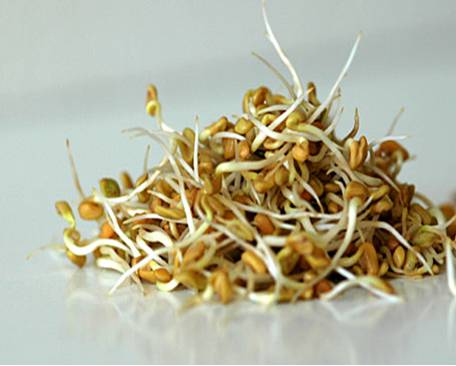
Summer Seed Sprouting


Seed sprouting may be one of those things that you have never considered doing at home. They are raw, very tasty and highly nutritious so give them a try once you’ve read this article.

Seeds sprouts are very easy to produce, economical and full of essential nutrients. If you are thinking back to distant memories of mustard and cress, then sprouts have moved on ‘sprout years’ since those days! Sprouts are one of the most alkalising, nutritious and convenient foods available, particularly as they can be grown easily in four to six days and require no effort and very little cost. Seeds sprouts are incredibly versatile in meals and can be added to salads, soups, stir-frys, and juices or just eaten as they are. They also provide an excellent source of protein and are a great addition to a raw food diet or a detox.

A tasty weapon to fight disease
The main benefits of sprouting seeds are the amazing amount of nutrients and enzymes that are released once a seed germinates from dormancy. What may look like a humble seed becomes a nutrient explosion once you provide it with light and water. Unlike most fresh foods that actually deteriorate once picked and lose nutrients prior to consumption, seed sprouts continue to become a powerhouse of nutrition as they grow. Seed sprouts are packed with vitamins, minerals, proteins, enzymes, phytochemicals, antioxidants, trace minerals, bioflavonoids and isoflavones, which work against toxins and invigorate the body’s immune system. The abundant enzymes in sprouts also make them easily digestible as their cell walls easily release nutrients.

Scientific proof
According to Professor Rowland of Ulster University eating just over 100 grams of tasty sprouted vegetables every day for a fortnight showed clear protective effects against DNA damage in human blood cells. “And just a portion – 113 grams – per day of a mix of broccoli, radish, alfalfa and clover sprouts was enough in our tests to show the protective effect.” DNA damage is associated with cancer risk. Sources of DNA damage include diet-related carcinogens, and bodily processes like oxidative stress – and the raw sprouts protect against this kind of damage. So this scientific research reinforces why you should eat your greens.

Types of sprouters
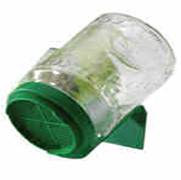
There are lots of different sprouters on the market that vary dramatically in price, but a simple ‘jar style’ sprouter as seen here will do a good job and costs less than £10.

Jar sprouter
Jar sprouter

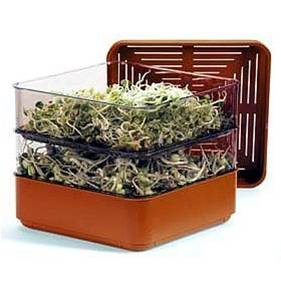
3 tier square sprouter

3 tier round sprouter

Instructions for sprouting

  • Place your chosen seeds in a fine sieve and wash thoroughly
  • Soak the seeds overnight or for approximately 12 hours and then rinse thoroughly
  • Place the seeds in the germinator and ensure that they are evenly spread out and not too cramped together, otherwise they may go mouldy
  • Place the germinator in a well lit spot, but away from direct sunlight and keep at room temperature
  • Water twice daily (ideally with filtered or bottled water)
  • Watch your seeds begin to sprout. After 4-6 days your sprouts are ready to harvest – rinse thoroughly and keep refrigerated (consume within 5 days)

Seed types
Many different types of sprout are available including the more popular alfalfa, broccoli, radish, mung bean and a range of mixes. Added herb seeds such as basil, coriander and oregano can bring lots of flavour to your food.

Jo Bareham is a BANT registered Nutritionist based in Haywards Heath www.healthyyou.co.uk