Tag Archives: recycling

Surface appeal

We wanted to revamp our kitchen. New surfaces, new worktops, new doors. We wanted something stylish, individual, sustainable and didn’t cost a fortune, something a little more “us” than going into a kitchen store and buying something off the shelf. How hard could that be? 
Actually, we tried that, went to the usual places and saw the usual stuff. Things with names like Nordic Noir and made of granite or Corian. Nice enough, but a bit uninspiring. It started to become a little bit of an obsession. Eventually, we decided on a radical, if familiar, course of action. “Let’s go for a drink and something to eat”. 

We went to Fumi, the new Japanese in Circus Street. The food’s great there and it’s been designed beautifully, a very stylish clean aesthetic. Sitting there, we couldn’t help notice the furniture. The tables looked like marble, but clearly weren’t. 

“We had them made for us. They’re really interesting, they’re made from used coffee”. 

What? 

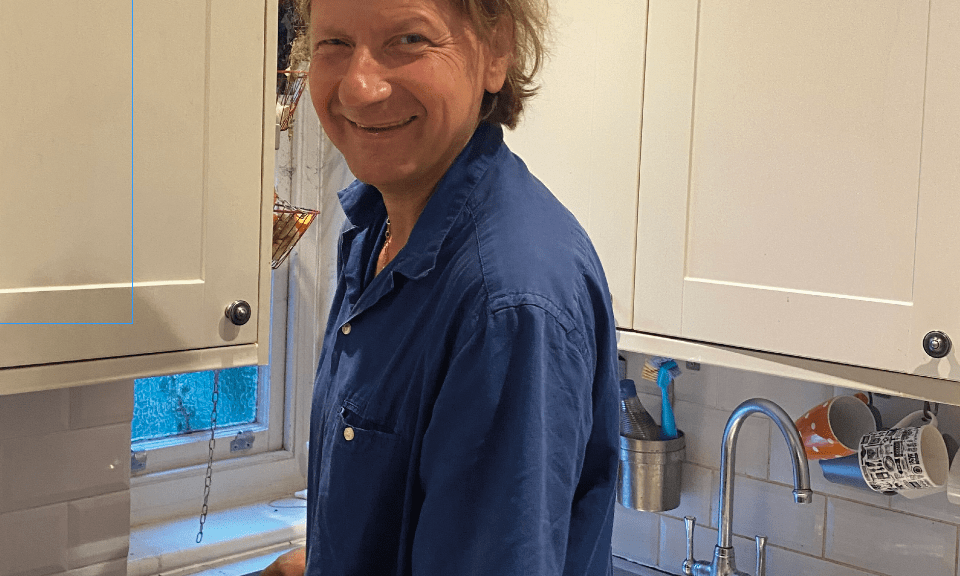
Two days later I was talking to Jani Lemut in, obviously, a coffee shop. 

“It was just an obvious thing to do. I was working with an interior design company who were importing all their furniture from India, but wanted to be more local and sustainable and so on, so they contacted me. We started talking about new designs and what we can do and what different materials to use, local materials. I started thinking ‘What else can I use?’ And coffee was very obvious, because it was just on the table. It was just there”.

How many cups of coffee get thrown away?

“Probably a lot”, said Jani. “I heard a statistic, I don’t know whether it’s right or not, but the average person in UK spends £25 pounds a year on coffee. In Brighton, it’s £75”. 

Apparently there are more coffee shops here per head than anywhere else in the UK. And in Seven Dials… 

“Yes. Most probably. Yeah, and it’s still gaining popularity. It’s quite incredible”.

Jani is a “classically trained furniture maker” from Slovenia who came here after the war in Yugoslavia started in 1990.  “I made wooden children’s toys and we had quite a nice steady business, but then after three or four months, the war started and that was it. Lost everything. The country came to a standstill and basically that’s what brought me here. “I came to see a friend of mine in Gloucestershire and I just loved it. Absolutely loved it. I love the freedom of expression here. When I got to London, I just loved it so much. I said to my friends, ‘Look you go back. I’m staying here’. And that was pretty much it.” 
He moved to St Ives and “had a really good time, doing mainly designing and building furniture, cottages. I was doing lots of artwork as well, art exhibitions and so on. Everything was always based in recycled materials. I was always fascinated by what gets thrown away. What can one do with the challenge? I still feel excited by the idea we can turn objects into a different life. So that’s my main motivation”.

Had you seen coffee used before? 

“People have tried using coffee in all sorts of products, but only as an additive. People have tried make composites are made of coffee and thermoplastics…” At this point Jani started talking about binding processes and chemistry. I ordered another coffee and waited for him to start speaking English again.

How long did it take you to work all this out?

“Two years”. 

And you kept going with it? Because you were certain that it would work?

“Well, I wasn’t certain certain, but there was a promising sign. The problem with it was stabilising the coffee because it’s organic it moves, it does all the the things that any organic stuff does. So to bind it in organic way, it’s quite difficult, but this is exactly what we were trying to do, to make a plastic free component”. 

And you have now?

“Yes, we have. Yes.”

The results are really lovely, but it doesn’t only look lovely, it looks real. Organic. 

“Of course, because all the ingredients that we use are purely by-products of different materials. marble dust, copper, dust, metal. Then you’ve got spices, natural pigments and so on and so forth, all sorts of stuff like charcoal”. 

You could make something beetroot colour?

“Yeah, we do that”.

Could you make something that blue? 

“Yes. Turquoise oxidize copper dust, a very intense turquoise”.

There are other uses for the materials but “I’m a bit wary of mixing too much either plastic or any chemicals with our product, because then it’s difficult to recycle further. So wherever we create, we try to create in such a way that is easy to dispose of or reuse later on. This is the main point of doing this. At the moment, our product, if you leave it out in a field for a couple of years, it will just disintegrate and it will go back to where it came from. That’s pretty much it”.

Everything here is about sustainability. On their website (below) they say “We are carbon neutral. We plant a tree for every sale we make. Our materials are sourced locally and much of it from waste”. They are “a circular business. Everything gets recycled, everything gets re-used”. 

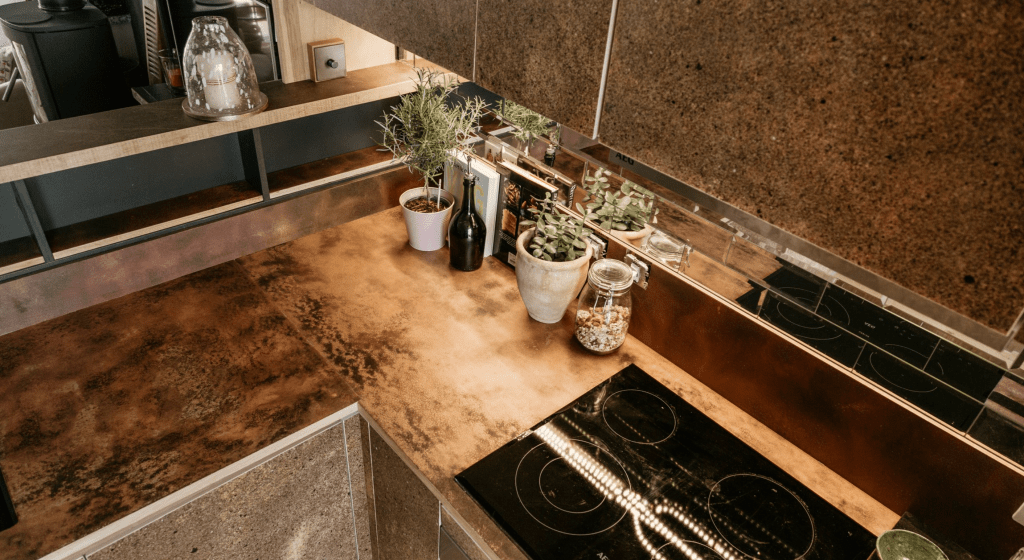
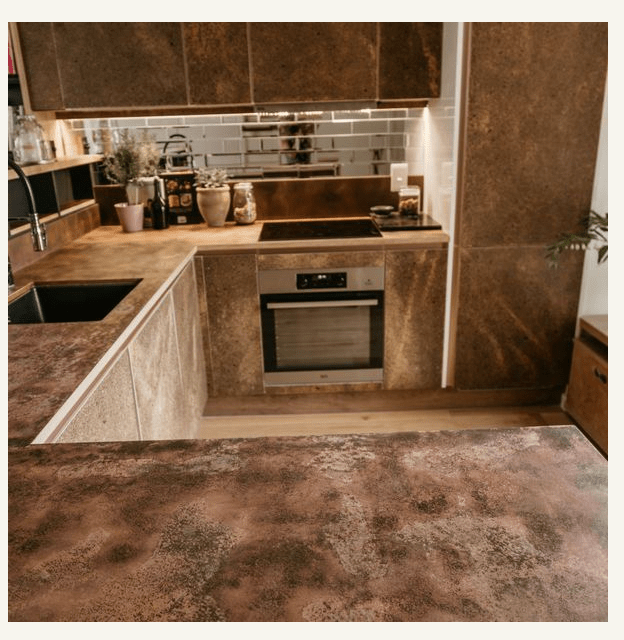
We had the worktops done, the kitchen island and the dining table, and went for a copper sheen finish that looks great and always gets comments. It’s hard-wearing, waterproof, almost completely heatproof and can be made to any size or shape. It also cost about a third of what we were quoted in the high street. 

“Why make something that will be extortionate? Why make something nobody can afford? If you can make something that’s beautiful and accessible and sustainable, then what’s not to like?” 

https://tomasandjani.co.uk

07930 944906

info@tomasandjani.co.uk

The Whistler – August 2019

Smoke Bath
Tom Kennedy, Wildlife Photographer Exhibition of the Year


Welcome to West Hill

People are constantly moving into and out of the West Hill/Seven Dials area. It can be a bit disorientating when you move into a new house or flat – it takes a while to work out where things are and how things work in your new neighbourhood. No sooner have you moved in, than you’re ready to dispose of your celebratory bottles. You stagger to the communal waste and recycling bin locations on Buckingham Road near Bright News, or the Dyke Road end of Compton Avenue or Clifton Road, and there’s no bottle depository! But, what the hell, you just leave all your bottles near the bin because you don’t know where else to take them, and although you take recycling seriously, not seriously enough to keep walking until you find the nearest bottle bank.  In this case, please do your neighbourhood a favour and dispose of bottles responsibly in the following locations: Buckingham Place end of Compton Avenue; Dyke Road near St Nicholas Church; corner of Terminus Road/Howard Place; or at the Montpelier Crescent recycling station. Have you noticed how near everything is to everything else in this part of town?

As reported in the last issue, we’re still looking for residents to join the West Hill Anti-Graffiti Action Team. If you’d like to volunteer to help blitz the tags in this area, please write to thewhistler1976@gmail.com.

If you’re curious to read some archive copies of The Whistler, going back to 1989, to get a flavour of what has been going on in this area over the last 30 years, please write to us at thewhistler1976@gmail.com. Depending on the year, we have two copies of each vintage publication month to give away.

Smoke Bath

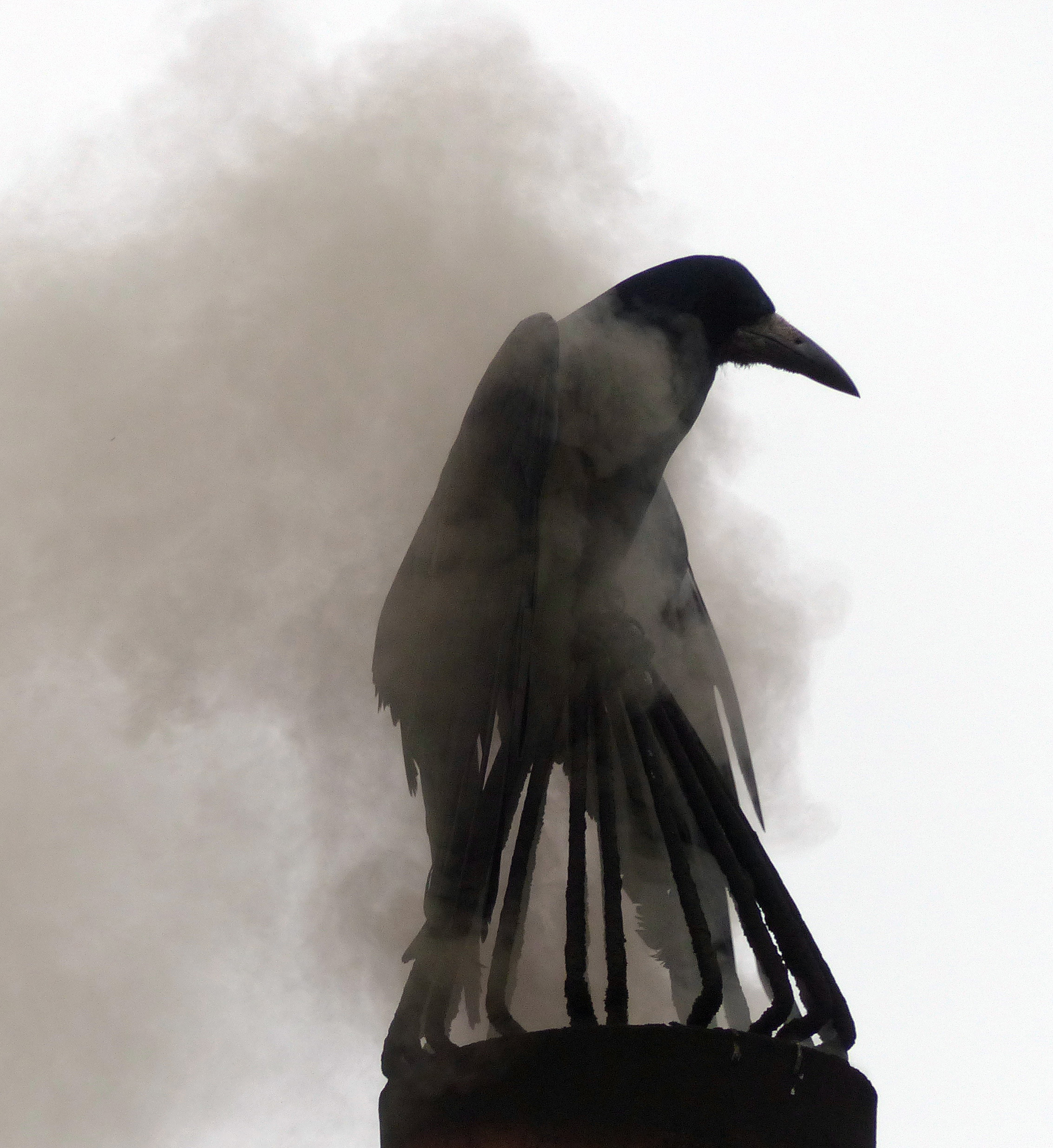
The image above – ‘Smoke Bath’ by Tom Kennedy – is part of the remarkable Wildlife Photographer of the Year exhibition at Brighton Museum and Art Gallery (until 8 September 2019). It has the most amazing photographs, each one accompanied by the story of how and when the photo was taken.  

Tom saw the rook as he glanced out of his living room window. Wings spread, the bird was using the neighbour’s chimney pot to smoke bathe. Realising the opportunity – and knowing the heat and smoke would only allow the rook to remain for a few minutes – he quickly took his photograph before leaving the bird to enjoy its smoky bath.

Rooks are incredibly intelligent creatures and smoke bathing is likely to be a learned behaviour, rather than instinct. The smoke helps the birds to fumigate their feathers, ridding them of irritating parasites such as lice, mites and ticks. The related jackdaw has even been seen fumigating itself over smouldering cigarette ends.

Out and About in West Hill

BE of West Hill muses while he is out and about . . .

  • It’s gone, it’s gone, it’s gone! Yes, the abandoned London-style cab, rotting in a residential bay in Alexandra Villas for the last two years has gone, finally! Did Santa use it for deliveries? Or did the council eventually take notice of my two hand-delivered letters and one email? Perhaps the wardens thought that, because of the bird droppings, the car was part of the tree canopy! I assume the council (and us) has lost revenue and incurred the cost of removal.

Continue reading Out and About in West Hill

West Hill Musings

We’re always pleased to receive contributions for The Whistler. We’d like to be able to thank the person who sent in these three vignettes, but they were too shy to leave a name with their hand-written note. So, for the moment we will just call them A. Resident.

NEW BINS… NEW BINS…

No, not new glasses for all! The Council has bought new, large, black rubbish bins in Compton Avenue and the Powis Square area. Have you seen them yet? This throws up a problem, which can they answer, even with advice on the outside, how are they going to monitor who puts what in the bins? I have witnessed (and reported) one of the collection crew throw bottles into an incorrect black bin. And how is the Council going to recycle the old, replaced bins? In the recycling bins? Now, there’s a thought! Continue reading West Hill Musings

The Whistler – February 2014

Rubbish
West Hill Conservation Area

COLLECTIVE RESPONSIBILITY

The picture above shows the recycling bins in Buckingham Road. When The Whistler printed edition went to press on 19 January, the usual weekend build-up of bottles and recycling detritus was in full swing. Bill and Maria Eady, used to enjoy living in Buckingham Road but their lives have changed since the recycling bins have been placed right outside their door. When they are not full to bursting, crashing bottles being dumped in the bins at all hours of the day and night are a familiar sound. Since then, the bottle bin has been removed altogether and relocated to Buckingham Street.

On the Letters page Councillor Pete West provides a lame response to the issue of non-collection since the Christmas  period. The point is that since  weekly kerbside collections in West Hill were replaced by the woefully inadequate collection from communal bins, has anyone from the council actually monitored the required frequency of collection to prevent the West Hill conservation area from regularly looking like a slum?

While flat roofs are refused planning permission by the council  for being ‘visually harmful’, the same council’s actions have allowed this visually horrific situation to build up. However, residents must also take some responsibility for adding to the rubbish piles. Do we think about walking a bit further to find another bin or taking our recycling home until the bins are empty?  Do we just curse the council and toss the recycling into the non-recycling bin anyway as we’re on our way somewhere else?

Write to The Whistler and tell us what you think.