Tag Archives: Environment

Around and about

Comment: Cllr Ellen McLeay and Cllr Sue Shanks

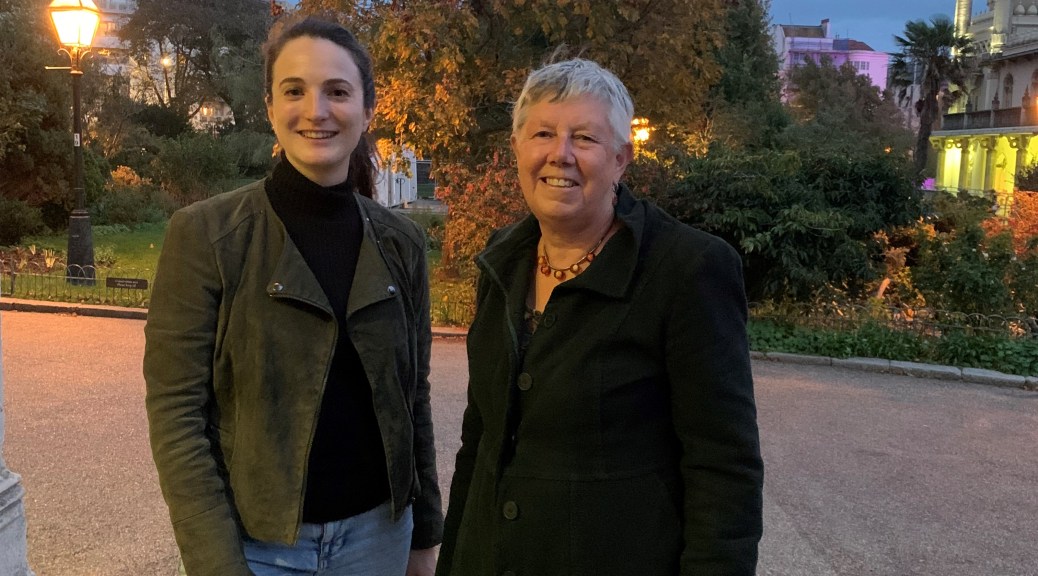
As the two ward councillors for West Hill and North Laine, we are delighted to be invited to write a regular column for The Whistler

We are representing residents in this area as Green Party opposition councillors, now Labour is the administration running the council. Sue is the opposition spokesperson for Children and Families, as well as a committee member for Planning. Ellen is the opposition spokesperson for Housing, and a co-Chair for the Central Area Housing Panel. We are both are committee members for the People Overview and Scrutiny committee, however our main role is to represent the community of West Hill and North Laine. You can contact us via the council website, just search for Brighton and Hove Contact Your Councillor.

Elected in May 2023, we have been supporting the community with a wide range of local issues, ranging from putting forward a request for a crossing on Buckingham Place, to more bike hangers on Compton Avenue, and steering better communication between Govia Thameslink Railway and CityClean for the clean up of the private land around Brighton Station.

The roads around and nearby Brighton Station have seen a lot of improvement works over the past year. In September, we saw the introduction of a new school streets initiative on St Nicolas Road for St Paul’s School to help children travel to school more safely and reduce traffic issues. As we’ve not received reports since the launch week, we hope that means it is now working for all those who shared initial concerns.

Two junctions along Trafalgar Street were redesigned to improve safety for pedestrians. The closing of the Trafalgar Street/Blackman Street junction was decided following a number of collisions over a three-year period, many involving cyclists. However, we are receiving equally troubling reports about the new junction where Whitecross Street meets Trafalgar Street. We’re engaging with transport officers, and they’re reviewing the situation.

Housing issues make up a lot of our case work, and we’re supporting council tenants and leaseholders in high-rise blocks across the ward to address their need for housing repairs or regarding reports of anti-social behaviour (ASB) in their blocks. Fire safety is another major concern for these residents and others in the New England Quarter. Following the Grenfell Tower fire, it’s more important than ever for residents have greater transparency on the fire safety of their building. 

Many residents contact us about antisocial behaviour and drugs in our ward – which is a huge challenge for the city. It has been reported that over the past year, the Combatting Drugs Partnership has closed down 38 county lines, which led to 99 arrests and over 8,000 drug seizures and added 80 young people to prevention programmes. These are impressive numbers, but residents still say that drug related ASB is more prevalent than ever. Ellen has been supporting residents badly impacted by this on Zion Gardens. There have been council organised community meetings focused on these issues in other wards. We are asking for one to be hosted in our ward. 

An important part of being a councillor is seeing all sides of a situation. Following reports from the community concerning residents occupying supported accommodation at William Collier House and St Mungo’s, we paid both housing providers a visit. During our time speaking with the housing managers and their residents, we were struck by the incredible work they do. We met some of their success stories – people who have experienced trauma you couldn’t imagine, are now on a journey of recovery, have benefited from training opportunities, and are working to move on into private rental accommodation. Or another resident whose needs were so complex it took the housing team two years to earn his trust. If anything, the visit reinforced the importance of these services for a fair society that gives everyone the opportunity to change, grow and live. 

Many businesses have contacted us about the challenges on New Road relating to anti-social behaviour. Sue represents the council on the Pavilion Trust who have been successful in a bid to improve the gardens which will put new fencing on New Road and the council are looking at a change for the benches. 

We were so sorry to see the loss of a very mature tree on Buckingham Road due to Elms disease – an extremely difficult decision made by the arboriculture team who work hard to conserve the city’s trees. Every summer, the team battle to protect Brighton’s historic collection of beautiful elm trees, and there are two key ways you can support them. Avoid bringing diseased elm wood into the city (that includes logs or timber you might burn). Keep an eye out for elm trees with leaves wilting or turning yellow or brown ahead of autumn (you can report it by emailing elmdisease@brighton-hove.gov.uk with a photo and the tree’s ‘what3words’ location). 

The council’s net zero strategy is hugely important for the city. We hope they will support these efforts with an additional commitment to protecting biodiversity. Protecting the natural world is an important component in achieving net zero. That’s why the reintroduction of glyphosate to the 

city and a recent decision to increase wild verge mowing to six cuts over the summer is concerning.  We are campaigning for an “opt-out” option for neighbourhoods who want to avoid glyphosate being sprayed on their streets. We can support with arranging weed clearing action days for your street. If this would be of interest to you, please reach out.

We are keen to work with the current Labour administration during this challenging economic time. Under the previous administration there was plenty of cross-party collaboration, and it would be great to see that continue in some capacity. We›d like to take this opportunity to respond to misinformation in the previous edition of The Whistler regarding our previous administration, 2020 to 2023. To represent what happened with toilets more accurately, we wanted to share the following timeline – where only one toilet was permanently closed: 

• Early 2020 saw many toilets close in response to the Covid-19 pandemic; these were gradually reopened in the latter part of 2020 / early 2021.

• Norton Road toilets closed permanently in April 2022 due to significant repair issues.

• 11 sites were closed in October 2022 due to financial pressures. These have subsequently reopened, apart from The Level.

• Four sites were closed in autumn 2022 pending refurbishment. These have subsequently reopened. 

We regularly attend community meetings with the London Road Action Team and the North Laine Community Association and would be pleased to meet with residents in the West Hill area as a group and to support the community association. 

We wish you a restful and restorative and a happy 2025. 
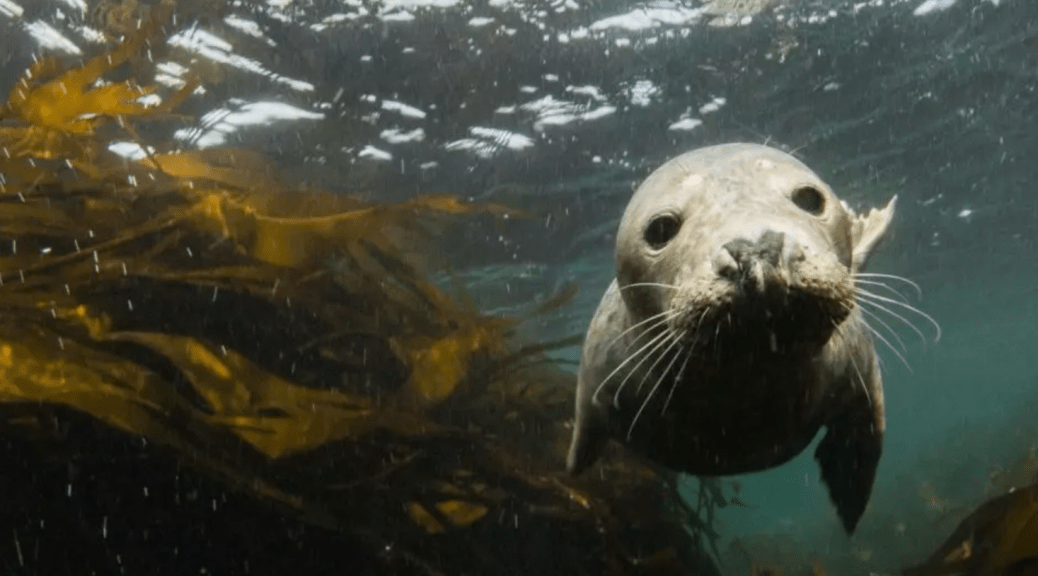
Climate Cafe – Rewilding The Sea

Brighton’s seaside is a playground, a health spa and a boon to the local economy. But in our crazy industrial food culture, we’re much more likely to buy our fish already battered in a shrink-wrapped plastic package from the supermarket than one of the lovely fish stalls on the beach or the fish shops – Andrew’s in the Open Market or Brighton & Newhaven Fish Sales next to Hove Lagoon, where the fish come straight off the day boats, supporting the environment and the local fishers.

Our coastline has been through its own boom and bust, with fish stocks on the critical list and the ocean’s eco-system becoming decimated by the heavy hand of the industrial food system. But there’s good news coming in on the Sussex waves; Dolphin Head, south of Selsey Bill, was designated a Highly Protected Marine Area (HPMA) last year, after years of campaigning. Following decades of bottom-towed trawling, the site has become degraded, but these new protections will allow the area to fully recover. The area is a hotspot for bio-diversity, with several habitats found there and is used by numerous seabirds and marine mammals, including Risso’s dolphins and Harbour porpoises.

It was a lone fisherman we met on a dog walk on the beach at Shoreham who told us that Rampion wind farm has brought all sorts of fish back to its waters, that the sea bass and plaice come right up to the beach now, and there are plenty of sea bream further out. “It doesn’t just stop the trawlers. It’s created a reef which provides new habitats.” 

And that creates a whole new eco-system. 

Local campaign group, Sussex Underwater, which only this autumn won a coveted Maritime Award for their film Our Sea Forest, reports that mussel beds are returning. Like oysters, these biovalves create important habitats for other species, and provide food for rays and other fish. 

It’s an astonishing reminder of a world that turns out of our view. Charles Clover, author of Rewilding the Sea, and seasoned environmental journalist says that we need to dive deep and wake up to what’s happening in our oceans not just to save the planet but to remind ourselves of what the Channel might have been like many years ago. “The dynamism of nature is just quite fantastic” he tells me. “If you leave it alone and harvest it really sustainably, using methods that don’t damage the rest of the ecosystem, then it does you multiple favours.”

Co-founder of the campaigning Blue Marine Foundation, Clover is bringing life back to our oceans and writing about it beautifully. Margaret Atwood calls his book “a game changer”. Knepp’s Isabella Tree says it’s “desperately needed”. George Monbiot says, “What if our seas became productive again with giant sturgeon, halibut and skate? It’s closer than you think.”

 “It’s not about not eating fish”, Clover tells me. “It’s about making sure the fish are managed properly. An extremely good example of the resurgence is the Bluefin Tuna around Britain’s shores. It’s not been there for 70, 80, 90 years, but it’s back. And it’s back principally because of a fisheries management decision.”

Industrial fishing has an enormous impact upon biodiversity; trawling and dredging smashes up the seabed, destroying “the forests of the sea” where the humble seaweed draws down CO2 and locks it away forever. But as Charles explains, Sussex Kelp has turned the tide on trawling.

“Sussex Kelp brings together the three reasons why we must rewild the sea: for greater food security, for biodiversity and for climate,” he says. In his book, he tells the story of Eric Smith, the Shoreham free-diver with Sussex Underwater who campaigned for the protection of the kelp belt, and continues to report on the astonishing recovery of this area from trawling. As a result of his work, mussel beds are expanding, stingrays have been sighted and the kelp is returning, says Clover.

“Kelp is one of many as-yet unquantified mechanisms that can help sequester carbon from the atmosphere and lock it up in sediments, though where its leaves go to that are not washed up on the shore is complicated and hard to quantify. But in the end, it will take its place with seagrass, saltmarsh, mangrove and, I believe, other forests of the seabed, in being recognised as an important mechanism that must be protected, that makes our planet more resilient.”

With the protection of the Sussex kelp, fish have come back as well as lots of other organisms, and local fishermen are happy too. “It shows what we could do all round our shores and it shows that in some places at least, we are moving in the right direction. As Eric puts it, “we are winning.”’

l Rewilding The Sea: How To Save Our Oceans by Charles Clover (Penguin) 

l Hear more from Charles Clover on Gilly Smith’s podcast “Cooking The Books with Gilly Smith”

Benita Matofska looks at Sussex Bay

I’ve long been fascinated by the wonders of our waterscapes and how vital ocean conservation is to our very existence. 70% of our planet is covered in water – from seas and salt marshes, to rivers and inland coastal waterways, these shape the land, the way we live, eat and breathe – they’re vital to our health, wealth and happiness and we need them to survive. When they thrive collectively, this is Blue Magic.

I grew up in land-locked Leeds and the first time I saw the sea, I was 18 months old and stood and stared and was silent for the first time. It was my first encounter and it would come to shape my life. 

Fast forward to when I was 10. Riddled with eczema, my parents took me to the Dead Sea. They’d heard about its healing powers and had been told that if you submerge yourself in the water for seven minutes, it can heal even the most damaged skin. Willing to give it a go I gripped his hands tightly and in we walked. The pain in my open sores was terrible, but I persevered and managed to stay submerged. Within three weeks, my eczema had cleared. It felt like a miracle. Nature’s minerals in the Dead Sea – magnesium, calcium and potassium – had worked their Blue Magic. 

So what does all this have to do with us Brightonians? Well a new initiative called Sussex Bay is set to bring Blue Magic to our very own shores, so we can reap the benefits. Sussex Bay is a mission to regenerate, restore and revive 100 miles of our Sussex coastline. Paul Brewer, the Director for Sustainability and Resources at Adur and Worthing Council and Dean Aragon-Spears, Head of Blue Natural Capital are spearheading this incredible project. 

Dean describes Sussex Bay as ‘a movement initiated by Adur & Worthing Councils, powered by civic organisations, local businesses, communities and people.’ 

Through what they describe as ‘bold collaboration’ they aim to generate £50 million by 2050 to accelerate local seascape recovery along this incredible coastline – from Selsey in the west to Camber
Sands in the east including its river systems, coastline and marine area out to 12 nautical miles.

Sussex Bay came about after Adur & Worthing Council declared a climate emergency in 2019. Two  local projects inspired the next step: the Knepp Estate which has rewilded 951 hectares of farmland and seen massive increases in wildlife and biodiversity, and secondly the work of the Sussex Inshore Fisheries Association to introduce a 300 km2 trawler exclusion zone off West Sussex to restore the decimated historic kelp forest. If yoiu could rewild the land, why couldn’t you rewild the sea?

“There’s an urgent need to reverse the catastrophic decline in marine biodiversity.  Sea-based rewilding projects are far less common than those on land. The Blue Marine Foundation defines rewilding the sea as ​‘any effort to improve the health of the ocean by actively restoring habitats and species, or by leaving it alone to recover’. Healthy seabed drive a richer marine ecology, so when habitats recover so does everything that relies upon it. 

“Now more than ever we must bring nature back to our seabed, reefs and rivers. Restoring these ecosystems and their blue natural capital helps protect our coasts from storms, clean our waters, store carbon and support biodiversity.

And as nature recovers, people and the coastal economy will benefit too; from sustainable fisheries to enhanced health and wellbeing, and new commercial opportunities in ecotourism and leisure.” And that is magic. 

https://www.sussexbay.org.uk/

Benita Matofska is a speaker and author of Generation Share, a collection of 200 stories of changemakers.

benita@benitamatofska.com


Reasons to believe in the power of the seas

1.Globally, the Blue Economy is worth $1.5 trillion, provides over 30 million jobs and food for three billion people. And that’s predicted to double by 2030. A similar initiative to Sussex Bay is The Great Blue Wall, an African initiative to secure livelihoods for 70 million people, restoring two million hectares of ocean, capturing 100 million tonnes of CO2. The network of seascapes will be connected by a living blue wall that act as regional ecological corridor created by conserved and restored blue ecosystems such as mangroves, seagrass and corals.

2.Another initiative is Ireland’s Eco Showboat, the brainchild of Anne Cleary and Denis Connolly who travelled the coast of Ireland by solar powered electric boat on a zero carbon journey to connect scientists, artists, communities to spark climate action.

3.We’ve lost half of our coral reefs in the last 30 years and are estimated to lose 90% by 2050 because of climate change, pollution and over fishing. The better news is that scientists have found that marine ecosystems recover very fast and we can restore marine life by 2050 if we act now. 

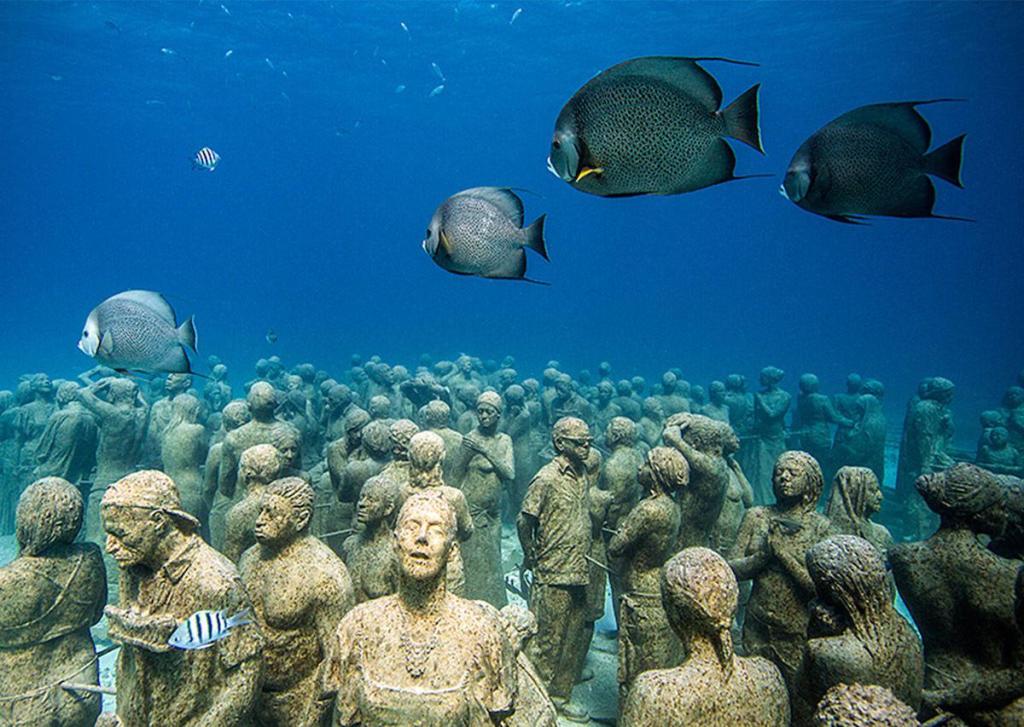
At the Museum of Underwater Art in Australia, underwater sculpture artist Jason DeCaires Taylor has created installations and beautiful artificial environments installations also lure divers and visitors away from the Great Barrier Reef, helping to protect it. 

4.Wetlands are biological super systems that store up to 50 times more carbon than rainforests. 40% of all plants & animals live and breed in wetlands and over a billion people depend on them for their living. We need to preserve our wetlands and our waterways to survive. The floating gardens is a project in Bangladesh to bring wetlands back to life using ancient Aztec traditions providing food, livelihoods and flood defences, combating impacts of climate change. 

5.The South African charity Waves for Change is a project offering surf therapy to children. By making the ocean accessible, children are learning new skills, and having a magical, life changing experience. 

6.Alejandro Duran, a Mexican environmentalist and artist, has created The Museum of Garbage and Washed Up, an installation and photography project using rubbish that washes up on Mexico’s Caribbean coast, a UNESCO world heritage site. His mission is to wake us up to the impacts of plastic pollution and consumerism. Alejandro and a team of volunteers found trash washed up from 58 countries and 6 continents.

How You Can Get Involved

1.Help to regenerate Sussex Bay by donating to the crowdfunding campaign. 

2.Volunteer with one of the Sussex Bay projects such as Sussex Underwater, the Sussex Kelp Project or the Sussex Dolphin Project.

3.Document wildlife sightings at the coast and get involved in citizen science. For more information, visit sussexbay.org.uk

4.Submit your idea. What’s your vision for Sussex Bay? Be part of the region’s biggest, boldest coastal collaboration ever. 

Contact hello@sussexbay.org.uk

Out and About

Litter Louts Look Out

People caught dropping litter, fly-tipping and allowing their dogs to foul in public places anywhere in Brighton & Hove now face £75 instant fines. Enforcement officers, employed by private company 3GS Environmental Solutions, began patrolling in the city in March. The new service supports the Council’s strategy of encouraging everyone to produce less waste and recycle more. It aims to tackle antisocial and illegal behaviour, improve the environment and reduce waste clean-up and disposal costs. Continue reading Out and About